Large Herbivore Working Group Series Webinar – Exploring the legal frameworks for semi-wild or “kept-wild” large herbivores
Written by Lifescape Project
How can legal frameworks support semi-wild, or “kept-wild”, animals on rewilding projects across the UK to live more naturally?
Stephanie Smith, Lifescape’s Managing Lawyer - Rewilding Law, recently explored this question during her webinar on “Semi-wild/Kept-Wild Livestock” as part of the Large Herbivore Working Group’s webinar series.
As explained in more detail below, she discussed livestock regulations and the work being undertaken by Lifescape to explore the use of exemptions and potential changes to the law to unlock the ecological potential of these animals.
What is the Large Herbivore Working Group?
The Large Herbivore Working Group (LHWG) is a group of experts whose aim is to advance the return of large grazing and browsing animals to aid in the restoration of natural processes to the UK.
The group is running a series of webinars sharing the group’s research so far, which to date has included sessions on Elk in Britain with Rina Quinlan, and Bison Reintroductions with Paul Whitfield.
Exploring the future of kept-wild herbivores
Through grazing, browsing, disturbance, movement and nutrient cycling, large herbivores create and maintain many of the ecological processes upon which functioning ecosystems depend.
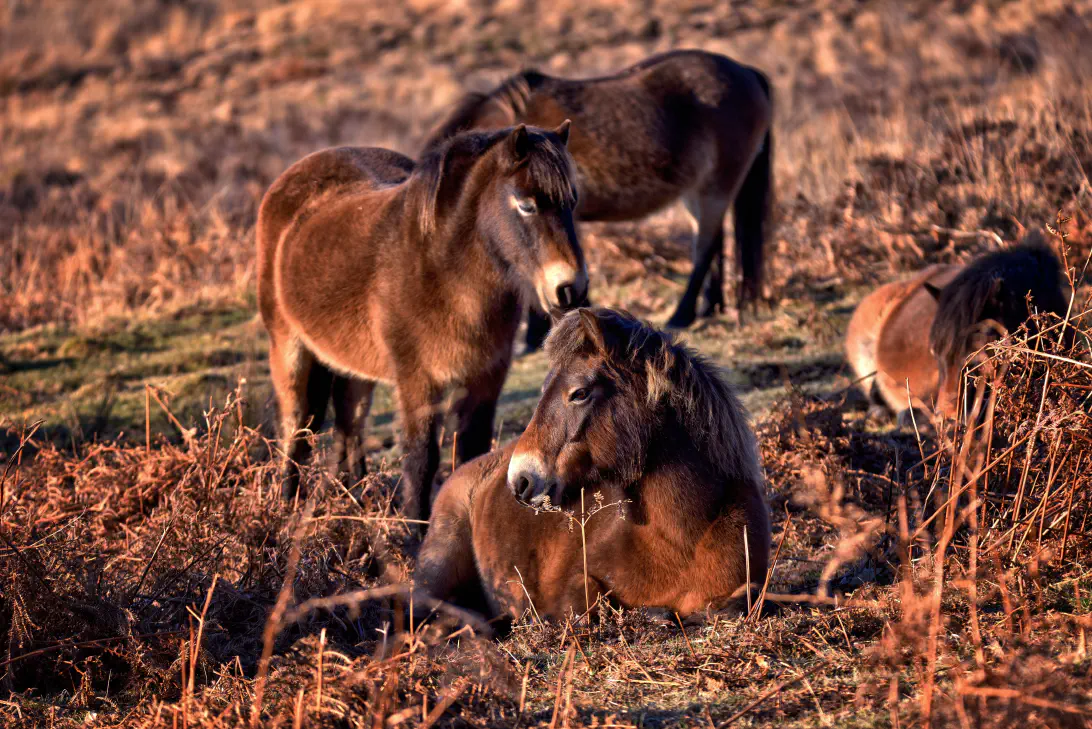
As part of our Rewilding Legal Innovation Lab on Building Legal Frameworks for Large Herbivores, we are exploring the use of large herbivores already present in the UK, like horses and cattle, as ecological proxies for extinct species such as bison and elk. This is with a view to these animals living more naturally with minimal human intervention in large rewilding projects, and bringing positive ecological changes to the landscape.
As Rewilding Britain’s Sara King explained in her introduction to Stephanie’s webinar on this topic:
“Lots of rewilding projects have some of these animals on their land already, but quite often the regulations and the legislation mean that it can be quite tricky to get those animals to act in a natural way. So one of the key areas of work for the Large Herbivore Working Group is how we can put the foundations and enablers in place for those projects… to hopefully encourage more natural behaviours”
Watch the video recording below to find out about practical challenges, emerging legal solutions, and opportunities for future reform. In particular, Stephanie discusses:
The ecological benefits of large herbivores on the landscape when they have the freedom to move around, such as creating shrub mosaics
How these animals are currently treated under UK law
Existing regulatory flexibilities that can support large herbivores to live more naturally in large rewilding projects, such as those related to equine microchipping and collection of animal carcasses
Lifescape’s work with projects like the Knepp Estate to explore legal solutions for their semi-wild horses (see our Rewilding Legal Innovation Lab for more detail)
The potential for a new “kept-wild” legal category of animals (if you’d like to find out more about this, read the summary of our report for the Law Commission)
Want to find out more about this work?
If you’d like to discuss any aspect of her presentation, or Lifescape’s work on large herbivores more generally, please reach out to Stephanie at stephanie.smith@lifescapeproject.org.
Stephanie will also be speaking at the Large Herbivores in Britain Conference taking place on 21 September 2026 at the University of Kent. Find out more and get your tickets here.
We're delighted that we've recently entered into a new conservation covenant with the Royal Society for the Protection of Birds (RSPB) for their Lakenheath Fen site in Suffolk.
The UK’s flagship 2021 Environment Act promised that new developments would leave nature in a better state than before, requiring at least a 10% increase in biodiversity.
We use cookies to enhance your experience, analyze site traffic, and deliver personalized content. By clicking "Accept All", you agree to our use of cookies as described in our Privacy Policy.
Privacy Preference Center
Manage your cookie settings for this website.
When you visit any website, it may store or retrieve information on your browser, mostly in the form of cookies. This information might be about you, your preferences or your device and is mostly used to make the site work as you expect it to.
Strictly Necessary Cookies
Always Active
These cookies are necessary for the website to function and cannot be switched off in our systems. They are usually only set in response to actions made by you which amount to a request for services, such as setting your privacy preferences, logging in or filling in forms.
Analytics Cookies
These cookies allow us to count visits and traffic sources so we can measure and improve the performance of our site. They help us to know which pages are the most and least popular and see how visitors move around the site.
Legal appeal live
Defending Biodiversity Net Gain
The Government has changed national planning policy in a way we believe unlawfully weakens biodiversity net gain, the legal guarantee that new developments leave nature better off. We've sent a pre-action letter and are considering judicial review. If you're passionate about restoring the UK's nature, please help us cover the legal costs of this fight.