



Rewilding in Italy
Developing Land
Coiled barbed wire removal works, Central Apennines.
Bruno D’Amicis / Rewilding Europe
Core Topics
- Authorisations and licenses for rewilding activities
- Different procedures with relevant administration
- Environmental Impact Assessments (EIAs)
- Forest management
- Removal of small dams
Key Takeaways
Table of Contents
2.
3.
6.
1. General considerations for developing rewilded land
2. When are permissions or licenses needed for activities as part of a rewilding project and how can they be obtained?
2.1. Planning regulations and regional plans
When implementing a rewilding project, you need to understand which permissions or licenses, if any, are required for your proposed activities. This will depend on the specific kind of intervention or project and the territory in which the intervention will be implemented.
Each region has various planning regulations and regional plans in place which may impact rewilding activities. Therefore, the first step toward understanding what permissions or other licences may be required is to consult these documents.
For example, in the Abruzzo region, regional law no. 3/2014 contains three different plans relevant to forests and grazing:
- the Regional Forestry Plan (RFP), which covers the entire region and contains provisions that may be directly applicable to rewilding projects;
- the Forestry Land-use Plan (PFIT) which applies when two or more Municipalities are involved; and
- the Silvo-pastoral Management Plan (PGP) and the Cultivation and Conservation Plan (CCP) which apply to individual land holdings depending on their size. They provide general guidelines to be taken into account in relation to grazing activities and forest protection.
2.2. What types of permissions may be needed?
In general, there are two types of procedure that you may be required to follow:
- Communication: this is typically required for more minor projects. If this procedure applies, you simply need to notify the relevant authority of your plan. Once you have submitted this notification, you may commence work. However, you should be aware that the authority has 30 days to consider the notification and has the power to object to it within that period. If the authority does not reply during this 30-day period, it is assumed that they have no comments on or objections to the proposed activity.
- Permissions / authorisations / permits: this procedure applies where an authority needs to consider the proposed activity and issue a specified permission prior to commencement. In these cases, you will need to submit the required information to the relevant authority and await their decision. If permission is refused, you may be able to appeal the decision, but you cannot start work on your proposed activity until permission is granted.
For example, you may need a building permit for construction works, such as building a hide for birdwatching or fencing a property; or you may need an authorisation from the environmental authorities if you want to implement an activity/ work which has an impact on the environment (e.g. removing a dam).
There is a third route that may be used where the public interest of the relevant authority aligns with
your particular interest. In this case, you may be in a position to conclude an agreement with the relevant authority (see Section 4 below).1
A project may also require an Environmental Impact Assessment (EIA) although, as discussed below, this is unlikely to be appliable to most rewilding activities (see Section 5 below).
Regulations vary from one municipality to the other. The same intervention may be exempt from any authorisation within the territory of Municipality A, but require a specific authorisation in Municipality B. For example, putting up a fence two meters high may require a prior consent under one specific municipal regulation while another municipality may have decided that fences up to three meters high can be built without any permission. This means that you will need to communicate with the authorities of your municipality to understand the position of your proposed activity.

Lanner falcon shaking feathers, Central Apennines.
Bruno D’Amicis / Rewilding Europe
Example 1
Landowner A owns a piece of land which is classified as forest land. They wish to change the use of land from commercial forestry to forest conservation.
Similarly, Landowner A owns land which is classified as agricultural land, and they wish to change the use of land to natural ecosystem / woodland.
The designated use of land is established in the relevant “Territorial Government Plan” (piano di governo del territorio) which may specify certain changes in land use which are permitted. If the change involves a modification beyond the permitted categories, this will require a specific act from the public authorities amending the relevant “Territorial Government Plan”.
The first step in both cases would be to check the Territorial Government Plan and see if the land use changes Landowner A wants to make are permitted. Even if such change is permitted, Landowner A will require a permit from the relevant authority. The process to obtain the necessary permit is done digitally. The details may vary from administration to administration but, generally, the procedure is done via certified electronic mail (Posta elettronica Certificata - PEC). Landowner A should therefore identify the competent administration and send the application digitally to the relevant address.
If the project meets all the necessary requirements, Landowner A will receive the permit from the relevant authority.
If the Territorial Government Plan does not permit the land use change, a variation to the plan must be obtained. Landowner A may apply to the competent administration for approval of the variation. The competent administration may then evaluate the request but note that it is not obliged to approve the requested Lanner falcon shaking feathers, Central Apennines. variation to the planning regulation.
Example 2
Landowner B wants to change the use of his land from irrigated agriculture to rainfed agriculture adapted to the dry local climate. The land is classified as an Irrigated Agricultural Area because it is within the Irrigation Perimeter of a river reservoir. Irrigation infrastructure was installed because of a water use program that was developed in that area.
Similarly to Example 1, Landowner B will need to first check whether this proposed change is permitted within the Territorial Government Plan and the planning regulations and then follow the steps outlined in Example 1.
Example 3
A rewilding association is managing a marshland with a great biodiverse fauna. This marshland is in a protected area. As part of their plan to promote the ecological value of the site, they want to build a fence to stop visitors being spotted by the animals. Visitors can still watch and admire the vibrant marshes.
As the land is in a protected area, the rewilding association, as the manager or owner of the land, needs to obtain the necessary permits from the relevant authorities. In this case, a permit may be required to put up a fence. A case-by-case analysis should be carried out in relation to the applicable municipal regulation in place.
Example 4A national river crosses a landscape recently bought by a rewilding association. The former owner severely damaged the riparian forest gallery, which was once home to many different bird species, was a source of food and shelter for the beavers and provided natural protection against flooding during harsh winters. The rewilding association wants to restore the riparian forestgallery to create the conditions to restore the ecosystem that used to exist and to recover the much needed natural protection for the grassland where large herbivores graze freely.
No authorisation should be required. However, a case-by-case assessment should still be carried out in relation to the applicable regulation in place (if any).
gallery to create the conditions to restore the ecosystem that used to exist and to recover the much needed natural protection for the grassland where large herbivores graze freely.
No authorisation should be required. However, a case-by-case assessment should still be carried out in relation to the applicable regulation in place (if any).
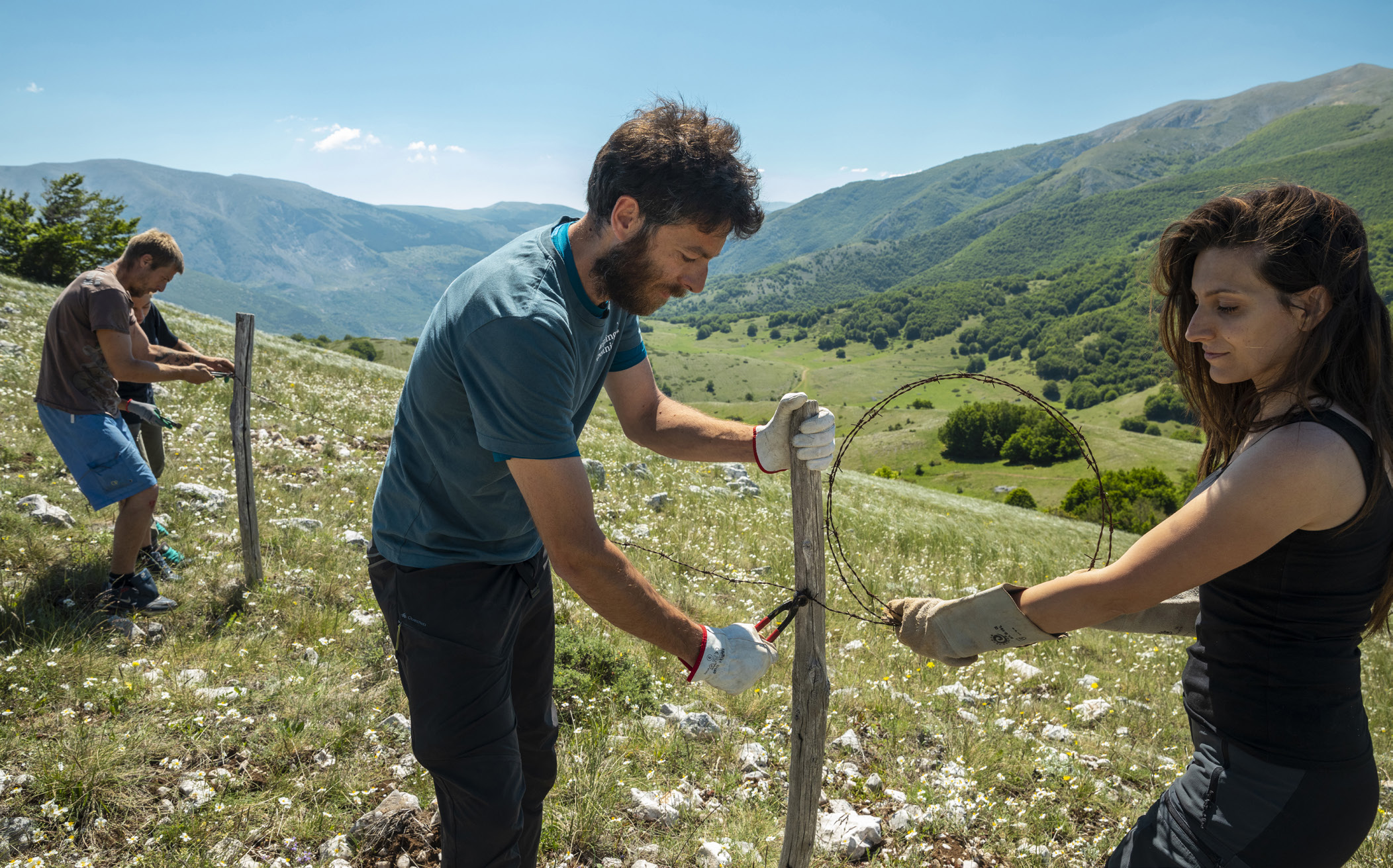
Barbed wire removal, Wildlife corridor between the Abruzzo, Lazio and Molise, and the Majella NPs.
Bruno D’Amicis / Rewilding Europe
3. Who makes administrative decisions relevant to rewilding?
The specific public authority that will make the decision or will need to receive the notification depends on the nature of the activity and the division of powers within each locality. You will need to discuss your project with the competent authorities who will then be able to advise if any other public body needs to be involved.
In more complex cases, multiple public bodies may need to be involved in the decision-making process. Assessments pertaining to environmental issues will often require the participation of several public authorities, since several factors (environmental, landscape, cultural heritage, etc.) need to be considered prior to authorisation being granted. In such cases, a process called the Conference of Services (Conferenza di servizi) will be followed.
3.1. What is the Conference of Services?
It’s a procedure to simplify the burdensome process of getting permissions from the public authorities when different entities need to be involved. Instead of initiating different proceedings before each authority, you may apply to this centralised service which will engage all the relevant authorities to jointly examine
and determine your request. There is not a simple set of criteria to determine whether a project should engage the Conference of Services and you should seek advice from your local municipality on whether this system is applicable to your project.
Applicants may play a role in the Conference of Services process where their involvement will help the authorities, for example, by providing clarifications in relation to the project. This may include making oral submissions or providing relevant documents.
3.2. How does the Conference of Services work?
Once your request is submitted, the entity receiving it will start the process of convening the Conference of Services to obtain all the required evaluations and the final decision.
Once the Conference of Services is convened, the first meeting must be held within 15 days. This period is extended to 30 days if the preliminary investigation is particularly complex. All required assessments should be concluded by the competent administrations within 90 days, except when an EIA is required, and the entire process is generally concluded within 6 months of submission.
In cases where the relevant deadlines have been missed, the administrations are obliged to adopt the final decision providing or refusing authorisation at your request and in any event within 30 days.
If the Conference of Services intends to refuse permission, the administration must notify the applicant of the reasons for the refusal prior to issuing the final decision. The applicant is entitled to appeal this preliminary decision within 10 days. If permission is still denied in the final decision, the applicant can appeal the final decision before the competent Administrative Court within 60 days of the date of final refusal.
If no decision is taken by the administrations within the relevant timeframe (which includes specific timelines of 30, 90, and 180 days, depending on the case), and if the law doesn’t provide for any silentassessment (i.e., when you can assume that the administration has accepted your request if you don’t hear otherwise 2), this constitutes a case of inertia of the public administration. In this case, it is possible to file an appeal to the Administrative Court.
4. Are there other agreements individuals / private entities can conclude
with the administration?
When the public interest is aligned with your particular interest, you may enter into an agreement with the competent administration rather than seeking a formal licence or permission. These agreements are tailormade and they may include forms of protection for your interests that are generally not provided by administrative planning laws or regulations.
In these agreements, the administration is also invested in pursuing its interests, and will therefore become more involved in the project than if it simply permitted or denied an authorisation request.
The law does not identify specific cases where activities can be implemented by means of agreements in lieu of a standard administrative proceeding. To start the process, you should submit your application to the competent administration, as you would normally do. If the administration sees an opportunity to advance their own interests, it may contact you and propose an agreement. There is no detailed procedure or steps to be followed when entering into such agreements, as timings and content will depend on each administration. You cannot force an administration to enter into an agreement as such a decision is discretionary.
The characteristics and constraints over the land, the public and private interests involved and the impact on the environment, will combine to determine which authority is able to enter into such agreements with
you. It may either be the Region (the Regional environmental department) or the State (the Ministry of Ecological Transition). In any case, you only need to submit the application to one administrative body, who will then, internally, call on other administrative bodies which may be affected by the agreement
Once concluded, these agreements are binding between the parties, and you need to comply with the provisions therein. Should the terms and conditions of the agreement be breached, the administration could withdraw from the agreement entirely. Moreover, the administration may also withdraw from the agreement (and terminate it) due to supervening reasons of public interest.
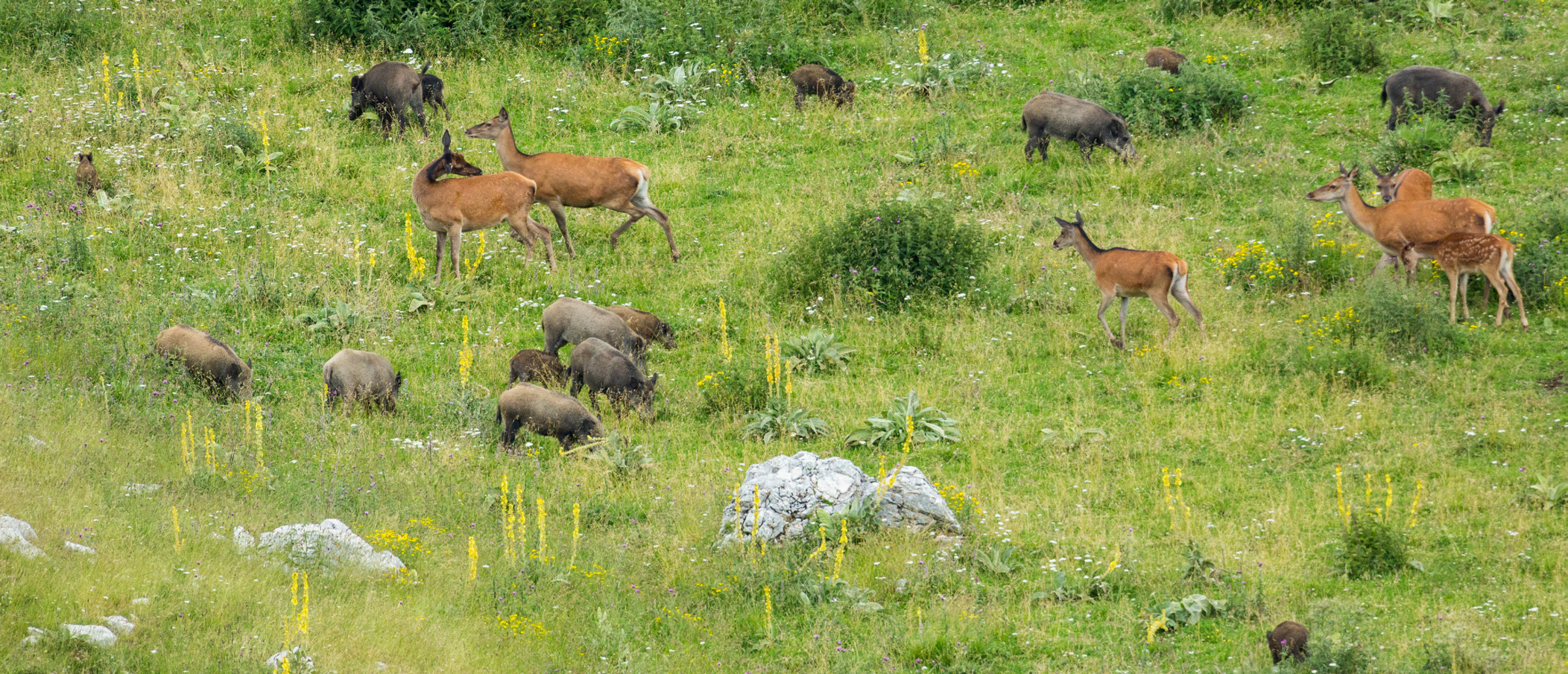
Red deer grazing with wild boar, Central Apennines.
Bruno D’Amicis / Rewilding Europe.
5. When are Environmental Impact Assessments (EIAs) relevant to rewilding?
In general, the main purpose of the EIA regime is to achieve high levels of environmental protection through a prior assessment of the possible consequences resulting from the construction and operation of projects / interventions which are likely to negatively impact the environment.
EIAs are generally required for big infrastructures projects which are likely to have a significant environmental impact, such as airports, highways, railroads3 and big dams.4 They may also be required for other specific projects (such as Agriculture and Silviculture and Aquaculture projects) which are of a specified size or are happening in protected areas,5 including Natura 2000 sites. Depending on the specifics of each rewilding activity and the specific conservation objectives set out for the protected area, rewilding activities may be subject to an EIA. In fact, even if the goal is to improve the condition of the ecosystem and/or to restore the landscape to a wilder state, where a project is being undertaken in a protected area it is wise to confirm that there is no need for an EIA.
However, given the scope of EIAs, it seems unlikely that rewilding works will require an EIA and
rewilding projects will likely only need to follow the general authorisation procedure described above. However, the authorities have significant discretion as to the application of the EIA procedure and they may determine that a rewilding project needs to conduct an EIA if they consider the activities are likely to have a significant environmental impact.
Before you advance with any works on your land, you should therefore check with the competent authorities if you need to follow the EIA procedure.
5.1. If a project needs to go through an EIA, how does it happen?6
When you first submit a request for an authorisation to carry out an activity on your land, you need to include a description of the activity.
In cases where the relevant authorities have advised that an EIA is required, the description of the project must also include an assessment of direct and indirect effects of your project on human health, biodiversity, soil, water, air, climate, cultural heritage, and landscape. This environmental impact assessment, which is done at your expense, should not only forecast the impact that your project will
have, but should also propose mitigation measures, precautions to be followed, and compensatory steps.7
You then need to submit the application to the competent authority for examination. At the regional level, the competent authority is the one that, according to regional laws, is responsible for environmental protection. If your project has an interregional scope or it concerns works listed in the Annex II of the Legislative Decree no. 152/2006 (Environmental Code)8 the competence then falls under the Ministry of Environment, in agreement with the Ministry for Cultural Heritage.9
A complete copy of the application and related attachments must also be sent to the regional, provincial, municipal authorities and, in the case of protected areas, to the management bodies. These entities must issue their opinion within 60 days of receiving the application.10
After this period, the competent authority will express their overall opinion, with any conditions, as part of the EIA procedure. The lack of a decision within the 60 days gives you ground to appeal to the competent Administrative Court.
Example 5Landowner A bought a property with a mixed nature. Some is arable (used
for growing crops), some is pasture where cattle graze, and there is also
some peatland that has a protected status for its ecological value in the
region. Next to the peatland a native woodland has been invaded by
eucalyptus from a nearby commercial plantation. Close to the pastureland,
there’s a small dam fed by a creek that crosses the property. The former
owner used the dam to irrigate and as a drinking fountain for animals.
There is also a 5-bedroom house, which used to be the family house of the
former owner. Landowner A intends to:
(i) restore the natural course of the creek that crosses their land. This
would require removing the small dam in the property that used to be used
for irrigation. It would also require Landowner A to stop growing crops
and allow natural succession. This would change the mixed nature of the
land in a dynamic way as it would depend on the season and volume of
water;
Authorisation from the River Basin Authority may be required since the
intervention is aimed at modifying the course of a creek. It is a simple
authorisation procedure with the River Basin Authority (see Section 7
below). Landowner A should also determine whether the creek or dam is
subject to any existing authorisations that may impact the proposed
activities.
(ii) introduce ancient breed cattle and use the pasture for extensive
grazing. Landowner A wants to remove all internal fences with exception of
the outer walls
which define the limits of the property, and they
don’t want to have any barns to house the animals or artificial feeders to
provide extra food as this breed is perfectly adapted to the weather and
vegetation of the region. This would open the possibility for the cattle
to use the woods as woodland pasture, thus helping in the restore the
ecosystem restoration damaged by the eucalyptus;
It seems no authorisations are required, as long as the activity is
implemented on private land. If the land falls into a protected area or in
public areas covered by civic uses (see Rewilding in Italy: Obtaining Land
and Legal Protections for Wild Land), the environmental authorisation and
administrative authorisation described above may be required. A
case-by-case assessment is suggested.
(iii) fell all eucalyptus from the area and sell its timber and then
fence off some of the trees and clumps for protection from the cattle;
Regulations relating to felling trees may vary in each Region/Province. As
a general principle no authorisation should be required to fell trees with
a trunk diameter under 80cm.
When the trunk diameter is greater than 80cm, then an authorisation may be
necessary. The fact that eucalyptuses are not protected trees makes it
more likely that no authorisation will be required. No authorisation is
required for the installation of fences around trees.
(iv) build a small hide for birdwatching
overlooking the peat, together with the necessary access to the hide.
Depending on the applicable municipal regulation and the size of the
installation, a permit may be required to build a hide for birdwatching. A
case-by-case assessment should be carried out.
Should this be the case, the building permit should be obtained by means
of a communication to the Municipality, as no formal authorisation needs
to be adopted by the authority. In relation to the access path, depending
on the size of the path, it may need permission.
(v) convert the 5-bedroom house into a hostel for Wwoofers (i.e., WWOOF
is an international community where visitors pay their stay with work on
organic farms) to help them during the execution of the rewilding
projects, and a place to host workshops about rewilding.
The proposed action would require:
a change in the use of the building unit from residential to tourist
accommodation. The feasibility of such change depends on the applicable
cadastral and urban planning regulations, which should be assessed on a
case-by-case basis;
a communication to the Municipality notifying the commencement of the
hostel activity. Specific annexes and requirements may be required
depending on the applicable Municipal regulation on these activities.
Landowner A bought a property with a mixed nature. Some is arable (used for growing crops), some is pasture where cattle graze, and there is also some peatland that has a protected status for its ecological value in the region. Next to the peatland a native woodland has been invaded by eucalyptus from a nearby commercial plantation. Close to the pastureland, there’s a small dam fed by a creek that crosses the property. The former owner used the dam to irrigate and as a drinking fountain for animals. There is also a 5-bedroom house, which used to be the family house of the former owner. Landowner A intends to:
(i) restore the natural course of the creek that crosses their land. This would require removing the small dam in the property that used to be used for irrigation. It would also require Landowner A to stop growing crops and allow natural succession. This would change the mixed nature of the land in a dynamic way as it would depend on the season and volume of water;
Authorisation from the River Basin Authority may be required since the intervention is aimed at modifying the course of a creek. It is a simple authorisation procedure with the River Basin Authority (see Section 7 below). Landowner A should also determine whether the creek or dam is subject to any existing authorisations that may impact the proposed activities.
(ii) introduce ancient breed cattle and use the pasture for extensive grazing. Landowner A wants to remove all internal fences with exception of the outer walls
which define the limits of the property, and they don’t want to have any barns to house the animals or artificial feeders to provide extra food as this breed is perfectly adapted to the weather and vegetation of the region. This would open the possibility for the cattle to use the woods as woodland pasture, thus helping in the restore the ecosystem restoration damaged by the eucalyptus;
It seems no authorisations are required, as long as the activity is implemented on private land. If the land falls into a protected area or in public areas covered by civic uses (see Rewilding in Italy: Obtaining Land and Legal Protections for Wild Land), the environmental authorisation and administrative authorisation described above may be required. A case-by-case assessment is suggested.
(iii) fell all eucalyptus from the area and sell its timber and then fence off some of the trees and clumps for protection from the cattle;
Regulations relating to felling trees may vary in each Region/Province. As a general principle no authorisation should be required to fell trees with a trunk diameter under 80cm.
When the trunk diameter is greater than 80cm, then an authorisation may be necessary. The fact that eucalyptuses are not protected trees makes it more likely that no authorisation will be required. No authorisation is required for the installation of fences around trees.
(iv) build a small hide for birdwatching overlooking the peat, together with the necessary access to the hide.
Depending on the applicable municipal regulation and the size of the installation, a permit may be required to build a hide for birdwatching. A case-by-case assessment should be carried out.
Should this be the case, the building permit should be obtained by means of a communication to the Municipality, as no formal authorisation needs to be adopted by the authority. In relation to the access path, depending on the size of the path, it may need permission.
(v) convert the 5-bedroom house into a hostel for Wwoofers (i.e., WWOOF is an international community where visitors pay their stay with work on organic farms) to help them during the execution of the rewilding projects, and a place to host workshops about rewilding.
The proposed action would require:
a change in the use of the building unit from residential to tourist accommodation. The feasibility of such change depends on the applicable cadastral and urban planning regulations, which should be assessed on a case-by-case basis;
a communication to the Municipality notifying the commencement of the hostel activity. Specific annexes and requirements may be required depending on the applicable Municipal regulation on these activities.
6. Are there specific constraints applicable to forests?
6.1. What constitutes a “forest”?
A “forest” is not defined by Italian law and so what constitutes a “forest”, and any applicable constraints, will be determined by each Region. For example, in the Abruzzo Region, any forest larger than 0.2 hectares will be subject to forestry constraints. For the Lazio Region, forests are every area over 0.5 hectares covered by forest vegetation with coverage of no less than 20% at any stage of development. In the Molise Region, forest is considered any surface covered by woody forest species with an arboreal or shrubby habitat, of natural or artificial origin, in any stage of development. An area that satisfies the relevant criteria will still be considered a forest even if the trees are felled.
6.2. What constraints apply to activities within forests?
As a general principle, forests are subject to maximum environmental protection and are considered to be protected areas. Therefore, even forests within private land need to comply with the environmental protections provided by law. Consequently, any activity, construction, artifact, or design of public or private works in forests identified in the relevant regional plans is subject to the restrictions on the land and any modification should follow environmental and administrative authorisation proceedings and assessments.
Each Region adopts specific provisions on the management of any forests within its Regional Forestry Plan (RFP), including the areas which are subject to protection.11 Municipalities can also adopt a Forestry Spatial Plan. These are documents are generally available on the Region websites and contain the strategic objectives related to development and forest protection.
The competent authority for forests at regional level may vary in each Region: for the Abruzzo, Lazio, and Molise regions the competent authorities are the Forestry Council, the Regional Council and, in some cases, the Municipalities, depending on the area of the forest and proposed intervention. Exactly which entity will control a forestry intervention depends on each Region and on the specific intervention.
Forests may also have landscape constraints which aim at preserving the elements of the landscape, such as the quality of the soil or a particular topography. These landscape constraints automatically apply to forests when forests are considered to have landscape interest.
As a result, any activity within a forest which can change the landscape should be assessed from a landscape perspective and you may need to apply to start the respective proceedings. Most likely, the entity receiving
your application will convene the Conference of Services to decide on your request given that forests are subject to maximum environmental protection and require authorisation and assessment by different authorities.
Within areas covered by forestry constraints some practices or activities are prohibited. The forest property manager may not:
- clear-cut forests;
- undertake selective cutting unless five years have elapsed since the last intervention;
- convert high-trunk forest into coppice forests (a particular kind of forest cultivation aimed at promoting a rapid forest growth) unless it is permitted by the Region.
It is worth noting that this level of environmental protection also applies to commercial forests. This means that commercial activities and the commercial use of forests is subject to authorisation. Moreover, specific limits and constraints may be set to protect the forest according to the specific characteristics of the trees and the area.
7. Are there specific regulations applicable to the removal of small dams?
You may have a small dam on your land that has been used to irrigate agricultural land or to serve as a reservoir for different uses, like providing water to animals.
Small dams are those which are less than 15 meters high or have a volume of less than 1.000.000 cubic meters which are not under the responsibility of the State through the Directorate of Dams of the Ministry of Infrastructure and Sustainable Mobility. All other dams are “large dams” and are not considered in this guidance note.
Any work that you plan to do on your land relating to small dams is subject to an authorisation granted by the competent Autorità di Bacino (River Basin Authority). This is a public entity set up between the State and the Regions, operating in river basins considered to be unitary systems and optimal areas for soil and subsoil protection.
The authorisation is required to carry out works in the riverbed or in the areas surrounding a public watercourse or on land belonging to the cadastral domain. Even if your land does not fall into this definition, any removal of a small dam will likely require authorisation from the River Basin Authority because it may impact an area within the Authority’s control. It is therefore important to check with the River Basin Authority whether their authorisation is required before removing any dam.
Any request for authorisation should be submitted to the competent River Basin Authority and include a description of the intervention, including related technical annexes. The proceedings are concluded by means of an authorisation issued within 60 days of the application, which may also include specific prescriptions the dam must comply with.
The authorisation would follow the standard procedure described above, starting with your request to remove the dam, and ending with the authorisation (or denial) from the River Basin Authority.

Eugenia’s violets in full bloom on mountain plateau, Central Apennines.
Bruno D’Amicis / Rewilding Europe
Endnotes
- Article 11, Law 241/1990.
- Article 20, Law 241/1990.
- Annex I to the EIA Directive 2011/92/EU p. 6.7.
- Annex I to the EIA Directive 2011/92/EU p. 6.15.
- Annex II to the EIA Directive 2011/92/EU p. 1.
- The EIA procedure is regulated by Legislative Decree 152 of 3 April 2006, as amended (see Titole III - Valutazione d’Impatto Ambientale (Environmental Impact Assessment).
- Id.
- The Annex II to the Legislative Decree no. 152/2006 (Environmental Code) provides a list of all works with a major environmental impact which are under the competence of the Ministry of Environmental.
- EIA Procedure, Titole III - Valutazione d’Impatto Ambientale (Environmental Impact Assessment).
- Id.
- Referring to the Abruzzo Region, relevant forest regulations are included in Regional Law 4 January 2014 n.3, Art. 9. For the Lazio Region relevant forest regulations are included in Regional Law 2002 n. 39. For the Molise Region relevant forest regulations are included in Regional Law L.R. 2000 n. 16.


Contact Us

Elsie Blackshaw-Crosby

Catarina Prata
Acknowledgements
Thank you to Rewilding Apennines for sharing their practical experiences of rewilding in Italy. Thank you also to Clifford Chance, LLP, and to Police & Partners for their legal support in producing this briefing note.
The Lifescape Project team would like to dedicate this legal briefing to the memory of Alessandro Parini, a brilliant and promising legal professional whose potential was tragically cut short far too soon. May his passion, intelligence, and dedication serve as a reminder of the impact one can make, forever inspiring us.