


Rewilding in Italy
Hunting
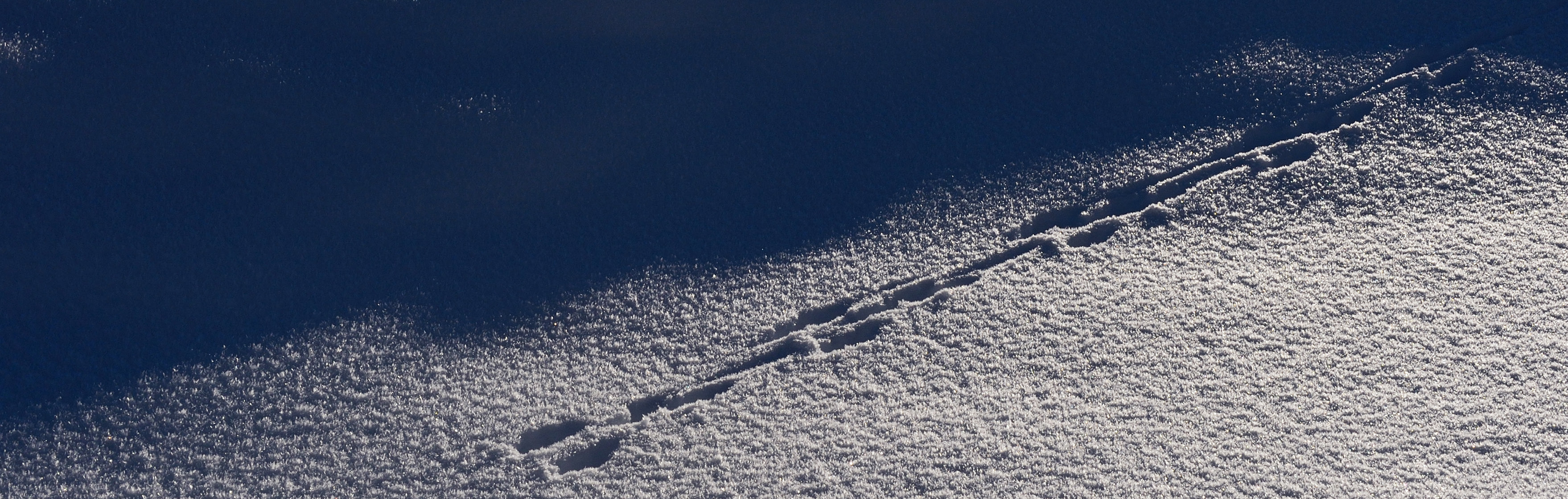
Tracks of European hare, Central Apennines
Staffan Widstrand / Rewilding Europe
Core Topics
- How hunting is regulated in Italy
- Excluding land from designated hunting areas
- Obligations of landowners within hunting areas
Key Takeaways
Table of Contents
6.
1. How is hunting regulated?
The Wildlife and Hunting Act1 (the “Hunting Act”), as amended to implement the EU Birds Directive2, establishes general rules for the protection of wildlife and sets out the national legal framework for hunting. It establishes the general principles governing hunting and gives power to regions and local authorities to establish local regulations.
The structure of the Hunting Act is reflected in local laws which tend to regulate hunting hand in hand with wildlife protection. Due to the broad mandate given to regions and local authorities under the Hunting Act, hunting regulations in Italy are very fragmented and are regulated by detailed rules issued by the regions
and local authorities. It is therefore not possible to provide a complete outline of the applicable rules in different areas and this note provides only an overview.
The general rule is that hunting is allowed if it does not conflict with wildlife conservation efforts or damage agricultural production.3 Only individuals who hold a relevant concession (i.e., a hunting licence) may practise hunting in accordance with applicable legal requirements and on designated hunting areas (including on unenclosed private land), as explained below.
2. How are hunting areas identified?
Hunting areas are defined by a general regional wildlife plan (piano faunistico-venatorio).4 Once the regional wildlife plan is approved, provinces also draw up detailed wildlife plans, outlining oases, parks, boundaries, etc.5
Both regional and provincial wildlife plans are valid for 5 years.
Land where hunting may be practised is divided into “designated hunting areas” (Ambiti Territoriali di Caccia – ATC), which are subdivisions of provincial land managed by a committee comprised of representatives of hunting, agricultural, environmentalist, and local government associations. The management committee is responsible for wildlife management and organising hunting in the “free hunting territory” (territorio libero di caccia), that is, all territory except for no-hunting areas and wildlife
conservation areas, such as oases and areas for wildlife repopulation and capture.
The process of allocating a certain area of land as a hunting area is left to the discretion of the local administration, and there is no tender procedure. Therefore, it is not the individual who asks for a given area to be classified as a hunting area; on the contrary, it is the local administration that identifies private land as a hunting area. An individual may then ask the administration to amend the wildlife plan so that their land is excluded from the designated hunting area (see Section 3 below).
Landowners or tenants whose land is used for planned hunting are entitled to a financial support based on the size, agricultural conditions, and/or environmental protection or enhancement measures in accordance with applicable regional laws.6
3. How can land be removed from a designated hunting area?
The general rule is that a landowner or tenant who wishes to prevent hunting on their land must submit a reasoned request to the Chairman of the Regional Council within 30 days of the approval of the wildlife plan.
The application is examined in the following 60 days and a decision must be adopted. This means that silence on part of the regional council cannot constitute rejection and, if the landowner or tenant does not receive a response within 60 days, they may invoke their right to obtain a decision.7
This procedure often proves to be complex for landowners, and it is not unusual that the application is eventually rejected by the local authority.
Also note that regional laws may set out additional rules. For example, in the Lazio, Abruzzo, Molise and Marche regions:
- Landowners or tenants of land must be informed that their land has been designated as an (i) oasis; (ii) wildlife repopulation or capture area; or (iii) public centre for re-establishing populations of native species and may challenge the decision within 60 days. However, even if these conservation areas are not established due to opposition by the landowners or tenants, hunting still cannot be practised on this land;8
- In exceptional cases and in view of particular environmental needs, provinces have the power to establish oasis and areas for repopulation and capture of wildlife (even temporarily), where hunting is forbidden.
If you wish to challenge land destination according to a wildlife plan may be challenged, it is important to act quickly as any challenge must be made within 30 days of the plan being published. After that period, there are no additional provisions (including in the Hunting Act or in regional laws in Lazio, Molise, Abruzzo, and Marche) which permit a wildlife plan to be challenged, including for the purposes of banning hunting on specific land. So, it is key for you to be aware of the plan and to act without delay to raise any challenge.
However, you should note that wildlife plans have a 5-year validity period. So, e.g., if a rewilding association buys the land after the deadline to challenge the plan has expired, they may only object once the next plan is published. Nonetheless, although it may not be possible to formally remove land from a designated hunting area, it may be possible to close off your land and effectively prevent hunters from entering (see section 6 below).
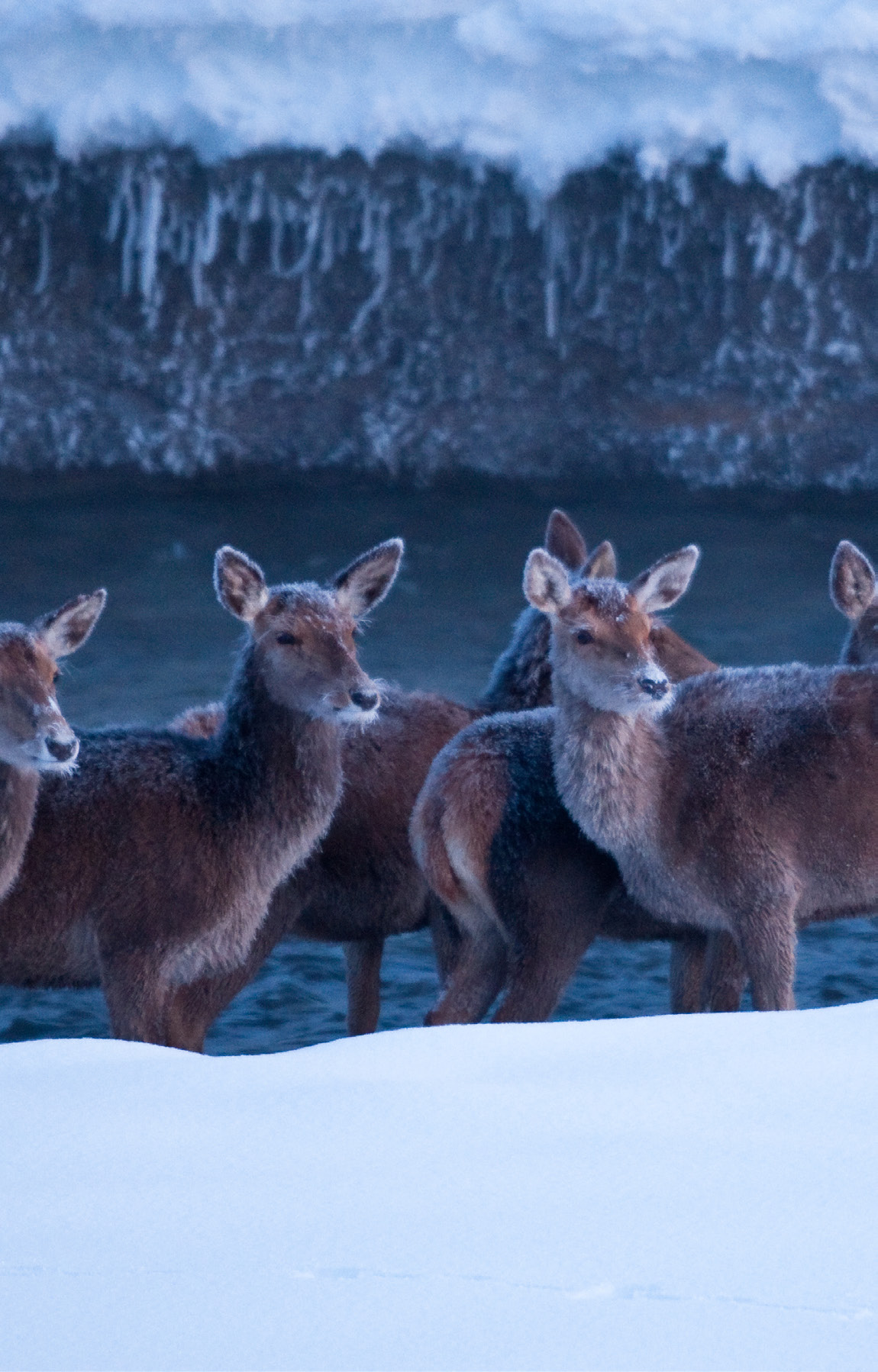
Herd of female Red deer on a frost morning, Central Apennines.
Bruno D’Amicis / Rewilding Europe
4. Who is permitted to hunt?
The following are required to practise hunting in Italy:
- a hunting licence;
- a hunting rifle licence;
- an insurance policy; and
- a hunting pass.9
Individuals must hold a hunting licence before hunting. A hunting licence is requested through an application and is obtained following public examinations before a commission appointed by the region in each provincial capital.10 Hunting licences are valid for 5 years and hunters may apply for renewal upon expiration.
The hunting pass is issued by the region of residence, which outlines the rules relating to the regional hunting calendar and the designated hunting areas where hunting is permitted.
After applying for and obtaining the above-listed documents, individuals will be able to hunt in the designated hunting areas in each region. Hunting licences are valid nationwide; however, the hunter needs to register with the region where they wish to practise hunting and pay a fee.11
5. What species can be hunted?
Hunting may take place in accordance with the annual hunting calendar published by each region, with a maximum of 3 weekly hunting days. The Hunting Act lists the species which can be hunted and periods when hunting can take place.12 Note that these may be amended by regions in respect to certain species due to region-specific environmental factors, after consulting the National Wildlife Institute (Istituto nazionale per la fauna selvatica).13
Hunting licences generally apply to all the listed species unless the licence is only granted in relation to certain species.
There are certain protected species in relation to which hunting is generally prohibited. These species
are listed in Annex D, letter A of Presidential Decree no. 357/1977. Pursuant to Article 8 of that Decree, it is prohibited to:
- deliberately capture or kill specimens of these species in the wild;
- deliberately disturb these species, particularly during the period of breeding, rearing, hibernation and migration;
- deliberately destroy or take these species’ eggs from the wild; and
- to destroy or damage the breeding sites or resting places of these species.
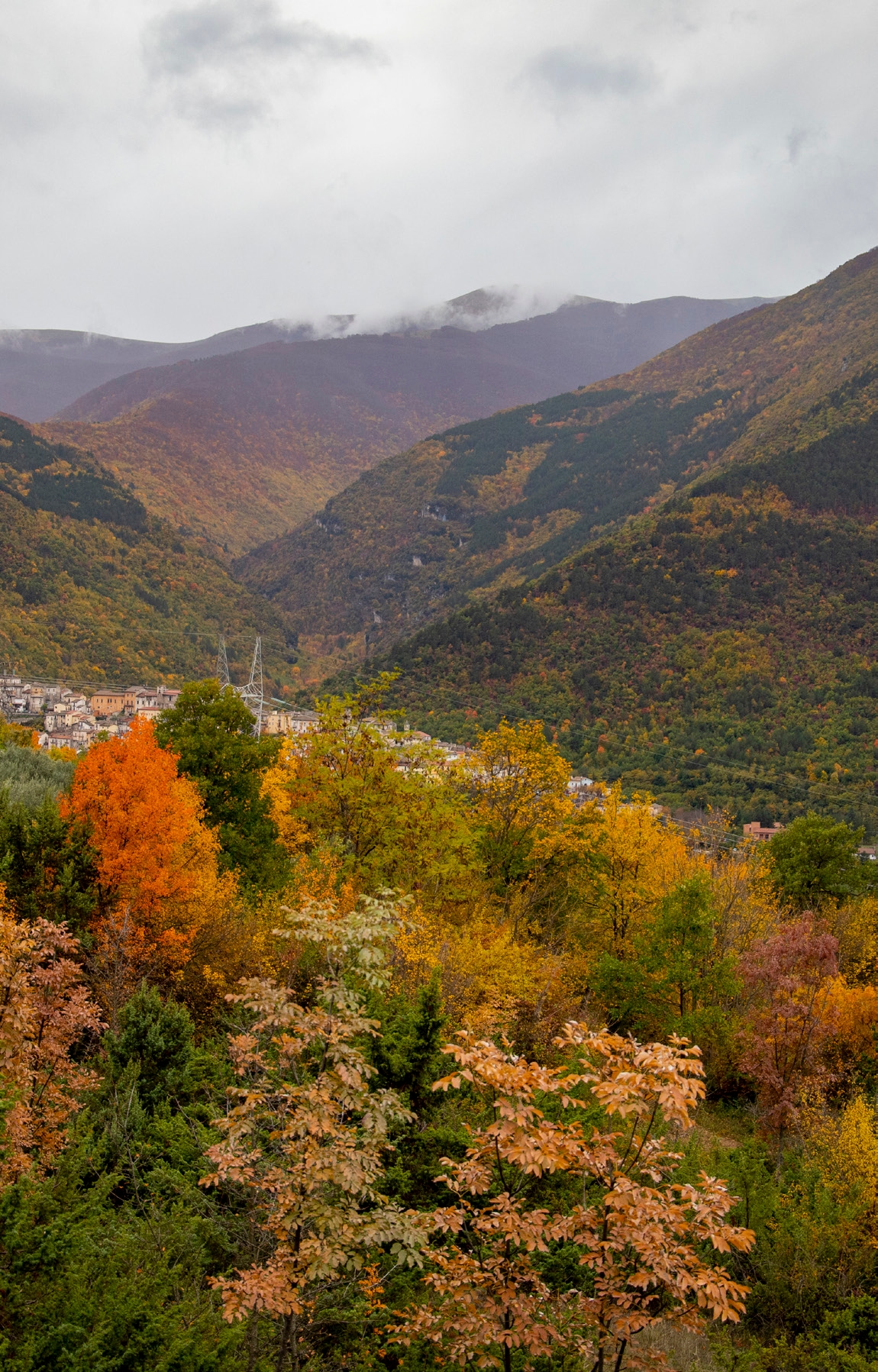
Pettorano Sul Gizio, Central Apennines.
Nelleke de Weerd / Rewilding Europe
6. Can I prevent hunters from entering my land?
Designated hunting areas are largely comprised of private land and only a small part is owned by local government (e.g., municipalities).
As a rule, landowners cannot prevent hunters from entering their land, unless:
- the land has not been classified as a hunting area;
- the hunter does not have a hunting licence;
- the land is cultivated, and hunting is likely to damage crops (this may be limited to specific times of the year and/or subject to signage obligations under regional law, e.g., in the Lazio region)14; or
- the landowner has enclosed their land in accordance with the Hunting Act.15
6.1. What do I need to do to enclose my land in accordance with the Hunting Act?
The Hunting Act lays down specific requirements for walls and fencing for land to be closed off to hunters. Specifically, the land must be enclosed by (i) a wall, wire mesh or other effective enclosure no less than 1.2 metres high; or (ii) by perennial streams or ponds at least 1.5 metres deep and at least 3 metres wide. In addition, landowners or tenants must put up appropriate signage at their own expense.16
Note that additional regional provisions may apply. For instance, in the Lazio, Abruzzo, Molise and Marche regions, the landowner or tenant must notify the regional council and/or province that their land is closed to hunters, indicating the relevant boundaries, and attaching a cadastral plan.17
7. If the hunting area is inside or adjacent to critical natural areas, is there any legal way to control what hunters can do?
However, since hunting should not compromise wildlife conservation efforts, additional safeguards may apply to land inside or adjacent to natural areas. The Hunting Act prohibits hunting:
- in public and private gardens, historical and archaeological parks and on land used for sports activities; and
- in national parks, regional parks, and nature reserves.18
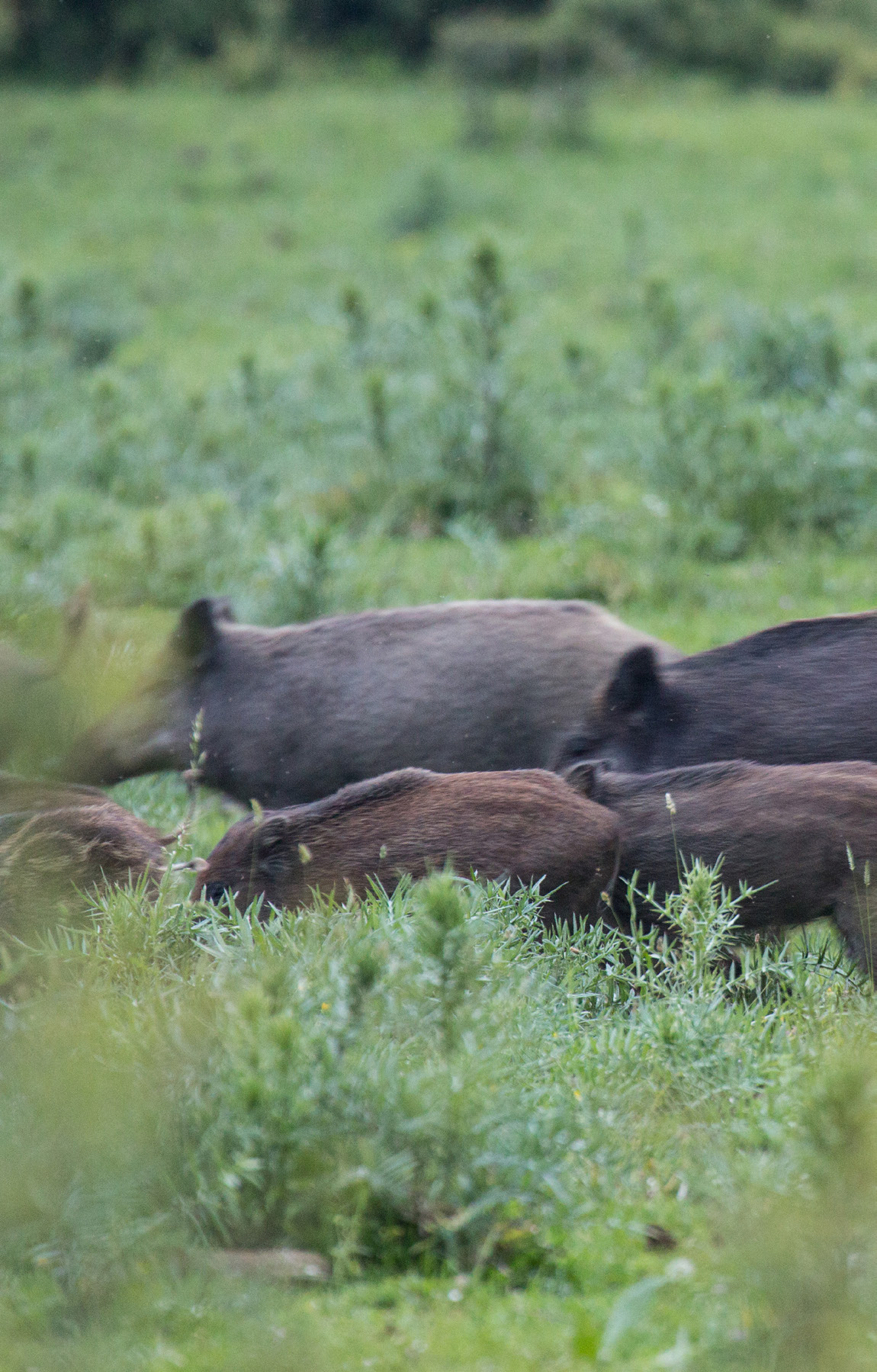
Wild boars crossing a meadow, Central Apennines
Bruno D’Amicis / Rewilding Europe
It is up to regions, in agreement with the management bodies of protected natural areas and the local authorities concerned, to regulate hunting, fishing, mining and environmental protection activities relating to adjacent land to protected areas.19
For example, in Abruzzo it is forbidden to:
- hunt migratory wild birds at a distance of less than 1km from mountain passes affected by migration routes, upon indication by the National Wildlife Institute;
- disturb wildlife in protected areas or wildlife farms using methods which are unreasonable or otherwise likely to drive them away or prevent them from resting or reproducing.20
As regards national parks in Abruzzo:
- only registered hunters residing in municipalities within the region are allowed to hunt on land adjacent to national or regional parks included in the designated hunting area21; and
- the management body of the protected natural area may restrict or prohibit hunting of particular species of animals in order to preserve local wildlife heritage.
ExampleLandowner A owns a property located in a hunting zone in the Lazio region. They don’t want any hunting to take place on their property:
a) Can they exclude their property from the hunting zone?
Landowner A can send a reasoned request to the Chairman of the Regional Council within 30 days of publication of the wildlife plan. The reason for not wanting to allow hunting on their land may be related to, e.g., safeguarding agricultural crops or because it would cause damage or disturbance to other activities of significant economic, social, or environmental interest. Once this 30-day period has passed, it is not possible to try to exclude land from a hunting zone until the next wildlife plan is published.
b) Are there any other mechanisms they could use to restrict hunting on their land, e.g., could they apply for their land to be protected for nature/designated as a refuge?
There are different types of protected land/wildlife refuge under Italian law – such as oasis, repopulation and capture areas, breeding centres, and state forests – and hunting is generally not permitted in these areas{
(in such cases, landowners should warn hunters through adequate signage).
Landowner A could advocate to have their land included in a protected area as this would restrict hunting on the land.
Regional and local government also have the power to establish protected areas under exceptional circumstances for environmental reasons.
c) Or can they just remain as part of the hunting zone but not undertake any hunting themselves?
Without taking any of the measures above, third parties could undertake hunting on the land anyway, even if Landowner A did not take part in hunting themselves.
d) Regardless of the solution adopted, is there a way to stop hunters crossing their property?
Landowner A may close off their land, e.g., with a wire mesh fence at least 1.2 metres high and put up a sign clearly stating that hunting is forbidden within the boundaries of the land. They would also need to inform the competent provincial authority, specifying the location and extent of the land, and attaching cadastral plan with a scale of 1:2,000 showing the relevant boundaries.
Landowner A owns a property located in a hunting zone in the Lazio region. They don’t want any hunting to take place on their property:
a) Can they exclude their property from the hunting zone?
Landowner A can send a reasoned request to the Chairman of the Regional Council within 30 days of publication of the wildlife plan. The reason for not wanting to allow hunting on their land may be related to, e.g., safeguarding agricultural crops or because it would cause damage or disturbance to other activities of significant economic, social, or environmental interest. Once this 30-day period has passed, it is not possible to try to exclude land from a hunting zone until the next wildlife plan is published.
b) Are there any other mechanisms they could use to restrict hunting on their land, e.g., could they apply for their land to be protected for nature/designated as a refuge?
There are different types of protected land/wildlife refuge under Italian law – such as oasis, repopulation and capture areas, breeding centres, and state forests – and hunting is generally not permitted in these areas{
(in such cases, landowners should warn hunters through adequate signage).
Landowner A could advocate to have their land included in a protected area as this would restrict hunting on the land.
Regional and local government also have the power to establish protected areas under exceptional circumstances for environmental reasons.
c) Or can they just remain as part of the hunting zone but not undertake any hunting themselves?
Without taking any of the measures above, third parties could undertake hunting on the land anyway, even if Landowner A did not take part in hunting themselves.
d) Regardless of the solution adopted, is there a way to stop hunters crossing their property?
Landowner A may close off their land, e.g., with a wire mesh fence at least 1.2 metres high and put up a sign clearly stating that hunting is forbidden within the boundaries of the land. They would also need to inform the competent provincial authority, specifying the location and extent of the land, and attaching cadastral plan with a scale of 1:2,000 showing the relevant boundaries.
8. What are the obligations of the owner of a hunting area?
ExampleLandowner A successfully excluded their land from the designated hunting
zoned, while wild boars remained on the land. The exclusion process took a
long time and until the decision came into effect, the land remained part
of the hunting zone. Because the property has no constant human presence
as Landowner A wants to intervene as little as possible, some boars
managed to escape.
1. What are the obligations of the hunting concession for damage caused
by the animals?
Since individuals generally have no control or duty of custody over
animals in the wild, Landowner A would generally not be liable for damage
caused by wild boars.
Anyone who suffers damage caused by wild boars may seek compensation from
government bodies. The hunting concession (i.e., designated hunting area)
has its own management body, which may have to pay:
- compensation for damage resulting from the regional authority’s failure
to manage and control wildlife according to the rules of tort
liability23; or
- compensation for damage to agricultural
production / grazing land / any structures on such land, in accordance
with Art. 14(14) and 26 of the Hunting Act and applicable regional laws,
e.g., for damage to neighbouring crops (including within the designated
hunting area) caused by wild boars, as well as the option of agreeing in
advance to fund any works necessary to prevent such damage. This type of
compensation is established under Art. 1173 (not Art. 2043) of the Civil
Code and may apply when damage is not otherwise reparable according to the
rules of tort liability, because of balancing two opposing interests,
i.e., an individual’s interest to protect their land and crops and the
public interest to protect wildlife, neither of which is entirely
expendable for the other.24
Note that that individuals have a duty to ensure minimum safety
conditions, especially when acting in a business / professional capacity
(e.g., a farmer who sells produce), by acting in an attentive, vigilant,
and responsible way. This means that the farmer who was aware of the risks
posed by wildlife or hunting nearby and seeks compensation for damages may
need to
prove that they have taken minimum care to prevent
damage to their crops.
2. Does it make a difference that a request to exclude the land from the
hunting concession was already in progress but not yet in place at the
time of events?
The rules outlined above in (a) would apply until the decision to exclude
Landowner A’s land becomes effective.
3. What would the regime be if the land has been already excluded from
the hunting concession at the time of the escape of the animals?
If the land is not a designated hunting area or protected wildlife area,
the hunting area management body would not have to pay damages and/or
compensation for damage from wildlife. The farmer may report the damage to
a local government authority and seek compensation pursuant to Art. 26 of
the Hunting Act.
Landowner A successfully excluded their land from the designated hunting zoned, while wild boars remained on the land. The exclusion process took a long time and until the decision came into effect, the land remained part of the hunting zone. Because the property has no constant human presence as Landowner A wants to intervene as little as possible, some boars managed to escape.
1. What are the obligations of the hunting concession for damage caused by the animals?
Since individuals generally have no control or duty of custody over animals in the wild, Landowner A would generally not be liable for damage caused by wild boars.
Anyone who suffers damage caused by wild boars may seek compensation from government bodies. The hunting concession (i.e., designated hunting area) has its own management body, which may have to pay:
- compensation for damage resulting from the regional authority’s failure to manage and control wildlife according to the rules of tort liability23; or
- compensation for damage to agricultural production / grazing land / any structures on such land, in accordance with Art. 14(14) and 26 of the Hunting Act and applicable regional laws, e.g., for damage to neighbouring crops (including within the designated hunting area) caused by wild boars, as well as the option of agreeing in advance to fund any works necessary to prevent such damage. This type of compensation is established under Art. 1173 (not Art. 2043) of the Civil Code and may apply when damage is not otherwise reparable according to the rules of tort liability, because of balancing two opposing interests, i.e., an individual’s interest to protect their land and crops and the public interest to protect wildlife, neither of which is entirely expendable for the other.24
Note that that individuals have a duty to ensure minimum safety conditions, especially when acting in a business / professional capacity (e.g., a farmer who sells produce), by acting in an attentive, vigilant, and responsible way. This means that the farmer who was aware of the risks posed by wildlife or hunting nearby and seeks compensation for damages may need to
prove that they have taken minimum care to prevent damage to their crops.
2. Does it make a difference that a request to exclude the land from the hunting concession was already in progress but not yet in place at the time of events?
The rules outlined above in (a) would apply until the decision to exclude Landowner A’s land becomes effective.
3. What would the regime be if the land has been already excluded from the hunting concession at the time of the escape of the animals?
If the land is not a designated hunting area or protected wildlife area, the hunting area management body would not have to pay damages and/or compensation for damage from wildlife. The farmer may report the damage to a local government authority and seek compensation pursuant to Art. 26 of the Hunting Act.
Endnotes
- Law no. 157 of 11 February 1992.
- Directive 2009/147/EC of 30 November 2009 on the conservation of wild birds.
- Art. 1(2) Hunting Act.
- Art. 10(6) and 14 Hunting Act.
- Art. 10(7) Hunting Act.
- Art. 15(1) Hunting Act.
- Art. 15 Hunting Act and Art. 2 of Law no. 241 of 7 August 1990.
- Art. 12 Lazio regional law no. 17 of 2 May 1995; art. 9 Abruzzo regional law no. 30 of 31 May 1994; art. 10 Molise regional law no. 19 of 10 August 1993; art. 12 Marche regional law no. 7 of 5 January 1995. However, note that if challenged by the landowners or tenants representing at least 40% of the total designated area, these types of conservation areas cannot be established.
- Art. 12 Hunting Act.
- Art. 22 Hunting Act.
- Art. 14 Hunting Act.
- You can find the lists here.
- Art. 18 of the Hunting Act.
- Pursuant to Article 15(7) of the Hunting Act, “the following are considered to be in current cultivation: land under herbaceous seed crops; specialised orchards; specialised vineyards and olive groves until the date of harvest date; land planted with soya, rice and corn for seed production until the date of harvest.“ See also art. 31(7) of Lazio regional law no. 17 of 2 May 1995.
- Art. 842 of the Civil Code.
- Article 15(8) Hunting Act.
- Art. 31 Lazio regional law no. 17 of 2 May 1995; art. 13 Abruzzo regional law no. 30 of 31 May 1994; art. 25 of Molise regional law no. 19 of 10 August 1993; art. 21 of Marche regional law no. 19 of 10 August 1993.
- Art. 21 Hunting Act.
- Art. 32 of the Protected Areas Act (Law no. 394 of 6 December 1991).
- Art. 43 Abruzzo regional law no. 30 of 31 May 1994.
- Art. 22(8) Abruzzo regional law no. 30 of 31 May 1994.
- Liability under Article 2052 of the Civil Code only arises where a person owns or uses an animal. Please refer to Rewilding in Italy: Third-Party Liability for more information.
- There is an ongoing debate as to the type of liability applicable in such cases: standard liability (Art. 2043 of the Civil Code) or strict liability (Art. 2052 of the Civil Code), which will impact how the burden of proof is established, as outlined in Rewilding in Italy: Third-Party Liability.
- Court of Potenza, 18 January 2023, no. 40; Court of Potenza, 26/2022, no. 1139.


Contact Us

Elsie Blackshaw-Crosby