

Rewilding in Italy
Liability for Animals
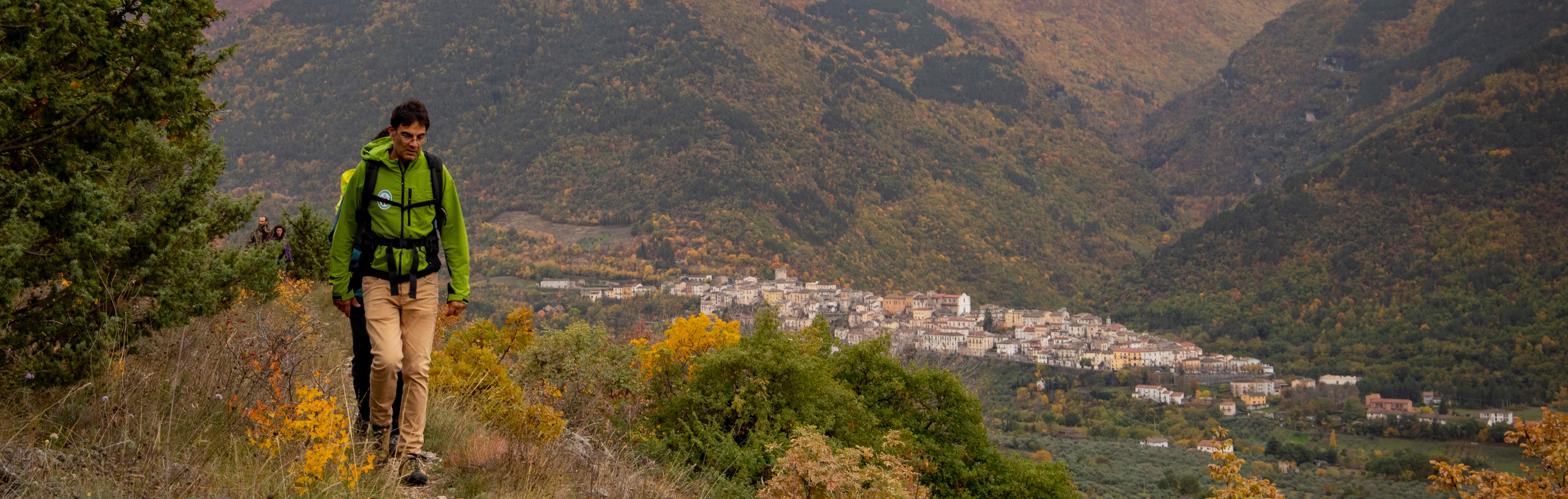
Hiker near Pettorano Sul Gizio, Central Apennines.
Nelleke de Weerd / Rewilding Europe
Core Topics
- Liability for kept and wild animals
Key Takeaways
Table of Contents
1. Liability for damage caused by animals
2. Am I liable for damage caused by animals under my control / custody?
Where animals are in a person’s custody (i.e., “sphere of control”), that person may be liable for damage caused by those animals to third parties or their property, according to the principles of strict liability1 (see Rewilding in Italy: Third-Party Liability).
To be in the custody of a person, or under their “sphere of control”, requires that the person exercises a degree of control over the animal (e.g., having it enclosed in a fenced area or otherwise limiting their range of movement) and has a duty to keep watch over the animal. This may therefore apply to the animals’ owners but also, e.g., to shepherds, keepers and others who have such temporary control and are able to make decisions about the animal at the relevant time.
In a rewilding context, animals such as taurus, horses or other cattle used for extensive natural grazing are likely to be considered under the practitioner’s “sphere of control” to the extent that they are either in fenced areas or their movement is controlled and/or they are
ear tagged or otherwise checked on for health and welfare purposes.
Such animals will still be considered under the person’s “sphere of control” even if they are lost or have escaped.2
Whoever has this kind of control and duty to keep watch may be liable for any damage the animals cause, subject to all the elements of tort liability being established (see Rewilding in Italy: Third-Party Liability). Damage caused by such animals gives rise to strict liability which means that there will be a presumption that the person responsible for the animal is liable, unless the harmful event is shown to have been caused by a fortuitous event.3 It would be up to the person responsible to show that they had not acted intentionally or negligently and that they had taken all steps that could be expected of an ordinary person in their position to avoid the harm occurring.
As in other cases of presumption of liability, there are cases where the owner / keeper may prove that they are not liable because there were facts to exempt liability. These can range from fortuitous events, i.e., the damage occurred because of unforeseeable circumstances, to circumstances presenting imminent and serious danger, where self-defence is necessary (see Rewilding in Italy: Third-party Liability).
Italian case law provides some guidance on what steps may or may not be adequate to rebut the presumption of liability. For example, in a case related to a dog the court found that the owner of the dog had a duty to prevent third parties being injured by the dog. The court found that simply putting up a sign saying “beware of the dog” was not sufficient to fulfil the duty to prevent the animal from causing harm to individuals.4 The reasoning of this case could be carried across to animals used in rewilding projects, suggesting that simply erecting a warning sign of the danger of animals may not be sufficient to fulfil the duty to prevent the animal causing harm to third parties.
Example 1
Landowner A has reintroduced European bison to their land to graze freely within a very large, fenced area. Accidentally, Landowner A leaves the gate open, and bison escape to the neighbouring land and damage crops and property. The neighbour’s partner leaves the house and surprises the bison on the crop field, falling and injuring themselves to the extent they need medical attention.
In this case, Landowner A may be liable for both the damaged crops and property and also the costs of the partner’s medical care, since the bison are under their control.5
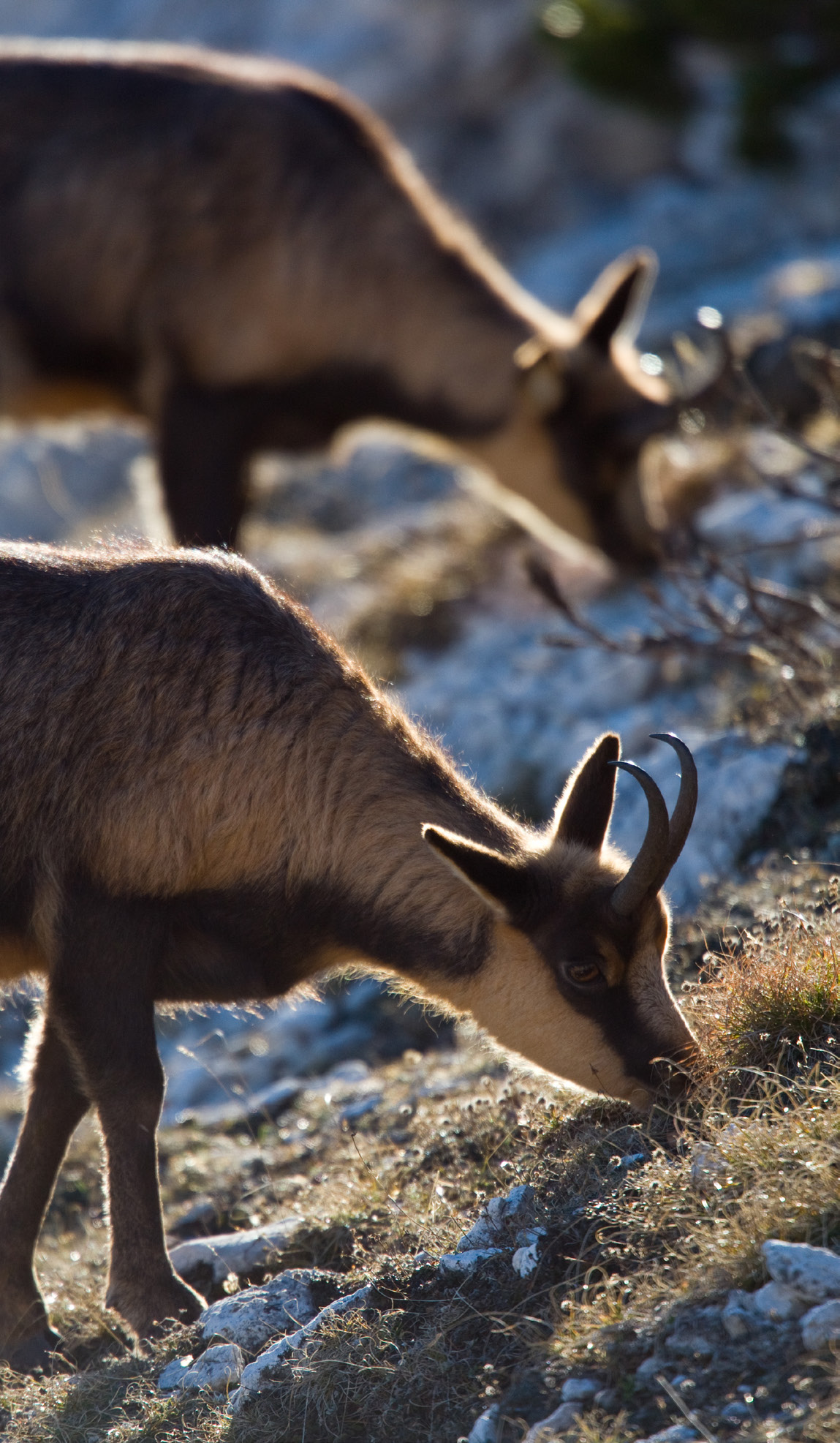
Apennine/Abruzzo chamois grazing, Abruzzo NP.
Bruno D’Amicis / Rewilding Europe
3. Am I liable if the animals escape?
A duty of custody exists in respect of enclosed animals, meaning that liability may arise if they escape and the general rules on burden of proof will apply (see Rewilding in Italy: Third-party Liability).
Animals escaping their enclosure on their own could be the result of an accident (e.g., if their escape was the result of natural causes, such as extreme weather phenomena), thus excluding liability.
In this case, it must be ascertained whether the escape (for instance, due to the gate opening) was foreseeable / avoidable or not. In practical terms, if you securely fenced your land, equipped the gate with a suitable lock, installed cameras, and despite this, the gate was opened, it can be reasonably argued that the event was unforeseeable and due to a fortuitous event. It is up to the court to establish and examine the factual circumstances.6
A third party opening the enclosure and freeing the animals would likely exclude any causal link between your actions, as the landowner, and the damages caused by the animals, therefore you would not be liable.
Example 2
Landowner B is undertaking a rewilding project which involves the reintroduction of deer. The deer are released onto the Landowner B’s land which is enclosed. One of the deer escapes the boundaries of the project and hits a passing car.
Landowner B may be liable if the boundaries were not properly fenced or otherwise enclosed, as the escape of the animals was likely not due to a fortuitous event, but due to Landowner B’s negligent conduct.7
Example 3
In the same scenario involving the reintroduction of deer, someone other than Landowner B intentionally opened a gate and let the deer escape.
In this scenario, Landowner B may be exempt from liability if they prove that (i) the deer escaping was due to the unforeseeable conduct of a third party that interrupted the casual link; and (ii) his duty of custody was correctly fulfilled (e.g., by installing video cameras, putting up a solid fence, etc. in respect to the size and nature of the animals kept on the project).
4. Am I liable for damage caused by wild animals?
Wild animals are those species of which there are populations living freely (“in a state of natural freedom”) permanently or temporarily on national territory (“animals in the wild”).8 Italian case law considers the aspect of “natural freedom” – i.e., a condition of living independently of man, as far as reproduction, feeding and shelter are concerned – as key in respect to the definition of “wild”.9 Game species living with such natural freedom can therefore be considered as wild animals.
In a rewilding context, animals which are released into the wild as part of a reintroduction or reinforcement project would be considered wild animals so long as their movement is in no way restricted by, e.g., by fences or enclosures.
The duty of custody, as outlined above, does not apply to animals in the wild, including animals released in animal sanctuaries and protected areas established under the Hunting Act.10
Animals in the wild are the national heritage of the Italian state.11 Based on this, once released into the wild, the animal becomes part of the Italian state’s national heritage, with no ownership rights or duty of custody for the person responsible for releasing them and thus no liability for any subsequent damage.
Similarly, local governments have no duty to take any protective measures or supervise animals in the wild and may only be liable for damage if they have received reports about or are otherwise aware of a particular danger and they have failed to take appropriate measures. This could be the case, e.g., if damage was caused by a wild boar on a public road.12
Where local government is considered liable for damage caused by animals in the wild, funds are allocated on a regional level to provide coverage for related compensation claims.13
Example 4
A rewilding project simply geotags wild animals already existing in the wild (they do not capture them, do not maintain them or in any way interfere with their freedom other than the minutes / seconds it takes).
In this case, the rewilding project would not be liable for any damage caused by the animals, as they are neither their owner nor their user of them.14
Example 5
A rewilding landscape starts a bear releasing program under appropriate government permissions. The bears are fitted with GPS collars and are then released into the wild to roam freely to wherever they feel like roaming. One week after the release of one of the bears, a beekeeper complains that one of the collared bears destroyed most of his beehives.
The rewilding project cannot be held liable for the conduct of the bears after their release, as they are neither owned nor used by the rewilding landscape and are freely roaming in the wild.15 Nonetheless, individuals have a general duty to stay vigilant and ensure minimum safety conditions. Since the bears were temporarily captured and kept for the time required to attach GPS collars, upon release, the rewilding landscape could potentially be liable for their handling of the release, despite obtaining the required permissions, if they did not take all appropriate measures to avoid putting people or property at risk or acted in a manner contrary to the general duties of care required to avoid liability. To avoid liability the rewilding project may prove that they took specific measures and handled the release with an appropriate degree of care, therefore the damage was caused by circumstances unrelated to the release.
As regards government, while local government has a general duty to manage and supervise the relevant territory, this does not entail a general duty to set up fencing, underpasses, ecoducts, etc. around all forested areas in order to avoid liability relating to wildlife.16 However, liability may arise for breaches of specific regional or local laws, or if a local government authority was in a position to prevent the damage or at least take measures to minimise any risks.
The rewilding project and/or the local government authority involved could potentially be liable in the above terms / jointly liable under Art. 2055 of the Civil Code, in the event that the conduct of both parties contributed to causing the damage and subject to the rules of tort liability (see Rewilding in Italy: Third-Party Liability).
In any case, the beekeeper may be entitled to government compensation outside the rules of tort liability, pursuant to Art. 26 of the Hunting Act.
Endnotes
- Art. 2052 Civil Code.
- Art. 2052 of the Civil Code. Court of Lucca, 1 March 2016, no. 446, confirmed by the Italian Supreme Court.
- Italian Supreme Court 20 July 2011 no. 15895
- Italian Supreme Court, 13 January 2017, no. 17133.
- Art. 2052 of the Civil Code.
- Italian Supreme Court no. 11598/2019.
- Art. 2052 of the Civil Code.
- Art. 2(1) of Law no. 157 of 11 February 1992 (the “Hunting Act”). Although the Hunting Act specifically concerns mammal and bird species, this is a broad definition that offers an insight into the criteria used to distinguish wild and domestic animals.
- Italian Supreme Court, criminal section, no. 2598 of 25 November 2003 relating to hunting, for which purposes pigeons were not considered wild animals. Similarly, Italian Supreme Court no. 23631, 9 April 2008. Regarding the aspect of freedom, see also Court of Terni no. 268 of 4 May 2020.
- Cfr. endnote 8, above.
- Art. 1 of the Hunting Act.
- Italian Supreme Court, 20 April 2020, no. 7969.
- Art. 26 of the Hunting Act.
- Art. 2052 of the Civil Code.
- Art. 2052 of the Civil Code.
- Italian Supreme Court, 21 November 2008, no. 27673.


Contact Us

Elsie Blackshaw-Crosby