



Rewilding in Italy
Obtaining Land and Legal Protections for Wild Land
Jerusalem sage flowering, Central Apennines
Bruno D’Amicis / Rewilding Europe
Core Topics
- How to obtain access to rural land in Italy for rewilding and nature restoration
- How to achieve long-term protection of the ecological gains achieved through rewilding
Key Takeaways
Table of Contents
1.
2.
3.
1. How can I obtain access to land for rewilding?
In Italy, the most common ways to be able to secure land are through ownership and lease agreements. There are also several methods which may be used which are known as in rem rights.
1.1. Right of ownership
Under Italian law, the right of ownership is the right to enjoy and dispose of an asset fully and exclusively within the limits and in compliance with the obligations established by the Italian Civil Code. It is therefore the best way to maximise control over an area of land. Right of ownership is characterised by (i) plenitude, meaning that the owner can do whatever he or she wants with the asset, including destroying it; and (ii) exclusiveness, meaning that the owner can prohibit any interference by third parties while enjoying the asset. It is the right that allows the widest sphere of powers that a person can exercise over a property. As well as purchasing or inheriting ownership of land, it is possible for a third party to acquire ownership through uninterrupted and undisputed possession for a certain period.
1.2. Lease agreements
Another common way of occupying land is by executing a lease agreement. A lease agreement is a contract by which one party (the landlord or lessor) undertakes to let another party (the tenant or lessee) use an asset for a given period in return for the payment of a fixed rent. The provisions applicable to lease agreements vary depending on the asset that is being leased. The
following categories of lease agreements may be particularly relevant to land leased for rewilding:
- leasing of non-urban real estate properties (beni immobili non urbani), such as rural buildings; and
- leasing of productive properties (beni produttivi), such as rural lands, companies, hotels, forests etc.
Regardless of these different regimes, all lease agreements have the following common characteristics:
- Duration: lease agreements may be executed for either a fixed or indefinite period (subject to minimum and maximum terms established by law for different types of assets)1;
- Obligations of the landlord: the landlord is obliged to deliver and maintain the leased property in a state which is fit for the agreed use. The landlord has to take care of all the necessary repairs except for minor maintenance works, which are the tenant’s responsibility;
- Tenant’s obligations: the tenant must use the property according to the agreed use and with diligence. At the end of the tenancy period, the tenant must return the leased property in the same state in which it has been received. No compensation is due by the landlord to the tenant for improvements made to the leased property unless the tenant has carried them out with the landlord’s consent. In any case, the tenant is entitled to remove any additions at the end of the tenancy period. If the landlord wishes to retain the additions, the tenant is entitled to compensation;
- Sale of the leased property and sublease/ assignment: the sale of the leased property does not result in the termination of the agreement. Unless otherwise agreed, the tenant may sublease the leased property - in whole or in part - but cannot assign the lease to a third party without the landlord’s consent;
- Renewal: if the lease is agreed for a limited time, the agreement terminates automatically with the expiry of the term unless renewed by the parties. Such renewal can be implied by the landlord allowing the tenant to continue enjoying the leased property. In the case of a lease without a term, either party may terminate the agreement by serving a termination notice before the expiry of the term provided by law (in the event of failure to give notice, the agreement is tacitly renewed).
1.3. Civic Uses Land
Civic uses (usi civici) establish a type of collective ownership that allows the local community to access to the land for carrying out different activities (i.e., animal grazing, picking plants or mushrooms, or recreational walking), representing a common institute in the mountainous Italian regions.2
Civic uses’ origins are ancient, mostly related to the needs of families and local communities living off the land. However, under modern legislation, this legal tool became more linked to ecological and environmental protection objectives.
For instance, the Abruzzo region aims to use civic uses to support the personal development of the local population by increasing forestry and animal husbandry in the mountains and high hills, as well as safeguarding and enhancing the environment of inland areas with activities such as forestation for hydrogeological purposes, clearing and improving the fertilization of pastureland.3
People living in the municipality where civic uses lands (terreni ad usi civici) are located have a right to share the access and enjoyment of such lands. The Abruzzo region’s civic uses body (Ente Usi Civici della Regione Abruzzo) plans and coordinates activities involving civic uses lands (terreni ad uso civico), according to regional civic uses plans (piani regolatori degli usi civici), and assesses proposals presented by individuals and associations concerning their possible use.4 If you live in civic uses land you might benefit from the right of way in its various forms such as taking your animals grazing there, bringing a group of friends for a walk or hosting a workshop on mushrooms.
If you are not part of the local community, you can get in touch with the local authorities in charge of civic uses to find out how to access the civic uses lands, potentially for rewilding activities. In this regard, you can benefit from specific regional provisions regarding, among others, the sustainability of civic uses land, providing for detailed procedures on the change of destination and open access rights of the local community.
1.4. Other in rem rights
Other in rem rights that can grant the holder the right to occupy land are the following:
- Easement (servitù): an easement is a burden over land for the use of another adjoining land belonging to a different owner. This may be particularly useful for rewilding activities and is discussed further below;
- Right of use (diritto d’uso): entitles the holder to the use of a property and to the benefits therefrom, but only to the extent of his personal family needs. This may be particularly useful for rewilding activities and is discussed further below;
- Surface right (diritto di superficie): the landowner grants the right to build and maintain a building over its land in favor of a third party, which becomes the owner of the building. In the event that the right of building is established for a specific duration, upon its expiry, the landowner becomes the legal owner of the building. This is unlikely to be relevant to rewilding activities as it only provides rights in relation to buildings;
- Emphyteusis (enfiteusi): grants the holder of the right with the same rights that the owner would have. The beneficiary shall (a) improve the land (meaning to increase the value or productivity of the land) and (b) pay the grantor a periodic rent (in money or in kind). The holder of the right may purchase full ownership of the land by paying the
grantor an amount equal to the net present value of future rents. Emphyteusis can be either perpetual or temporary; in the latter case, it shall expire within 20 years. Emphyteusis is an obsolete concept, and it is unclear whether it could be used in practice to facilitate rewilding;
- Beneficial interest (diritto di usufrutto): grants the beneficiary the right to enjoy the property, as long as he/she respects its economic destination, which is a concept related to the concrete function of the land (for instance, if you have the right of beneficial on a land functional to grazing, you cannot change its destination and use the land as a park). This right shall alternatively expire within (a) the lifetime of the beneficiary if granted to an individual; (b) 30 years from its registration if the beneficiary is a legal entity. As rewilding will often alter the economic destination of land, this is not considered further in this note, but you should take further advice on securing land using a beneficial interest if the economic destination of the land is not going to change;
- Right of habitation (diritto di abitazione): entitles its holder to live in a house, but only to the extent of his personal and family needs.
Unless you take specific action to prevent it happening, it is likely that at the end of your ownership or other management of land, there will be nothing to prevent it being degraded by future owners/managers.
In other jurisdictions, private legal mechanisms (such as conservation easements) offer long term protection for wild land. For example, in the USA conservation easements are legally binding agreements between a landowner and a land trust or government agency by which the landowner voluntarily agrees to constrain the exercise of its rights over the land for the purpose of achieving certain conservation objectives5 (e.g., maintain and improve water quality, foster the growth of healthy forest, maintain, and improve wildlife habitat and migration corridors etc.).6
Conservation easements do not exist in Italy. However, if you take time to plan and think about this issue, there are certain legal structures that can be put in place to ensure longer term protection in Italy. The appropriateness and feasibility of each will depend on the specific facts in each case.
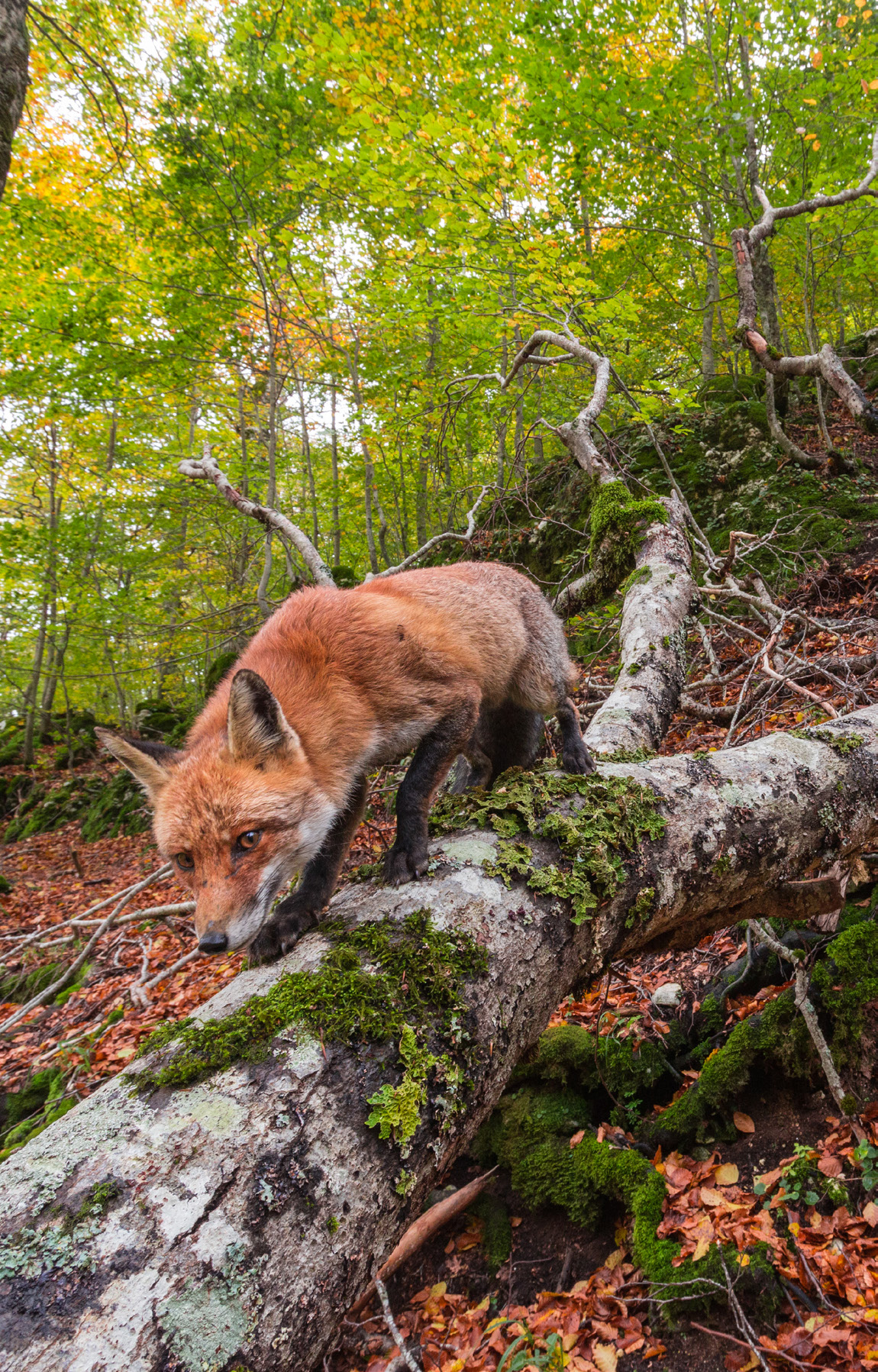
Red fox in beech forest, Central Apennines
Bruno D’Amicis / Rewilding Europe
2. Why is it important to think about the long-term protection of wild land and which of these legal structures offers the best chance of protecting wild land in the future?
2.1. Lease agreements
Although very common, lease agreements offer no guarantee of long-term protection of the land because at the end of the lease, the use of the land will revert to the landowner and they can do anything they wish to the land (within the law, of course). We are not aware of any way of preventing this reality when using lease agreements.
It is also important to understand that as a standard term, lease agreements require the lessee to return the land in the same state in which they acquired it at the start of the lease. If this were enforced by the landlord at the end of a e.g., 30-year lease, you might need to destroy all of the ecological gains made on the land during your tenure.
It may be possible to specifically agree with the landlord before entering a lease that this standard term will not apply to your lease, and this should be recorded in the lease agreement itself.
2.2. Ownership and destination deeds
The owner of land has control over how it is used and managed during their ownership. The issue in terms of long-term protection arises when there is a change in ownership, either because the owner decides to sell the land or when they die, and it is inherited by others.
There are two options to achieve long-term protection when land is owned:
- Consider whether the land could be owned by a legal entity rather than an individual. This can offer greater security than personal ownership, especially if the legal entity is established for the express purpose of rewilding or wider environmental protection purposes as this will constrain its use of the land (including its ability to sell the land). The details of the different forms of legal entity to use and additional protections to put in place in the case of the entity’s dissolution are beyond the scope of this note and legal advice should be sought on this.
- Registering a destination deed against the land, as described below. A destination deed could be used either by a practitioner over their own land or thirdparty owners of land could register a destination deed for a rewilding beneficiary for up to 90 years. You therefore do not need to own your own land to benefit from destination deeds.
A destination deed allows a landowner (“disposer”) to remove one or more real estate properties from their assets and restrict how and for what purposes they can be used (referred to as the “destination” of the land) for a maximum of 90 years. The prescribed
destination must result in interests worthy of protection.7 As this is a relatively new legal concept, there is no clear definition of what this means in practice, but it seems that environmental protection or ecosystem restoration should be considered worthy of protection. However, legal advice should be taken to ensure that the specified destination satisfies this legal requirement.
By ‘imprinting’ the destination restriction on specific assets (entered into the public register where the real estate property is also registered), these assets are ‘isolated’ from the ‘general’ assets owned by the person, to allocate them to pursue the purpose for which the destination deed was executed.
Such interests may be registered for either a definite or indefinite beneficiary. A rewilding association could, for example, be a beneficiary of a destination deed. Once registered at the land registry, the destination deed will be enforceable against third parties, including future owners of the land who will have to manage the land in accordance with the terms of the destination deed.
The destination deed must include:
- a disposer;
- one or more beneficiaries;
- one or more real estate assets that constitute the object;
- a purpose/specific destination;
- the duration (for a period not exceeding ninety years or the lifetime of the beneficiary);
- possibly and preferably a party implementing the purpose (the trustee).
A destination deed may be structured in one of the following ways:
- unilateral: the disposer bounds the asset to a particular destination. In this case it is not necessary to enter into an agreement, but it will be necessary to execute a unilateral deed;
- bilateral: when the ownership of the property is transferred to a beneficiary bounded by a constraint on its destination. In this case, the beneficiary is subjected to legally binding obligations as well as obligations attached to the assets acquired and a specific agreement between the parties shall be executed.
The content of the destination deed must be duly authenticated and registered at the Land Register. The required form is that of a public notarial deed. The destination deed shall comply with the form requirements imposed by the law to be considered validly existent.
Example
Landowner A recently bought a piece of land with some of the remaining old-growth forests in the country. Besides owning it, she does not intend to interfere with the land. She also plans to secure its wilderness to ensure that no one, including her descendants, can change her vision for the property. She is especially concerned about the possibility of her heirs, who do not have the same sensitivity towards nature, felling the trees for timber. Are there any private law instruments to protect the land to the level intended by the landowner?
Landowner A may decide to register a destination deed over the parcel of land, imposing a destination restriction on the selected real estate property, the scope of which must protect interests worthy of protection (i.e., in this case, the conservation of wilderness and environmental protection).
The destination deed must be entered into the register so that beneficiaries are allowed to enforce the destination restriction against future owners, including the descendants.
2.3. Easements rights
Regular easements
You may wish to consider using a regular easement (referred to in this note simply as “easements”) if you own an area of land that is close to land owned by a third party who has agreed for you to use the land as a continuation of your project.
The key benefit of establishing an easement compared to e.g., entering a lease, is that it can bind any future owners of the neighbouring land. Not only does this give you longer term security to plan your activities, it also provides greater certainty that the ecological improvements achieved will not be destroyed in the future.
In the Example below, we explain how an easement could be used when Landowner A wants to give the owner of a neighboring land (Landowner B) the right to use Land A as an extension of the permanent grazing pasture for taurus.
Irregular easements
Irregular easements allow landowners to grant a third party a right to use their land for a specific purpose. The main drawback is that the agreement will end on the death of the owner or if they sell the land. It therefore offers very little security of tenure or of longterm protection for the land.
In the example below, we explain how an irregular easement could be used where a landowner wishes to grant a rewilding charity the right to manage his land in accordance with rewilding principles.
What are easements?
Broadly speaking, an easement is the right to use and/or enter onto the property of another without owning it. Although traditionally easements served exclusively as tools to reconcile interests of neighbouring land (e.g., to grant the right of passage over another person’s land), they have developed into a wider sets of rights, including the granting of access rights to individuals (personal easements).
Under Italian law, an easement (diritto di servitù) consists of a limitation imposed on a land (the servient land) for the benefit8 of another adjoining9 land (the dominant land) belonging to a different owner. The Italian Civil Code provides a general definition of what an easement is, followed by a list of types of easements.
There are some types of easements specifically identified in the Italian Civil Code that may be particularly relevant for rewilding activities. For example, easements providing for grazing rights (servitus pascendi) specifically allow for the grazing of cattle on neighbouring land. This is discussed further in the Example below.
In addition, there are irregular easements that are not identified in the Civil Code and operate under a different legal regime.
How can easements be created?
Regular easements
If you wish to create an easement as part of your rewilding project, it is likely that you will need to enter into an agreement with the owner of the other area of land (servitù volontarie).These types of easements may be freely negotiated by the parties as long as the agreements fall under the definition of easement as provided under the Italian Civil Code, i.e. the agreement contains all the elements required by law.
Easements may only exist where the servient and dominant land are close to each other. This means that to take advantage of easements, you must own an area of land close to the area of land over which you wish to establish an easement.
To be legally binding the easement agreement must set out: (i) the burden imposed on one land (the servient land); and (ii) the utility gained by the other land (the dominant land).
To be valid, easement agreements must be executed in written form, either by notarial public deed or written private agreement (scrittura privata).10
To be enforceable against third parties and future owners, the easement must be registered at the Land Register.
Irregular easements
These are personal agreements between the landowner and a third party. The third party does not need to own any land to benefit from the easement. It would be good practice to record the terms of what has been agreed in writing and for the parties to sign the agreement. However, there are no legal formalities and irregular easements do not need to be registered at the Land Register. Irregular easements are not binding on future owners and are personal to the beneficiary.
Example
An example of an irregular easement would be an agreement allowing Landowner A to cross Landowner B’s land to go fishing. The parties may wish to record this in writing, so the terms of such agreement are clear, but it is not necessary to do so. As an irregular easement, it cannot be registered at the Land Registry and cannot be enforced by anyone other than Landowner A. In addition, if Landowner B sells their land, Landowner A will need to make a new agreement with the new landowner to allow him access for fishing.
Other legal easements
There are also certain types of easements that are imposed by law (servitù coattive) e.g., where land has no direct access to a public way, the adjacent landowner will have to permit their neighbours to cross their land to reach the public way.
If the servient land is sold, must the new owner respect the easement?
Regular easements
Easement rights are binding not only between the original parties to the agreement but also with respect to future owners of the lands, meaning that the right runs with the land in case of transfer.11 This only happens, however, if the easement is properly registered at the relevant Land Register (Conservatoria dei Registri Immobiliari) prior to any transfer of ownership of the servient land being registered.12 If the easement is only registered after the servient land has changed ownership, it will not be binding on that new owner.
Irregular easements
Irregular easements do not bind future owners of the land.
When do easements end and how can they be terminated?
Easements may specify how long they will last. In such cases, the easement will end at the expiry of that period unless renewed.
The parties to a regular easement can specify that it lasts forever, making it a very powerful tool for the long-term protection of land in relevant circumstances.
If an easement is perpetual, it may be terminated if:
- the beneficiary of the easement (i.e., the owner of the dominant land) agrees to waive their rights;
- the two parcels of land become owned by the same person or entity; or
- if the rights granted under the easement are not used for 20 years.
ExampleLandowner A bought an area of land and plans to
convert it into a permanent meadow covered with
native forage herbs and grass. She also plans to
release a herd of Tauros to graze the land. She would
ideally like to ensure that this area of land cannot be
degraded or reverted to e.g., general agricultural land
by future owners.
The land is adjacent to another area of land, owned by
a neighbour, the soil characteristics of which are like
Landowner A’s land. The neighbour (Landowner B)
doesn’t use her land for any particular purpose and
would like to support Landowner A endeavours. The
parties agree that the neighbouring land should be
used as an extension of the permanent grazing pasture
for the taurus and will also be converted into a
permanent meadow for this purpose.
What type of agreement could be put in place
between the two landowners to record and enact
such collaboration in practice? How would such
an agreement affect the future use of each area
of land?
Such an agreement can be achieved through an
easement as it perfectly falls under the definition of
easement provided by the law. Indeed, the “grazing
rights easement” (so-called servitus pascendi),
belongs to the category of rustic easements, and
consists in the right to lead cattle to graze on
someone else’s land.13
In this example all the criteria required by the legal
definition of easement are met:
a burden is imposed over Landowner B’s land (the
servient land), which allows Landowner A to use
Landowner B’s land for grazing;
the utility of the neighbouring land is represented
by Landowner A’s right to use not only their land,
but also Landowner B’s land for grazing; and
Landowner A’s and Landowner B’s land are
neighbouring lands.
Such an easement must be in writing14, and
registered15 for it to be enforced against future
owners and third parties. The use of the easement
is regulated by its title; when the title is lacking, it
is regulated by law.
Once the easement is established, the burden
imposed on the servient land and the consequent
utility of the dominant land become perpetual,
unless one of the circumstances described above
occurs.
While this easement is in force, both Landowners A
and B must keep the land as a permanent meadow
and be used for the grazing of taurus.
- Should/could the agreement refer to the
conservation purpose of this collaboration?
Yes, the relationship that exists between the
parcels of land, and the consequent utility, is
an essential pre-requisite for the constitution of
the easement.Are there time limits for such an agreement?
How long can it remain in place, and will it bind
subsequent owners of either/both parcels of land?
Can any future owners of either parcel of land bring
such agreement to an end?
Once the easement based on an agreement has
entered the Land Register, it becomes enforceable
against third parties, binding subsequent owners of
the servient land. There is no maximum time for
easements (unless otherwise agreed between the
parties to the agreement) and therefore the parties
could choose to impose the restriction in perpetuity.
The easement may expire if a duration is provided
for in the title. On the other hand, if the easement
is perpetual, it can be extinguished in two
alternative ways: by waiver of the beneficiary or by
non-use of the easement for twenty years (e.g.,
other people’s cattle don’t graze the land for 20
consecutive years).
In case of dispute, the landowner of the dominant
land may also request the court to verify the
existence of their easement right or stop any
disturbance or intrusive acts. The landowner of the
servient land may also request the court to order
that the land is restored to pristine condition and
be compensated for any damages.
Landowner A bought an area of land and plans to convert it into a permanent meadow covered with native forage herbs and grass. She also plans to release a herd of Tauros to graze the land. She would ideally like to ensure that this area of land cannot be degraded or reverted to e.g., general agricultural land by future owners.
The land is adjacent to another area of land, owned by a neighbour, the soil characteristics of which are like Landowner A’s land. The neighbour (Landowner B) doesn’t use her land for any particular purpose and would like to support Landowner A endeavours. The parties agree that the neighbouring land should be used as an extension of the permanent grazing pasture for the taurus and will also be converted into a permanent meadow for this purpose.
What type of agreement could be put in place between the two landowners to record and enact such collaboration in practice? How would such an agreement affect the future use of each area of land?
Such an agreement can be achieved through an easement as it perfectly falls under the definition of easement provided by the law. Indeed, the “grazing rights easement” (so-called servitus pascendi), belongs to the category of rustic easements, and consists in the right to lead cattle to graze on someone else’s land.13
In this example all the criteria required by the legal definition of easement are met:
a burden is imposed over Landowner B’s land (the servient land), which allows Landowner A to use Landowner B’s land for grazing;
the utility of the neighbouring land is represented by Landowner A’s right to use not only their land, but also Landowner B’s land for grazing; and
Landowner A’s and Landowner B’s land are neighbouring lands.
Such an easement must be in writing14, and registered15 for it to be enforced against future owners and third parties. The use of the easement is regulated by its title; when the title is lacking, it is regulated by law.
Once the easement is established, the burden imposed on the servient land and the consequent utility of the dominant land become perpetual, unless one of the circumstances described above occurs.
While this easement is in force, both Landowners A and B must keep the land as a permanent meadow and be used for the grazing of taurus.
- Should/could the agreement refer to the conservation purpose of this collaboration?
Are there time limits for such an agreement? How long can it remain in place, and will it bind subsequent owners of either/both parcels of land? Can any future owners of either parcel of land bring such agreement to an end?
Once the easement based on an agreement has entered the Land Register, it becomes enforceable against third parties, binding subsequent owners of the servient land. There is no maximum time for easements (unless otherwise agreed between the parties to the agreement) and therefore the parties could choose to impose the restriction in perpetuity.
The easement may expire if a duration is provided for in the title. On the other hand, if the easement is perpetual, it can be extinguished in two alternative ways: by waiver of the beneficiary or by non-use of the easement for twenty years (e.g., other people’s cattle don’t graze the land for 20 consecutive years).
In case of dispute, the landowner of the dominant land may also request the court to verify the existence of their easement right or stop any disturbance or intrusive acts. The landowner of the servient land may also request the court to order that the land is restored to pristine condition and be compensated for any damages.
2.4. Right of use
By granting a right of use, a landowner can grant a beneficiary (either an individual or a legal entity) the right of use over their land, without transferring the title of ownership.
According to Italian law, the right of use (diritto d’uso) entitles the holder of such right to use a property16 and to keep the benefits (i.e., goods naturally created by the property), but only to the extent of his and his family’s personal needs.
The broad definition provided by law can be interpreted to make it suitable for legal entities (e.g., companies, associations, or foundations), which may be designated as the beneficiaries of a right of use although such legal entities won’t be able to benefit from the “fruits” of the property.
A right of use is a personal right that cannot be transferred to third parties.
The beneficiary may be granted: (i) the right to occupy and use the land, which may be enforced against third parties; and (ii) the right to enhance the property or to install additional elements on it. At the same time, the holder shall respect the economic destination of the property and take care of it. On the other side, the owner shall refrain from interfering with the holder’s enjoyment of the property.
In the example below, we provide an example of how a right of use might be used in a situation where a landowner wishes to grant a rewilding charity with day-to-day management control over his land for a particular purpose.
How long can a right of use last?
If the beneficiary of the right is a legal entity, the right shall expire within 30 years from its registration.
Is a right of use enforceable against future owners of the land?
A right of use may be entered into the Land Register and therefore, it may be enforced by the beneficiary against third parties (including future owners) for 30 years from its registration (or any shorter term specified).
Are there any formalities to create a right of use?
To ensure the validity of the agreement, it must be executed in written form and registered within the competent Land Register for its enforcement vis-à-vis third parties.17

Stonecrop, Central Apennines.
Bruno D’Amicis / Rewilding Europe
ExampleA landowner wants to allow a rewilding charity to rewild their estate and
to ensure that once it is rewilded it can’t be returned to its earlier,
nonrewilded state. The landowner, however, wishes to retain ownership of
the land. Both parties want to guarantee that the land remains secured for
rewilding purposes, under the management of the rewilding charity,
regardless of who inherits the land once the landowner dies. The rewilding
charity suggests an agreement whereby it would have a right to manage the
land in perpetuity which would give it control over the management of the
land even if the underlying ownership changes in the future. Could this
type of arrangement work in Italy? If so, what would its key features need
to be for it to be binding e.g., would payment by the rewilding charity be
required? If this type of arrangement isn’t feasible, is there another way
that the landowner could achieve his goals?
The most robust solution available would be for the landowner to register
a destination deed by which the landowner (the “disposer”) maintains
ownership of the land, imposing a constraint on the land use by entitling
the rewilding charity to manage the land in accordance with the defined
“destination” (the terms of which could be agreed between the parties and
could refer to
e.g., ecological restoration in accordance with rewilding
principles). By doing so, the landowner maintains the
ownership and allows the rewilding charity to take care
of the land for up to 90 years. The rewilding charity
would maintain this right even if the ownership of the
land changed during that period.
If it is not possible to enter a destination deed, the
parties could also consider using an irregular easement
or a “right of use”:
Irregular easement: The landowner could grant
the rewilding charity with a personal right over the
land in the form of an irregular easement.
However, this right would not be enforceable
against any future owners of the land, and it
therefore does not offer much security.
Right of use: The landowner could grant the
rewilding charity a “right of use” over his land.
As the rewilding charity is a legal entity, the right
of use would last for 30 years and must be
registered at the Land Register to make it
enforceable against any future owners of the land
during that 30-year period.
A landowner wants to allow a rewilding charity to rewild their estate and to ensure that once it is rewilded it can’t be returned to its earlier, nonrewilded state. The landowner, however, wishes to retain ownership of the land. Both parties want to guarantee that the land remains secured for rewilding purposes, under the management of the rewilding charity, regardless of who inherits the land once the landowner dies. The rewilding charity suggests an agreement whereby it would have a right to manage the land in perpetuity which would give it control over the management of the land even if the underlying ownership changes in the future. Could this type of arrangement work in Italy? If so, what would its key features need to be for it to be binding e.g., would payment by the rewilding charity be required? If this type of arrangement isn’t feasible, is there another way that the landowner could achieve his goals?
The most robust solution available would be for the landowner to register a destination deed by which the landowner (the “disposer”) maintains ownership of the land, imposing a constraint on the land use by entitling the rewilding charity to manage the land in accordance with the defined “destination” (the terms of which could be agreed between the parties and could refer to
e.g., ecological restoration in accordance with rewilding principles). By doing so, the landowner maintains the ownership and allows the rewilding charity to take care of the land for up to 90 years. The rewilding charity would maintain this right even if the ownership of the land changed during that period.
If it is not possible to enter a destination deed, the parties could also consider using an irregular easement or a “right of use”:
Irregular easement: The landowner could grant the rewilding charity with a personal right over the land in the form of an irregular easement. However, this right would not be enforceable against any future owners of the land, and it therefore does not offer much security.
Right of use: The landowner could grant the rewilding charity a “right of use” over his land. As the rewilding charity is a legal entity, the right of use would last for 30 years and must be registered at the Land Register to make it enforceable against any future owners of the land during that 30-year period.

Oak leaves, Abruzzo, Italy
Bruno D’Amicis / Rewilding Europe
Summary
The following table summarises the key characteristics of the various legal structures we have discussed which can be used to enhance the long-term protection of the land. The facts of each case will determine which of them will be possible or most suitable.
| Legal structure | Overview / purpose | Enforceability | Expiration | Form |
|---|---|---|---|---|
| Destination deed | The landowner is allowed to retain ownership of the property while entrusting a third party with the right to take care of the land in accordance with its “destination” by means of a mandate of administration. The destination must be entered into the register to make it enforceable by beneficiaries and any other interested parties. | Enforceable against future owners, if registration at the Land Register occurs before the registration of any deed transferring ownership of the land | Max 90 years or, alternatively, the lifetime of the beneficiary (the latter of which is only for physical entities). | Written |
| Easement rights | Easements allow the landowner to retain ownership of the land while granting a neighbouring landowner the right to use the land for a prescribed purpose. To be valid, easements must fall under the definition provided by the law (i.e., the burden imposed on the servient land increases the utility of the dominant land). | Enforceable against future owners if registration at the Land Register occurs before the registration of any deed transferring ownership of the land | Perpetual, unless:
| Written |
| Irregular easement | If the relationship involves a parcel of land and an association, lacking the proximity between two neighbouring lands, parties may nonetheless stipulate an agreement to grant the association the right to take care of the land. This will be an irregular easement. | Only enforceable against the original parties (cannot be registered at the Land Registry). |
| Not required |
| Right of use | As an effective alternative to easement, the landowner can grant the beneficiary the right of use over a land, without transferring the title of ownership. Differently from irregular easements, a right of use may be entered into the Land Register and therefore, it may be enforced by the beneficiary against third parties. | Enforceable against future owners if registration occurs before the registration of any deed transferring ownership. | Max 30 years | Written |
3. What are the existing public law mechanisms to protect wild land? Could they be used to help achieve long-term protection of rewilded land?
3.1. What types of protected areas exist in Italy?
Under Italian law, landscape and environmental assets are protected by a series of instruments, both on national and regional levels, which limit the human intervention in specific areas.
The system of protected areas is classified as follows:
- National Parks: as of today, there are 24 national parks registered in Italy. National parks are established by law and are intended to ensure the protection of unique species or environments. Within these specific areas, public access is limited and permitted with prior authorisation only for recreational, educational and cultural purposes;
- Regional Parks: regional parks are classified as protected areas and have a similar regulation to the national parks, except that, unlike national parks, human interference is accepted, and the protection of the land takes into consideration the relationship between the territory and local people;
- State Nature Reserve and Special Statute Region Nature Reserve: these are smaller areas that are of great importance from a scientific point of view, as they represent specific and characteristic territories. The reserves are
divided into different categories according to the levels of protection accorded to them: (a) Integral Nature Reserves, in which access to visitors is prohibited and human presence is limited to purely scientific and surveillance purposes; (b) Oriented Nature Reserves, in which human presence is limited and subject to conditions; (c) Special Nature Reserves and Biogenetic Nature Reserves, established mainly to preserve the genetic characteristics of certain living beings considered endangered, with each reserve having its own rules about permitted human activities;
- Wetlands (Zone Umide): these areas are marshes, seawater areas etc., which are of international importance and are established under the Ramsar Convention. The majority of wetlands recognized by the Convention are also classified as nature reserves;
- Marine protected areas: these areas consist of marine environments, waters, seabed, and stretches of coastline which are of significant interest because of their natural, geomorphological, physical, and biochemical characteristics with special regard to flora and fauna. Depending on their characteristics, they enjoy different degrees of protection. As of today, there are 32 marine protected areas in Italy;
- Regional Protected Natural Areas: these are generally natural monuments, suburban or provincial parks, or natural areas managed by environmental associations such as WWF or Legambiente. They may be publicly or privately managed and aim to conserve representative samples of ecosystems considered particularly rare or habitats of endangered species. Creation of Regional Protected Natural Areas is made by regional law, but private individuals or entities may request the Region to consider the opportunity to establish a new protected area.
- Natura 2000 Network: this is an ecological network spread throughout the territory of the European Union, established under the Habitats Directive and the Birds Directive18 to ensure the long-term maintenance of natural habitats and endangered species of flora and fauna at the community level. In Italy, specific areas of protection (i.e., Siti di Importanza Comunitaria, SIC, Zone Speciali di Conservazione, ZSC, and Zone di Protezione Speciale, ZPS) are identified by individual regions and autonomous provinces in a centrally coordinated process.
3.2. How are protected areas created?
Each of the above-mentioned areas/parks can be established either on state-owned and private lands, and it will result in the relevant restrictions being applied to the protected area.
Private individuals or legal entities can propose that the Government or the Region creates a national park or other protected area. However, the actual creation of any such protected area will be via a legal instrument. To be effective, a proposal must be signed by 50,000 citizens (for national laws) and generally by 5,000-10,000 citizens (for regional laws; specific indications are set out in each regional law, depending on the specific regional population).
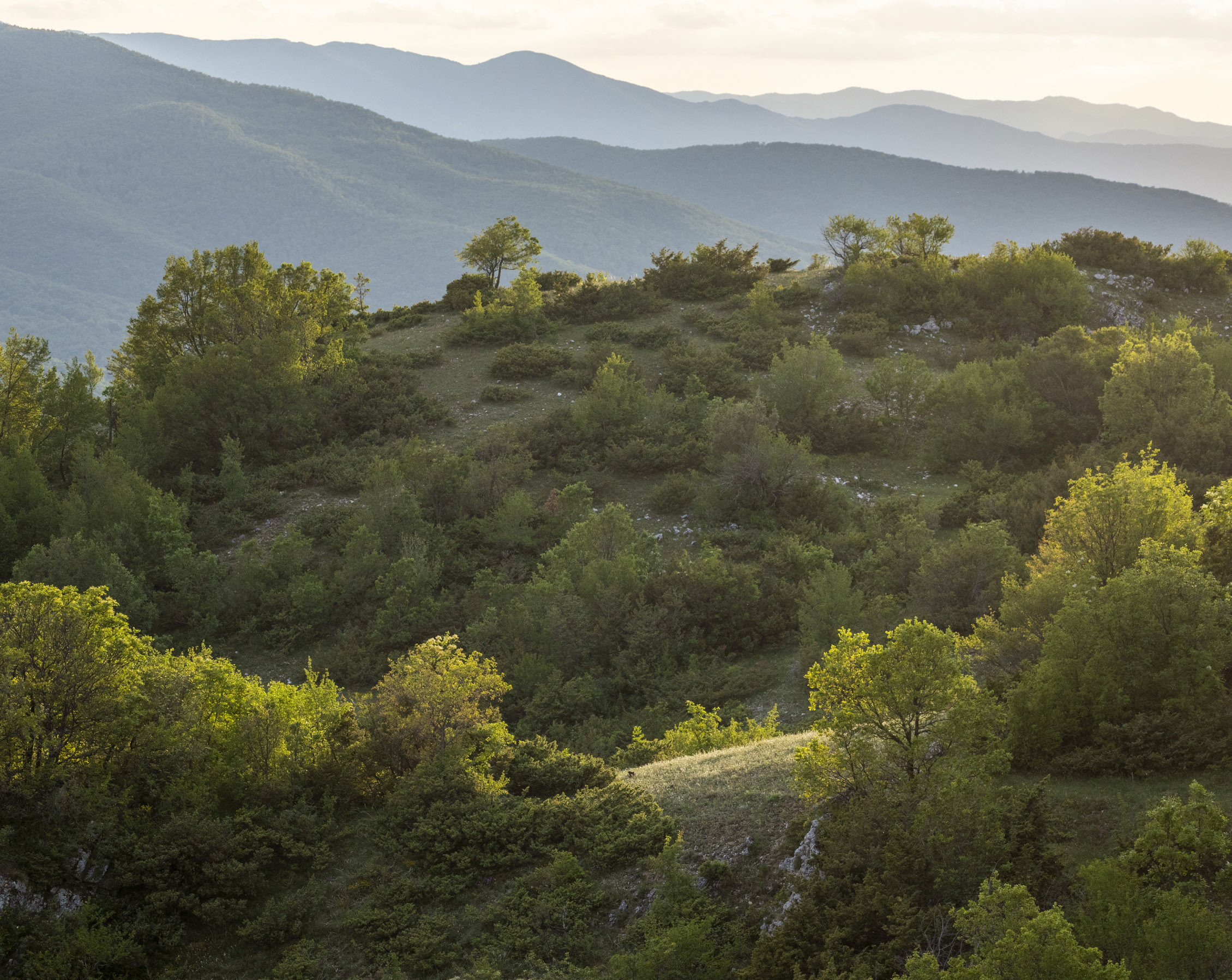
Vegetation and scenery, Central Apennines.
Bruno D’Amicis / Rewilding Europe
4. Is there any legislation that might change the status quo in the near future?
Practitioners and others who care about environmental protection should note that Article 9 of the Italian Constitution has been recently approved, introducing for the first time the concept of environmental protection in the Constitution by recognising the interests of future generations.
This principle may ensure further constitutional protection for rewilding purposes, although constitutional provisions do not produce immediate effects on the legal system, but rather establish a set of values that represent the ground on which the legal system is based.

Last light Mount Bolza, Central Italy.
Bruno D’Amicis / Rewilding Europe
Endnotes
- E.g., agrarian leases must generally be for a minimum term of 15 years (Law 203/1982)
- Art. 3 of Law no. 168 of 20 November 2017 (the “Collective Ownership Act” or “COA”).
- Art. 3 of Regional law no. 25 of 3 March 1988 (the “Abruzzo Civic Uses Act”).
- Art. 11 of the Abruzzo Civic Uses Act.
- https://www.conservationeasement.us/what-is-a-conservation-easement/ National Conservation Easement Database
- The concept of conservation easement was first introduced in the United States of America (USA) and it is now frequently used as a good alternative to land purchase for rewilding purposes, as the easement selectively targets only those rights necessary to protect specific conservation objectives. Conservation easements have become the most popular conservation tool in the USA as it has also been extensively incentivized with significant state and federal tax advantages. Land trusts in the USA now protect more land through conservation easements than through all other private land conservation tools combined (Land Trust Alliance 2015, the 2015 Land Trust Census Report, Washington: LTA).
- Italian courts broadly interpret the notion of ‘interest worthy of protection’. In 2006 the Italian court of Cortina d’Ampezzo recognised the environment as an interest worthy of protection.
- The utility may also be represented by the greater convenience of the dominant land.
- The servient and dominant land do not necessarily have to be strictly adjoining, although they must be relatively close to each other for the easement to make sense.
- Article 1350, paragraph 4 of the Italian Civil Code
- This is because they are in rem rights
- Article 2643 of the Italian Civil Code
- The case described in the example (i.e., bearing the burden of other people’s cattle grazing on the land) fits with Art. 1027 of the Italian Civil Code, i.e., a burden imposed on a property (servant land) for the benefit of another property (dominant land) belonging to a different owner.
- Art. 1350, no. 4 of the Civil Code
- Art. 2644 of the Civil Code
- The right of use may have numerous different objects like cars or work equipment or, as common in the past, lands, mines, and forests.
- Italian Civil Code, Article 1350, paragraph 4.
- Directives 92/43/EEC and 2009/147/EC respectively.


Contact Us

Elsie Blackshaw-Crosby