


Rewilding in Italy
Third-Party Liability
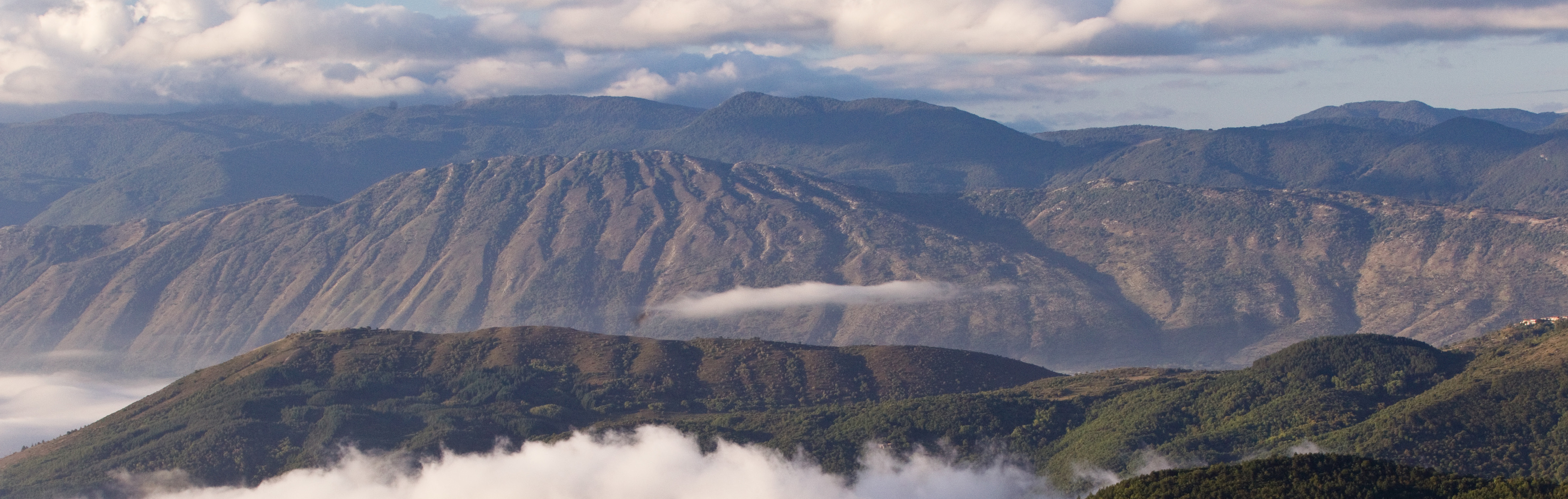
Rosciolo dei Marsi village, Central Apennines
Bruno D’Amicis / Rewilding Europe
Core Topics
- Practical steps that you should take to limit the risk or impact of liability on your project
- The types of liability and how they are established
- Liabilities in specific situations related to rewilding
- Waiver and exemptions of liability
Key Takeaways
Table of contents
1. What practical steps can I take to reduce risks associated with civil liability?
Practical steps to limit potential civil liability- Undertake regular and thorough risk assessments in relation to the risks posed to visitors and neighbouring landowners by the activities you are undertaking. These risk assessments should identify the practical steps you have put in place to limit the risk of injury or damage occurring and record why these are appropriate. Acting in accordance with such risk assessments may help to show that you have acted with the necessary level of care and attention to avoid liability.
- Ensure that you have the right insurance in place which covers any civil liability for injury or damage caused by your activities / on your project.
- Make explicitly clear, via signs or other notifications, whether the rewilding project is publicly accessible or not and that, if it is accessible, anyone accessing the site does so at their own risk.
- Erect/maintain fencing and/or other suitable barriers to ensure livestock, horses and other animals cannot escape and cause damage to neighbouring land or property or injury to third parties.
- Seek targeted legal advice when any issue about liability arises, including with respect to which defences may be available.
- Undertake regular and thorough risk assessments in relation to the risks posed to visitors and neighbouring landowners by the activities you are undertaking. These risk assessments should identify the practical steps you have put in place to limit the risk of injury or damage occurring and record why these are appropriate. Acting in accordance with such risk assessments may help to show that you have acted with the necessary level of care and attention to avoid liability.
- Ensure that you have the right insurance in place which covers any civil liability for injury or damage caused by your activities / on your project.
- Make explicitly clear, via signs or other notifications, whether the rewilding project is publicly accessible or not and that, if it is accessible, anyone accessing the site does so at their own risk.
- Erect/maintain fencing and/or other suitable barriers to ensure livestock, horses and other animals cannot escape and cause damage to neighbouring land or property or injury to third parties.
- Seek targeted legal advice when any issue about liability arises, including with respect to which defences may be available.
2. Tortious liability: what is it and how is it relevant to rewilding?
2.1. Overview
Tortious liability arises when a “third party” (e.g., a neighbouring landowner or individuals present on the land) claims compensation for injury or damage they suffered, and such damage is somehow related to you: either it happened on your land, or something under your care caused the damage. Damage may be in the form of personal injury or damage to property and may be caused, e.g., by man-made structures or natural elements on your land or by animals.
Rewilding activities do not have a special status in relation to tortious liability: as long as the situation causing the damage observes the requirements for liability to arise, it will apply. It is therefore important to understand the general rules of tort liability and the elements of which you need to be aware.
You may be liable for any intentional or negligent conduct, which causes wrongful damage to another individual or their property.1 Breaking this down, there are four aspects, all of which must exist for liability to arise:
- Conduct: this may be an action or inaction, which may be momentary, continuous and/or a chain of events;
- Intention or negligence: both intentional and negligent conduct can give rise to liability. Intention implies willingness and awareness of one’s harmful actions. The concept of negligence is much broader
and applies even when there is no intention to cause harm. This test will be satisfied where the relevant individual has failed to exercise “ordinary diligence”, through carelessness, recklessness, or failure to apply appropriate technical, social, or professional norms, without intention to cause harm.2
- Wrongful damage: this occurs when a legally protected right or interest is harmed. This may be personal injury, or it may be damage to property (including land) and covers for foreseeable and unforeseeable damages.
- Causation: there must be a causal link between the individual’s conduct and the damage suffered by the third party. In general terms, a causal link is expressed in terms of probability, where such conduct normally causes such damage. The causal link may be interrupted by another intervening event that caused the damage, in which case liability may not arise.
As explained below, there are various factors which may prevent liability arising including the negligence of the injured party and where the damage was unforeseeable.
If liability is established, you may be required to pay compensation (known as “damages”) to the person who has suffered injury or damage because of your conduct. The amount of compensation is determined based on the nature and extent of the damage.
Example 1
Landowner A is pruning the trees on the boundary of their land and by mistake cuts some branches off the neighbour’s fruit trees. Unfortunately, the branches are filled with pears that the neighbour would sell at the local market. The growing pears are now lost.
If the neighbour wishes to take action against Landowner A, it is likely that Landowner A will be found liable for damage caused, as the four parts of liability exist:
- Conduct (the cutting of the branches);
- Negligence, since the cutting down of the branches of the neighbour’s tree occurred by mistake, but could have been avoided if Landowner A had acted more carefully;
- Wrongful damage, which includes not being able to enjoy the pears and, potentially, the economic loss resulting from not being able to sell the pears; and
- Causal link, since the damage suffered by the neighbour is directly attributable to Landowner A’s negligent conduct.
2.2. What does it mean to be negligent and what steps may be taken to avoid negligence?
As explained above, you may be found liable for wrongful damage caused where you are negligent or reckless as to the impact of your actions, or you failed to comply with laws, regulations, orders, or instructions. It is not necessary to have any intention to cause damage.
Whether or not actions are considered negligent is a question of fact which will be considered objectively. The test is whether or not you acted to the standard that would be expected of a reasonable person in the circumstances. Where you are acting in a professional or skilled capacity, your actions will be measured against how a person of your professional skill or expertise would have acted.
It is in this context that risk assessments become really important because they will record the risks identified and the steps taken to avoid or mitigate those risks. They may help to show that you acted reasonably and were not negligent and that rather, the damage suffered was unforeseeable and unavoidable (see below).
2.3. When may an individual be exempt from liability or when may their liability be limited?
There are situations where the general rule outlined above does not apply and you may not be liable even if your actions have caused wrongful damage or injury and you have been negligent, as described below:
Example 2
A group of wild boars (not introduced by anyone) settles on Landowner B’s land for a while because it provides a good habitat for them. One night, the group of wild boars leave the property and cause an accident on a nearby road with minimal damage to the car. Afterwards, the animals go to a neighbouring land and destroy a field of watercress that the neighbour was eager to harvest and consume.
In this case, unless the injured party (e.g., the driver of the car or the neighbouring landowner whose crops were destroyed) proves that the group of wild boars was owned and kept by Landowner B for their own benefit (see 2.4 below), Landowner B does not incur liability because the harm is not directly attributable to their negligent or intentional conduct.
- Fortuitous event: A fortuitous event is an unforeseeable and unavoidable event (e.g., hurricanes, earthquakes, or the actions of a third party including, potentially, the third party harmed) outside your control which interrupt the causal link between your actions and the harmful event. Both natural events and human action may be considered a fortuitous event if they are exceptional, unforeseeable, and unavoidable, even with due diligence and care. Fortuitous events are particularly relevant in cases of strict liability, as highlighted in the practical scenarios in this briefing.
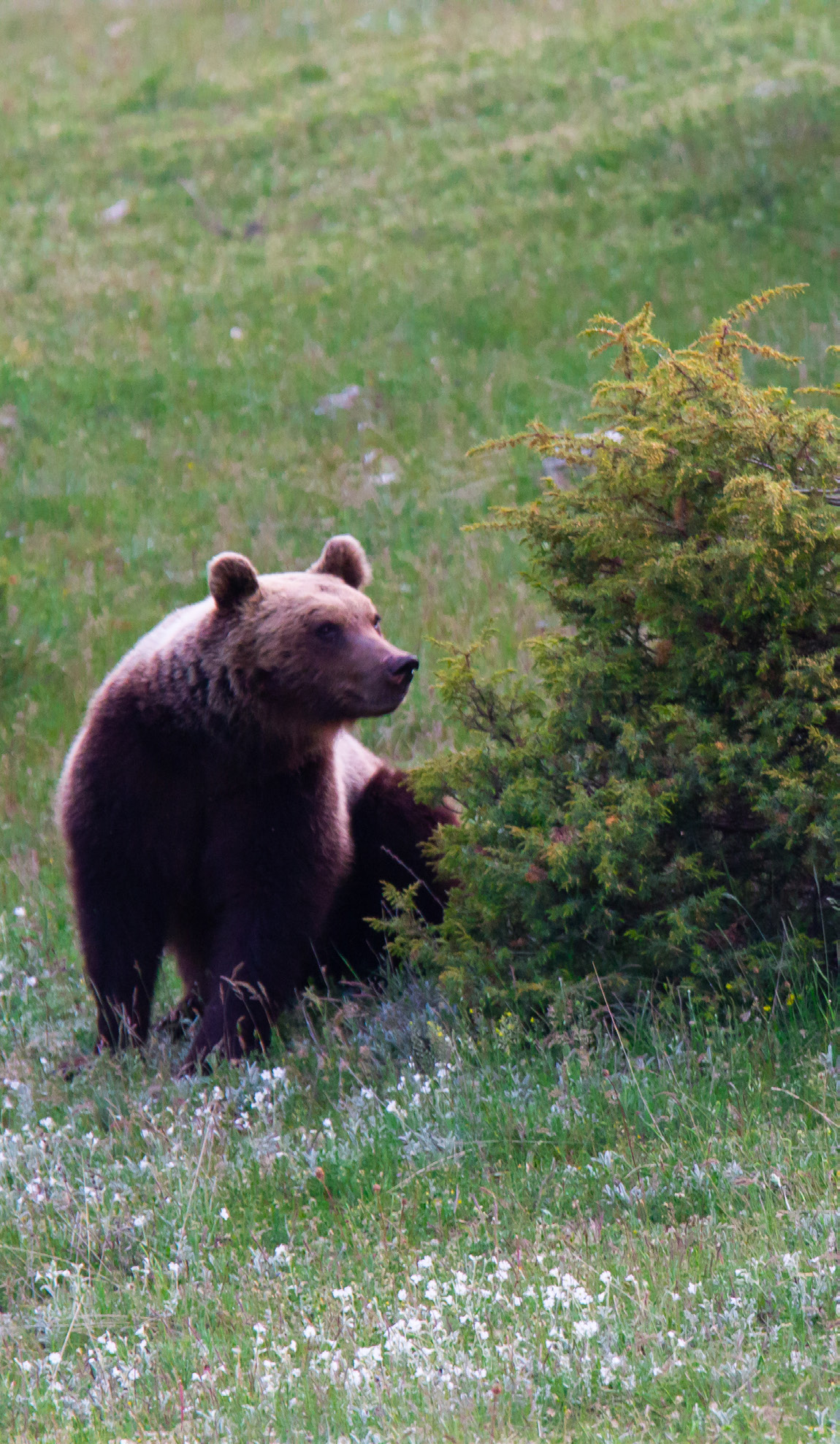
Adult Marsican brown bear, Central Apennines.
Bruno D’Amicis/Rewilding Europe
- Last resort: Liability may not arise where the actions causing harm to a third party were a necessary last resort for you to save yourself or others from imminent and serious harm, which is otherwise unavoidable.3 Therefore, a balancing test would be required to establish whether not acting would have resulted in greater harm. Where an action causing harm was undertaken with the aim of avoiding greater harm, there will be no liability and it is likely that no compensation will be payable to the injured party.
- Self-defence or defence of others: Liability may also not arise where you are acting in self-defence or defence of others in the face of imminent, serious, and otherwise unavoidable harm from an unlawful attack, where the “attack” may be directed at humans, animals4 and economic rights (such as physical property). Such cases also require a balancing test to assess the necessity and proportionality of the defence or self-defence action in comparison to the attack.5
- Failure of injured party to exercise ordinary diligence: Liability will not arise in circumstances where the injured party could have avoided suffering damage by using ordinary diligence. The boundaries of ordinary diligence are not always clear, and indeed case law is sometimes ambiguous in this regard. In general, the assessment as to whether ordinary diligence has been observed is a question of fact, to be ascertained on a case-bycase basis by the competent court, including by consulting any applicable technical, social, or professional criteria.
- Contributory negligence: In cases where the damage is the result of both the negligence of the damaging party and the negligence of the injured party (contributory negligence), the amount of compensation payable may be reduced.6
Example 3A rewilding association has a rewilding project in some open woodland where they graze a small herd of horses. The large site is enclosed by fencing but is open to the public. At the entrance gate, there is a large sign which explains that the site is a natural landscape and warns visitors to pay attention not to trip over tree roots or broken branches etc. It also advises visitors that the horses are wild animals which are unpredictable and should therefore not be approached. The sign explains that visitors are welcome and encouraged to enter the site but that they do so at their own risk.
A family with two teenage children visits the site. As they are walking around, the mother trips over a tree root and sprains her ankle. While the father is helping her, the children approach the horses and one of them gets knocked over as the horses run away, sustaining a head injury.
In this case, it is likely that the association has not been negligent and is therefore unlikely to be found liable under the general rules of tortious liability. Importantly, the association appears to have taken all necessary precautions, based on the ordinary standard of diligence
required, to avoid potential damages to the visitors. In particular, the signs were visible and clearly explained the specific risks associated with protruding roots and the wild animals on the site, as well as clearly explaining that visitors entered the site at their own risk. This specificity is important in determining negligence and is good practice to follow.
Irrespective of the assessment on the negligence by the association, however, they could be held liable under Articles 2051 and 2052 of the Civil Code (which provides for two cases of strict liability), as we will see in better detail below.
In either case, the association may be exempt from liability if they prove that the harm occurred because of the injured party’s failure to act with ordinary care. For example, if the association adequately warned the injured party not to enter an area because it was dangerous and the injured party nevertheless did so and subsequently injure themselves, such damage will not be compensable.
Note that the financial impacts of this type of civil liability can be mitigated by having adequate insurance in place.
A rewilding association has a rewilding project in some open woodland where they graze a small herd of horses. The large site is enclosed by fencing but is open to the public. At the entrance gate, there is a large sign which explains that the site is a natural landscape and warns visitors to pay attention not to trip over tree roots or broken branches etc. It also advises visitors that the horses are wild animals which are unpredictable and should therefore not be approached. The sign explains that visitors are welcome and encouraged to enter the site but that they do so at their own risk.
A family with two teenage children visits the site. As they are walking around, the mother trips over a tree root and sprains her ankle. While the father is helping her, the children approach the horses and one of them gets knocked over as the horses run away, sustaining a head injury.
In this case, it is likely that the association has not been negligent and is therefore unlikely to be found liable under the general rules of tortious liability. Importantly, the association appears to have taken all necessary precautions, based on the ordinary standard of diligence
required, to avoid potential damages to the visitors. In particular, the signs were visible and clearly explained the specific risks associated with protruding roots and the wild animals on the site, as well as clearly explaining that visitors entered the site at their own risk. This specificity is important in determining negligence and is good practice to follow.
Irrespective of the assessment on the negligence by the association, however, they could be held liable under Articles 2051 and 2052 of the Civil Code (which provides for two cases of strict liability), as we will see in better detail below.
In either case, the association may be exempt from liability if they prove that the harm occurred because of the injured party’s failure to act with ordinary care. For example, if the association adequately warned the injured party not to enter an area because it was dangerous and the injured party nevertheless did so and subsequently injure themselves, such damage will not be compensable.
Note that the financial impacts of this type of civil liability can be mitigated by having adequate insurance in place.
Example 4
It is a windy day and Landowner B sees a big fire on their neighbour’s land. The firefighters are too far away to assist. To prevent the fire from spreading, Landowner B cuts the surrounding crops or sprays water on them, ruining them.
In this case, Landowner B is unlikely to incur liability or be required to pay compensation because their conduct was aimed exclusively at benefitting the third party, which, in the absence of the Landowner B’s action, would have suffered even greater damages.
Example 5
A rewilding project keeps a herd of wild horses. A third party is walking their dog near the herd without a leash. While the keeper is nearby to collect the GPS collars, the dog attacks one of the horses. To defend the horse and to prevent the dog from being hurt by the horse, the keeper hurts the dog to scare it away from the herd.
In this case, the keeper will likely be exempt from liability because (i) his action was necessary to save his horses (and himself) from an harmful event that was not otherwise avoidable, (ii) the danger was not caused by the keeper, but by the owner of the dog himself, who let it run without leash, and (iii) the relationship of proportionality between the damage that the dog could have caused to the horses and the harm caused by the keeper to the dog, which was merely hit in order to be scared away, was observed.
Example 6
While spending the day visiting a rewilding landscape, a visitor fond of rock-climbing falls while climbing a wall, seriously injuring themselves.
Any liability arising from this injury will depend on a number of factors:
- If the visitor was permitted to be on the land and rock climbing is one of the possible activities to do in the landscape, then the visitor may claim compensation for the injury sustained pursuant to Art. 2051 of the Civil Code (strict liability, as described below).
- Even if rock climbing is sometimes permitted, if the visitor entered without permission, the landowner may be exempt from liability if he has properly signalled the prohibition of access and fenced off the area.
- If the visitor was permitted to be on the land, but rock climbing was not an activity that the landowner anticipated would be carried out on the land, the landowner may be exempt from liability if he has provided adequate warning that the area was not suitable for rock-climbing and has also warned of the risks involved.
- If the visitor entered without permission and rockclimbing was not an activity that the landowner condoned, the landowner may be exempt from liability if he has properly signalled the prohibition of access and fenced off the area.
However, the landowner may argue that the accident was attributable to the visitor’s negligent and unforeseeable behaviour and the landowner could not have done anything to prevent it, as using the wall for such purposes is not common practice among visitors, thereby removing any liability.
In any case, it is advisable to consider erecting signage as a precautionary measure in areas where there is risk of failing to highlight any potential danger for visitors and maintain man-made structures in good condition, especially if public access is permitted.
Example 7
Landowner C discovers a group of wild campers on their land and asks them to leave immediately as they do not have permission to be there. On the way out, one of the campers injures herself by tripping over old barbed wire.
In this case, Landowner C may invoke the principle that the custodian is exempt from liability due to the imprudent conduct of the injured party who voluntarily exposed herself to a dangerous situation which she could have foreseen using ordinary diligence, i.e., entering without permission and choosing to camp on a wild landscape.
Furthermore, should Landowner C be held liable, he may request that the damages payable be reduced because the damage was (also) caused by imprudent conduct.
Example 8
A land manager orders his employees to dig a pond with heavy machinery. As a result of the digging, accidentally, a large rock falls, hitting a walker.
The land manager is liable because the harmful event occurred during the performance of the task assigned to the workers by the land manager and the workers were under his direction and management.
In general, the land manager might also be held liable for the damages caused by a contractor (i.e., not an employee), provided that he has the power to control the work of the contractor and the activities he undertakes.
2.4. Who bears the burden of proof?
The general rule is that the person seeking compensation for damages needs to prove they are entitled to compensation. This means, in practice, that they need to present evidence to demonstrate that each of the elements of tort liability is present (see above), including that the potential defendant’s negligence (or intentional act) caused the harm.
However, there are particular situations where this obligation is reversed, i.e., fault is presumed and the person who caused the damage needs to prove they are not liable, or they did everything required of them to prevent the damage from happening. This is referred to as strict liability. There are a number of specific areas of strict liability which may be relevant to rewilding activities, as discussed in sections 3 to 5 below.
2.5. Can an individual be liable for someone else’s conduct?
Where visitors are allowed on a rewilding project and the project includes any training or educational activities, the rewilding practitioners may be liable in respect of damages caused to third parties by their pupils and apprentices while they are under their supervision.7 Moreover, you may be liable for damage caused by persons working for you, for instance:
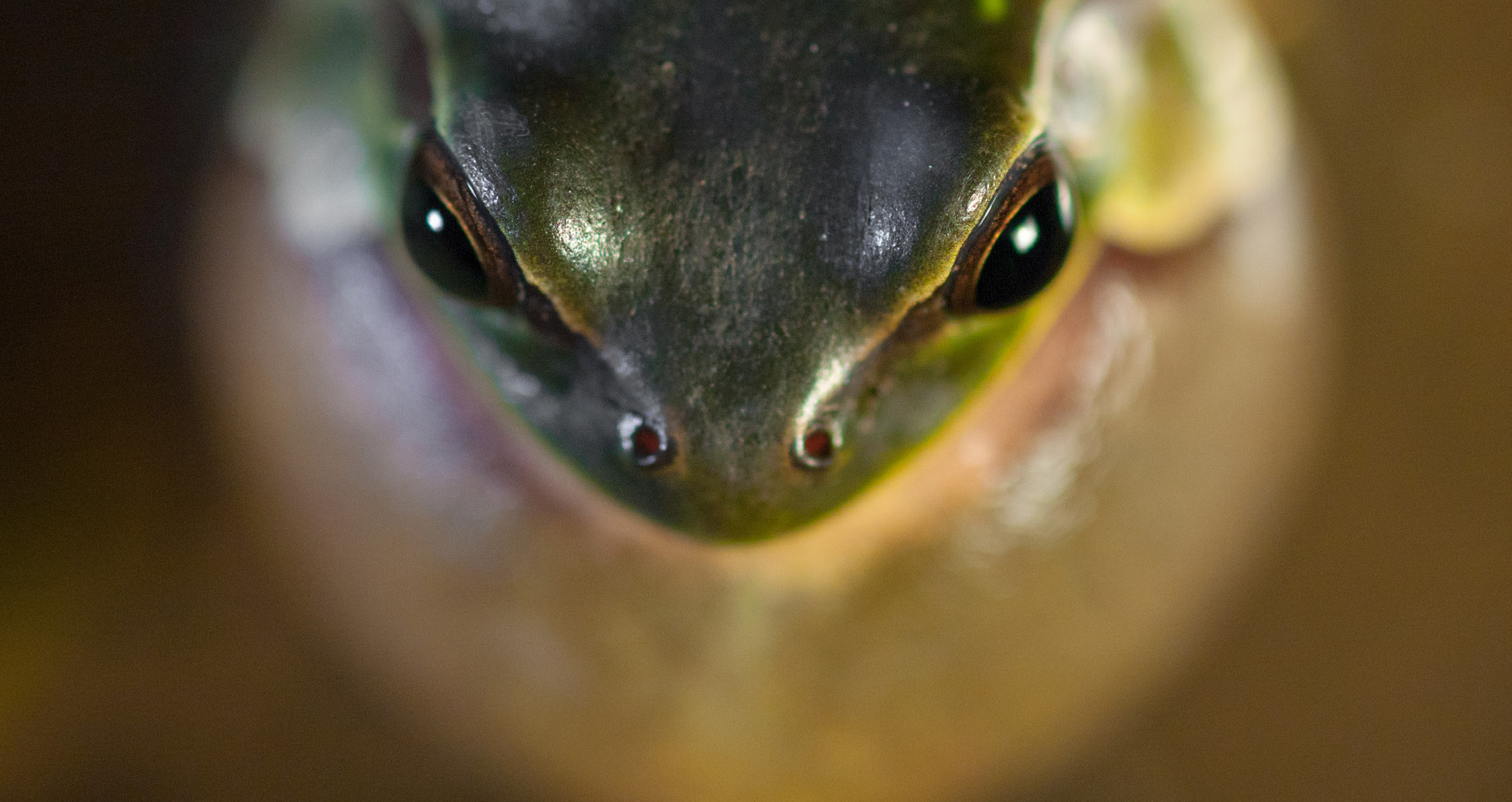
Italian treefrog male calling during mating season, Central Apennines.
Bruno D’Amicis/Rewilding Europe
- In respect of your employees; and/or
- In respect of any persons assisting you in the performance of your own contractual obligations to third parties, regardless of the nature of the relationship between you and the person assisting you, provided that you make use of their work.8
3. Strict liability in relation to dangerous activity
You may undertake some actions on your land that are considered dangerous. Some activities are considered dangerous in themselves regardless of and prior to any harmful event.9 Activities involving water or fire are usually considered as dangerous (e.g., burning debris in open fields or draining a small reservoir on your property).
Because they are more likely to cause damage due to their inherent characteristics, fault is presumed, i.e., the claimant does not need to prove that you intentionally caused the damage or were negligent to establish liability. If the causal link between the action and the damage is established, that would be enough to trigger liability.
To be exempt from liability, you need to prove that you took all appropriate measures to prevent the damage.10 In practical terms, this substantially means that you need to demonstrate that the harmful event was due to a fortuitous event. You may also be exempt from liability if you prove that the harmful event was due to the conduct of the injured party or third party, provided that such conduct was suitable to remove the causal link between the dangerous activity and the damage suffered by the injured party.
Example 9
During Spring, and after some rainy days, Landowner C decides to clear shrubs from a small area using a hedge trimmer (for which they have permission from the local authority). While they were using it, the trimmer brushed against a rock hidden by the high shrub. A spark landed on a hay bale nearby, setting it on fire. Landowner C didn’t notice the fire immediately and it soon became uncontrollable, advancing to the neighbouring land and burning the crops and everything else on that land. Landowner C had some buckets with water and a fire extinguisher, but by the time they realised what was happening, the fire had gotten out of control.
Although this may constitute a dangerous activity, strict liability is unlikely to apply because Landowner C took all the necessary precautions to avoid the damage (he checked if the machinery could be used, he obtained the necessary authorization from local authorities and he had water and a fire extinguisher to hand in case of fire). However, Landowner C may be liable if he has carried out the activity in a reckless manner, e.g., by carrying it out in risky weather conditions (e.g., on a windy day, with the consequent risk of any fire being more likely to spread)
Example 10
Landowner D decides to drain a small artificial lake to return the landscape to marshland. A drainage channel is created for these purposes. Owing to an error in design the water mistakenly drains via neighbouring farmland, flooding the soil, and ruining its crops.
In this case, Landowner D will be held strictly liable since (i) water drainage activities are regarded as dangerous11 and (ii) Landowner D certainly cannot claim to have taken all suitable measures to avoid the damage, since the harmful event is attributed to an error in design.
Example 11
As a part of a rewilding project, Landowner E stops clearing their land in breach of the rules regarding the management of woodland and dry bush accumulates. A wildfire starts in the accumulated dry bush, spreads to neighbouring land, and burns the crops and everything else on that land.
In this case, strict liability cannot be triggered, since the fire is the consequence of negligent conduct that allowed it to spread (rather than the result of an inherently dangerous activity). However, Landowner E may still be liable for the damage since his negligent conduct, which resulted in the burning of the neighbouring land, violated a rule (relating to the clearing of the land) the purpose of which was to prevent the occurrence of known dangers such as the grass catching fire.12
4. Strict liability for harm caused by objects on private property
Landowners will be held strictly liable for any harm caused to third parties or property (including neighbouring land) by objects, found on their land. For this purpose, Italian law considers anything that is not human to be an “object”. Thus, both natural and manmade objects may fall under this provision, including plants and trees. Note that there is a separate provision giving rise to strict liability in relation to animals – see Rewilding in Italy: Liabilities for Animals.
A landowner is considered “custodian” (custode) of all objects found on their land13, giving rise to strict liability for any harm caused by those objects regardless of (i) whether the object itself is actually or potentially dangerous; or (ii) any negligence or intention to cause harm on part of the landowner.14
Although taking reasonable precautions to prevent harm arising will not in itself be a sufficient defence, doing so may help to demonstrate that the harm was caused by an unforeseeable event, in which case liability will not arise. The negligence of the injured party may count as an unforeseeable event in these circumstances.
In addition to the above, the following factors, among others, also affect how liability is determined:
- whether the third party was permitted to enter the land (i.e., authorised/unauthorised entry). Liability will generally not arise if the third party was not authorised to be on the land;
- whether the object represents a foreseeable danger, of which you have given no warning;
- whether the object is used by the third party according to its intended purpose, or a use other than its intended purpose, which is nonetheless foreseeable by the custodian due to its widespread use within a certain social context.
Example 12
A visitor enters Landowner F’s land. While there the visitor trips over a hidden drainage grate and breaks their leg.
In this case, Landowner F is likely to incur liability, since the drainage grate was hidden and, therefore, the harmful act cannot be attributed to a reckless and unforeseeable activity of the visitor.
Example 13
Landowner G excavates their land and takes all necessary and reasonable precautions to avoid a landslide. However, a landslide occurs and destroys part of the crops of the neighbouring land.
In this case, Landowner G may be exempt from liability by proving that the landslide was due to an unforeseeable and uncontrollable (fortuitous) event. The fact that Landowner G took all necessary and reasonable safety measures will help to establish that the landslide was caused by a fortuitous event.
Example 14
An unauthorised person enters the land and falls off a cliff where there is no warning sign of the danger and seriously injures themselves.
In this case, the person who entered the land without permission is unlikely to be able to claim damages, as they entered the land without permission to do so. If the land was fenced off and there were signs of “no entry”, the landowner would not be liable for injuries caused by the fall. However, if the property was not fenced, the passer-by could claim they did not know it was private property with no public access. In those circumstances, the visitor may claim that the landowner has not fulfilled the obligation to ensure the safety of passers-by (Article 2043 Civil Code). If the land was not closed off, it would be advisable to have some sort of warning sign about the danger of the cliff.
To be clear the entry was unauthorised, it is recommended that (i) the land is enclosed; or (ii) there are clear signs that the property is closed off to the public and third parties. In practice, if landholders wish to restrict access to their land and wish to take steps to limit any potential liability towards unauthorised third parties on their land, it is strongly advised to enclose the land. This is important because the absence of fences and signage may make it difficult to prove that entry is not permitted.
Where there are unforeseeable dangers present on the land (such as a cliff), landholders may consider whether it would be reasonable to install warning signs or fences to prevent third parties being injured.
5. Strict liability for damage caused by ruin or faulty maintenance of man-made structures
The owner of a building or other man-made structure, such as bridges, walls, sheds, etc., may be liable for damage caused by any form of ruin, unless they can prove that the damage was not caused by faulty maintenance or a construction defect.15
The owner has a duty of care and supervision over the buildings or structures he owns and, as such, is in the best possible position to be able to assess the risks related to the structure and take appropriate preventive action. Thus, the owner is presumed liable for any damage caused to third parties by any manmade structure they own, even if there are no visible signs that make it possible to foresee the collapse.16
Liability may arise regardless of any negligence or ill intention and even where the structure was built according to applicable technical standards. The owner may only be exempt from liability if they prove that
the damage was caused exclusively by (i) a fortuitous event unrelated to faulty maintenance and construction defects of the structure; or (ii) the conduct of the injured party or another individual.17
The damage may be the result of weather conditions at the time of the collapse or ruin. Whether liability may be excluded due to such conditions is heavily debated. In some cases, an exceptionally violent storm or hurricane may be considered a fortuitous event, thus excluding liability, however, case law on this point is nuanced.
Note that if the above conditions do not apply, for instance, you do not own the structure, the structure is not in ruin or collapsed, or there is no causal link between the damage caused and faulty maintenance or construction defects, you may still be liable as a custodian, as described above.
Example 15
Landowner H builds a lookout for bird watching. The lookout has a construction defect which is not visible or obvious. One day the lookout collapses and injures a passer-by (or causes damage to neighbouring land).
In this case, Landowner H will be liable even if the defect was not visible using ordinary diligence because the owner of a building or other structure is liable for damages caused by its collapse, unless he proves that such damages were not caused (i) by defective maintenance, or (ii) by a construction defect.18
Endnotes
- Pursuant to Art. 2043 et seq. of the Italian Civil Code, i.e., Royal Decree no. 262 of 16 March 1942 (“Civil Code”).
- Mild negligence, i.e., failure to fulfil one’s duty of care, is generally sufficient to determine liability, however in some cases liability is limited to cases of gross negligence, i.e., disregard for basic technical and/or professional rules.
- Art. 2045 of the Civil Code.
- Italian Supreme Court, Criminal Division, 29 October 2015, no. 50329.
- Art. 2044 of the Civil Code.
- The compensation is reduced according to the seriousness of the negligence and the extent of the consequences arising from it (Article 1227 Civil Code).
- Art. 2048 of the Civil Code.
- Art. 2049 of the Civil Code.
- The concept of dangerous activity is largely defined by case law and generally refers to any activity that is inherently dangerous due to its nature and detrimental potential (i.e., regardless of human conduct), as well as the way in which the activity is performed and/or the characteristics of the objects used.
- Art. 2050 of the Civil Code.
- As per Article 2050 of the Civil Code
- Under the general provision set forth by Article 2043 of the Civil Code
- Under Art. 2051 of the Italian Civil Code the expression “custodian” is a much broader concept than the one of owner/possessor. Indeed, a “custodian” for the purposes of Article 2051 of the Civil Code means anyone who has an actual physical power over the object, which implies a duty to guard it, i.e., to watch over it and maintain control over it, to prevent it from producing damage. Therefore, the notion of “custody” relevant for the purposes of Art. 2051 of the Civil Code is not to be understood in its contractual sense, but is to be considered in a material sense, and therefore covers a broader category than just owners/possessors.
- Art. 2051 of the Civil Code.
- Art. 2053 Civil Code.
- Italian Supreme Court, 20 December 1976, Italian Supreme Court no. 4694; 9 August 1961, no. 1941.
- Court of Lecco, 21 August 2019, no. 511.
- Art. 2053 of the Civil Code.


Contact Us

Elsie Blackshaw-Crosby