


Rewilding in Poland
Developing Land
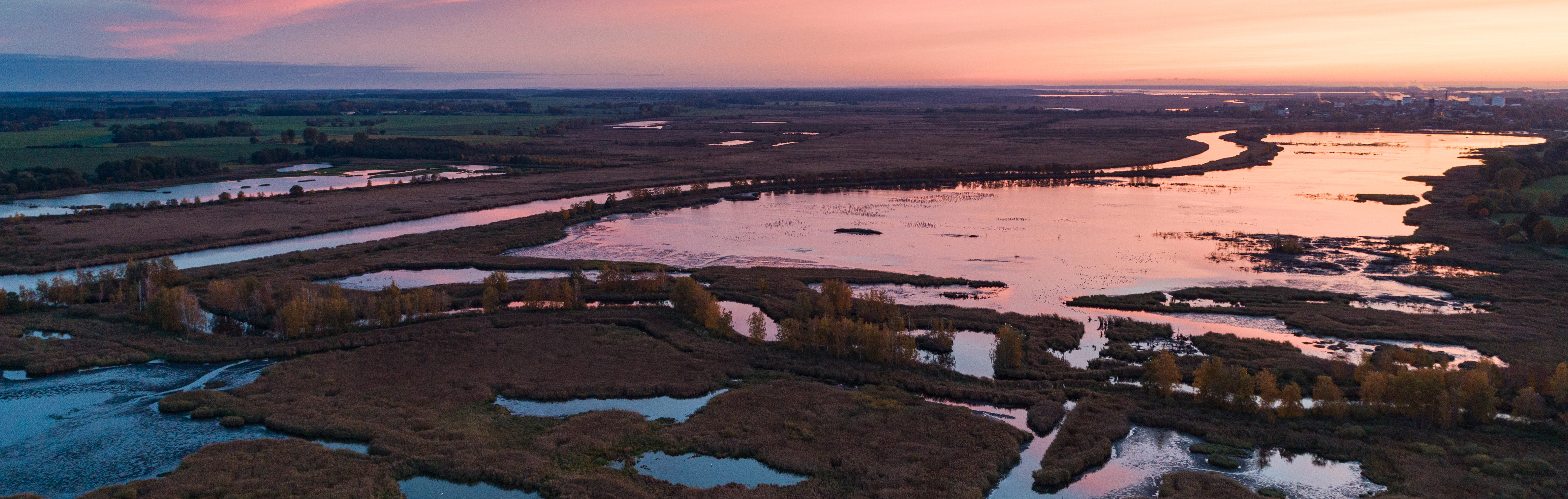
Rewetted peat bogs, Penne river, Rewilding Oder Delta.
Florian Möllers / Rewilding Europe
Core Topics
- Key areas of law that may impact any development activities on land
- Limitations on the acquisition and use of agricultural and forest land
- Permits to develop land – when they are required
- Environmental Impact Assessment and environmental decisions
Key Takeaways
Table of Contents
2.
3.
4.
5.
1. What should be considered before developing land?
2. What are zoning and planning permissions?
2.1. Zoning and planning in the context of rewilding
Many rewilding activities require the use of land, and you should therefore be aware of the legal designation of land you intend to use, and of potential restrictions applicable to planned rewilding activities that count as development (e.g., construction of eco-tourism structures, bird hides, and construction or removal of fences).
Planning regulations in the context of rewilding are particularly important if you intend to: (i) acquire agricultural land or a forest; and/or (ii) construct objects necessary for certain activities, in particular buildings (e.g., to provide accommodation for eco-tourists) or larger structures (e.g., observation towers).
At the same time, many rewilding activities, especially those not involving construction works, may not require any zoning permits. For example, if you, as a farmer, own agricultural land, or a private forest, you
may decide to dedicate part of such land to rewilding without a need to change its formal permitted use.
2.2. What are the main zoning regulations?
Under Polish law,2 local zoning plans determine what development activities (mainly related to construction) may be undertaken on identified areas of land. When you are considering undertaking any development on your land, as a first step you should establish whether the relevant land is covered by a zoning plan and act in accordance with its restrictions where one exists. In the absence of a local zoning plan, such development requires a location permit issued in the form of an administrative decision.
Local zoning plans
Local zoning plans are generally binding within the local authority area, and they indicate the areas where certain types of objects and/or infrastructure can be located (e.g., residential buildings, industrial developments, public buildings, public infrastructure).
They also identify agricultural or restricted areas where no construction developments are allowed. Usually, a zoning plan will indicate specific requirements for the construction developments in the given area (e.g., maximum height of buildings, types of buildings, maximum part of a plot a building can cover) or, if no construction is allowed in the area, potential exceptions from the general prohibition.
The adoption of zoning plans must be conducted with the involvement of the local community. Its members are allowed to formally comment on the draft of the plan before its adoption and to submit their own proposals as to the content of the plan.
The procedure of adopting a local zoning plan is relatively complex and expensive and therefore, most of the municipalities in Poland have not adopted local zoning plans, or the plans in force cover only small parts of their territory. Amending the local zoning plan is also a time-consuming process that may last several years. In any case, rewilding practitioners and environmental activists may contribute to the process of preparing and adopting the zoning plan by filing motions and making suggestions as to the use of certain areas, for example, by advocating for a ban on construction in environmentally valuable areas.
Location permits
There are two types of location permits: (i) a “regular” planning permit (decyzja o warunkach zabudowy); and (ii) a public purpose investment decision (decyzja o lokalizacji inwestycji celu publicznego), which can only be issued in the case of developments having the status of developments for a “public purpose” (a
legally defined term in Polish law). The second of these permits is unlikely to be relevant to rewilding and is not discussed further in this note.
Regular planning permits are issued by a mayor (wójt) of the municipality in which the planned development is to be located. The planning permit does not grant any right to the land, and it does not breach the ownership title or rights of third parties. This means that any interested party may obtain such a permit, irrespective of whether they hold a legal title to the site. However, to actually undertake the permitted development, you will need to hold relevant property rights over the land.
There is no standardised form on which you may apply for a planning permit. However, several documents must always be attached to it: (i) a copy of the ordnance survey sitemap or, where there is none, a copy of the plan; (ii) a descriptive and graphic specification of the planned type of land use and characteristics of the land development, including the intended purpose, and dimensions of the proposed construction; (iii) the environmental decision (stamped as final), if it is required; (iv) a power of attorney or certified true copy issued to the person acting on behalf of the applicant (if relevant); and (v) a proof of payment of the stamp duty for issuing a planning permit (and a stamp duty for submitting a power of attorney, if any).
The authority handling the case issues a planning permit if the planned development satisfies all the following conditions: (i) the existing or designed
service infrastructure is sufficient for the planned development; (ii) the site does not require a greenfield conversion consent to be obtained; and (iii) the planning permit is consistent with separate laws, including regulations on environmental protection or construction law.
As explained in section 4 below, certain constructions will also require a building permit (or notification). Having a planning permit in place is a pre-requisite for applying for a building permit (or making a notification).
Example
Landowner A owns land covered by a local zoning plan. In the local zoning plan, Landowner A’s land is partially designated for forest and partially for agriculture with a possibility to construct farming facilities, housing for farmers, and agrotourism (i.e., nature-based tourism conducted by farmers).
There are specific requirements for the buildings to be constructed on the land (e.g. type of construction, maximum height, and maximum area are determined). Landowner A would like to start a business and educational activity consisting in providing board and lodging to visitors interested in exploring the local natural environment and learning about sustainable agriculture. To that end, Landowner A can extend their current farm buildings, but only to the extent indicated in the local zoning plan and use them for lodging purposes. The building designs prepared by Landowner A must be in line with the local zoning plan.
3. Are there limitations concerning agricultural land and forests?
It is essential to understand that the use of agricultural land and forests in Poland is generally restricted and, as a rule, cannot be used for purposes other than agriculture or forestry. Polish law also imposes strict limitations as to trade in agricultural land. These limitations may have a significant impact on the possibility of securing land for the purposes of rewilding. For further information on forests, see Rewilding in Poland: Forest Management.
3.1. Actual change in the use of agricultural land
If you already own agricultural land or forest and intend to start rewilding activities on such land without a need to construct anything, such a change of actual use of land does not require any special permit, even though it may result in an exclusion of that land from agricultural production. You may, for example, convert an agricultural field into a meadow or a grassland used for natural grazing. However, if you acquired the land less than 5 years ago, you are obliged to cultivate the land for the first 5 years after purchase, etc. In reality, many rewilding activities may count as agriculture, in which case this time restriction will not apply.
3.2. Use of agricultural land for construction purposes
If you’re planning to use agricultural land or forest for construction purposes, e.g., construction of lodgings, then a formal exclusion of land from agricultural production may need to be obtained. Such exclusion of land from agricultural or forest production is required only with respect to specific categories of lands (the most attractive categories from the perspective of agricultural production). In other cases, a separate administrative decision relating to change of use is not necessary.
The obligation to exclude the land from agriculture production concerns arable land of: (i) RI-RIII class being of mineral or organic origin; and (ii) RIV-RVI class being of organic origin. In such cases, you need to obtain a consent in the form of an administrative decision to exclude the relevant land from agricultural production. You will then need to obtain a building permit in relation to all the plots identified for construction and pay an annual fee in relation to the exclusion.
Note that this regulation also applies to areas that are (at least partially) intended for construction in the local zoning plans (as in the practical scenario provided for above).
3.3. Restrictions applicable to trade in agricultural land
As explained in more detail in the note Rewilding in Poland: Obtaining Land and Legal Mechanisms for Protection, the Agricultural Reform of 2016 introduced a number of limitations on the trade and use of the agricultural land.
As of 30 April 2016, only individual farmers can purchase agricultural properties and the aggregate of the purchased agricultural property, and the agricultural land already owned by the purchaser as its agricultural farm may not exceed 300 ha of arable land. Acquisition of an agricultural property by an entity other than an individual farmer (including NGOs, e.g., rewilding organisations) requires prior consent of the relevant director of the National Agricultural Support Office (Krajowy Ośrodek Wsparcia Rolnictwa (“KOWR”)). Such a consent can only be issued under special circumstances, e.g., if the seller of the land
shows that it was impossible to sell the land to an individual farmer and if the entity acquiring the land undertakes to conduct agricultural activity on the land. The Agricultural Reform does not provide for any special circumstances or exemptions from these rules which would be directly applicable to rewilding activities or alike.
Subject to certain exceptions (see Rewilding in Poland: Obtaining Land and Legal Mechanisms for Protection), any agricultural land purchased following the introduction of the Agricultural Reform must be used by its new owner for agricultural purposes for at least five years following the date of the acquisition (the restriction does not apply to the land being inherited).
Consequently, such agricultural property may not be sold, disposed of, or given to any other entity for use (e.g., based on a lease or tenancy agreement) prior to the lapse of the five-year period. This is subject to exceptional circumstances beyond the purchaser’s discretion, justified by an important private or public interest, under which the title to the land may be transferred before the lapse of the five-year period, subject to obtaining prior consent from KOWR.
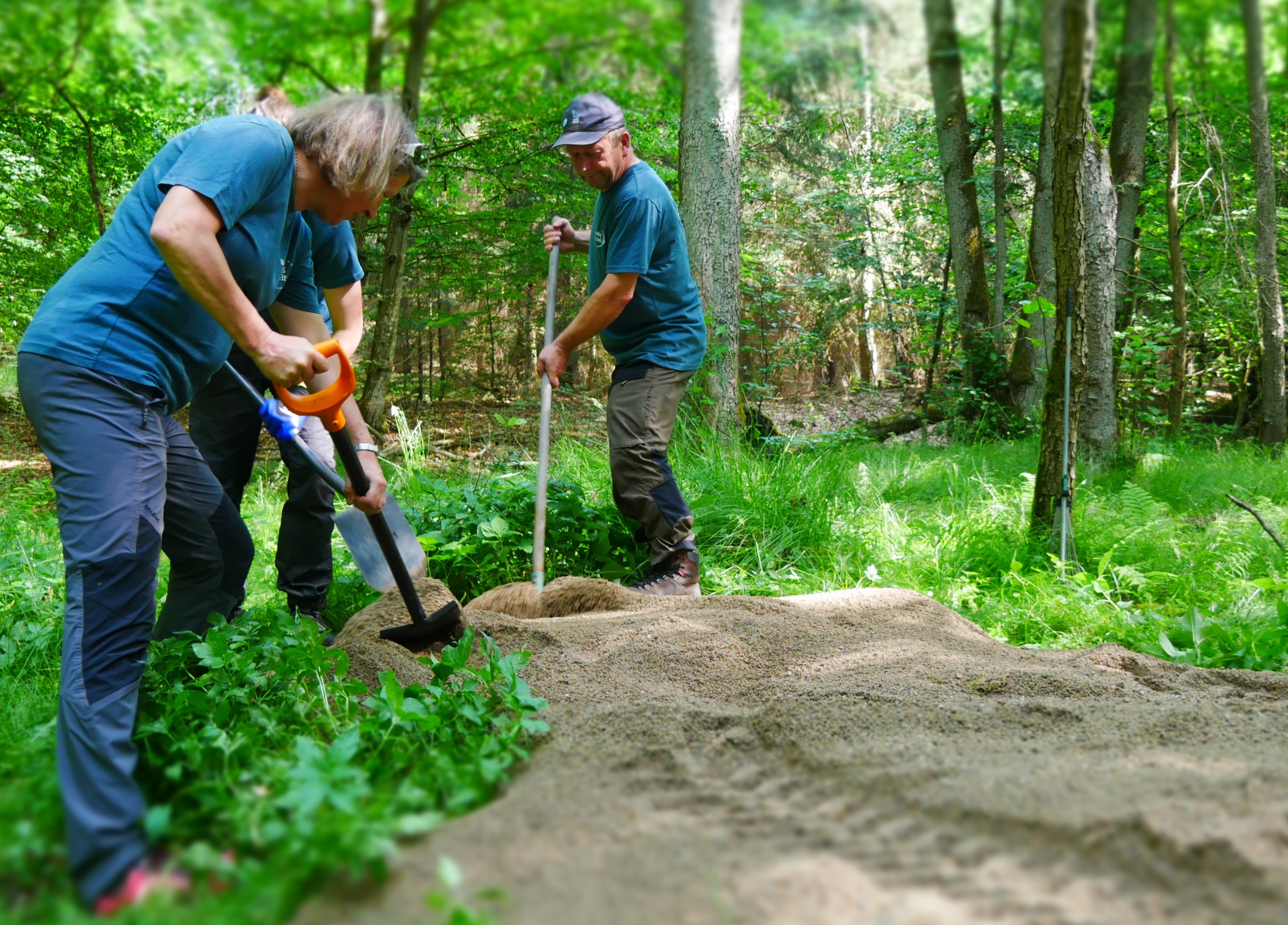
Fieldwork to close man-made ditched to rewet the area, Gowienica river, Oder Delta.
Marcin Budniak / Rewilding Europe
Example
Landowner B has identified a 5ha plot of land suitable for rewilding and wishes to acquire rights to that land. There is no local zoning plan in place for that land, but it is registered in the land register as arable land. Landowner B considers: (i) buying the plot from its current owner; or (ii) entering into a long-term lease or tenancy agreement with its current owner. Is it possible for Landowner B to enter possession of the land if:
- Landowner B is an individual farmer and currently possesses less than 300ha of agricultural land?
Being an individual famer and owning not more than 300ha of agricultural land, Landowner B can purchase agricultural land without a need to obtain KOWR’s consent. After purchasing the land, they will be obliged to conduct agricultural activity for at least five years.
- Landowner B is not an individual farmer?
Only individual farmers can freely buy agricultural land. If Landowner B wishes to acquire the land but is not an individual farmer, the seller of the land will need to apply for a consent of the Director of KOWR, evidencing that it was impossible to sell the land to an individual farmer and that the buyer undertakes to comply with the obligation to conduct agricultural activity on the land.
If Landowner B is not an individual farmer, they could obtain title to the land using a long-term lease or tenancy agreement (see Rewilding in Poland: Obtaining Land and Legal Mechanisms for Protection). Such an agreement can be concluded for a limited period (30 years in the case of a lease and 10 years in the case of a tenancy agreement) or for an indefinite period. To be able to grant such a lease or tenancy, the landowner must have owned and cultivated the land for at least five years before the agreement is concluded.
4. Man-made structures
If you’re planning to build something on your land, e.g., putting up a fence or building a bird lookout, you must observe the requirements of the Polish Building Law.3 Although the general rule is that you will need a building permit or some sort of authorisation to build anything on your land, there are situations where no permit is needed as the Building Law contemplates three levels of administrative requirements applicable to construction works:
- construction requiring neither a building permit nor a notification;
- construction requiring a notification of planned construction works; and
- construction requiring a building permit.
Note that the rules applicable to the construction of objects also apply to any subsequent reconstruction and demolition (although in the case of refurbishment of existing construction objects simplified rules may apply). Therefore, before dismantling or demolishing any man-made structure, you should consider which of the above levels of administrative requirements apply.
It is generally advisable to discuss your planned construction / demolition with the competent authorities who can help you better understand formal requirements applicable to your project, in particular by indicating whether such a project requires a building permit or a notification.
Construction and/or demolition without required permits may lead to administrative and criminal sanctions being imposed.
4.1. Cases not requiring a permit or notification
This is the lowest level of requirements, applicable only to types of developments explicitly indicated in the Building Law.
The list includes, among others:
- gazebos (up to 35m2);
- small car parks (up to 10 parking spots);
- landscaping objects and small architecture;
- fences not higher than 2.2m; or
- very small (up to 1000m2 and up to 3m depth) ponds and water reservoirs situated on agricultural land.
4.2. Cases requiring a notification of planned construction
This is the second level of requirements, and it is also applicable to the types of developments explicitly indicated in the Building Law.
The list of construction objects requiring such notification includes:
- small, stand-alone houses;
- temporary (to be dismantled within 180 days) objects not permanently connected with the land;
- piers no longer than 25 meters and no higher than 2.5m;
- small (up to 35m2), single-storey service buildings;
- fences higher than 2.2m; or
- small (between 1000 and 5000 m2 and up to 3m depth) ponds and water reservoirs situated on an agricultural land.
In these cases, you can commence construction works subject to a complete notification being submitted to the competent authority. In practice, this means that there is a waiting period during which you cannot start construction works, as explained below.
The notification is submitted on a standardised application form, addressed to the competent starost (starosta). You need to attach the following documents to the notification: (i) a statement that you have the right to use the land for construction purposes;(ii) relevant sketches and/or drawings (depending on the type of object); (iii) opinions, approvals, permits, and other documents required by specific laws; (iv) a situation plan prepared by a professional designer (in the case of some objects); (iv) a planning permit or a decision on the establishment of the location of a public purpose project, if it is required in accordance with the laws on land use planning and development (only if no local zoning plan applies to the real estate to which the application refers); (v) an environmental
decision (stamped as final) if it is required; and (vi) proof of payment of any applicable stamp duty (and a stamp duty for submitting a power of attorney, if any).
The competent authority is entitled to raise objections with respect to the notification of construction works within 21 days of receipt of such notification. If no objection is raised, you can commence the planned construction works.
4.3. Cases requiring a building permit
This is the highest level of requirement, and it is a default rule, meaning that for all developments not covered by a simplified regime in the Building Law, you will need a building permit. Many developments that may be planned by rewilding practitioners may, in fact, not require a building permit, and would instead fall into the categories of developments to which one of the more liberal regimes described above applies.
4.4. What is the process to request a building permit?
Building permits are usually issued by the competent starost (starosta).4 In some cases, the issuer may be the competent voivode (wojewoda).5 Other authorities may also become involved, for example, if an environmental impact assessment is required (see below section 5).
You need to apply for a building permit on a standardised application form, pay the fee and submit various supporting documents.6 The fee required for
issuance of a building permit depends on the type of development project.7 In addition to the fee, you will need to pay stamp duty tax.
The authority should issue the building permit if: (i) the application meets all the conditions; (ii) the application was filed during the term of validity of the planning permit (see section 2.2 above), or is in line with the local zoning plan (if applicable); and (iii) a statement that the applicant has the right to use the land for construction purposes was submitted.
Once approved, the building permit allows you to start the works and it also establishes the obligations and conditions which will apply to the construction once completed. Keep in mind that for larger developments you also need a permit of use, to be obtained following the end of construction works. As a rule, the end of construction works should be notified to the competent construction supervisory authority (usually Powiatowy Inspektorat Nadzoru Budowlanego) who then issues a permit for use (if required).
4.5. Does a building permit expire?
Yes. A building permit expires if: (i) construction works are not started within 3 years of the date on which the building permit became final; or (ii) construction works are suspended for a period longer than 3 years. In such a case, a new building permit will be required.
Example
Landowner G bought a property with a mixed nature: some is arable (used for growing crops), some is pasture where sheep graze, and a part of peatland has protected status for its ecological value in the region. Next to the peatland a native woodland has been invaded by boxelder maple. Close to the pastures, there’s a small dam fed by a creek that crosses the property. The former owner used the dam for irrigation and as a water source for animals. There is also a 5-bedroom house, which used to be the family house of the former owner. Landowner G intends to:
- build a small hide for birdwatching overlooking the peat, together with the necessary access to the hide;
To build a birdwatching hide and its access, Landowner G needs to file a notification with the competent Starost. Such hide, if not placed on top of a tower, can be considered as a small service building or a shed (it cannot be larger than up to 35m2) and in this case there is no need for a building permit. If the Starost does not raise objections about the notification within 21 days of its receipt, Landowner G can commence construction of the hide.
- convert the 5-bedroom house into a hostel for wwoofers (WWOOF is an international community where visitors pay their stay with work on organic farms) to help them during the execution of the rewilding projects, and a place to host workshops about rewilding;
If the house needs to be reconstructed to serve as a hostel, Landowner G must obtain a building permit (due to the change of its function, the house will not be treated as a single-family house anymore). Landowner G should also notify the competent Starost about its intention to change the use of the building. Note that, in this case, the competent Starost may raise an objection if specific requirements (e.g. health and safety) are not met.
- introduce ancient breed cattle and use the pasture for extensive grazing. They want to remove all internal fences (not higher than 2.2.m) with the exception of the outer walls which define the limits of the property;
As the fence is not higher than 2.2m, Landowner G can take it down with no need for a permit or a notification. If the fence was higher than 2.2m, then a notification would be required. As for a possible change in land use, extensive grazing and woodland pasture still fall under agricultural land, so no actions are required by Landowner G to change the nature of grazing.
- fell all boxelder maples from the area and sell its timber and fence off some of the trees and clumps for protection from the cattle.
Felling the trees would require a permit for felling trees or, if the area is considered a forest under the Act on Forests, felling should be done in line with the applicable simplified management plan. For more information on forest management see Rewilding in Poland: Forest Management. As for fencing off the trees, if the fencing used is not higher than 2.2m, then no permit or notification is needed.
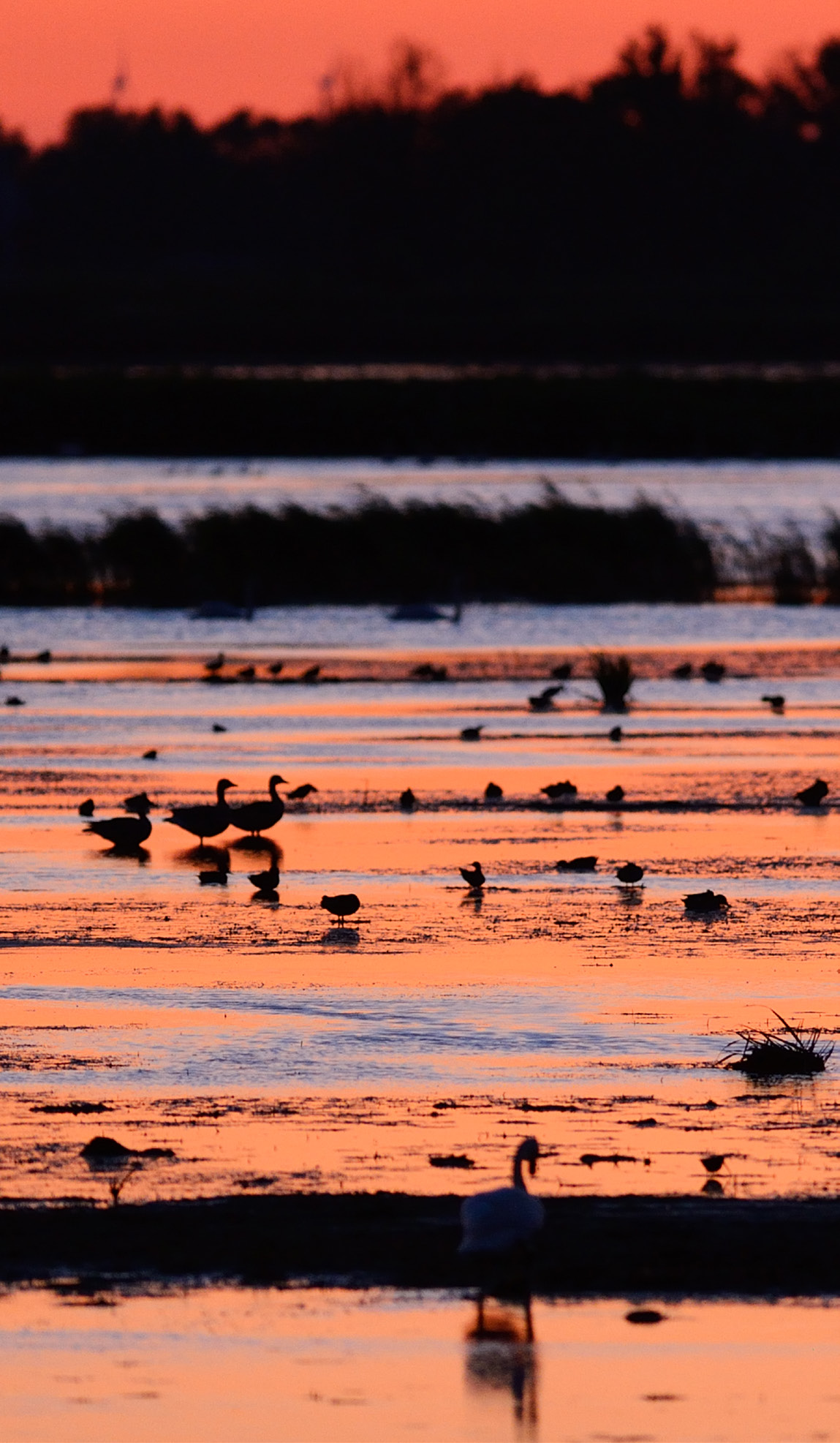
Mute swan (Cygnus olor) , Oder river delta/Odra river.
Staffan Widstrand / Rewilding Europe
5. What environmental regulations need to be considered?
5.1. Environmental impact assessment and environmental decisions
Some construction developments require an environmental decision which will include an analysis of the impact of the planned development on the environment and set out the conditions that the developer should meet to protect it. In some cases, an in-depth environmental impact assessment will need to be undertaken before an environmental decision can be issued. Environmental assessments are regulated by the EIA Act.8
5.2. When are these necessary?
An environmental decision is required for any planned:
- large-scale infrastructure projects that are considered to always have a significant impact on the environment (“Category A”); or
- specified developments that may potentially have a significant impact on the environment, and which satisfy specified size thresholds or are in protected areas (“Category B”).9
Rewilding activities are unlikely to constitute either Category A or Category B development. However, depending on your exact plans, you should consider the list of Category B developments carefully as it includes activities that may be relevant to rewilding,
including: livestock farming and keeping of certain quantities of animals;10 construction and reconstruction of certain hotels and campsites – larger than 0.5ha if within a protected area or otherwise larger than 2ha; or certain forestry activities, e.g., forestation of agricultural land, of an area exceeding 20ha.
In addition, the competent authority maintains wide discretion and may stipulate that an environmental decision is required for developments falling outside Categories A and B.
5.3. Who decides?
Depending on the category of development, environmental decisions are either issued by a mayor (wójt) of the local municipality or by specialised environmental authorities (General Director for Environmental Protection, regional directors for environmental protection, and regional directors of National Forestry) in the case of some developments and planned activities.11 Other authorities become involved in the proceedings by issuing their opinions and being consulted at various stages of the proceedings.
5.4. How to request an environmental decision?
An application for an environmental decision is submitted by an applicant on a standardised
application form12 for environmental decisions. The applicant must attach several documents to the application. Depending on the category of planned development, the applicant must attach to the application either:
- an Environmental Impact Assessment report (the “EIA Report”); and/or
- a Project Information Sheet.
An EIA Report will be required for all Category A developments and may also be required for Category B developments if they fulfil the criteria explained above. In any case, all Category B developments require a Project Information Sheet. In this case, the Project Information Sheet is filed first, based on which the competent authority may decide that an EIA Report should also be prepared.
The EIA Report constitutes a very complex document and must be prepared by an independent expert in accordance with specific requirements, as indicated in the EIA Act and the instructions of the authority issuing the environmental decision. On the other hand, the Project Information Sheet is a much less detailed than an EIA report and should include basic information about the planned project, enabling an analysis of criteria or determination of the scope of the project’s EIA report.13
5.5. What information is in the environmental decision?
The key elements of an environmental decision are: (i) the type and location of the planned development; (ii) material conditions regarding use of the environment in the development and operational phase; (iii) requirements regarding environmental protection which must be incorporated in the project documentation submitted during building permit proceedings; and (iv) obligations to monitor the impact of the planned development on the environment, carry out additional EIA procedures, and/or carry out post-completion analysis of the impact of the development on the environment.
In each case, it is advisable to confirm whether the activity planned by a rewilding practitioner is included in the list of developments referred to above.
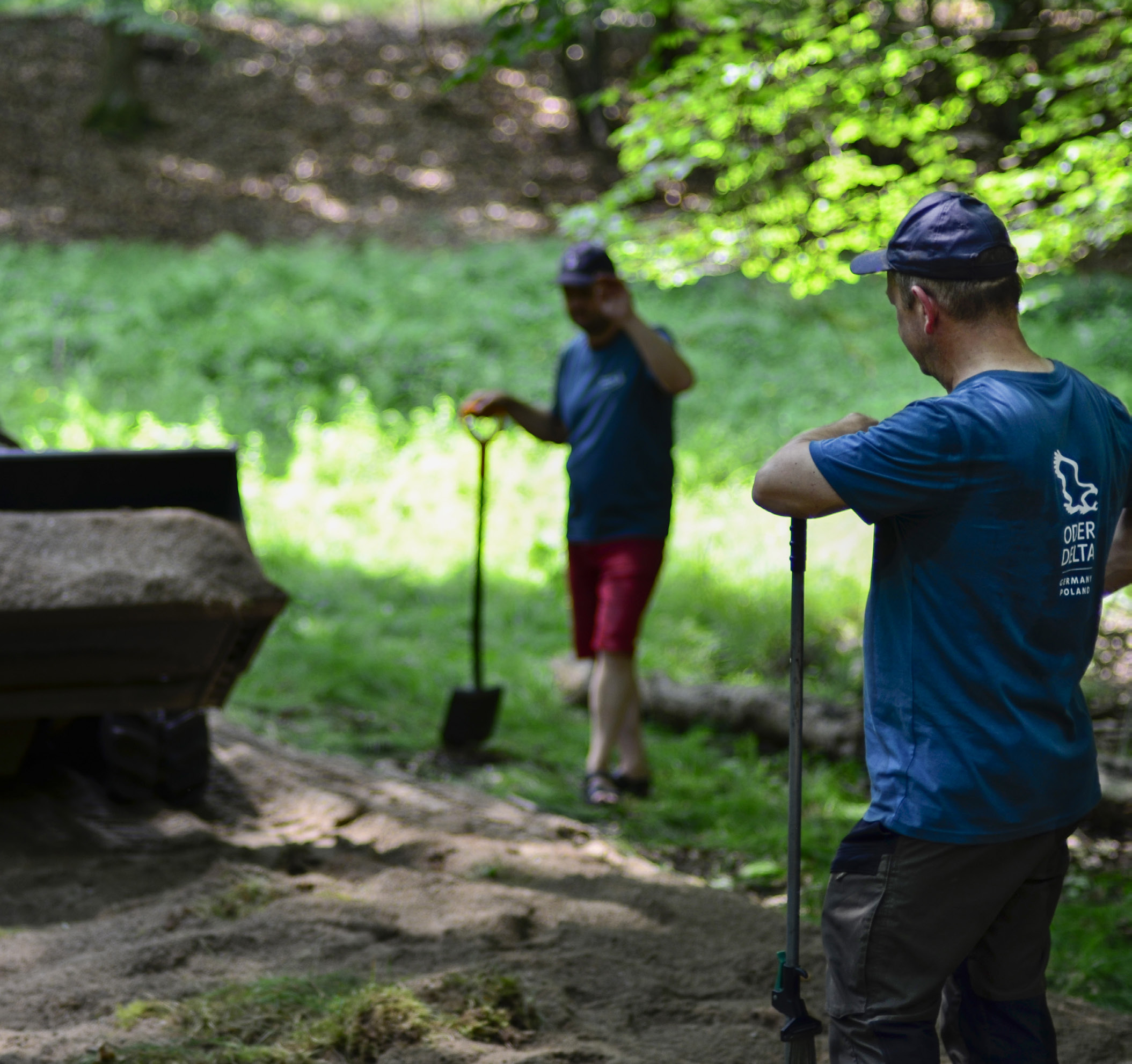
Fieldwork to close man-made ditched to rewet the area, Gowienica river, Oder Delta.
Marcin Budniak / Rewilding Europe
6. Assessment of Impact on Natura 2000 sites (“Natura 2000 Site Decision”)
When developments are to take place in a Natura 2000 site or may have a significant negative impact on a Natura 2000 site, there is an additional procedure which must be followed prior to any notification or building permit. This procedure is the Natura 2000 Site Decision. Rules on the Natura 2000 Site Decision are provided for in the EIA Act.
Example
Landowner C owns land in a Natura 2000 site, created to protect a particular bird species. Landowner C built a lookout to watch the birds and wants to build a car park with 5 spaces to avoid visitors parking their cars on sensitive ground.
If the land was not in a Natura 2000 site, Landowner C would not need a permit or notification to build the car park for 5 cars. However, because it is situated in a Natura 2000 site, Landowner C needs to send a notification to the competent authority and give them 21 days to raise any objections to the proposed construction works (see section 4.2 above).
When the authority receives the notification, it will assess whether the development may potentially have a significant negative impact on the Natura 2000 area. If so, the case is handed over to the environmental authorities for further assessment.
Before taking any decision, the competent authority (usually the competent Starost) conducts an initial assessment of whether the project (whether independently or in combination with other activities) has the potential to significantly negatively impact Natura 2000 sites.14 If the decision is that the building permit application or notification of planned work should go through further assessment, the process is passed to the regional office for environmental protection.
After making such assessment, if the conclusion is that the project could have a significant impact on Natura 2000 sites, you are required to submit the relevant documentation to apply for a Natura 2000 Decision.15
After receiving your application and supporting documentation, the regional director for environmental protection will decide within 14 days of receiving your application if an EIA is required. If an EIA is required, you will need to provide further information.
A project will be approved if the EIA concludes that: (i) there is no significant negative impact on Natura 2000 sites; or (ii) the project could have a significant impact on Natura 2000 sites, but there are grounds permitting the implementation of the project under the Nature Conservation Act (NCA).16 For further information on the NCA see Rewilding in Poland: Protected Areas.
Approval will not be granted if the assessment concludes that the project potentially has a significant negative impact on a Natura 2000 site, and no grounds for exceptions under the NCA are justified.
The regional director for environmental protection’s decision is issued within 45 days of receiving the complete application and supporting documentation. Afterwards, the competent authorities issue their decision with respect the planned development in the Natura 2000 site.17
Endnotes
- Act of 20 July 2017 – the Water Law: Prawo wodne; consolidated text published in the Journal of Laws of 2021, item 2233, as amended.
- Key legal regulations on zoning are included in the Act of 27 March 2003 on planning and spatial development and relevant secondary legislation.
- Key regulations in that respect are provided for in the Act of 7 July 1994 – the Building Law and its secondary legislation: Prawo budowlane; consolidated text in the Journal of Laws of 2023, item 682, as amended.
- Starost is an administrative body in Poland, a district administrator, who manages a Powiat (a district).
- Voivode is a regional governmental body who manages a Województwo (a region).
- An applicant for a building permit is required to attach the following documents to the application: (i) a declaration on the right to use the real estate for construction purposes; (ii) 4 counterparts of the building design (the design is be prepared by a designer holding relevant construction licenses. It should contain opinions, approvals, permits, and other documents required by specific laws. In addition, the design should contain the declaration of the design’s author and reviewer on the design preparation in accordance with the applicable laws and engineering knowledge and must comply with the requirements set out in the decisions issued earlier); (iii) a certificate of building design author’s entry in the list of members of the relevant chamber of the professional association; (iv) a planning permit or a decision on establishment of the location of a public purpose project, if it is required in accordance with the laws on land use planning and development (only if no local zoning plan applies to the real estate to which the application refers); (v) an environmental decision (stamped as final) if it is required; and (vi) a proof of payment of a stamp duty for issuing a building permit (and a stamp duty for submitting a power of attorney, if any).
- Act of 3 October 2008 on providing information on the environment and its protection, public participation in environmental protection and environmental impact assessments (the “EIA Act”), and in the secondary legislation. Ustawa o udostępnianiu informacji o środowisku i jego ochronie, udziale społeczeństwa w ochronie środowiska oraz o ocenach oddziaływania na środowisko (consolidated text published in the Journal of Laws of 2022, item 1029, as amended).
- A list of types of projects that may significantly affect the environment is set out in the secondary legislation adopted by the Council of Ministers. The lists are included in the Regulation of the Council of Ministers of 10 September 2019 on the investments that may have a significant impact on the environment (Rozporządzenie Rady Ministrów z dnia 10 września 2019 r. w sprawie przedsięwzięć mogących znacząco oddziaływać na środowisko; published in the Journal of Laws of 2019, item 1839, as amended).
- Quantities are specified in the Regulation of the Council of Ministers of 10 September 2019 on the investments that may have a significant impact on the environment and vary depending on species.
- For example, conversion of a forest into an arable land.
- See for example: https://www.biznes.gov.pl/pl/opisy-procedur/-/proc/1540.
- The Project Information Sheet must include in particular data on: (i) type, features, scale and location of the development, (ii) surface area of the occupied real estate and of the built feature and the hitherto land use thereof and real estate coverage with vegetation; (iii) type of technology to be used; (iv) possible variants of the development; (v) anticipated consumption of water, raw materials, materials, fuels and energy; (vi) solutions protecting the environment; (vii) types and anticipated quantity of substances or energy released to the environment with the use of solutions protecting the environment; (viii) possible cross-border environmental impact; (ix) areas subject to protection regulations under Polish law, located within the project’s significant impact area; (x) projects being executed and completed, located on the site on which the project execution is planned, and within the project’s impact area or whose impacts are present within the planned project’s impact area - to the extent that their impacts might lead to cumulation of impacts with the planned project; (xi) risk of occurrence of a severe failure or natural disaster or building collapse; and (xii) anticipated quantities and types of produced waste and its environmental impact.
- Articles 96 and 97 of the EIA Act.
- Articles 97 and 98 of the EIA Act.
- Grounds for making an exception are set out in Article 34 of the NCA.
- Article 98 of the EIA Act.


Contact Us

Elsie Blackshaw-Crosby