


Rewilding in Poland
Forest Management
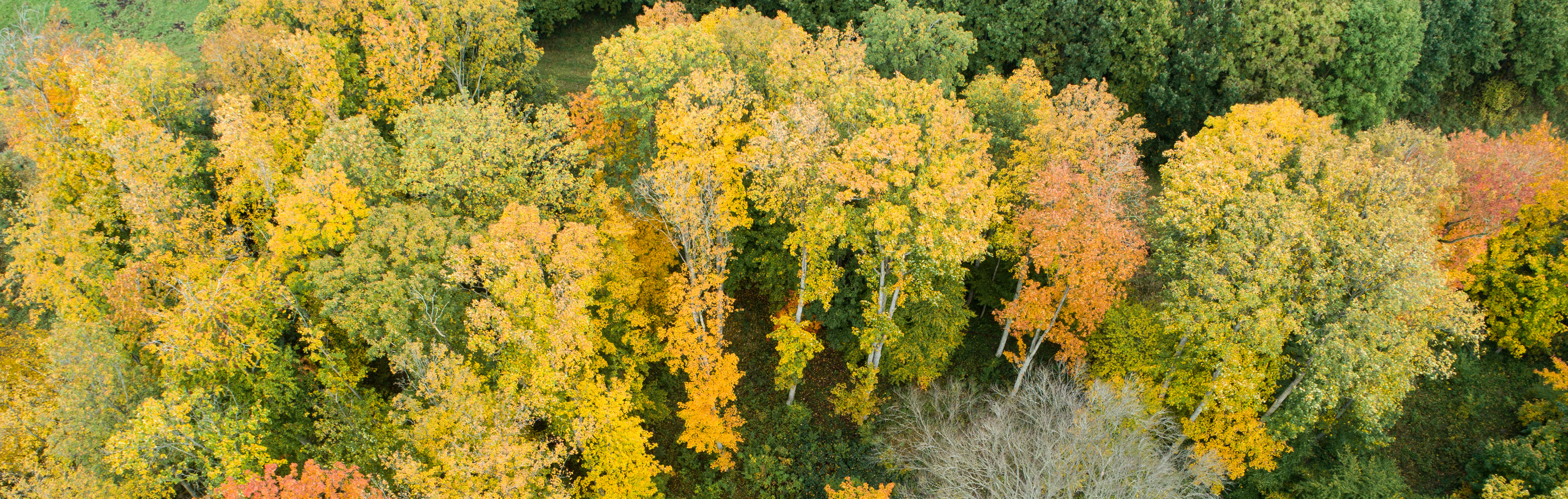
Mixed-broadleaf forest, NSG Karlsburger und Oldenburger Holz nature reserve, Rewilding Oder Delta.
Florian Möllers / Rewilding Europe
Core Topics
- Definition of forest and the general legal framework
- Existing planning regulations for forest management
- Special regimes of protection
- Measure to adopt regarding wildfire prevention
Key Takeaways
Table of Contents
1. What is a forest and how does forest and woodland management work?
Not all “forests” in the everyday sense will constitute a forest under Polish law. Different rules may apply depending on whether an area falls within the definition of a forest under the Act on Forests.1
The Act on Forests defines a “forest” as: an area of at least 0.10 ha, covered by compact forest vegetation (trees, shrubs, or undergrowth), intended for forestry production, or constituting a nature reserve or forming part of a national park, or entered in the register of historical monuments, and land used for the purposes of forest management (i.e. land where buildings, roads, storage areas, and car parks used for forest management are situated).
Besides defining what a forest is, the Act on Forests provides an overarching framework concerning forests and forestry activities in Poland. It applies to all forests, regardless of ownership. It is framed by the following principles of forest management:
- general protection of forests;
- sustainability of forests;
- continuity and sustainable use of all forest functions; and
- enlargement of forest resources.
The Act on Forests mainly concerns productive forestry, in particular, harvesting timber. Practitioners
must observe these regulations when planning any forest management on their land, such as felling trees or other actions impacting the forest. The Act on Forests equally applies to areas such as e.g., where trees have been felled and where forest vegetation will regrow.
Note that land that does not meet the above conditions will not constitute a forest under the Act on Forests. For example, if the land constitutes an area of at least 0.10 ha, covered by compact forest vegetation (trees, shrubs, or undergrowth), but is not intended for forestry production (for commercial use), does not constitute a nature reserve, does not form part of a national park and is not entered in the register of historical monuments, then the Act of Forests will not apply to it. In such a case, any activities related to forest management will be subject to regulations of the Nature Conservation Act (“NCA”).2 It is, therefore, important that practitioners consult local authorities when in doubt as to whether the Act on Forests applies to certain areas of wooded land.
Another important detail is that management of private forests in Poland is supervised by public authorities. If a given forest falls under the Act on Forests, the Starost will exercise supervision over it. Otherwise, felling trees and/or removing shrubs may require consent of the local mayor.
2. Who can own forests?
Forests in Poland can be state-owned (by the State Treasury) or privately-owned (by natural persons, companies, communities, etc.).3 For the purposes of this note, non-State-owned forests will be referred to as private forests.
Both private and State-owned forests may be used for timber harvesting, recreational purposes, etc. The goods (the land’s natural benefits) located in private forests are owned by the owner of the land where the private forest is situated. Owning a forest does not require any concession or licence, but forestry production must be conducted according to the regulations described below.
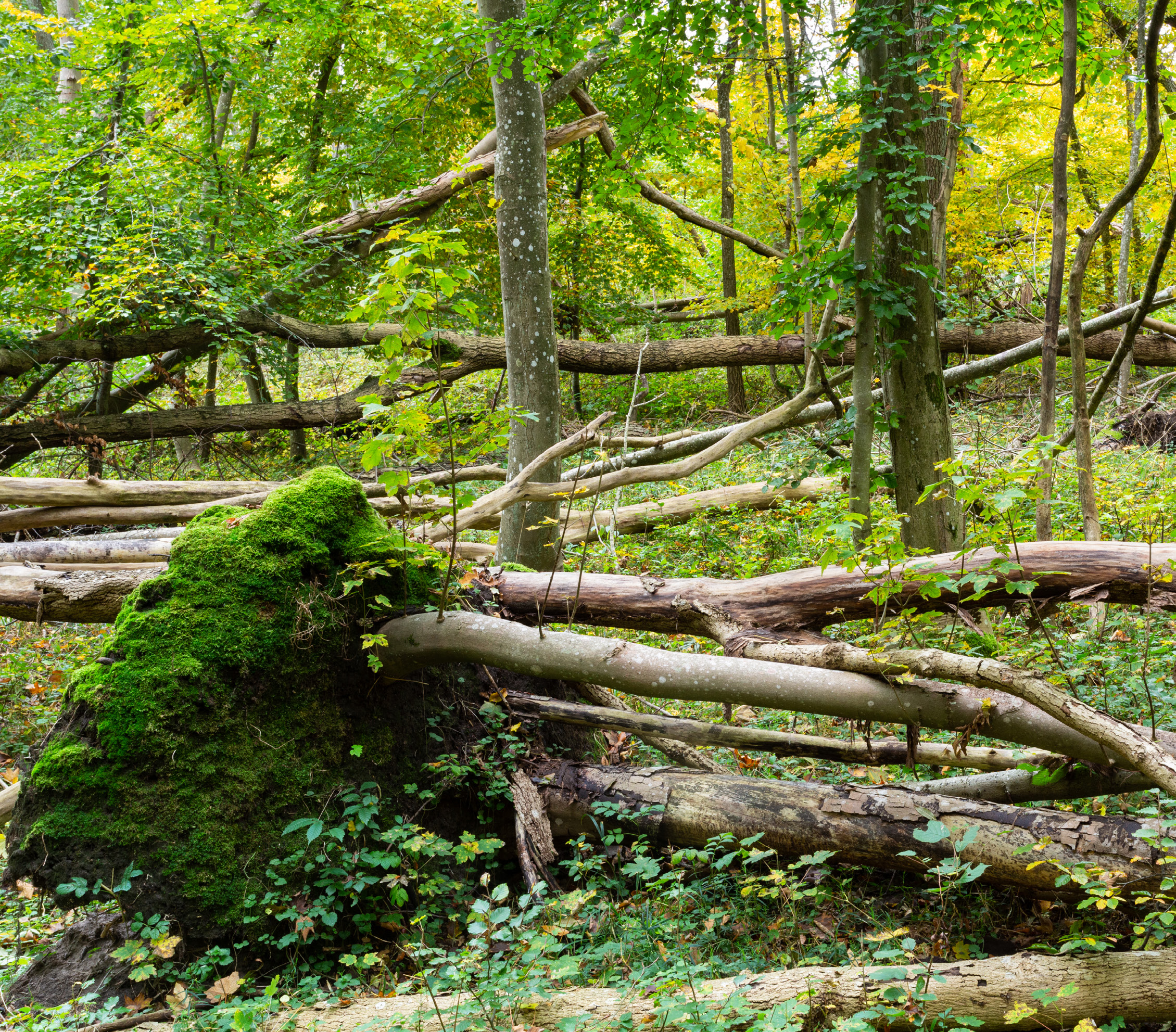
NSG Karlsburger und Oldenburger Holz nature reserve, Rewilding Oder Delta.
Florian Möllers / Rewilding Europe
3. What are the main planning regulations applicable to forest management?
There are two main types of planning regulations applicable to forests falling under the Act on Forests: (i) forest management plans; and (ii) simplified forest management plans.4/5
Both aim at preserving forests for their beneficial impact on climate, air, water, soil, human living and health, and natural balance. These plans also aim to conserve forests, especially forests and forest ecosystems of particular relevance to the preservation
of biodiversity, as well as conserving forest genetic resources, landscape value, and research.
Other objectives include the preservation of soils and areas particularly vulnerable to pollution or damage, the protection of surface and deep-sea water and water retention, and production based on sustainable use of raw materials and forest by-products.6
4. Are there any special regimes of protection?
The status of “protective forest” can be granted (and revoked) by the Minister of the Environment, upon request of the Director General, who must obtain the opinion of the municipal council in respect of Stateowned forests.
These forests have their own forest management plans with rules, modes for recognition, and management provisions decided by regulations issued by the Minister of the Environment.
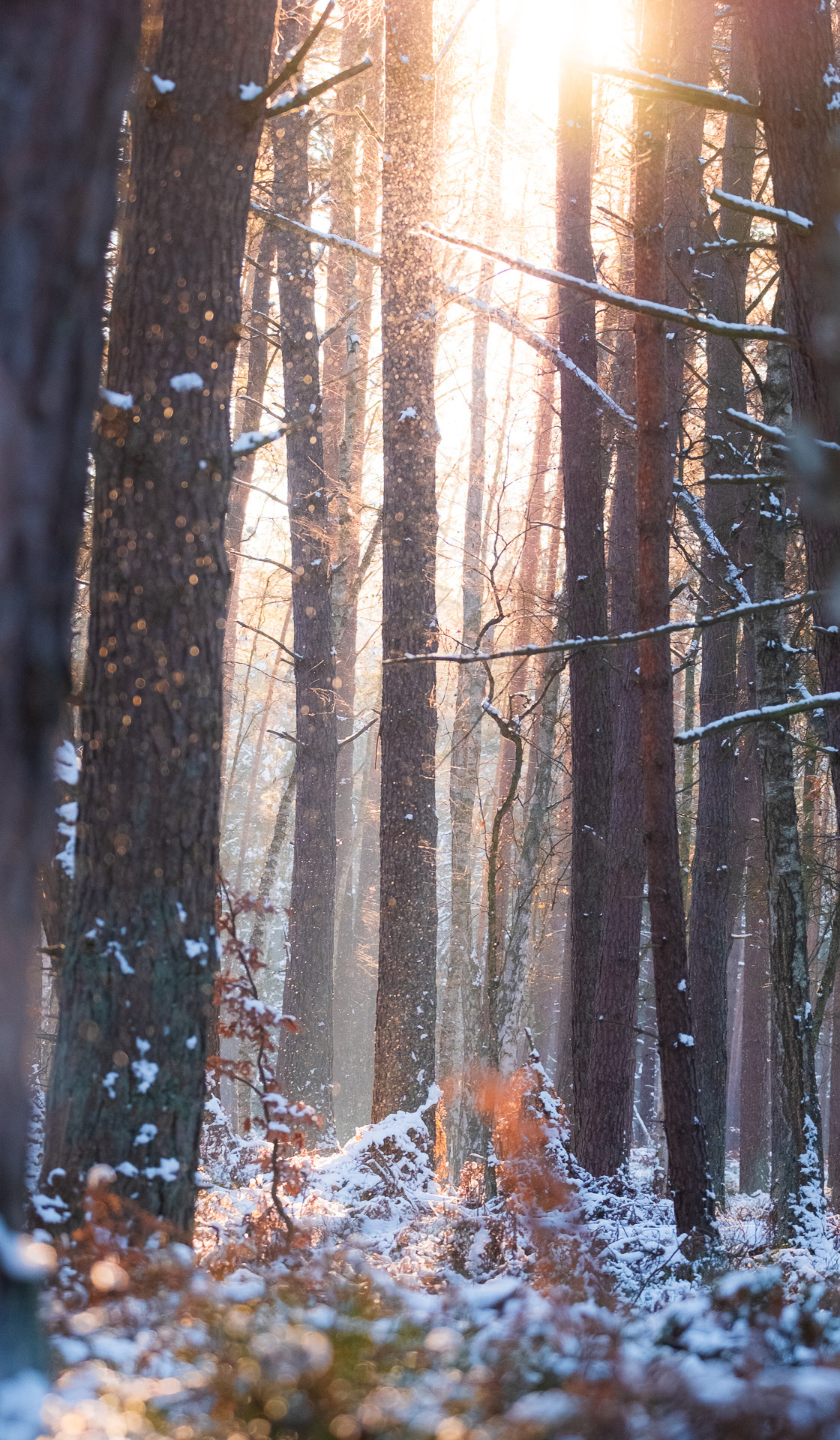
Ueckermünder Heide in winter, Rewilding Oder Delta.
Agnieszka Soboń / Rewilding Oder Delta
5. What measures need to be adopted by forest owners regarding wildfire prevention?
There is a general and overarching obligation on everyone to take precautions against the possibility of fire. This obligation falls on everyone using forest land.
However, it is the responsibility of the forest owner to provide the forest land with required fire-fighting equipment. The fire-fighting equipment includes equipment for the prevention, detection, and fighting of a fire or limiting its effects, in particular: devices forming part of the alarm and dispatch system, observation, patrol system, facilities related to water intake from water sources for the forest fire protection system.
In forest land it is prohibited:
- to leave fallen branches, brushwood, felled trees, and spoil within 30m of the edge of a railway track or public road, except if the road is unpaved;
- to carry out activities that may cause fire hazards in forests and mid-forest areas, in meadows, moors and heaths, as well as within 100m of the forest boundary, in particular:
- starting a fire outside designated fire pits;
- smoking, except on paved paths and areas designated for human habitation; or
- when erecting heaps or stacks, failing to keep a distance of at least 100m from forests and wooded areas.
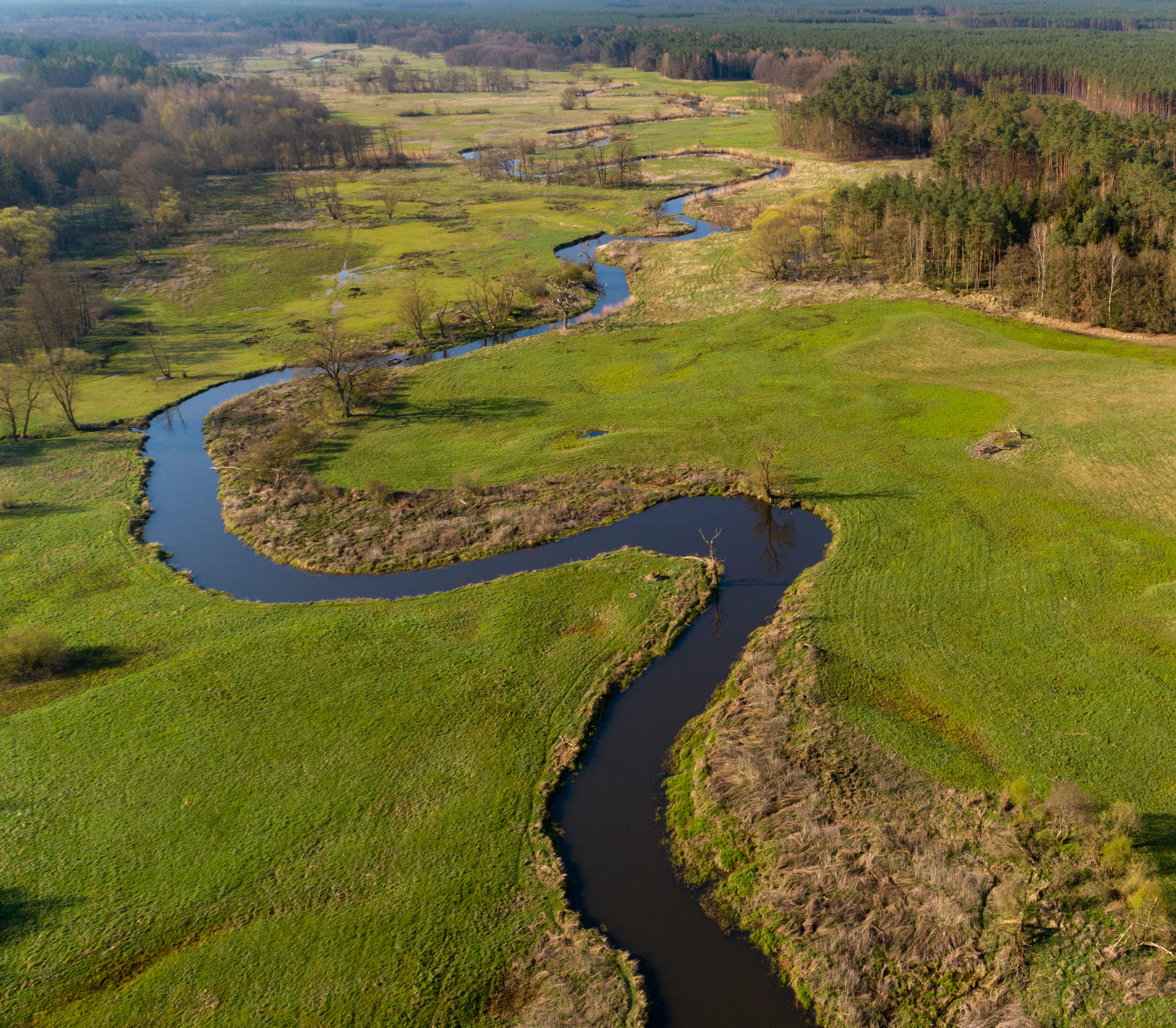
Aerial view of meanders of the river Ina, Krzewno area, West-Pomerania.
Florian Möllers / Rewilding Europe
Endnotes
- Act of 28 September 1991 on forests (the “Act on Forests”): Ustawa o lasach; consolidated text published in the Journal of Laws of 2022, item 672, as amended. Other relevant regulations are included in the Nature Conservation Act, the EIA Act, and the Polish Civil Code.
- Act of 16 April 2004, Ustawa z dnia 16 kwietnia 2004 r. o ochronie przyrody; consolidated text published in the Journal of Laws of 2022, item 916, as amended.
- In Poland, about 94% of private forests are owned by natural persons. About 4% of private forests are made up of those that are managed by land communities. The remaining - such as private forests belonging to agricultural production cooperatives, churches, religious, professional associations, and others - occupy a relatively small area.
- Forest management plans are drawn up for 10 years, taking into account the natural and economic conditions of the forest in question, and the objectives and methods defined for each forest stand. If justified, the plan may be drawn up for shorter periods, e.g., in case of damage or natural disaster. This change in duration needs to be approved by the authority of the forest management plan. Forest management plans shall contain: (i) a description of forests and land intended for afforestation, including (a) a statement of the areas of forests, land intended for afforestation, and protection forests, (b) a summary of the forest area with forest vegetation (forest crops) by tree species, age classes, classes of bonitation of trees, and forest functions; and (ii) an analysis of forest management practices over the past period; (iii) a nature conservation programme; (iv) the definitions of tasks, including in particular: (a) the quantity intended for the collection of wood, referred to separately as the pulp of the working of the wood and the surface area of the area of the ankles, (b) afforestation and reforestation, (c) nursing and protection of the forest, including fire protection, (d) hunting economy, and (e) the need for technical infrastructure.
- Simplified forest management plans shall be drawn up for private forests and communes at the request of the locally competent Starost under its coordination. For forests with an area of less than 10 ha, a forest inventory is made, with an even more limited scope than a simplified forest management plan. A simplified forest management plans covers: (i) a general characterisation of the forests, land to be afforested, and other land and properties under the management of the district; (ii) results of forest management analysis for the past period; (iii) a description of the principles adopted in defining the forest management tasks for the district; (iv) a description and summary of the tasks resulting from the forest management plan; (v) a nature conservation programme (including a description of the natural and cultural values of the forest district); (vi) a forecast of the timber resources at the end of the management period; and (vii) a summary of management activities.
- Article 7, Act on Forests.
- Article 15, Act on Forests.


Contact Us

Elsie Blackshaw-Crosby