

Rewilding in Poland
Forest Management
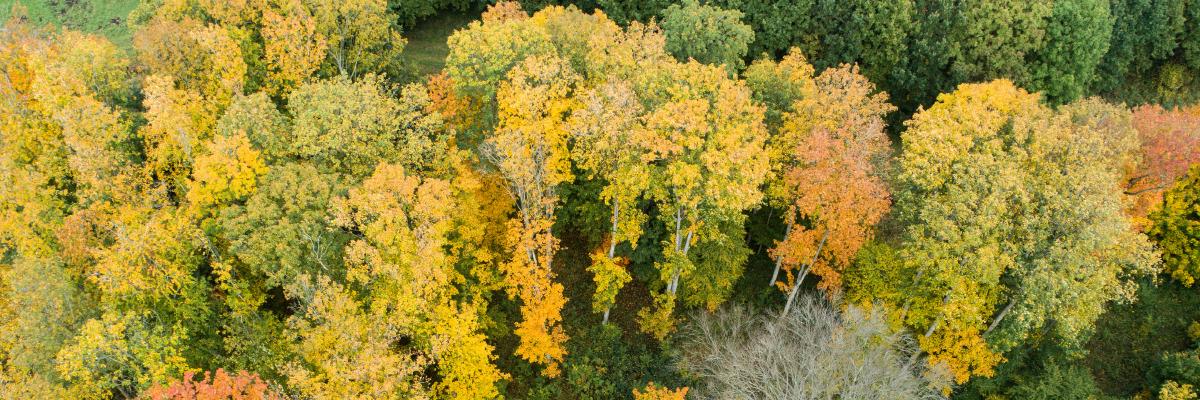
Mixed-broadleaf forest, NSG Karlsburger und Oldenburger Holz nature reserve, Rewilding Oder Delta.
Florian Möllers / Rewilding Europe
Core Topics
- Definition of forest and the general legal framework
- Existing planning regulations for forest management
- Special regimes of protection
- Measure to adopt regarding wildfire prevention
Key Takeaways
Table of Contents
1. What is a forest and how does forest and woodland management work?
Not all “forests” in the everyday sense will constitute a forest under Polish law. Different rules may apply depending on whether an area falls within the definition of a forest under the Act on Forests.1
The Act on Forests defines a “forest” as: an area of at least 0.10 ha, covered by compact forest vegetation (trees, shrubs, or undergrowth), intended for forestry production, or constituting a nature reserve or forming part of a national park, or entered in the register of historical monuments, and land used for the purposes of forest management (i.e. land where buildings, roads, storage areas, and car parks used for forest management are situated).
Besides defining what a forest is, the Act on Forests provides an overarching framework concerning forests and forestry activities in Poland. It applies to all forests, regardless of ownership. It is framed by the following principles of forest management:
- general protection of forests;
- sustainability of forests;
- continuity and sustainable use of all forest functions; and
- enlargement of forest resources.
The Act on Forests mainly concerns productive forestry, in particular, harvesting timber. Practitioners
must observe these regulations when planning any forest management on their land, such as felling trees or other actions impacting the forest. The Act on Forests equally applies to areas such as e.g., where trees have been felled and where forest vegetation will regrow.
Note that land that does not meet the above conditions will not constitute a forest under the Act on Forests. For example, if the land constitutes an area of at least 0.10 ha, covered by compact forest vegetation (trees, shrubs, or undergrowth), but is not intended for forestry production (for commercial use), does not constitute a nature reserve, does not form part of a national park and is not entered in the register of historical monuments, then the Act of Forests will not apply to it. In such a case, any activities related to forest management will be subject to regulations of the Nature Conservation Act (“NCA”).2 It is, therefore, important that practitioners consult local authorities when in doubt as to whether the Act on Forests applies to certain areas of wooded land.
If a given area does not meet the definition of a forest, other legal regimes apply, in particular the provisions on nature protection. In practice, the proper classification of the area therefore constitutes the starting point for assessing the permissibility of the planned activities.
Another important detail is that management of private forests in Poland is supervised by public authorities. If a given forest falls under the Act on Forests, the Starost will exercise supervision over it. Otherwise, felling trees and/or removing shrubs may require consent of the local mayor.
2. Who can own forests?
Forests in Poland can be state-owned (by the State Treasury) or privately-owned (by natural persons, companies, communities, etc.).3 For the purposes of this note, non-State-owned forests will be referred to as private forests.
Both private and State-owned forests may be used for timber harvesting, recreational purposes, etc. The goods (the land’s natural benefits) located in private forests are owned by the owner of the land where the private forest is situated. Owning a forest does not require any concession or licence, but forestry production must be conducted according to the regulations described below.
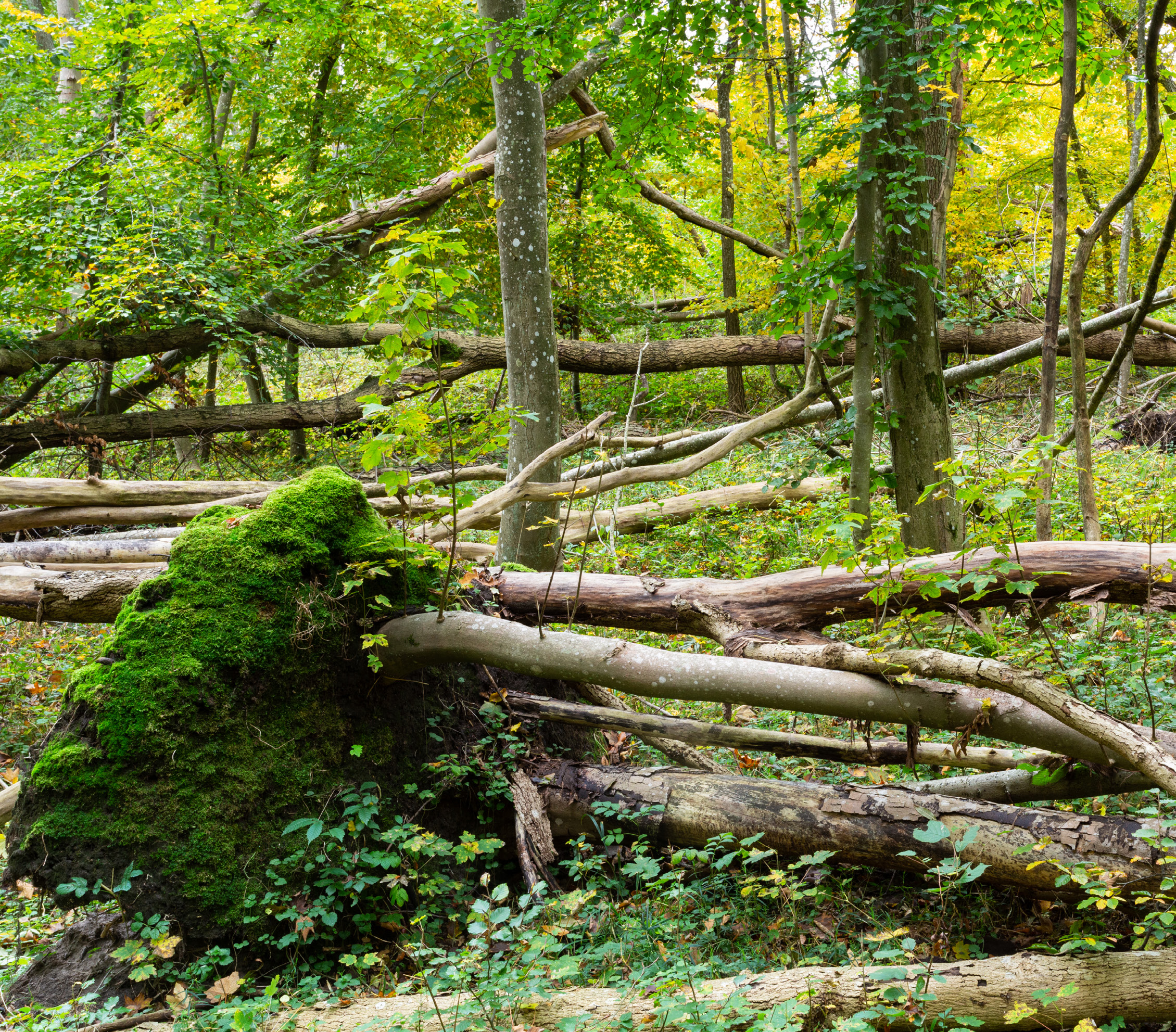
NSG Karlsburger und Oldenburger Holz nature reserve, Rewilding Oder Delta.
Florian Möllers / Rewilding Europe
3. What are the main planning regulations applicable to forest management?
There are two main types of planning regulations applicable to forests falling under the Act on Forests: (i) forest management plans; and (ii) simplified forest management plans.4/5
These instruments set out the rules for forest management, including in particular the scope of permissible forestry works, the manner of use of forest resources, and activities related to the protection and restoration of forest ecosystems.
At the same time, these plans serve both protective and economic functions—they define the framework for sustainable forest management, taking into account both production and conservation objectives.
including the preservation of biodiversity and ecosystem balance.6
In particular, they cover issues relating to:
- the protection and sustainability of forest resources;
- the management of timber resources;
- the protection of soil and water resources;
- reforestation and afforestation activities;
- nature conservation measures and actions aimed at preventing environmental degredation.
4. Are there any special regimes of protection?
The status of “protective forest” can be granted (and revoked) by the Minister of the Environment, upon request of the Director General, who must obtain the opinion of the municipal council in respect of Stateowned forests.
These forests have their own forest management plans with rules, modes for recognition, and management provisions decided by regulations issued by the Minister of the Environment.
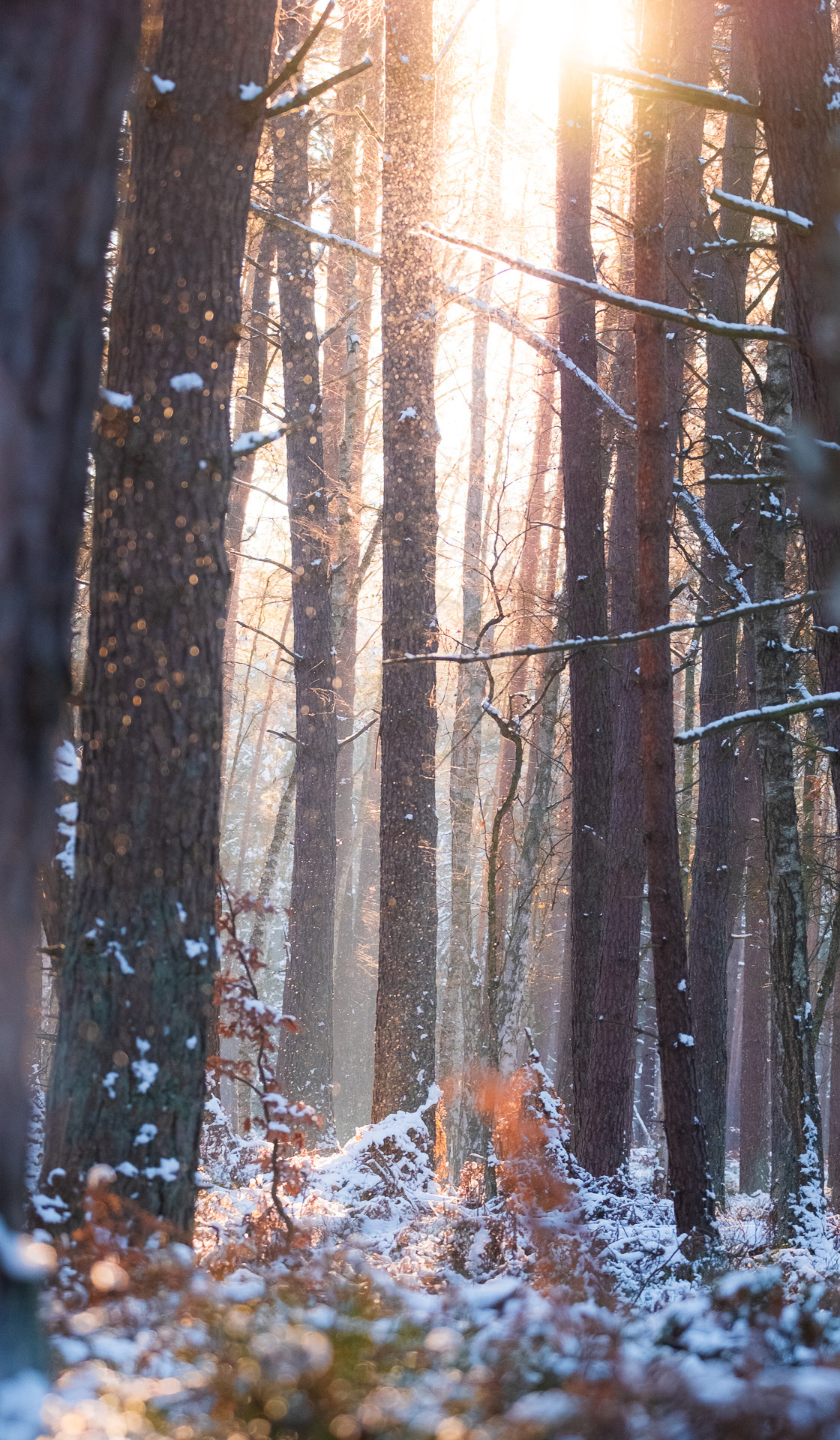
Ueckermünder Heide in winter, Rewilding Oder Delta.
Agnieszka Soboń / Rewilding Oder Delta
5. What measures need to be adopted by forest owners regarding wildfire prevention?
There is a general and overarching obligation on everyone to take precautions against the possibility of fire. This obligation falls on everyone using forest land.
However, it is the responsibility of the forest owner to provide the forest land with required fire-fighting equipment. The fire-fighting equipment includes equipment for the prevention, detection, and fighting of a fire or limiting its effects, in particular: devices forming part of the alarm and dispatch system, observation, patrol system, facilities related to water intake from water sources for the forest fire protection system.
In forest land it is prohibited:
- to leave fallen branches, brushwood, felled trees, and spoil within 30m of the edge of a railway track or public road, except if the road is unpaved;
- to carry out activities that may cause fire hazards in forests and mid-forest areas, in meadows, moors and heaths, as well as within 100m of the forest boundary, in particular:
- starting a fire outside designated fire pits;
- smoking, except on paved paths and areas designated for human habitation; or
- when erecting heaps or stacks, failing to keep a distance of at least 100m from forests and wooded areas.
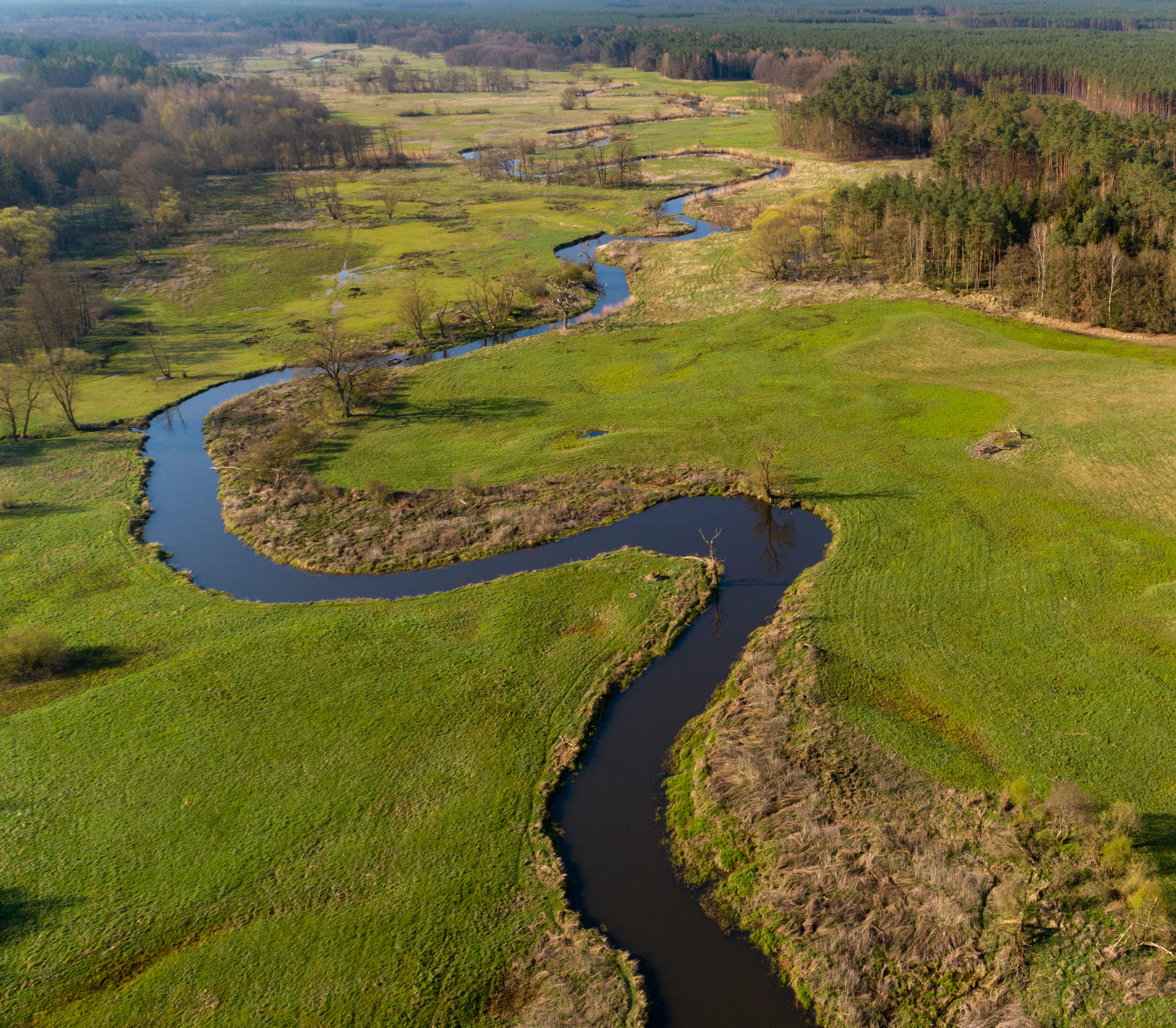
Aerial view of meanders of the river Ina, Krzewno area, West-Pomerania.
Florian Möllers / Rewilding Europe
6. New directions in forest protection
In recent years, a shift has been observed in the approach to forest protection, consisting in increasing the importance of environmental and social functions at the expense of production functions. This trend results in particular from initiatives at the European Union level as well as programmatic actions undertaken at the national level.
6.1. Old-growth forests
At the European Union level, the concept of so-called old-growth forests has been introduced, understood as forest areas with a high degree of naturalness, developed as a result of natural processes, characterized by features of late stages of ecosystem development and a significant share of deadwood.
The EU Biodiversity Strategy for 2030 provides for such areas to be placed under strict protection as part of achieving the objective of protecting at least 30% of land and sea areas, including 10%under a strict protection regime.
In the Polish legal system, the concept of old-growth forests has not yet been regulated at the statutory level. It currently operates within the sphere of policy guidelines and management practice, in particular based on actions of the Minister of Climate and Environment and the State Forests.
In practice, the identification of old-growth forests is based on expert criteria, and such areas are excluded, within varying scope, from forest management. As a rule, only activities of a protective nature or those related to public safety remain permissible.
From a regulatory perspective, this means that although the formal status of old-growth forests has not yet been established by statute, their importance in forest management practice is increasing and may lead to de facto restrictions on permissible economic activity.
6.2. Forests with a Social Function (Social Forests)
In parallel, initiatives are being developed at the national level to increase the importance of the social function of forests. In particular, in 2024, a program was initiated to designate forests with a leading social function in the vicinity of large urban centers.
This concept assumes a change in the management model for State Treasury forests by giving priority to social and protective functions – such as recreation, education, and improving environmental quality – over production.
The process of designating such areas is programmatic and based on cooperation between administrative bodies, the State Forests, and local communities.
In practical terms, this means the potential introduction of additional restrictions on forest management, particularly in areas located in the immediate vicinity of large urban centers.


Contact Us

Elsie Blackshaw-Crosby