


Rewilding in Poland
Hunting
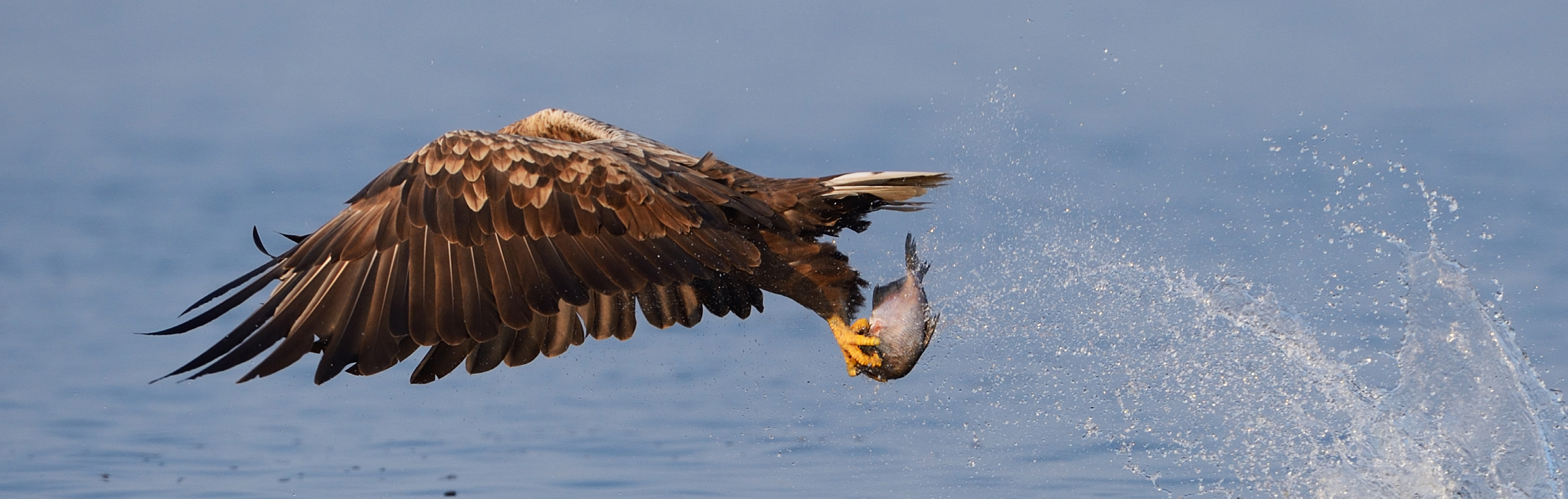
White-tailed eagle (Haliaeetus albicilla) hunting, Stettin lagoon.
Staffan Widstrand / Rewilding Europe
Core Topics
- How the territory is organised for hunting purposes
- How hunting management is carried out in Poland
- Ways to prevent hunting on the land
Key Takeaways
1. What is the general legal framework applicable to hunting in Poland?
2. How is hunting territory organised?
2.1. Hunting zones
Polish territory, both private and public land, is divided into hunting zones,3 taking into account biodiversity, landform, and other factors which may influence the management of hunting. The aim is to create zones which are independent so they can be managed separately.
A hunting zone is land with a minimum continuous area of 3.000 ha (i.e., a hunting zone cannot be composed of separated patches of land which do not border each other). In certain circumstances, the minister responsible for the environment may consent to smaller hunting zones being created.4
2.2. How are hunting zones created?
Hunting zones are created based on the resolution of the provincial government, considering (1) the need for the protection, preservation, and development of preferred animal species; (2) the avoidance of dividing
water bodies; and (3) the determination of the borders by natural or clear boundaries.
The draft of such resolution is prepared by the marshal of the voivodeship (Polish: marszałek województwa) who is assisted by a special committee consisting of representatives of the State Forest Agency, the Polish Hunting Association, and the local agricultural association which also issue opinions concerning the draft resolution. Any draft resolution establishing a hunting zone should be published on the official website of the marshal’s office for at least 21 days. Any person or entity may submit comments and questions on the published draft resolution, which must be considered by the marshal. However, there’s no clarity regarding the weight these contributions have in the final resolution.
Each hunting zone is clearly mapped, and the extent of each zone can be identified on the map published on each Regional Hunting Association’s website.5
2.3. Are there any restrictions on where hunting zones may be created?
It is not possible to create hunting zones within certain protected areas such as:6
- national parks and nature reserves (with the exception of reserves or parts thereof where hunting is not prohibited);
- areas within the administrative boundaries of towns (but if these boundaries include larger forest or agricultural areas, a hunting zone may be established);
- areas occupied by villages not classified as towns, within the boundaries including residential and farm buildings with yards, squares and the streets and roads inside these villages;
- areas intended for social, religious, industrial, commercial, storage, transport and other economic purposes, and areas of historic and special character, within the limits of their fencing.
2.4. How do hunting zones work?
Hunting zones are leased out to hunting clubs within the Polish Hunting Association (and cannot be leased to private entities or individuals).7 Should no hunting club be interested in the lease of a hunting zone; such
zone is leased by the Polish Hunting Association. Hunting clubs (composed of a minimum of 10 natural persons who are members of the Polish Hunting Association8) are assigned with the primary task of implementing the goals and hunting tasks from the Polish Hunting Association.9
Hunting zones are leased out on 10-year contracts, by the head of the relevant district (Polish: starosta) if in open land, or by the regional forestry Director if in woodland.10
Rather than lease a hunting zone, the minister responsible for the environment, may decide, after consulting the Polish Hunting Association, to exclude hunting zones from leasing and transfer them, for a period of not less than 10 years, with the purpose of using those areas as game breeding centres where other activities are carried out, apart from hunting, such as:11
- conducting scientific research;
- restoring the population of threatened species of wild animals;
- breeding native game species for the purpose of establishing hunting grounds; and
- breeding game animals that are particularly useful in forest ecosystem.
2.5. Is it possible to oppose the creation of a hunting zone?
No. Landowners with land12 within the proposed hunting zone, cannot oppose the creation of the hunting zone. However, if landowners own property within the proposed hunting zone, they can comment on the proposal during the public consultation and request that the property is excluded from the zone.13 Details of how to submit comments on the draft and the deadline for submission are published together with the draft.
When submitting the comments, landowners need to indicate the reasons for the requested exclusion of the land from the hunting zone. For example, they may argue that hunting will hinder or disrupt activities on their land, e.g., they breed animals which are sensitive to noise and hunting will have a negative impact on the welfare of the animals.
2.6. Are there other things that can be done if land is included in a hunting zone?
Landowners may demand compensation from the voivodeship for any actual damage caused by limitations in using their land as a result of its inclusion in the hunting zone. Be mindful that this may be hard to prove in practice.
Also, as an owner (being a natural person) of real estate which is part of a hunting zone, landowners may submit to the local starost a written statement on the prohibition of hunting on their property (see below for more details).
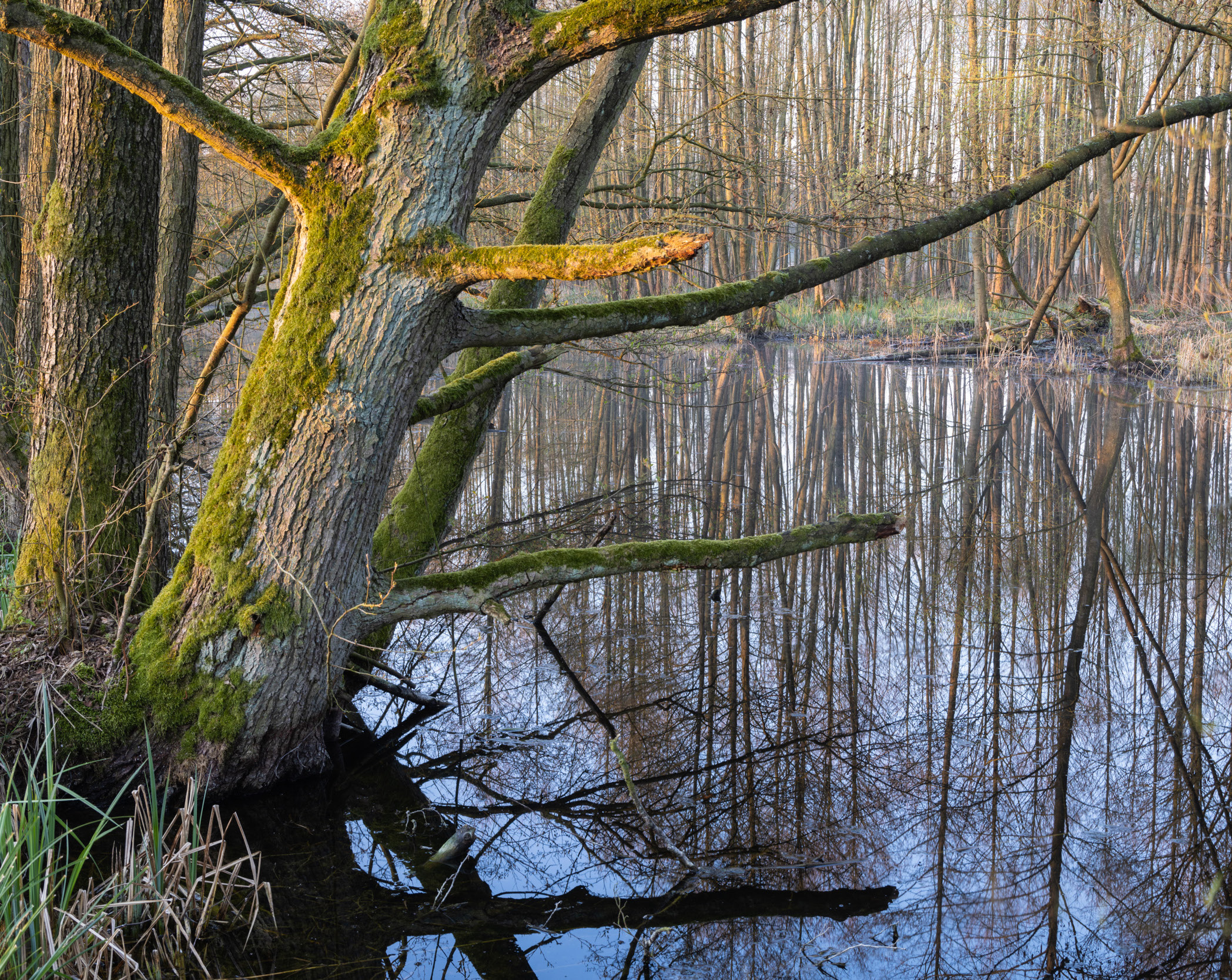
Alder trees (Alnus glutinosa) at the shores of a former peat extratction site close Święta, West-Pomerania.
Florian Möllers / Rewilding Europe
3. Is it possible to prevent hunting on private property?
If the land is in a hunting zone, there are some actions which can be taken to prohibit hunting on the land, as explained below.
3.1. Declaration of prohibition to hunt on the property
As an owner or perpetual usufructuary of a property included in a hunting zone, it is possible to submit a written declaration of the prohibition to hunt on the property.14 Note that this declaration is always accepted as it is considered to be a tool for private individuals to protect their constitutional right to property and therefore cannot be rejected.
Note that only individual owners may make such a declaration and this option is not available where legal entities own land.
What is the process to submit such a declaration?
A declaration of the prohibition to hunt (or its revocation) is submitted to the head of the relevant district (Polish: starosta) who must certify, free of charge, the declaration or withdrawal of the declaration.15 If the starosta is not the competent authority to lease a given hunting zone or if a given hunting zone has been excluded from leasing, they are obliged to immediately notify the competent authority to lease the hunting zone or the minister competent for the environment, respectively, about
the submission of a statement on the prohibition of hunting or the withdrawal of the declaration on the prohibition of hunting. If the hunting zone is in open land, the relevant public authority in charge of leasing the hunting zone is the marshal provincial governor; if the hunting zone is in woodland, the relevant authority is the regional forestry Director.16
The effects of such declaration start:17
- from the day following its submission, when the head of the district is the competent authority to lease the given hunting zone;
- from the day following the notification to the authority competent for the lease (if it is not the head of the district); or
- from the day following the date of notification to the minister responsible for the environment in cases where the relevant hunting zone is being managed as a game breeding centre (see subsection 2.3 above).
Does this prohibition run with the land?
No. The prohibition against hunting on a property is a personal entitlement of the owner or perpetual usufructuary who made the declaration, and it expires upon their death or change of the ownership of the
land due to other circumstances (such as sale, donation etc.), if it has not been previously revoked.
This means that any new owner of the property who wishes to continue the prohibition will need to submit a new declaration (including when the land has been inherited).
Can the prohibition to hunt be revoked?
Yes. Who requests it can also can revoke the declaration, also in writing, to the same authorities to whom they initially made it.18 However, they can only do this after the end of the hunting economic year19 (Polish: łowiecki rok gospodarczy) in which the declaration prohibiting hunting was made.
3.2. Raising an objection to a collective hunt
If the right over the land is as lessee or manager, and it is not possible to get the owner to request a declaration of prohibition to hunt, the only option to prevent some hunting from happening on the land is to submit an objection to any planned collective hunt which involves the land, either as a hunting ground, or as passage.20 Please note that owners of land can also raise an objection to such a hunt.
Does the objection work in every case?
No. This solution can only be applicable to prevent collective hunts on the property. This means that
individual hunters can hunt and cross the land if it is in a hunting zone, and there is not much one can do to prevent it (except to request a declaration of prohibition to hunt, see 3.1 above).
In any case, an objection to a collective hunt will only be successful if the authorities establish that hunting on the specified land will endanger the safety or lives of people in that area. It is therefore very limited in scope.
If a practitioner is seeking to lease or obtain other management rights to an area of land within a hunting zone and they wish to prevent hunting on that land, they should try to ensure as part of the negotiations for title to the land that the owner submits a declaration of no hunting for the land (provided that the owner is a natural person and not a legal entity e.g. a company).
How is an objection raised?
To submit an objection, the practitioner needs to have a justification and file it to the relevant authority not less than 3 days before the planned date of the collective hunt. These objections need to be raised each time there is a planned collective hunt.
It is highly recommended to always mention and justify what dangers to the safety or lives of people in the area are at stake (e.g., there are people on the
land which can be hurt during hunting) otherwise the objection is unlikely to be accepted.
The practitioner should identify the property with its exact address, and in case there is no address, the number of the cadastral plot and precinct.
How is the objection handled once submitted?
The relevant authority communicates the objection to the lessee or manager of the hunting district, who may accept it if the collective hunt endangers the safety or life of people in the area mentioned in the objection.
What are the consequences of raising an objection?
If the objection to a collective hunt is accepted, the lessee or manager of the hunting district is obliged to mark the excluded zone with warning signs before the planned date of commencement of the collective hunt.
There is not much one can do if the objection is not accepted. It is understood that the mechanisms to prevent hunting on land (such as objection to the creation of hunting zones, declaration of prohibition of hunting, and objection to collective hunting) have been considered adequate to protect ownership and additional protection was not considered necessary by the authorities. It is therefore crucial to prepare detailed and well justified objections.
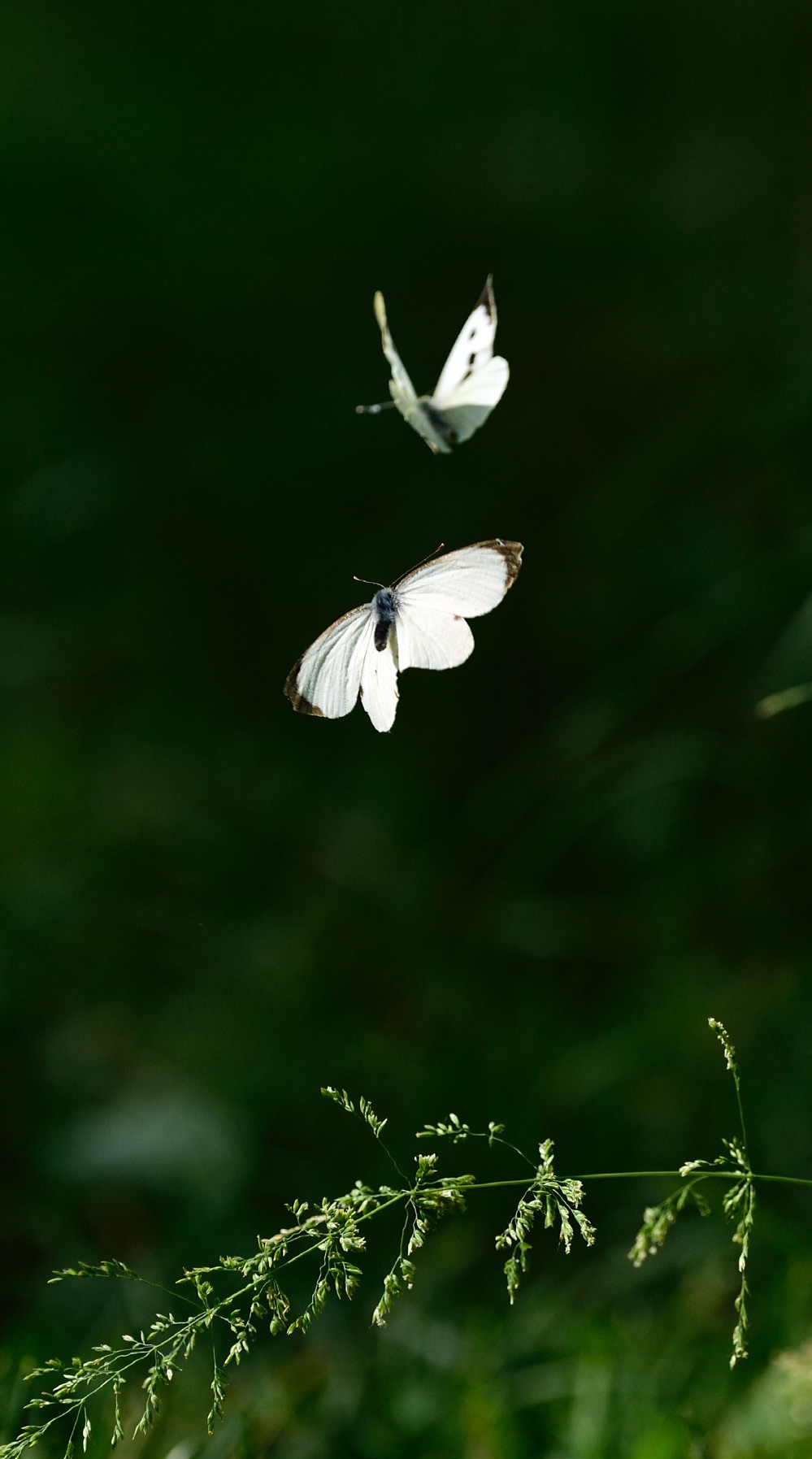
Black-veined white (Aporia crataegi), Altwarper Dune - Altwarper Binnendünen.
Solvin Zankl / Rewilding Europe
4. How is a game refuge created?
A game refuge (Polish: ostoja zwierzyny) is a form of protection which may be established in an area with favourable conditions for the functioning of endangered or rare species of game animals. Hunting is prohibited in game refuges (in fact it is prohibited to enter any area which is marked as a game refuge).
Game refuges may serve the purposes of protection, conservation of diversity of game populations and of protection and shaping the natural environment to improve the living conditions of endangered species.21 These purposes are well aligned with some rewilding principles, such as restoring ecosystems by correcting trophic chains.
4.1. What are the necessary steps to create a game refuge?
Game refuges are established by the Regional Director for Protection of Environment (Regionalny Dyrektor Ochrony Środowiska).22
Although not a legal requirement, such decisions will often be made after consultation with lessees and
managers of hunting zones (i.e., in most cases the hunting clubs). This is because these stakeholders may designate and prohibit entry to areas where hunting is not permitted because it is a game refuge.23 This requires the consent of the owner or manager of the land (in case the owner is unknown).
The marking of the area and the installation of amenities for the animals in the refuge, such as feeding stations, sheds etc., are the responsibility of the tenants and managers of the hunting zones at their own expense. Such activities may be undertaken only with the consent of the owner of the real estate.
4.2. How long can game refuges be created for?
The law does not specify how long a game refuge can be created for. Therefore, it seems possible that the protection measures associated with the establishment of the game refuge will be applied only as long as the area has favourable conditions for the functioning of endangered or rare species of game animals (e.g., such species gather there during mating season).
Example
Landowner A owns a property located in a hunting zone. They don’t want any hunting to take place on their property.
(1) Can they exclude their property from the hunting zone? If so, what is involved in doing that?
Yes, Landowner A can declare a prohibition to hunt on their property by submitting a written declaration to the relevant head of the district (starosta) (see sub-section 3.1).
Please note, however, that only individuals may use this measure, as this prerogative of the Hunting Law is granted only to individuals, and it is a lifelong entitlement. Legal entities are not covered by this provision.
(2) Are there any other mechanisms they could use to restrict hunting on their land, e.g., could they apply for their land to be protected for nature / designated as some kind of refuge and would this mean that no hunting can take place on their land?
There are no legal mechanisms for private persons to give their land a protected status. However, they can try to seek an official decision from the competent authorities for such a purpose. Game refuges may be created by decision of the Regional Director for Protection of Environment when the legal conditions are met (see section 4 above).
If the land of Landowner A is an area with favourable conditions to protect and promote healthy populations of endangered game species, they can suggest that the relevant authority create a game refuge on their land. If they succeed, no hunting can take place within the area designated as a game refuge, and access to the area is prohibited.
(3) Or can they just remain as part of the hunting zone but not undertake any hunting themselves? What are the risks associated with this and would third parties be permitted to undertake hunting anyway?
There is no obligation on landowners within a hunting zone to undertake any hunting themselves and hunting zones can be established on land regardless of whether its owners have a hunting concession.
If the owners of the land forming part of the given hunting zone do not have a hunting concession, then they cannot undertake any hunting on their land.24
However, even though the owners of the land forming part of the given hunting zone do not have a hunting concession, third parties are permitted to hunt on their land if such land is within the hunting zone and has not been excluded from hunting as mentioned in the note (e.g. no hunting declaration is in place).
(4) Regardless of the solution adopted, is there a way to stop hunters crossing their property, to hunt or just to pass by?
Besides the possibility of Landowner A requesting a declaration not to hunt (see (1) above and section 3.1), Landowner A can also try to stop a collective hunt (including hunters passing through and/or actively hunting) by raising an objection to a collective hunt (see 3.2 section above). In this case, the objection may not be accepted by the relevant authority if danger to the life or health of people has not been established.
(5) Please also consider whether the position would differ if Landowner A was in fact just leasing the property from its owner under a 50-year lease.
The only solution for a someone leasing land in a hunting zone is the objection to each collective hunt. Unless there is a prohibition of hunting on the property (which would need to be requested by the owner), there is no way to stop individual hunters from hunting or crossing the property
5. How does liability work in relation to hunting?
5.1. Civil liability
Owners or holders of agricultural and forest land should cooperate with the lessees and managers of hunting zones in safeguarding the land against damage caused by hunting.25 The law does not specify what this cooperation would involve, although examples may include cooperation in providing supplementary food for animals or constructing hunting facilities such as fences. At a minimum, owners and land holders should not interfere with the performance of the lessees’ and managers’ duties.
The lessee or manager of a hunting zone is obliged to compensate for damage caused: (i) to crops by wild boar, elk, deer, fallow deer (Polish: daniel) and roe deer (Polish: sarna); or (ii) during hunting.26 This obligation exists at all times, regardless of whether or not hunting was taking place at the time of the damage.
Compensation for damage caused by hunting shall not be granted:27
- for damage caused by hunting occurring on a property in relation to which the owner or perpetual usufructuary has submitted a declaration on the prohibition to hunt (section 3.1 above);
- if it occurred on state-owned land leased to private individuals;
- to the owners of damaged agricultural crops, who have not completed harvest within 14 days of the end of the harvesting period for this species of crops in a given region, determined by the provincial assembly (Polish: sejmik wojewódzki);
- for damage not exceeding the equivalent of 100kg of rye per hectare of crop;
- for damage to crops deposited in heaps, piles, and mounds in the immediate vicinity of a forest; and
- for damage to crops planted in gross violation of the agro-technical knowledge.
The owner or holder of the agricultural land applies for the estimation of the damage, including the
determination of the amount of compensation due to the lessee or manager of the hunting zone.28 The application shall include in particular: (i) the identification and contact details of the holder of the land; (ii) the location of the damaged land; and (iii) details of the crop which has been damaged.29
The damage assessment shall consist of (i) a visual inspection, and (ii) a final estimation of the damage.30 The competent authorities31 will issue a decision within 14 days, determining the amount of compensation.32 Compensation shall be paid from the funds of the lessee or manager of the hunting zone, no later than 30 days from the date of the decision.
5.2. Criminal liability
There are heavy consequences for the violation of hunting laws, that can range from a fine to several years of imprisonment.33 These relate to actions such as destroying the nests of game birds or undertaking hunting beyond the terms of the permissions granted for the relevant hunting zone.
Endnotes
- Act of October 13, 1995, Journal U. 1995 No. 147 Item 713.
- Article 8, n. 1 and n. 2 of the Hunting Law.
- Article 23, n. 1 of the Hunting Law.
- Article 23, n. 2 of the Hunting Law.
- See the list of such sites: https://www.pzlow.pl/zarzady-okregowe/.
- Article 26 of the Hunting Law.
- Article 28, n. 1 of the Hunting Law.
- Article 33a, n. 1 of the Hunting Law.
- Article 33, n, 1 and n. 2 of the Hunting Law.
- Article 29, n. 1 and n. 2 of the Hunting Law.
- Article 28, n. 2 of the Hunting Law.
- In Poland the land can be either owner or held in perpetual usufruct (użytkowanie wieczyste) which in practice gives rights similar to the ownership. Therefore, when referring to “owner” or ownership in this note, it will be applicable also to “perpetual usufructuary” or “perpetual usufruct”.
- Draft resolutions establishing the hunting zones must be published on the official Internet site of the local marshal’s office and the term for bringing comments thereto should not be shorter than 21 days.
- Article 27b of the Hunting Law.
- Article 27b, n. 4 of the Hunting Law.
- Article 27b, n. 6 of the Hunting Law.
- Article 27b, n. 5 of the Hunting Law.
- Article 27b, n. 4 of the Hunting Law.
- The annual hunting plan is prepared for the period from April 1 to March 31 of the following year.
- Article 42ab, n. 3 of the Hunting Law.
- Article 3, n. 1 and n. 2 of the Hunting Law.
- Article 60, n. 3 3 of the Nature Conservation Act (NCA).
- Article 12 of the Hunting Law.
- Although it is not the responsibility of the landowner, there may be consequences for underperforming with regards to the hunting plan. It is the responsibility of the relevant hunting club to perform the hunting plan (established by the Polish Hunting Association). In case the hunting club does not perform at least 80% of the hunting plan in three consecutive years with no justified reasons, the lease of the hunting zone can be terminated. Also, there are no clear indications to what “justified reasons” may be, and one possible reading is to consider “justified” when the landowners did not consent hunting in their land.
- Article 47 of the Hunting Law.
- Article 46, n. 1 of the Hunting Law.
- Article 48 of the Hunting Law.
- Article 46, n. 3 of the Hunting Law.
- Article 46, n. 4 of the Hunting Law.
- Article 46a and 46c in connection with Article 46, n. 6 of the Hunting Law.
- The State Forests National Forest Holding (Polish: Państwowe Gospodarstwo Leśne Lasy Państwowe).
- Article 46e of the Hunting Law.
- Articles 51-54 of the Hunting Law.


Contact Us

Elsie Blackshaw-Crosby