


Rewilding in Poland
Liability to Neighbouring Landowners
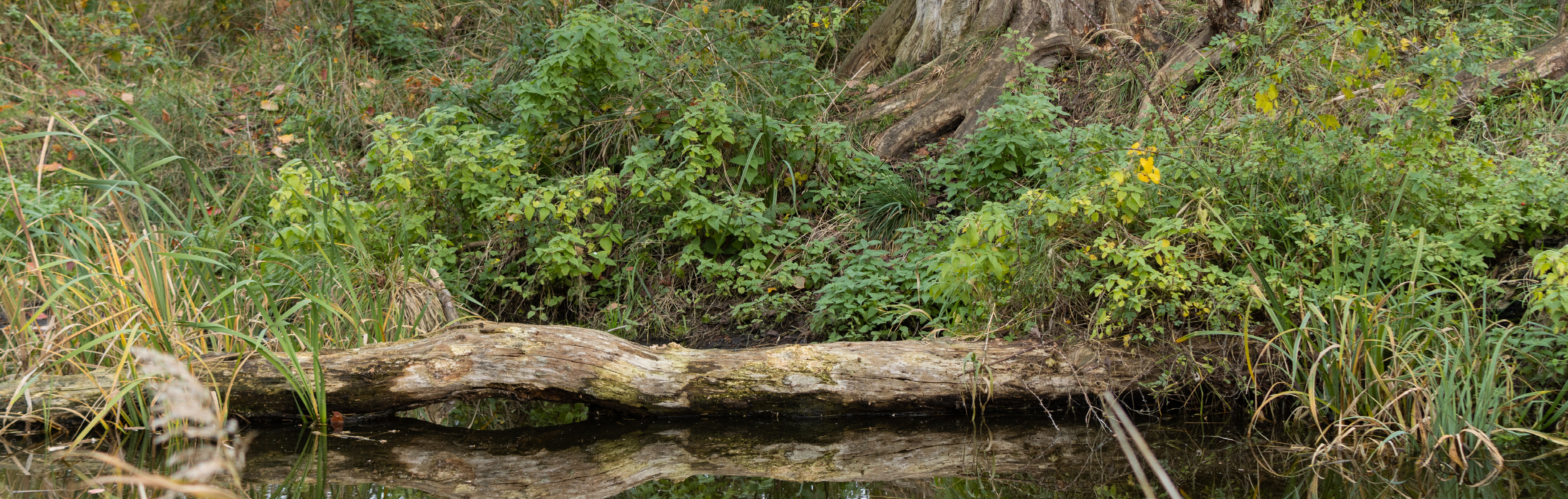
Elm showing traces of beaver activity, Anklamer Stadtbruch nature reserve.
Florian Möllers / Rewilding Europe
Core Topics
- Liabilities for damage caused to your neighbours from activities on your land
Key Takeaways
Table of Contents
1. What is the liability towards the owners and users of neighbouring land?
Where your activities cause damage to neighbouring land or stop a neighbour enjoying their land, you may be required to stop such activity and pay compensation for the damage suffered.
Certain types of activities common to rewilding could been seen to interfere with your neighbour’s enjoyment of their land or could risk causing damage to their land. These are discussed below.
2. What is the liability for damage caused by the use of water and water courses?
The Water Law1 prohibits (i) discharging water and sewage onto neighbouring land; and (ii) altering or controlling drainage of rainwater, snowmelt, and water from springs if it would cause damage to neighbouring land. This is because the Water Law qualifies such activities as a water service (discharging water and sewage) or a special use of water (discharge of rainwater and snowmelt that have been captured for drainage), which are only permitted after obtaining a water permit. For more information, please refer to Rewilding in Poland: Developing Land and Rewilding in Poland: Dam Removal.
This means that as the owner of a property, you may change the direction and intensity of rainwater and snowmelt drainage on your land without a permit if it does not cause damage to other people’s land through which the water flows.
However, if damage is caused because of these activities (regardless of whether a permit has been acquired), you will be liable to pay compensation for that damage, even if you took reasonable steps to try to prevent any such damage.2
If you’re not able to predict whether your planned works could cause a change in the direction or intensity of rainwater and snowmelt run-off, it is recommended that you enter into an agreement with the owners of the properties where a change in water relations may occur, and agree on the scope of liability, before making such change or carrying out other works on your land. Such an agreement cannot, however, concern the discharge of sewage into someone else’s water or the discharge of sewage into the ground on neighbouring land. Such action is only permissible based on a water permit, even if the neighbour agrees.
Example 1
A rewilding project decides to drain a small artificial lake to return the landscape to marshland. A drainage channel is created for these purposes. Owing to an error in design, the water mistakenly drains via neighbouring farmland, flooding the soil, and spoiling the landowner’s crops.
In this situation, obtaining a water permit would be necessary but this would not suffice to protect the rewilding project from liability. Before starting such works, it is recommended that the rewilding project discusses the proposed work with the neighbours that may be impacted by these works and tries to enter into an agreement with them. In this agreement, the parties could clearly define the scope of the project’s liability. This should be done before any works take place. This agreement needs to be approved by the competent entity, as set out below.
Example 2
As part of a large rewilding project a river is allowed to regain its natural floodplain. To achieve this, the rewilding project refrains from maintaining banks and river defences. During a subsequent period of heavy rainfall, neighbouring land bordering the river is flooded and this causes damage to neighbouring property. Over time, the river also begins to erode neighbouring land overlooking the river, parts of which begin to break off into the river and are no longer safe for grazing.
Like Example 1, before undertaking any of these actions, the rewilding project must obtain a water permit and enter into agreements with owners of the neighbouring properties. These agreements must be approved by the head of the village, the mayor, or the town mayor to be enforceable and should record which party will be liable for any damage caused by the actions.
3. What is the liability for damage caused by overhanging fruit, branches, or roots?
If the fruits and branches of your trees fall onto or overhang your neighbour’s land, they are entitled to cut them off and keep them. However, your neighbour must first give you the opportunity to cut the branches etc. yourself so that you can keep them.
Example 3
A rewilding project fells non-native trees, destroying part of the wall on neighbouring land. Not only did the wall fall, but also some branches fell on the neighbour’s fruit trees destroying fruit to be sold at the local market.
The land manager has a duty of care for the condition of the trees on their property. In cases of intentional felling, the land manager is under an obligation to ensure a safe execution, to people and objects, of the planned felling. In this scenario, the rewilding project would therefore likely be liable to compensate the neighbour for the damage caused to their wall and their fruit harvest.
In cases of disease or threat to safety, the land manager must secure the stability of the tree, treat it, or cut it down. Failure to do so is a culpable action. This means that the land manager is liable for all consequences, including damage to walls and loss of profit for damaged goods.
In relation to felling healthy trees, the status of the tree must first be checked because there is a list of species which cannot be cut.4 If the tree is healthy and has fallen as a result of a gale, there is no question of fault or responsibility. However, if the tree fell over during the storm because it had been weakened by disease, the owner may be liable for any damage caused.
Example 4
The roots of a tree belonging to Landowner A destroy the drainage system of the neighbouring land.
Landowner A’s neighbour may cut off and keep for himself roots passing from their property. This entitlement only applies to owners whose properties are disturbed by troublesome roots, as it is presented in this case. However, Landowner A’s neighbour must give Landowner A a reasonable period to correct the situation. If there is damage, Landowner A is liable and has an obligation to remedy it.
4. What is the liability in relation to earthworks?
The Polish neighbourhood regulations include a prohibition on causing disturbance to neighbouring land as a result of earthworks.5 The rule effectively prohibits earthworks being carried out that could cause irreparable damage to neighbouring properties, such as loss of support to a building situated on neighbouring land, i.e., a landslide.
The infliction of damage by earthworks may give rise to a claim for damages in tort liability based on the principle of fault. This prohibition also covers works that could only hypothetically give rise to a threat of irreparable damage.6 Such earthworks are any works related to excavation, sub-excavation, cross-cutting, etc. It may therefore include digging foundations, holes in the ground for a cellar or septic tank, as well as digging drainage ditches for one’s own use.
For the prohibition to apply, it is not necessary to be certain that the earthworks would cause a loss of support to neighbouring property. It is sufficient that “if, in the specific circumstances, it can be expected that the works carried out may cause the neighbouring land to lose its support”.7 Thus, even if the danger is not direct but is spatially and temporally close, the prohibition may apply.
In summary, this provision prohibits carrying out earthworks which threaten neighbouring properties with loss of support even in the distant future, if it can be established that the loss of support is causally linked to the earthworks to be carried out.
Example 5
Landowner B excavates their land to create a large area of water for migratory birds and takes all necessary and reasonable precautions to avoid a landslide. However, a landslide occurs and destroys part of the crops on the neighbouring land.
In this case, Landowner B could be liable, even if they had taken all necessary precautions including obtaining a building permit, if applicable. Note, however, that, in the case of earthworks, it is irrelevant that the earthworks were carried out on the basis of a building permit issued by the competent administrative authority. This is because the building permit does not give any special powers allowing the execution of earthworks that threaten neighbouring properties with loss of support.

White tailed sea eagle (Haliaeetus albicilla), Stettin lagoon.
Staffan Widstrand / Rewilding Europe
5. What is the liability for damage caused by fire?
If you need to conduct works involving fire, you need to pay special attention to the conditions under which you’re using fire and you should adopt all necessary measures to minimise and mitigate risk.
Activities involving fire are considered dangerous and as such, you will be held accountable for any resulting damage, even if you caused such damage out of negligence. However, as e.g., a building or a structure owner, if you show that you took all necessary and reasonable measures to prevent damages, you may be exempt from liability or your duty to compensate may be reduced.
Example 6
A wooded area is to be rewilded and, as part of this, Landowner C stops maintaining it and clearing it of debris. Dry brush begins to accumulate. During a particularly dry summer, a large wildfire starts and spreads to neighbouring land, damaging crops, and causing injury. The neighbour alleges that wild campers – who are invited to enter the land – have regularly been lighting campfires, and this is tolerated by Landowner C.
The decision to allow wild campers to light campfires in a high fire risk environment may be seen as an omission on the part of Landowner C. To limit liability, Landowner C should establish strict rules concerning lighting campfires.
Case law is not clear on the issue of liability of Landowner C, so a situation like this would be judged on a case-by-case basis.
Example 7
During spring, and after some rainy days, Landowner D decides to clear shrub from a small area and allow grass and wildflowers to germinate, using a hedge trimmer. While they were using it, the trimmer brushed against a rock hidden by a high shrub. A spark landed on a bale of hay nearby, setting it on fire. Landowner D didn’t notice the fire immediately and it soon became uncontrollable, advancing to the neighbouring land and burning the crops and everything else on that land. Landowner D had some buckets with water and a fire extinguisher to hand, but by the time they realised what was happening, the fire was out of control.
Landowner D will be liable unless they prove that they took all necessary precautions when using the hedge trimmer to prevent any damage from happening, thus limiting their liability. Besides having fire-fighting equipment next to him, Landowner D may also need to prove that they knew how to properly use such equipment (and in certain cases may need to provide documents evidencing such competence). Another mitigating factor may be if Landowner D is able to show that the delay detecting the fire was not significant or would not have made a difference to the extent of damage.
6. What is the liability for damages caused by immissions?
Immisions (immisje in Polish) refer to any physical interference with the use or enjoyment of property, caused by activities or operations on neighbouring land. These may include noise, vibrations, odours, dust, and generally any introduction of physical substances or energy into the air, water, soil, or land.
Generally, if the immissions cause damage, the damage shall be compensated, and the question of fault and the good or bad faith of the infringer is irrelevant for the occurrence of an immission.
Note that your neighbour may demand that you stop causing immissions that are interfering with their enjoyment of their property, but also, they may demand that you stop any preparations for an activity that will cause future damaging imissions.
Example 8
Landowner E decided to plant many tall trees which would likely interfere with access to natural light from the neighbouring landowners.
In this case, Landowner E may be blocked from planting the trees because, in the future, they will impact the neighbour’s right to access natural light from their land, even though currently the landowner’s actions are not causing damage to the neighbour.8
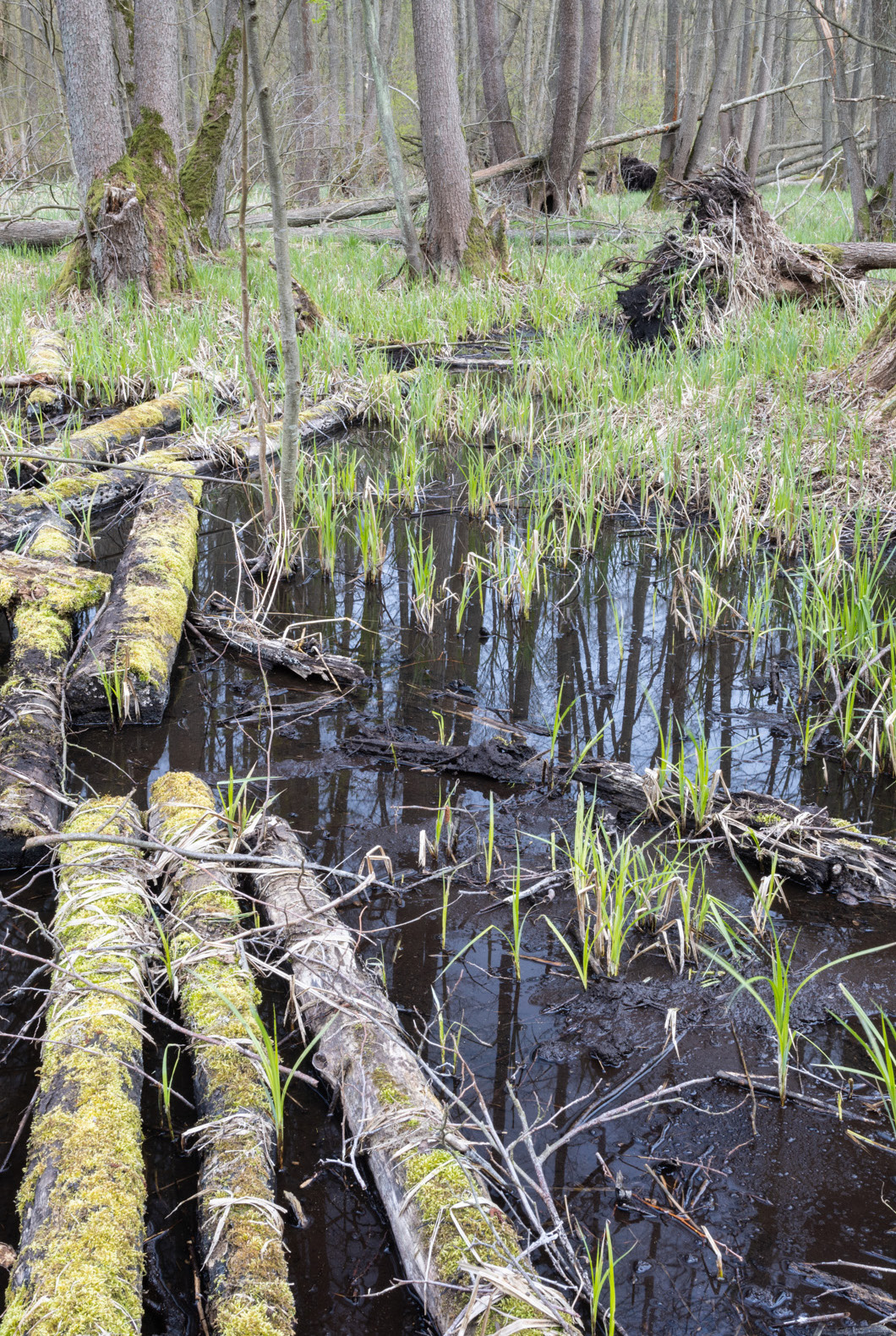
Wetland in a small fen wood, Rewilding Oder Delta.
Florian Möllers / Rewilding Europe
Endnotes
- Act of 20 July 2017, Water Law.
- Judgment of the Voivodship Administrative Court in Rzeszów of 5.06.2019, II SA/Rz 387/19.
- Art. 235 of Polish Water Law.
- Art. 83f of Polish Environmental Protection Act.
- Art. 147 of Polish Civil Code.
- According to Article 147 of the Civil Code, it is not necessary to be certain of the loss of support as a result of earthworks carried out on neighbouring land. Case law has confirmed this: “It is sufficient if, in the specific circumstances, it can be expected that the works being carried out will cause the neighbouring land to lose its support, without the danger having to be immediate, imminent” (the Supreme Court in its judgment of 12 April 2007, III CSK 431/06).
- The Supreme Court in its judgment of 12 April 2007, III CSK 431/06.
- Judgment of the Court of Appeal in Gdańsk of 9.02.2016, I ACa 875/15. Polish courts have ruled that “while the defendant’s current use of its property does not pose a serious threat to the plaintiffs because of the still small size of the trees planted, but in the future the defendant’s action will far exceed the average and intensify the negative impact on the plaintiffs’ property and their welfare.”


Contact Us

Elsie Blackshaw-Crosby