
Rewilding in Poland
Obtaining Land and Legal Mechanisms for Protection
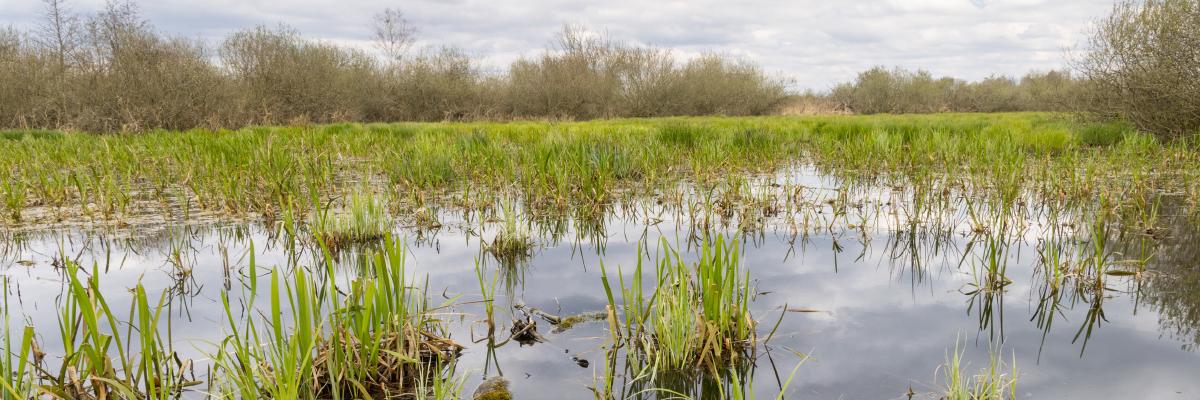
Former peat bog extraction site turned into wet meadow, Boleslawice, West-Pomerania.
Florian Möllers / Rewilding Europe
Core Topics
- Key issues to consider when securing land for rewilding
- The 2016 Agriculture Reform and its impact of land transactions
- The different legal structures available to obtain / secure land for rewilding
- Grazing rights
Key Takeaways
Table of Contents
3.
4.
1. When securing land for rewilding, what key issues should be considered?
When securing land for rewilding activities, besides the suitability of the proposed land, there are three issues that are relevant.
First, it is necessary to consider what will happen to the land at the end of the ownership / management period. Without taking specific actions, the land may be degraded by future owners/managers, resulting in the loss of the ecological benefits achieved by rewilding. Certain legal structures for obtaining land provide greater protection than others.
Second, it is common for lease / tenancy agreements (or similar) to include clauses which require the land to be restored to the same state as it was at the start of the lease. This is potentially problematic because
changing the state and nature of the land is at the heart of rewilding. Practitioners should therefore keep an eye out for these types of clauses, and where they exist, either seek to have them removed or include explicit provisions in the agreement which acknowledge the nature and purpose of rewilding and stipulate that such changes will not constitute a breach.
Third, the 2016 Agricultural Reform1 places significant restrictions on dealing in agricultural properties in Poland. It makes it harder to obtain land for rewilding (either through ownership or usufruct / lease / tenancy), where that land is registered as agricultural land. This is discussed in more detail in the following section.
2. What is the 2016 Agricultural Reform and are there approaches which minimise its impact?
The Agricultural Reform introduced (with some exceptions) several limitations on the trading in, and use of, agricultural land from 30 April 2016:
- Only individual farmers can purchase agricultural properties (and the aggregate of the purchased agricultural property and that already owned by the purchaser as an agricultural farm may not exceed 300 ha of arable land).
An acquisition of an agricultural property by an entity other than an individual farmer and/or acquisition of such land through a share deal transaction may require the prior approval of the relevant director of the National Agricultural Support Office (“KOWR”).
Agreements for the sale and purchase of real property require a notarial deed. For agricultural land, prior to drawing up the sale and purchase agreement for transferring the title, the notary
public has to verify whether the terms and conditions set under the Agricultural Reform have been fulfilled.
Any agricultural property purchased following the Agricultural Reform must be used for agricultural purposes for at least five years following the date of acquisition (the restriction does not apply to properties that are inherited).
Consequently, such agricultural property may, as a rule, not be sold, disposed of, or given to any other entity for their use before the end of this five-year period unless KOWR issues an approval, which may be possible in cases justified by an important interest of the buyer or the public interest. There is no exhaustive statutory list of circumstances justifying KOWR approval. In theory, environmental reasons, including those related to rewilding, could constitute an important public interest, but this would be subject to KOWR’s discretionary assessment. This restriction also applies to usufructs, easements, usage, tenancies, and leases, meaning that such rights cannot be granted over agricultural land during the five-year period without KOWR approval.
Where KOWR’s approval is required, depending on the complexity of the case, KOWR should issue its decision within 2 months of receiving a complete application. If the applicant does not seek such approval, KOWR may start court proceedings to contest the purchase/grant of rights. In summary, this means that unless individuals undertaking rewilding activities qualify as a farmer,2 any purchase of agricultural land will require consent of the KOWR.3 If the rewilding practitioner is not a farmer, they will need to submit a request for consent which should include:
the identities of the seller and the purchaser, with their residential addresses or registered office. Where one party is a natural person who does not have Polish citizenship, it is necessary to include details of their country code and passport number or other identity document;
the designation of the agricultural property being sold, according to the land and building register; and
justification for the application, including the purpose for which the agricultural property is being purchased, and the expected use of the property.
The following supporting materials shall accompany the application:
an extract from the land and building register for the agricultural property being sold;
a copy of the land and building register, or a certificate issued based on the collection of documents kept for the agricultural real estate being disposed of, or information on the parcel number of the land and building register available in the central database of land and building register;
certificate of the designation of the disposed agricultural property in the local zoning plan;
documents confirming fulfilment of the conditions for KOWR approval;
if the application is submitted by the buyer, then a statement from the seller on their intention to sell agricultural land to the applicant; and
if the application is submitted by the seller, then a statement from the seller about the impossibility of selling agricultural land to an individual farmer; and
the agreed sale price.
3. What are the key legal structures available to secure land for rewilding? What are their advantages / disadvantages?
Please refer to the summary table at the end of this note for a side-by-side comparison of these different legal structures.
3.1. Ownership
What does ownership of land mean?
Ownership is the broadest, most fundamental right in rem, allowing the owner to use, dispose of, and benefit from the property to the exclusion of others (subject to any rights granted to third parties under leases or easements etc).
Ownership is the safest form of securing land for rewilding, as it is not subject to a time limit. Ownership can be lost only in strictly defined cases. For example, where the land is disposed of by sale, death of the owner (if an individual), or liquidation of the company (if a legal person), expropriation or other events provided by law.
However, there may still be legal restrictions on the use of owned property (e.g., local zoning provisions), principles of community coexistence (resulting from ethical norms) or the socio-economic purpose of the ownership.4
What formalities are required to transfer ownership?
Transfer of real estate requires a contract as a notarial deed and registration in the land and mortgage register.
Is ownership of land useful for rewilding?
Under Polish law, ownership is the best title to real estate for rewilding. It gives the owner full the broadest possible rights, subject to statutory limitations, allowing them to keep control for the entire period of ownership.
However, as noted above, the purchase of a property for rewilding may prove difficult because of the 2016 Agricultural Reform and the need to get permission from the KOWR.
Besides the restriction on the disposal of agricultural land, State Treasury units have many pre-emptive rights in the purchase of real estate. Therefore, if practitioners are planning to purchase land, it is recommended that they conduct thorough due diligence to verify whether the property in question is subject to any pre-emption rights. Common cases include where:
the municipality has a pre-emption right in purchases of (i) undeveloped real estate previously acquired by the seller from the State Treasury or local government units; or (ii) land in an area designated in the local zoning plan for public purposes or for which a decision on the location of a public purpose investment has been issued;
State Forests have a pre-emptive right to purchase real estate (i) designated as forest in the land and buildings register; (ii) intended for afforestation as specified in the local zoning plan or in the decision on land development conditions; or (iii) being a forest within the meaning of Article 3 of the Forest Act, covered by a simplified forest management plan or a decision of the district governor specifying tasks in forest management (see Rewilding in Poland: Forest Management);
the State Treasury has a pre-emptive right with a sale of land under inland standing waters; and
a municipal council may establish, in favour of the municipality, a pre-emptive right to purchase all real estate in a revitalisation area.
Example
Landowner A recently bought a piece of land which includes old-growth forests. Besides owning it, she does not intend to interfere with the land. She also plans to secure its wilderness to ensure that no one, including her descendants, can change her vision for the property. She is especially concerned about the possibility of her heirs, who do not have the same sensitivity towards nature, to fell the trees for timber and profit from it. Are there any private law instruments to protect the land to the level intended by the landowner?
Polish law does not provide for instruments which could ensure that future property owners continue to use the property for rewilding. Unfortunately, it is not possible to limit the property rights of future owners and oblige them to a certain use of the land.
3.2. Usufruct (PL: użytkowanie)
What are usufruct rights?
The beneficiary of a usufruct is entitled to use and benefit from the property. It can be granted to both individuals and/or legal entities, such as companies or NGOs. This means that if practitioners establish a usufruct, they can manage and benefit from the land during the term of the usufruct.
It should be emphasised that in order for a legal relationship to create a usufruct, the right to use the object of usufruct and the right to collect the profits (pożytki) created by the object must be both granted to the beneficiary (i.e. the usufructuary). Polish law distinguishes three types of profits that the usufructuary may receive under a usufruct:
natural profits: crops from the land and other detached components of the land such as fruit picked from a tree or sand extracted from the ground. This is the most relevant for farmland and potentially for rewilding;
civilian profits: income from the land based on a legal relationship (e.g., rent if the real property is sublet); and
legal profits: income that the land brings in accordance with its socio-economic purpose, such as interest or dividends. In the context of rewilding, it is possible to consider developing activities from which practitioners can receive dividends such as guided tours, eco-tourism accommodation, natural capital payments (e.g. carbon or biodiversity credits) as profits that practitioners may receive as usufructuaries. However, it is recommended to consult with legal experts to get better tailored advice.
Thus, it is important to remember that a contract which gives the right to use an object without giving the right to collect benefits will not result in the establishment of usufruct, even if the parties refer to it as such. Instead, this would be a contract of usage, as described below (see section 3.4).
How long can usufruct rights last?
A usufruct may be concluded for a definite or indefinite period (e.g. until the beneficiary dies or, if the beneficiary is a legal person, until it is dissolved). Although it cannot be granted in perpetuity, the possibility of granting usufruct for such indefinite periods (especially when granted to a legal entity) makes it a useful tool to consider when trying to secure land for rewilding long-term.
Once granted, the usufruct will remain enforceable even if the land is transferred to a new owner. This is another key benefit in a rewilding context.
Note that a usufruct is non-transferable. This means that once it is granted, the beneficiary cannot pass on those rights to another individual or legal entity.
How can a usufruct end?
Usufruct rights will automatically expire if they have not been exercised at least once within a continuous ten-year period (note that any exercise of the right, however brief, will reset the time limit and prevent the right from expiring). In practice, non-exercise of a usufruct regarding land means not using or benefiting from the relevant land.
The owner of the land has very limited rights to end unconditional and indefinite usufructs. They, as a rule cannot terminate it at will, although in specific cases provided by law (e.g., for important reasons), termination may be sought before a court. This is another aspect of usufruct which make them a powerful tool for those looking to secure land for rewilding for long periods of time and with as much security as possible.
Parties to usufruct can, of course, agree voluntarily to end the right.
What formalities are required to create a usufruct?
A valid usufruct can be paid or unpaid, depending on the parties’ agreement. The usufruct agreement must be executed as a notarial deed. Also, it needs to be disclosed in the land and mortgage register so it can be enforceable against third parties.
Are usufructs useful for rewilding?
Usufructs provide a legally strong and robust option for those looking to secure land for rewilding. This is because:
although a usufruct cannot be granted in perpetuity, the term of a usufruct may be long-term and only end when the beneficiary NGO is dissolved, for example;
the usufruct will remain in place even if the land is sold to different owners; and
- there are very limited termination rights available, and the owner cannot end at will (even by application to a court).
It is important to bear in mind that granting usufruct rights is restricted under the 2016 Agricultural Reform within the first 5 years of purchase (see section 2).
Example
A practitioner gains usufruct rights over a land where a herd of Taurus usually graze. The landowner keeps the herd of Taurus for breeding programs worldwide. In the agreement, the practitioner is entitled to manage the land for extensive grazing and the landowner wants the practitioner to be the keeper of the herd of Taurus while the usufruct lasts. The practitioner is happy to manage the grassland for extensive grazing, but would prefer to let the herd live in a semi-wild regime, with no economic purpose.
In this example, the usufruct does not involve any economic benefits as the herd is left to live in a semi-wild regime. As such, there is some risk that this would be considered an ordinary lease - which includes rights for the property owner to end the contractual relationship.
However, if the usufruct involved collection, by the practitioner as usufructuary, of any benefits (e.g., harvesting of grass cuttings, fruits, income from eco-tourism etc.), then there is a basis for considering such a relationship as a usufruct (and significantly limiting termination rights for the owner).
3.3. Easement (PL: służebność)
What are easements?
Easements are a legal tool for granting a right to do something on someone else’s property. For example, they may grant a right of access across third party land to a property which is otherwise isolated from a public road. They could also grant permission to graze animals on third party land.
There are two relevant types of easements in Poland:5
Land easements – this type of easement requires the existence of two properties: one (servient) property is at the service of the other (dominant) property, regardless of ownership. This means that the dominant land will continue to benefit from the easement even when it is sold or otherwise passes to a new owner. It does not matter whether the land is owned by a legal or natural person (i.e., a company / charity etc or an individual). It is understood that the establishment of an easement is based on economic value. This means that when the premise for its establishment no longer exists (i.e., the easement no longer serves the assumed economic purpose), the easement will expire. In practice, it may be difficult to show the economic value of rewilding (unless it encompasses rights such as harvesting or commercial activities, etc).
Personal easements – these are established to satisfy the personal needs of the holder (they may be consumption purposes, but also moral or
aesthetic). Although the rights under a personal easement can be the same as rights under a land easement, one major difference is that the benefit of personal easements is unconnected to a property. This means that personal easements lack the distinction between dominant and servient properties: there is only a servient property to benefit of the individual. Therefore, a personal easement can only be established for the benefit of an individual (and not a legal entity such as company / charity). It is non-transferable and non-hereditary, so it cannot be transferred to another person.
There are three categories of benefits which may be granted by easements:
they allow the beneficiary to use the servient property to a specified extent (e.g., a right to cross the property to access their own land);
they may oblige the owner of the servient property to not perform certain actions in relation to his own property (e.g., restricting their ability to cut certain trees or to drain agricultural land); and/or
they may oblige the owner of the dominant property to not do certain things on or to the servient property. For example, to restrict the ability to enter the servient property to remove overhanging tree branches or fruit, or to prohibit fertilising the land with certain substances or emitting unpleasant odours.
A valid land easement must provide a real benefit to the dominant property, which does not need to be strictly economic in nature (economic, with land easements, or another benefit for which it was established, with a personal easement). Where the benefit of an easement ceases to exist, the easement is no longer valid, and the owner of the encumbered property can go to court and demand the termination of this right encumbering their property. Same goes even if there are no conditions or time limit for the easement. This means that a valid easement needs to have an economic value. Considering the use of easements for rewilding, it is crucial to recognise this significant feature, as proving the economic value of relevant activities can be challenging.
How long can easements last?
Easements can be concluded for a definite or indefinite period.
As with usufructs, personal easements established for an indefinite period expire with the death of the person.
Normally, unconditional and indefinite land easements are permanently attached to the property in question. Therefore, such easements run with the land, regardless of changes in property ownership (provided that the real benefit of the easement still exists). There are certain specific exceptions when indefinite
land easements will end, such as the sale of the dominant property in foreclosure proceedings.
Regardless of the term, any easement:
will cease to exist by law if it has not been exercised within a continuous ten-year period;
may be abolished in exchange for compensation if, because of a change in circumstances, the easement has become burdensome for the owner of the servient property and is not necessary for the beneficiary; and
may be abolished if the easement has lost all meaning to the beneficiary, in which case the easement can be removed without compensation.
What formalities are required to create easements?
Easements are usually created by a written contract6 and may be paid or royalty-free.
Easements may be registered in the land and mortgage register (but this is unnecessary for them to be created).
However, registration in the land and mortgage register is recommended. In particular, when easements are registered, they become enforceable against third parties. Another benefit in registering an easement is that if a discrepancy arises between what is in the land and mortgage register and the actual legal status, the contents of the register will prevail in favour of the person who acquired ownership or other right in rem through a legal transaction with the person entitled to grant such right, as according to the register.
Are easements useful for rewilding?
Easements can be useful for rewilding as they provide a tool to enlarge the area of operations, binding future owners of an adjacent property to the benefit of rewilding activities, if properly registered.
Although it is not possible to establish easements for perpetuity, creating an easement with an indefinite and irrevocable period provides high certainty of its duration. However, when the owner of the encumbered property finds that the easement has lost its purpose, they can demand its removal. In addition, it is important to keep in mind that an easement will count as a “disposal” under the Agricultural Reform, meaning that easements cannot be granted for agricultural land within the first five years of purchase, subject to getting the necessary consents.
Example
Landowner B bought an area of land and plans to convert it into a permanent meadow covered with native forage herbs and grass. She also plans to release a herd of Taurus to graze the land. These animals are not being kept for human consumption. She would ideally like to ensure that this area cannot be degraded or reverted to general agricultural land by future owners.
The land is next to another area of land, owned by a neighbour, the soil characteristics of which are like landowner B’s land. The neighbour doesn’t use her land for any purpose and would like to support landowner B’s endeavors. However, the neighbour is not interested in selling their land. The parties agree that the neighbouring land should be used as an extension of the permanent grazing pasture for the Taurus and will also be converted into a permanent meadow for this purpose.
1. What type of agreement could be put in place between the two landowners to record and enact such collaboration in practice? How would such an agreement affect the future use of each area of land?
The collaboration between the two landowners could be formalised through a land easement.
The land easement would grant Landowner B control over the neighbouring land for its duration. This would effectively prevent the neighbour from using the land for other purposes during this time. Even if the neighbour were to sell the land in the future, the easement would remain in place and bind subsequent owners. This would ensure that the neighbouring land continues to be used as a permanent meadow for grazing, consistent with Landowner B’s conservation goals, regardless of changes in ownership.
Depending on the content of the agreement, there is a risk that it would not be considered a de facto easement because of the lack of economic value and would instead be considered a lease that can be ended under the statutory time limits.
2. Should / could the agreement refer to the conservation purpose of this collaboration? What advantages would that bring to Landowner B to guarantee that the agreement serves her purposes?
The agreement may contain such provisions - this would ensure that the owner is aware of the purpose for which the property will be used.
3. Are there time limits for such an agreement? How long can it remain in place, and will it bind subsequent owners of either or both parcels of land? Can any future owners of either parcel of land bring such an agreement to an end?
While setting up an easement for an undefined and irrevocable timeframe offers considerable assurance regarding its duration, once the owner of the burdened property determines that the easement no longer serves its purpose, they can request its termination.
4. Are there any protections that can ensure that such an agreement be enforceable?
When an easement is registered, it becomes enforceable on third parties, which is a way of making its content run with the land, i.e., subsequent owners are bound by an easement which is properly registered. Furthermore, registering the land in the land and mortgage register can provide a solution for disputes concerning the legal status of the land. This is particularly useful when a subsequent owner of the servient property questions the existence or terms of an easement.
3.4. Usage (PL: uzyczenie)
What is usage?
Usage is the right of a specific person to use a property free of charge for a fixed or indefinite period. The usage cannot be subject to any payment of rent. It is established by contract between the user and the person providing the property for use. This makes it a useful tool for rewilding, where practitioners wish to formalise an agreement with a supportive landowner for the free use of their land for rewilding activities. However, a usage agreement is personal to the parties to the contract, and it will not run with the land. There are several provisions from the Civil Code which must be observed by the user:- the property shall be used in a way that corresponds to its properties and purpose or as specified in the usage agreement;
- the user shall bear the ordinary costs of maintaining the property in order to keep it in an undamaged condition;
- the user shall take care of the property and must immediately notify the owner of any claims by a third party concerning the property, as well as of any need for repairs;
- the user shall return the property at the end of the usage period in an unimpaired condition (i.e. in the same state as at the time the usage was granted). However, the user is exempt from liability for the wear and tear of the property resulting from its
proper use (i.e. the ordinary effects of its use, as determined by the nature of the property and the purpose of the agreement).
It is important to understand that, when considering entering a usage agreement, this last element of the Civil Code would, in principle, require practitioners to return the land to its original state. This could be problematic because rewilding inherently involves changing the nature of the land. However, the parties can change or exclude this statutory obligation and explicitly record in the agreement either that they intend to change this obligation and the reasons why; or that they willingly exclude it from their contractual relationship.
How long does usage last?
Usage agreements can be established for either a definite or indefinite period, but cannot be established for perpetuity.
Usage contracts are easier to end than usufructs or easements and they do not run with the land. The usage ends if:
the duration specified in the agreement has expired (e.g., the use was concluded for a fixed period of 3 years);
the purpose of the agreement has been achieved (e.g., if the parties agreed to use the property to re-establish a beaver population, the agreement will expire once that has been achieved);
the user uses the land in a manner inconsistent with the agreement or the nature or purpose of the land;
the user has given the land for use to another person, without being authorised to do so either by the existing agreement, or is forced to do so by their circumstances;
the property is needed by the owner for reasons that could not be foreseen at the time of the agreement. For example, a sudden deterioration in the owner’s economic position such that they want to obtain a rental income from the property. This introduces an element of uncertainty as to how long the usage will be available.
What formalities are required to create usage?
Usage agreements do not require a specific form to be valid, although a written form is recommended for evidentiary purposes.
Is usage useful for rewilding?
Usage could be beneficial for rewilding purposes as a mechanism to formalise any agreement for the free use of land for rewilding activities. Usage agreements can specify an indefinite period but cannot be granted in perpetuity. However, usage agreements will not run with the land, which means that that if ownership changes, the new owner will not be obliged to honour the usage agreement. There are also various statutory provisions which permit the landowner to end the agreement, therefore limiting the security of tenure available. In addition, keep in mind that granting usage rights is restricted under the 2016 Agricultural Reform within the first 5 years of purchase (see section 2).
Example
Landowner C wants to allow a rewilding charity to rewild their estate and to ensure that once it is rewilded that it can’t be returned to its earlier, non-rewilded state. Landowner C, however, wishes to retain ownership of the land. Both parties want to guarantee that the land remains secured for rewilding purposes, under the management of the rewilding charity, regardless of who inherits the land once Landowner C dies. The rewilding charity suggests a usage agreement whereby it would have a right to manage the land in perpetuity, which would give it control over the management of the land, even if the underlying ownership changes in the future.
1) Could this type of arrangement work in Poland? If so, what would its key features need to be for it to be binding, e.g. would payment by the rewilding charity be required?
It is not possible to conclude a usage agreement allowing the use of the property for perpetuity, only for an indefinite period (e.g. until the dissolution of the charity). This means that the general right to end the contract (under the notice periods provided by law) cannot be contractually excluded and there will always be a risk that the property owner may change his mind and end the contract under the statutory notice periods. A usage agreement cannot bind future owners of the land, so will not offer the long-term protection that the parties are seeking.
2) If a usage agreement isn’t feasible, is there another way that the landowner could achieve his goals?
A usufruct agreement could effectively achieve Landowner C’s goals of allowing the rewilding charity to manage the land for rewilding purposes while retaining ownership. Key features of the agreement would include specifying the duration of the usufruct and outlining the rights and responsibilities of both parties. Payment by the rewilding charity could be negotiated but is not required for the agreement to be binding. A usufruct also requires that the beneficiary has the right to use the land and the right to collect profits. The rewilding charity would be entitled to use the land for rewilding purposes and collecting the profits, which in the present case would be natural (e.g. proper landscape mosaics for wildfire prevention) and/or legal (e.g. income from eco-tourism in the land).
Once granted, the usufruct will remain enforceable even if the land is transferred to a new owner. The owner of the land has very limited rights to terminate an unconditional and indefinite usufruct. They cannot end at will (regardless of the reason) or demand its termination by a court.
Usufructs concluded for an indefinite period will automatically expire if they have not been exercised at least once within a continuous ten-year period (note that any exercise of the right, however brief, will reset the time limit and prevent the right from expiring).
3.5. Leases (PL: dzierzawa)
What are leases?
Leases provide a flexible and common way to secure the use of land where ownership is not possible. Subject to certain formalities (including the need for appropriate payment), the parties can freely set the terms of the lease. Lease agreements require the lessee to receive profits (PL: pozytki) from enjoying the lease. As with usufructs, Polish law distinguishes three types of profits that the lessee may receive under a lease: natural, civilian, and legal (see section 3.2 above). Upon termination of the lease, the lessee shall return the property in an undisturbed condition although the lessee shall not be liable for the wear and tear resulting from proper use (i.e. the ordinary effects of its use, related to the nature of the property and the purpose of the contract). As noted above for usage contracts, this default position is problematic where land is used for rewilding as it threatens the longevity of the ecological changes achieved. However, in the same fashion, the parties may change or exclude the statutory obligation to return the property in an undisturbed condition by expressly providing for such modification or exclusion in the contract.How long do leases last?
Lease agreements may be concluded for a definite7 or indefinite period. When a lease is concluded for a period of more than 30 years, the contract will be considered being for an indefinite term once the initial 30 years has passed.
If a lease is concluded for an indefinite period, either party can terminate for any reason by giving sufficient notice. The notice period may be specified in the contract itself but, if there are no such provisions, the following notice periods from the Civil Code apply:
if rent is payable at intervals of more than a month, three months’ notice must be given and this notice may only expire at the end of the calendar quarter (e.g., if rent is due on 10 June and is unpaid, the lessor cannot terminate the lease until 30 September);
if rent is payable monthly, one month’s notice must be given, expiring at the end of the calendar month;
if rent is payable at shorter intervals than one month, three days’ notice must be given;
if the rent is daily, one day’s notice must be given.
Leases concluded for a definite period8 expire at the end of the term for which they have been concluded or when terminated by one of the parties, if such termination is allowed for in the lease agreement (each case in which a party is entitled to terminate a
lease concluded for a definite period must be precisely defined).
This means that the possibility of termination depends on the structure of the lease, and may be specifically limited in agreements concluded for a definite period. Even if the property is leased for an indefinite period without a specific notice period, either party will always have the right to terminate in accordance with the terms of the Civil Code described above. This would remain the case even if the lease agreement stipulated that neither party could terminate it.
One important aspect is that if the landowner sells the leased land, the lease survives the sale, but the new owner may end the lease.
The exception is that the new owner will not be able to end the lease if the lease is for a fixed time with an authenticated date (e.g., signed in front of a public notary) and the tenant has taken possession of the land.
Another aspect that practitioners must know is that in some cases a tenant has pre-emption rights in relation to agricultural land (only if the lease agreement is concluded with authenticated date, has been performed for at least 3 years, and the land forms part of the tenant’s family agricultural holding within the meaning of the Polish law). In such cases, the landowner of agricultural land must give preference to the tenant of such land when considering selling it.
What formalities are required to create a lease?
To be valid, a lease agreement must always include either monetary payment or another form of benefit (e.g., the provision of certain services).
The content of the lease agreement enjoys freedom of contract between the landlord and the lessee, but certain minimum requirements of the Civil Code must be observed, such as the payment, designation of the parties, and subject of the lease.
A lease agreement may be concluded orally or in writing. However, an oral agreement carries certain consequences. For example, if the agreement is concluded orally, it is always deemed to be for an indefinite period with the possibility of termination according to the Civil Code terms described above.
Are leases useful for rewilding?
The flexibility of leases means that they are a common and useful way to secure access to land for multiple purposes, including rewilding. Leases are generally used where the lessee is entitled to collect profits, while tenancies are used where such entitlement is not intended (see section 3.6 below). Unless expressly agreed otherwise, the relevant land will need to be returned in an undisturbed condition so rewilding practitioners should seek to amend such conditions.
Given the applicable rules regarding termination of a lease, they are inherently uncertain and insecure as both parties have a greater degree of freedom that can be detrimental for a rewilding project, which requires time to develop and bear fruit.
3.6. Tenancy (PL: najem)
What is a tenancy?
A tenancy is similar to a lease: it is also created by agreement between the parties and it can be concluded for definite or indefinite periods (the rules on the duration of the lease, above, equally apply).
The difference is that there is no profit obligation for the tenant, which may be a better fit for rewilding in situations where it may be challenging to understand rewilding activities as having an economic purpose.
As a rule, upon termination of the tenancy, the tenant shall return the land in accordance with its “normal and prescribed” use. However, the parties may decide otherwise in the tenancy agreement. As described above for leases, this is important for rewilding and efforts should be made to expressly amend this default provision in the contract.
Apart from this, the characteristics of tenancies are the same as leases for the most part.
How long can a tenancy last?
Rules around duration and termination are the same as for leases, described in section 3.5 above. One key difference is that a tenancy entered for a term of more than 10 years shall, upon the expiration of that term, be deemed to have been entered into for an indefinite term (unlike 30 years for leases).
What formalities are required to create a tenancy?
A tenancy cannot be free of charge. A requirement of tenancy is the payment of rent, either in money or benefits of any other kind. It may also be designated as a fractional share of the profits, if applicable.
Otherwise, the formalities required for leases also apply to tenancies.
Are tenancies useful for rewilding?
A tenancy could be useful for rewilding purposes because it does not require economic benefits / collection of profits by the tenant. If an arrangement is for rewilding purposes without the intention to collect profits, practitioners may opt for a tenancy. Conversely, if the agreement is concluded for rewilding purposes with an intention to collect profits, then the proper mechanism is a lease.
Note that a tenancy does not provide certainty of duration. It is impossible to enter into a tenancy agreement for perpetuity. Even if the agreement is for an indefinite period, the owner of the property will always have the right to terminate it in accordance with statutory deadlines.
Summary
- Tenancy (see section 3.6 above): practitioners can enter a long-term tenancy agreement with the owner of the land. They would be allowed to use the third party’s land for grazing, in exchange for payment for rent.
- Grazing agreement: the practitioner would agree with the owner of the land to use it for grazing. The terms would be freely agreed between the parties, and it would also terminate under the agreed terms or general rules. One option could be a usage agreement for grazing (see section 3.4 above).
4.3. Are there any rules for grazing rights in public land?
If grazing takes place in national parks (e.g., Bieszczady Mountains), it is necessary to consult with the management of the national park. In some cases, the management of the national park organises public tenders for a long-term lease (PL: dzierzawa) of certain areas within the national park and it seems likely that a similar approach would be adopted for grazing rights in any protected areas (see Rewilding in Poland: Protected Areas). When dealing with land with no protected status, it is necessary to determine whether the land is in the public domain or private domain of the State or other public entities (such as municipalities).
Example
Landowner F bought a piece of land north of a historic village, with a diverse mosaic of natural habitats. Mixed forests of hardwoods and softwoods, scrub, and dry and wet meadows create conditions for the coexistence of animals and plants with very different ecological requirements. Landowner F brought to the land an ancient breed of horses, very similar to wild horses that used to inhabit the region. The herd was introduced to replicate the role of its ancestors, mainly herbivory and reinforcement of the nutrient cycle, having a positive effect on biodiversity. The herd grazes on a semi-wild basis and caught the attention of one neighbour. This neighbour suggested to Landowner F that the horses could also be allowed to graze his land and play the same ecological role. However, between Landowner F’s land and the neighbour’s land, there is another property, the owner of which does not wish to have the horses cross his land. There is a public path linking both properties, but it is not suitable for the hoses because it is very close to a public road.
In this scenario, Landowner F would need to enter a voluntary easement agreement with the owner of the property between Landowner F’s land and the land of
the other neighbour interested in a grazing arrangement. Such an easement would allow the animals to cross the land in the middle. However, without consent of the middle landowner, the establishment of an easement will not be possible.
As in the example above, but Landowner F and the other landowner sign a contract (grazing agreement or lease) permitting grazing for a 10-year period with no break clauses. After 5 years, the landowner sells the grazing property to a third-party who has other plans for the land.
In this scenario, an agreement permitting the use of the land for grazing may be considered as a tenancy or a lease agreement, even if the parties name it otherwise.
For such an agreement to be protected as a lease or a tenancy agreement with a sale of the grazing land, it needs to be concluded in the required form (with an authenticated date), for a definite period (no longer than 10 years with the tenancy agreement and not longer than 30 years with the lease agreement), and the land must be possessed by Landowner F. Otherwise, the new owner may terminate the agreement.
In either case, the public interest underlying the assignment of grazing rights relating, for example, to vegetation control and fire prevention, should be emphasised. However, under the general principles of administration, the contracting of these usage rights may be subject to open consultation with the community to determine any opposition to the allocation of these rights. Given the various options available, the best course of action for obtaining grazing rights on public land must be analysed on a case-by-case basis.
4.4. What are the consequences of unauthorised grazing?
Unauthorised grazing on a third-party’s land violates the property right and is a minor offence. According to Polish law, whoever grazes livestock on forest or agricultural land without authorisation, or crosses through such land in places where it is forbidden, or chases away livestock, shall be subject to a fine of up to PLN 500 or a reprimand.
5. Are there private law mechanisms to grant protected status to rewilded land?
Endnotes
- The Act of 14 April 2016 on the Suspension of Sales of Real Properties of the Agricultural Resources of the State Treasury and on Amendments to Certain Acts came into force on 30 April 2016, amending the Agricultural System.
An individual farmer is a person who cumulatively fulfils the following conditions:
- a natural person;
- owner, possessor or tenant of agricultural real property the total area of which does not exceed 300 hectares;
- has agricultural qualifications (i.e., relevant education or work experience); and
- has lived for at least 5 years in the municipality in the area of which one of the agricultural real property included in the farm is located and has personally run the farm for that period.
- KOWR (PL: Krajowy Ośrodek Wsparcia Rolnictwa) is a state entity responsible for the supervision of agricultural real estate transactions.
- The issue of constraints arising from the principles of social intercourse and the socio-economic purpose of the ownership often intersect. Among the examples of prohibitions following from these principles set forth in the case law to date can be considered: the prohibition of violating the method of heating the premises, the prohibition of criminal activity on the property, or the recognition that the donation or sale (at an undervalued price) of property for the sole purpose of harassing a former spouse or children constitutes a violation of the principles of social intercourse.
- There is a third type of easement known as a transmission easement, which is a right consisting in the encumbering of property in favour of an entrepreneur who intends to build or whose property is owned by transmission facilities for the supply or discharge of liquids, steam, gas, or electricity (e.g. companies that require the provision of adequate cable/gas/pipeline infrastructure for their business operations). This does not appear relevant for rewilding and is not considered in this note.
- In Polish law there are also so-called forced easements, but they will not apply to rewilding.
- Which cannot exceed 30 years, otherwise the exceeding duration will be considered as concluded for an indefinite period.
- Which cannot exceed 30 years, otherwise the exceeding duration will automatically be considered as concluded for an indefinite period.
- A contract that gives the right to use a thing, without giving the right to collect benefits, will not result in the establishment of a usufruct.
- Id.
- Based on the Law of December 10, 2020, on the organization of breeding and reproduction of livestock, Article 2 defines livestock adopting the definition of “domestic animal” in Article 2(1) of Regulation (EU) 2016/1012 of the European Parliament and of the Council of June 8, 2016 (Animal Breeding Regulation): (a) the bovine species (Bos taurus, Bos indicus and Bubalus bubalis); (b) the porcine species (Sus scrofa); (c) the ovine species (Ovis aries); (d) the caprine species (Capra hircus); or (e) the equine species (Equus caballus and Equus asinus). In sum, livestock can be cattle, pigs, sheep, goats, and horses. However, grazing regulations do not include wild animals in their scope.
- E.g. Karsiborska Kępa and Gorzowskie Owczary.

Contact Us

Elsie Blackshaw-Crosby