


Rewilding in Poland
Protected Areas
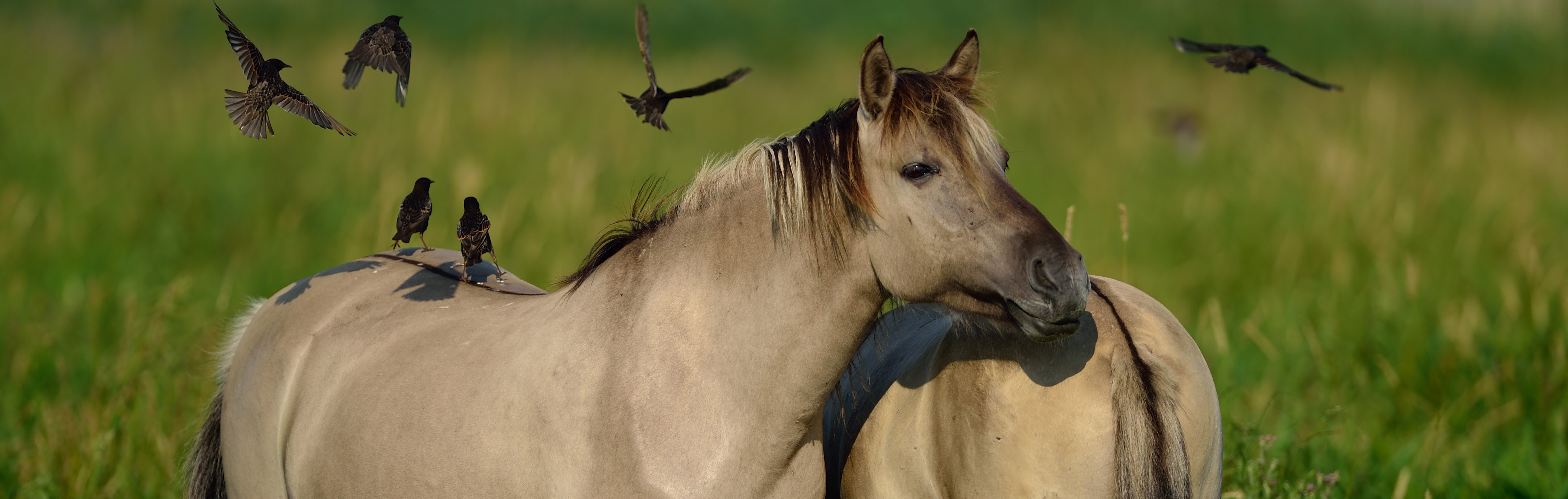
Wild Konik horses, Odra Delta reserve, Stepnica
Solvin Zankl / Rewilding Europe
Core Topics
- Overview of the types of protected areas and how they may impact rewilding activities
- Impact of protected areas on private land
Key Takeaways
1. What is the legal framework of nature conservation in Poland?
2. What types of protected areas exist?
Under the NCA there are different types of protected areas/ sites, each one with different regimes that may impact rewilding activities differently.
2.1. National Parks (Park Narodowy)
These are large areas (not less than 1000ha) distinguished by special natural, scientific, social, cultural, and/or educational values. The natural environment of the entire National Park is legally protected. National Parks are established to preserve flora, fauna, inanimate nature, biological diversity, and resources, and to restore proper, unique, and natural environmental states.
2.2. Nature Reserves (Rezerwat Przyrody)
Nature Reserves are areas preserved in their natural state (or insignificantly changed by humans) which are distinguished by special natural, scientific, cultural or landscape values.
2.3. Landscape Parks (Park Krajobrazowy) and Protected Landscape Areas (Obszar chronionego krajobrazu)
Landscape Parks are protected for the sake of their natural, historical, cultural and landscape values
and which are ought to be maintained and promoted sustainably.
Protected Landscape Areas include areas protected due to their distinctive landscape with diversified ecosystems, also valued as areas of tourism and recreation.
2.4. Natura 2000 Areas (Obszar Natura 2000)
The aim of the Natura 2000 network is to ensure the long-term survival of Europe’s most valuable and threatened species and habitats, listed under both the Birds Directive and the Habitats Directive.
Under the Birds Directive, Member States designate Special Protection Areas (SPAs). Under the Habitats Directive, Member States submit lists of proposed Sites of Community Importance and once adopted, they are designated as Special Conservation Areas (SCAs).
The Natura 2000 framework is extensive and complex. You need to be aware of the range of obligations to be complied with if the land is in or located near a Natura 2000 site, or (regardless of proximity) the project could have a significant impact on a Natura 2000 site (see 3. 4 and 4.1 below; see also Rewilding in Poland: Developing Land).
Although the goals can be aligned, the Natura 2000 framework works differently from rewilding in the sense that the former is focused on one species or habitat, while rewilding has a much more holistic approach focusing on whole ecosystem restoration. However, the Natura 2000 framework provides important working tools for those undertaking rewilding activities and the associated legal framework will need to be complied with when implementing a rewilding project.
2.5. Natural Monuments (Pomnik przyrody), Documentation Sites (Stanowisko dokumentacyjne), and Landscape-Nature Protected Complexes (Zespół przyrodniczo – krajobrazowy)
A Natural Monument can constitute individual, as well as groups of, natural objects of special natural, scientific, cultural, historical or landscape values, distinguished by individual features, which make it stand out among other similar objects.
Documentation Sites are geological formations of great relevance from a scientific or educational point of view.
Landscape-Nature Protected Complexes constitute parts of natural and cultural landscapes deserving special protection due to their particular aesthetic values.
2.6. Ecological Area (Użytek ekologiczny) and Protection of Species (Ochrona gatunkowa)
Ecological Areas are areas deserving protection due to their ecological remains which are significant for maintaining biological diversity.
Protection of Species applies to specific species of animals and plants, and once determined, is applicable country-wide.
3. Can private entities or individuals apply for an area to be protected?
Although there is no legal procedure allowing individuals to apply for the establishment of protected areas, landowners can petition the relevant authorities, asking them to create new protected areas.2
Any private entity can use a non-binding petition to suggest to the relevant public authorities that they grant protected status to a site, or even to a species. There is no formal procedure for such
requests and the authorities have full discretion in deciding whether to grant the requested protection.
You may wish to consider submitting such a petition if you believe that a rewilding area of land should be protected due to its nature conservation value.
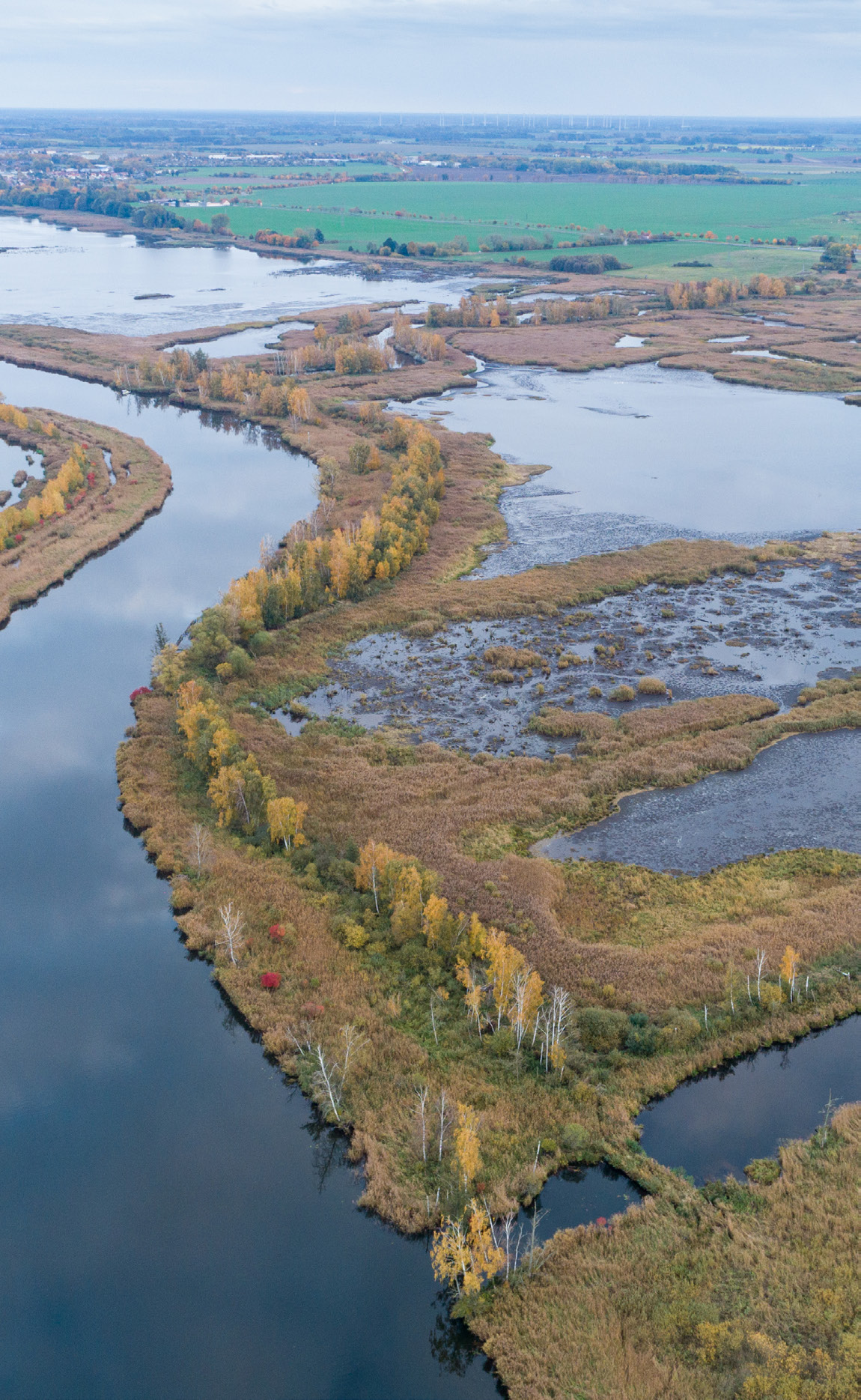
Rewetted peat bogs, Penne river, Rewilding Oder Delta
Florian Möllers / Rewilding Europe
4. How do protected areas impact private land?
Private land very often forms part of areas designated for nature conservation and, consequently, the owners of such land must comply with the associated rules and limitations.3 Such limitations may, for example, concern afforestation activities.
For each type of protected area, there are several sources of rules and limitations, such as the NCA, the relevant protection plan, internal regulations, and the local zoning plan. Below you can find a brief description of those limitations in each type of protected area. Note that certain developments may require an environmental decision and an Environmental Impact Assessment (EIA) may also be required (see Rewilding in Poland: Developing Land).
4.1. National Parks and Nature Reserves
The NCA prohibits certain actions in National Parks and Nature Reserves, some of them particularly relevant from a rewilding perspective. For example, the prohibition on introducing into a National Park or a Nature Reserve any new species without prior consent of the Ministry of Environment, or the prohibition of introducing any genetically modified organism. For more information, see Rewilding in Poland: Wildlife Reintroductions.
Private owners must also follow rules laid down in the relevant protection plan, which is adopted every 5 years for each National Park and Nature Reserve.4 A protection plan identifies existing risks to the natural environment of the protected area and indicates actions to be undertaken to limit such risks. A protection plan may, for example, prohibit introduction of certain species of fish in the park or limit the possibility of creating or extending a
drainage system. Obligations and prohibitions included in the plan must be observed by the authorities responsible for spatial planning.
4.2. Landscape Parks
The NCA establishes a set of rules and prohibitions relating to Landscape Parks which do not seem relevant to rewilding activities because they concern large-scale developments or activities having a negative impact on the environment.
Individual protection plans5 established for each Landscape Park will specify activities which should be or cannot be undertaken in the relevant park. A protection plan should be adopted every 20 years and should include guidelines, prohibitions, and impose responsibilities on the entity supervising the given Landscape Park, as well as on private owners of land situated in the protected area.
4.3. Protected Landscape Area
Rules concerning active protection of the ecosystem as well as obligations and prohibitions binding within a Protected Landscape Area are introduced by the relevant voivodeship council.
4.4. Natura 2000 Areas
For Natura 2000 Areas, a protection plan must be established to specify rules applicable to the protected area. Natura 2000 protection plans are created for a period of 20 years and are available from the regional environmental authorities either on the websites, or they can be consulted in their respective offices.
Example
Landowner A owns a plot of land situated in a Protected Landscape Area. Landowner A would like to create a private forest on their land.
Landowner A must be aware that any afforestation of uncultivated or non-agricultural land located in a Protected Landscape Area is considered to have a potentially significant impact on the environment (Category B development) – regardless of the area of afforestation – and requires an environmental decision (see Rewilding in Poland: Developing Land).
The situation would be different if the private forest was in the buffer zone of the Protected Landscape Area - then the environmental impact assessment of the project would depend only on the size of the afforested area.
SPAs and SCAs are subject to conservation measures, which include land planning, management measures, environmental impact assessments, and surveillance. Moreover, the management of sites must also consider the guidelines provided by the Natura 2000 protection plan, which cover sectors like agriculture and pastoralism, forestry, construction works and infrastructure, and other economic activities.
Some Natura 2000 areas are strictly protected nature reserves, meaning that all human activities beyond what is necessary to achieve the site’s conservation objectives are prohibited. However, the network also contains mostly privately owned areas where some degree of wider human intervention is allowed. The approach to conservation and sustainable use of the Natura 2000 areas is much wider and largely centred on people working with nature rather than against it.
4.5. Natural Monuments and Landscape-Nature Protected Complexes
Establishing Natural Monuments (for example, an ancient oak) on private land does not require consent of the owner of such land. Municipal councils can oblige the landowner to undertake specific actions required for the proper conservation of the monument.
Specific rules concerning the use of Landscape-Nature Protected Complexes should be provided for in the local zoning plan adopted for the relevant area.6
4.6. Documentation Site, Ecological Areas, and Protection of Species
It may be the case that a rewilding practitioner plans to create a certain form of nature conservation on their land for the purposes of rewilding activities (see section 3 above).
5. Are there any assessment procedures applicable to rewilding projects in protected areas?
Yes, depending on the type of development and the type of protected area.
For protected areas which are not Natura 2000 areas, the general rules regarding assessment apply. These are explained in detail in section 5 of Rewilding in Poland: Developing Land. In accordance with these rules, the need for an assessment will depend on the nature of the development and whether the proposed development constitutes a Category A or B activity. See Rewilding in Poland: Developing Land for further information.
The status of “protective forest” can be granted (and revoked) by the Minister of the Environment, upon request of the Director General, who must obtain the opinion of the municipal council in respect of Stateowned forests.
For developments falling into neither Category A, nor Category B, but which may significantly impact a Natura 2000 protected area, a Natura 2000 impact assessment must be conducted. For more information and a detailed explanation of the applicable procedure, refer to section 6 of Rewilding in Poland: Developing Land.
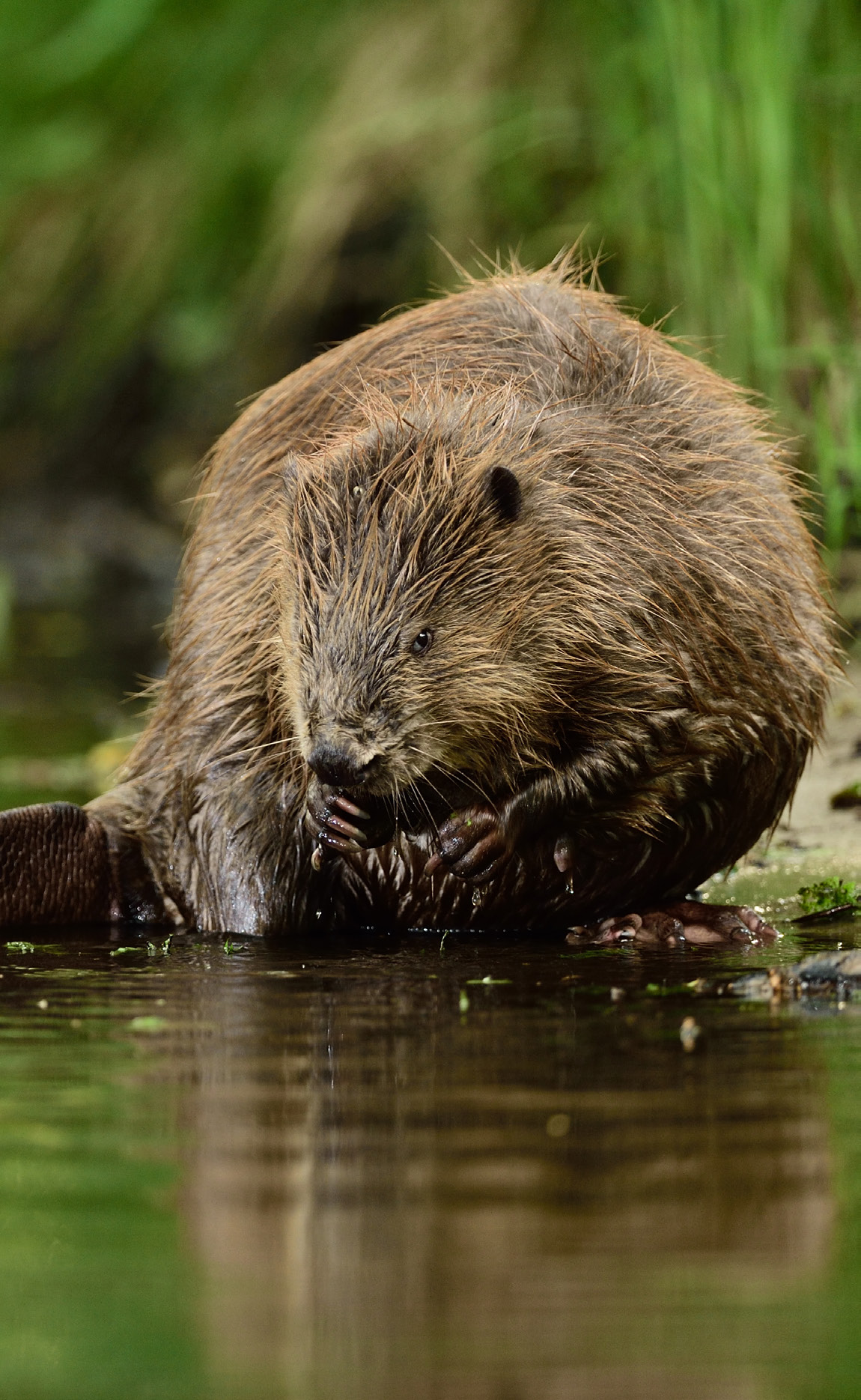
Beaver (Castor fiber), Peene valley
Solvin Zankl / Rewilding Europe
Endnotes
- Act of 16 April 2004, Ustawa z dnia 16 kwietnia 2004 r. o ochronie przyrody; consolidated text published in the Journal of Laws of 2022, item 916, as amended.
- Rezerwat Przyrody Stawy Gnojna and Rezerwat Gubińskie Mokradła are examples of Nature Reserves created by authorities on the proposal of owners of the lands they cover.
- In 2013 private grounds made up almost 19% of the total area of all National Parks in Poland (in some of them, e.g., Ojcowski National Park or Biebrzański National Park, private grounds accounted for 30% of total area).
- A protection plan is adopted by the Minister of Environment in the form of a regulation. Each regulation is published in the official Journal of Laws and is usually available on the website of the given National Park or Nature Reserve.
- A protection plan is adopted by the Minister of Environment in the form of a regulation. Each regulation is published in the official Journal of Laws and is usually available on the website of the given National Park or Nature Reserve.
- Local zoning plans are available via the websites of the relevant communes.


Contact Us

Elsie Blackshaw-Crosby