


Rewilding in Poland
Public Access and Third-Party Liability on Your Land
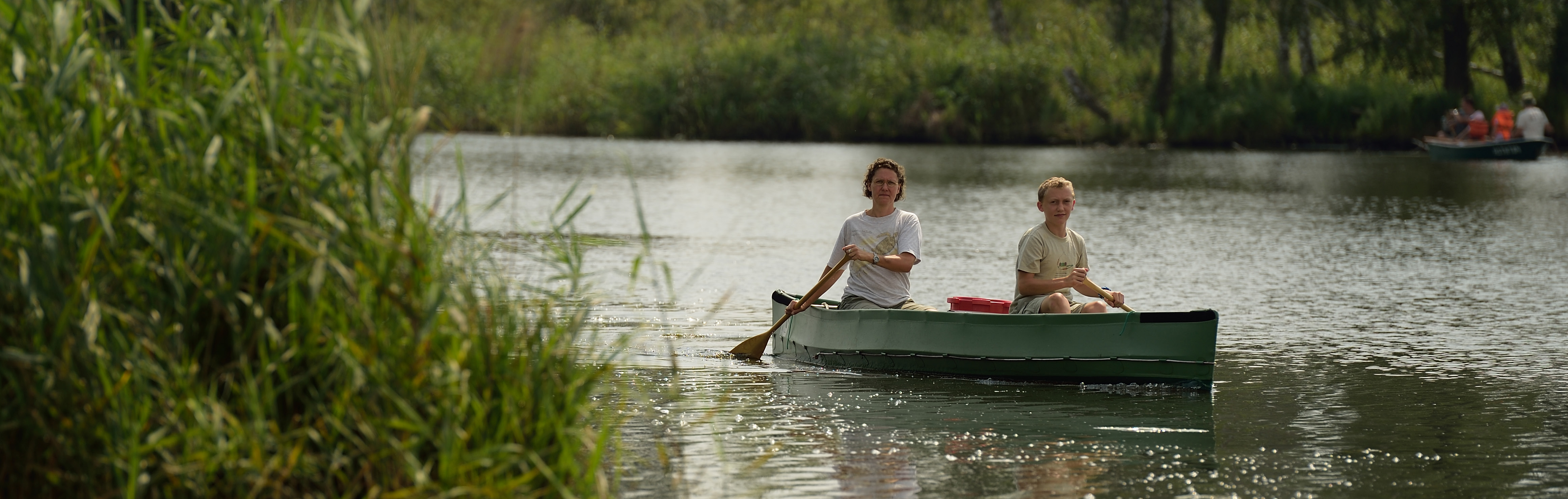
Canoeing on the Peene river, Anklam
Solvin Zankl / Rewilding Europe
Core Topics
- Third-party rights of access to land and how to permit and prevent public access to private land
- Practical steps to limit the risk of liability towards third parties who visit your land
- Different types of third-party liability and how they are established (including waiver and exemptions)
- Liability for construction or maintenance defects
Key Takeaways
Table of Contents
1.
3.
1. When is public access allowed and how does it impact liability?
Whenever people visit your land, you may be liable to pay compensation if they are injured while on your land. It is therefore important to understand when and how members of the public may access your land.
When describing the types of public access to land it is necessary to distinguish between public land and private land. While there is wide public access to public land, access to private land is generally at the discretion of the owner / manager of the land who is entitled to restrict access.
There are, however, exceptions to this general rule of limited access to private land. In the following circumstances, access is permitted to private land, and it is generally not possible to prevent such access:
- right of way1 for the benefit of neighbouring properties or for the public interest, such as access to public road;2
- hunting - please refer to Rewilding in Poland: Hunting; and
- public right of way to public inland surface waters and the shore of marine waters and the territorial sea.3
1.1. How can access to land be permitted?
If you wish to allow and encourage access to your land and rewilding project, you are able to do this by simply removing any fences or other barriers and making it known that public access is permitted. In
these circumstances, it is important to be aware of the potential liabilities described in this note and take the practical steps described below to limit liability.
1.2. How can access to land be prevented?
Whilst you may want to promote rewilding and invite the public onto your land, you may be developing a project which is not suitable for public access. Alternatively, you may wish to adopt a mixed approach, allowing access to some areas and restricting access to other areas. In such cases, you need to limit access by erecting fencing and putting signs in the areas you do not want to give access to.
Although you have the right to prohibit access to your land, you must make this prohibition very clear and visible. The penal code requires that, to be able to take legal action in trespass against someone entering your land uninvited, that land must be fenced. However, recent caselaw has suggested that clear signs prohibiting entry also comply with the requirement to inform passers-by that entry is not permitted.4 Note that digging a ditch around your property is not considered to be a fence or to signal that entry is forbidden. It is worth bearing this in mind when making any decisions as to whether to fence your land.
So, if you own or are managing privately owned land, here are some steps you can take to make sure that access to your land is on your terms:
- Posting signs: you can post signs at the boundaries of your property to inform the public that entry is either permitted or prohibited. These signs should be clear and visible, using terms such as “no entry” or “entry prohibited” if relevant.
- Fences and barriers: you can also erect physical barriers in accordance with local regulations and zoning laws, such as fences or gates, to prevent public access to your property (see Rewilding in
Poland: Developing Land for more details on zoning laws).
- Legal action: if someone enters your property without your permission on a repeated or prolonged basis, you may resort to legal action to have them removed (although always try to remove them yourself before involving the local authorities).
2. Practical steps to limit potential third-party liability
As this note will explain, landowners and land managers may incur liability for injury or damage caused to third parties present on their land. There are important practical steps to take to limit the risk of such liability arising:
- Undertake regular and thorough risk assessments in relation to the risks posed to visitors and neighbouring landowners by your activities.
- These risk assessments should identify the practical steps you have put in place to limit the risk of injury or damage occurring and should record why these are appropriate. Acting in accordance with such risk assessments may help to show that you have acted with the necessary level of care and attention to avoid liability.
- Ensure that the right insurance is in place which covers any civil liability for injury or damage caused by your activities/on your project.
- Make explicitly clear, via signs or other notifications, whether the rewilding project is publicly accessible or not. If it is accessible, specify that anyone accessing the site does so at their own risk.
- Erect/maintain fencing and/or other suitable barriers to ensure livestock, horses and other animals under your care cannot escape and cause damage or injury.
- Seek targeted legal advice when any issue about liability arises, including with respect to which defences may be available.
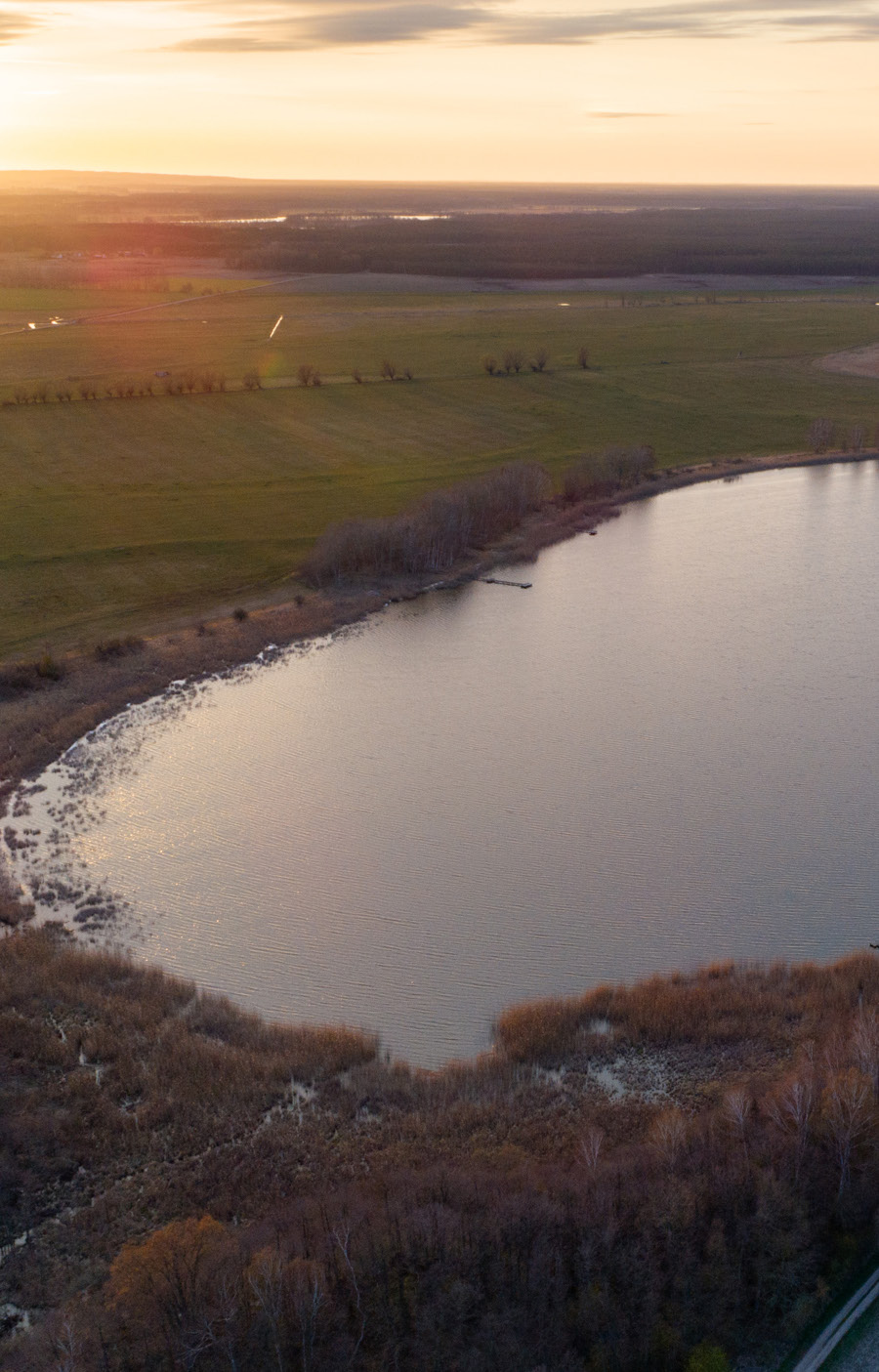
Fishing huts at the banks of the lake Haussee, Rothenklempenow.
Florian Möllers / Rewilding Europe
3. What is third-party liability and when might a person be liable?
Third-party liability can arise when a visitor to your land is injured, whether that injury is caused by your own actions, by someone for whom you are responsible (e.g., an employee) and/or by animals/ objects/plants/trees under your care. By establishing liability, the aim is to compensate the third party for the harm caused, usually by way of payment.
You may be liable when the damage was caused as a result of an action or a failure to act appropriately, even where there was no intention to cause any damage or harm.
Example 1
During a visit to a rewilding landscape, a visitor trips on some old barbed-wire and injures themselves.
Whether or not the landowner or land manager could be liable for this injury will be a matter of fact. Liability would depend on whether the landowner / manager failed to take the necessary steps to ensure the safety of visitors. It would also depend on whether the actions of the injured visitor contributed to the injury e.g., if they were under the influence of alcohol.
3.1. What types of third-party liability are there?
There are three types of third-party liability:
- Fault-basis liability - to obtain compensation, the injured party needs to prove that the liable person caused the damage. Such liability can arise in both intentional and unintentional situations.
- Strict liability - in this case it is not necessary to prove fault. It is based on the premise that there are activities that, by their nature, are inherently dangerous, and so fault is presumed. It can be mitigated if the supposedly liable person shows that they took all necessary measures to prevent the damage.
- Liability in equity – such liability is borne by a person responsible for the actions of a person or animal incapable of bearing fault. Liability in equity can only exist in cases where, although the person or animal who caused the damage cannot bear fault, it is equitable for damages to be paid. An example where such liability might arise is where damage is caused by animals under human care. For example, if an animal under your care bites a bystander, you are liable for such an incident because you failed to prevent it. If the animal was provoked, liability in equity could exempt or reduce liability. Please note that this means liability in equity cannot arise in relation to damage caused by free-living wild animals.
3.2. What are the general requirements of third-party liability?
There are four elements which must be established for third-party liability to arise:
- Conduct – a voluntary act or omission by the liable person.
- Intention or negligence – intention implies willingness and awareness of one’s harmful actions. Negligence implies a failure to duly consider the possible consequences of one’s actions or a failure to exercise ordinary diligence. Recklessness as to the impact of your actions or failure to comply with laws, regulations, orders, or instructions will constitute negligent behaviour. Negligence arises even when there is no intention to cause harm.
- Wrongful damage – the injured person must have suffered loss or damage. Damage can be material or non-material, depending on whether the damage is assessable in monetary terms. Examples of material damage may be damage to property, hospital bills, loss of profit, etc. An example of nonmaterial damage may be pain and suffering.
- Causation – there must be a causal link between the individual’s conduct and the damage suffered by the injured person. Generally, the causal link is expressed in terms of probability, i.e., such conduct would normally cause such damage. Causation may be interrupted by an intervening event, in which case liability may not arise.
If liability is established, you may be required to pay compensation. The amount of compensation payable will be determined based on the nature and extent of damages.
What does it mean to be negligent and what steps may be taken to avoid negligence?
Being negligent means failing to exercise ordinary diligence. Whether or not actions are considered negligent is a question of fact and will be considered objectively. The test for negligence is whether you acted as expected of a reasonable person in the specific circumstances of the situation. If you are acting in a professional or skilled capacity, then your actions will be measured against how a professional or expert would have acted in the same situation.
In practice, you must act in a way that leaves no doubt that you did all you could to avoid any damage and that you never had intention to cause any harm.
It is in this context that risk assessments become important. Risk assessments record the risks you have identified and the steps you have taken to avoid or mitigate such risks. This can help you show that you acted reasonably, were not negligent and that the damage suffered was unavoidable.
Example 2
A rewilding project works in some open woodland where they graze a small herd of horses. The site is fenced but open to the public. At the entrance gate, there is a large sign which explains that the site is a natural landscape and warns visitors to pay attention not to trip over tree roots or broken branches etc. It also advises visitors that the horses are wild animals which are unpredictable and should therefore not be approached. The sign explains that visitors are welcome and encouraged to enter the site but that they do so at their own risk.
A family with two teenagers visits the site. As they walk around, the mother trips over a tree root and sprains her ankle. While the father is helping her, the teenagers approach the horses and one of them gets knocked over as the horses run away, sustaining a head injury.
In this case, it may be argued that the rewilding project took all necessary precautions to avoid potential injury to the visitors, based on what you might expect those measures to be. Therefore, it is likely that there was no negligence and so no liability for the damages.
In particular, the signs were visible and clearly explained the specific risks associated with protruding roots and wild animals on the site. They also clearly explained that visitors entered the site at their own risk. This specificity is important in determining negligence and is good practice to follow.
4. Are there any exemptions to liability?
There are situations where the general rule does not apply, and you may not be liable even if your actions have caused damage or injury and you were negligent. Such cases include where the liable person is under 13 years of age or deemed insane; contribution of the injured party; consent from the injured party; lawful exercise of a right; last resort; self-defence (or defence of others); and fortuitus event.
- Age and/or insanity: fault-based liability will not be incurred by a person under the age of 13, nor will it be incurred by persons who were insane at the time of the incident.5
- Contribution of the injured party: when the injured party contributes to the causation of damage, either because they commit a wrongful action (e.g., trespassing) or the damage is the result of both the negligence of the damaging party and the negligence of the injured party (contributory negligence), it may lead to a reduction in compensation, which should be made according to the circumstances and, in particular, the degree of fault of both parties.
Example 3
Camping is permitted on Landowner B’s land and a group of campers are camping overnight. One of the campers injures herself by tripping over a fallen branch. What liability may Landowner B have for such injury?
In cases where Landowner B allows entry and use of the land by third parties, they have an obligation to maintain the land in a condition that ensures the safety of those third parties from any foreseeable danger.
In practice, a judge would have to determine whether the injury could have been avoided by the third party through greater care and due diligence. In this regard, the circumstances of the injury, such as environmental conditions, time of day, the third party’s clothing and/or equipment, or any intervening events may be relevant.
The circumstances of the injury and the general maintenance of the land would also play a role in determining liability. Fallen branches are unlikely to be actively removed on rewilding projects
Example 4
An unauthorised person enters the land and falls off a cliff where there is no warning sign of the danger. She seriously injures herself.
Insofar as the entry is prohibited and a person does not have permission to be on the premises, it should be assumed that the landowner is not liable for the incident. This is because fault cannot be attributed to the landowner, as the injured person entered the land without their permission. However, determination of liability is always fact specific.
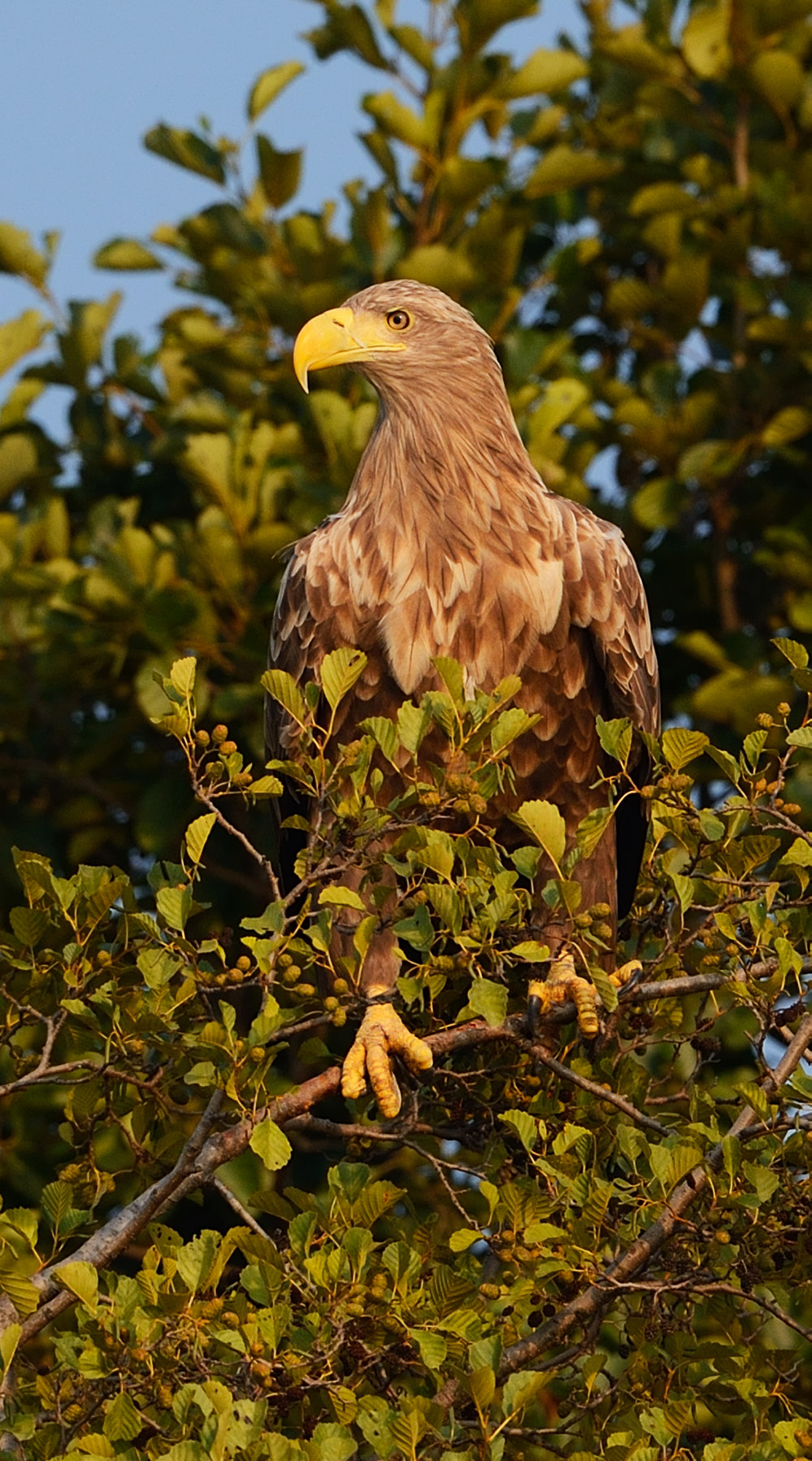
White tailed sea eagle (Haliaeetus albicilla), from fishing boat, Stettin lagoon, Oder river delta.
Staffan Widstrand/Rewilding Europe.
- Lawful exercise of a right: when the damage is caused because you’re exercising a right, the act causing the damage is not considered wrongful and so there may be no liability.
- Last resort: liability may not arise where the actions causing harm to a third party were a necessary last resort for you to save yourself or others from imminent and serious harm, which would otherwise be unavoidable. This means that if an action causing harm is undertaken to avoid greater harm, there will be no liability and it is likely that no compensation is due to the injured party. It will always be a balancing act and question of fact as to whether the actions caused greater or lesser harm than would have otherwise occurred.
Example 5
It is a windy day, and a rewilding practitioner sees a big fire on their neighbour’s land. The firefighters are too far away. To prevent the fire from spreading, the practitioner cuts the surrounding crops or sprays water on them, ruining them.
In this case, as the practitioner was protecting something of greater value, they can claim that it was an action of last resort, and liability is unlikely to arise.
- Self-defence (or defence of others): when you act to stop an imminent, serious, and otherwise unavoidable harm from an unlawful attack, liability may not arise. An attack may be directed at you, other people, animals, and rights recognised by law, such as property rights and livelihoods. Here, you also need to strike a balance when assessing the necessity and proportionality of the defensive action in comparison to the attack (acts which go beyond self-defence may make you liable).
- Fortuitus event: these are exceptional, unforeseeable, and unavoidable events, such as natural phenomena like hurricanes, earthquakes, thunderstorms, heavy rain, or actions of a third party outside your control. Fortuitous events, because you cannot predict or control them, interrupt the causal link between your actions and the harmful event.
Example 6
A rewilding project keeps a herd of wild horses. A third party is walking their dog by the herd without a leash. While the keeper is nearby to collect the GPS collars, the dog attacks one of the horses. To defend the horse and to prevent the dog from being hurt by the horse, the keeper hurts the dog to scare it away from the herd.
If there is no doubt as to the circumstances of the event the keeper is unlikely to bear any liability since he was acting to de-escalate the situation.
5. What is the liability for damage caused by man-made structures if there is a construction or maintenance defect?
If you have a man-made structure on your land, you may be strictly liable for any damage caused by it unless the damage was not attributable to either a failure to maintain the structure in good condition or a defect in construction. Strict liability means that fault is presumed, and the intention or negligence of the landowner does not need to be established.
Despite this strict liability, third parties may also be found liable for such damage where, for example, they were contracted to build or maintain the structure.
Example 7
Landowner A builds a lookout for bird watching. The lookout has a construction defect that is not visible or obvious. One day, the lookout collapses, injuring a passer-by and causing damage to the neighbouring land.
Imagine that, in this example, Landowner A was aware of the defect and called a contractor to repair it. They agreed on a day, but the contractor failed to appear, and arrived 4 days later. Unfortunately, the collapse of the lookout happened the day before the contractor finally appeared.
In this case Landowner A is likely to be liable for the damage caused, but they can try to limit it by showing the efforts they made to resolve this situation. Since the visitor did not exacerbate the situation (e.g., did not jump on the lookout despite visible warnings), it appears that there is no contributory negligence and Landowner A is likely to be liable.

NSG Karlsburger und Oldenburger Holz nature reserve, Rewilding Oder Delta
Florian Möllers / Rewilding Europe
Endnotes
- Art. 145 of Polish Civil Code
- Article 145 of the Civil Code.
- Regulated by the Water Law Act (Act of 20 July 2017). Inland surface waters are natural watercourses and springs, lakes and other natural bodies of water that have a natural inflow or outflow of surface water, artificial bodies of water situated on flowing waters, canals and standing waters. Fencing our properties adjacent to public inland surface waters to distance of less than 1.5 m from the shoreline is prohibited. It is also prohibited to forbid or prevent passage through the area. The ban does not apply to water intake protection zones, livestock concessions, or areas restricted for reasons of national defence and security.
- As has been ruled by the Polish Supreme Court: The condition for criminality is that the land (property, plot of land) is fenced - with a fence, wall, rails, fence, barbed wire, etc., not with a ditch - as the fence indicates that the owner or possessor does not wish third parties to enter. Restricting oneself to the “intention to fence”, without reference to an actually existing fence, would mean that the offence of trespass in this form could also be committed in a situation where the owner marks the area with boundary signs and “no trespassing” boards, without any fence, thus expressing his will. Order of the Supreme Court of 09.07.2013, ref. III KK 73/13
- The insanity exclusion does not apply where insanity is a result of self-imposed intoxication (art. 31 par. 3, Penal Code).


Contact Us

Elsie Blackshaw-Crosby