

Rewilding in Poland
Wildlife Reintroductions
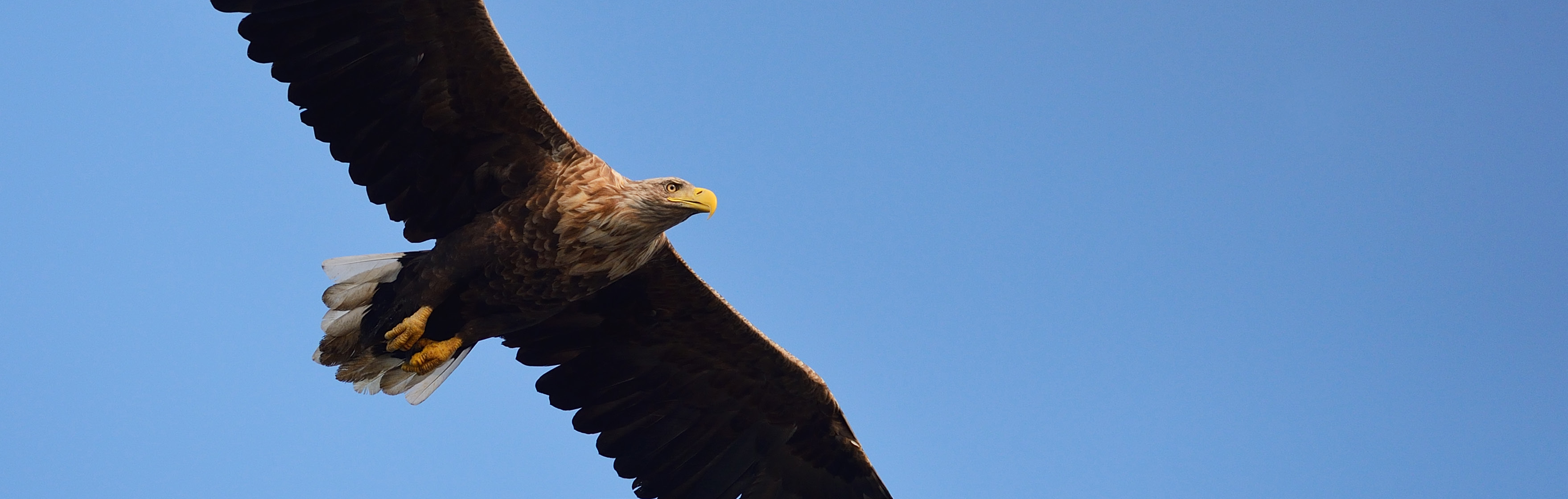
White tailed sea eagle (Haliaeetus albicilla), Stettin lagoon.
Staffan Widstrand / Rewilding Europe
Core Topics
- The legal framework for the reintroduction of protected species
- The regime applicable to the introduction of alien species
- The rules applicable to importing, holding, and transporting animals
- Obligations regarding welfare, health, and biosecurity in the context of a reintroduction programme
Key Takeaways
Table of Contents
4.
5.
6.
1. What is the general framework applicable to reintroductions?
The general rule in Poland is that species reintroductions and reinforcements, as tools for conservation, are the responsibility of the State.1 These activities are regulated, primarily, by the Nature Conservation Act (NCA) which implements the EU Birds and Habitats Directives in Polish law.2 There is other supporting legislation, which is referenced where relevant in this note.
Public programmes for the reintroduction of protected animals are part of national nature conservation programmes and are developed and implemented by the State in cooperation with research centres, academics, non-governmental organisations, and citizens.3 Some reintroduction programmes are developed at the non-governmental level and are simply supported by the State.4
This practice may be because protected animal species are considered as the property of the State Treasury, meaning that the State has a priority right and
obligation to ensure appropriate conservation of protected animal species (including through reintroduction activities).5
Although it is in theory possible for private persons to carry out reintroductions and reinforcements, this is not a common practice – in fact, there does not seem to have been any examples of private persons in Poland independently developing reintroduction projects. It is therefore expected that any reintroduction or reinforcement project will be undertaken in partnership with, or with support from, the State.
It is therefore highly recommended for practitioners to carefully consider engaging with public entities when planning to reintroduce or reinforce species. In addition, practitioners must also comply with all the applicable regulations under Polish law (i.e., veterinary, sanitary, and animal protection regulations).6
2. What are the preliminary legal considerations for developing a reintroduction programme?
The NCA defines “nature conservation” as, among other things, the preservation and promotion of wildlife and natural habitats.7 Nature conservation also aims to maintain ecological processes, the stability of habitats and to ensure the continuing existence of animals, plants, and fungi, together with their habitats, by keeping or restoring a stable level of conservation.8 Reintroduction and reinforcement programmes aim to achieve exactly these outcomes.
However, when considering reaching out to public authorities, there are two main obstacles to reintroduction activities in Poland that practitioners should be aware of:
- there is a general prohibition against reintroducing protected animal species (including dangerous animals)9 and invasive alien species10 to the natural environment; and
- there are administrative and animal welfare obligations when conducting reintroduction programmes.
Thus, any potential reintroduction programme should consider the following aspects, as they will help determine the applicable laws and regulations and avoid liability:
- Species: What species are being reintroduced? Are the species native to the area in which they will be released? Are the species a protected species? Are they considered dangerous?
- Location: What geographical area are the animals being reintroduced to? What is its status – is it a protected area and/or is it subject to specific land use or planning permission requirements?
- Import / export and transport: Does transportation entail import and export? If so, are the countries of import and export EU member states?
- Animal welfare: Are there any animal health or welfare obligations which need to be complied with? What are the requirements relating to transport and keeping of the animals to ensure their wellbeing?
Note that a reintroduction programme may entail considering and understanding potential liability issues associated with animals, thus practitioners should keep in mind Rewilding in Poland: Liability for Animals.
Brief note on (re)introduction of fish
With respect to fish, the Water Law Act and the Inland Fisheries Act slightly modify the legal regime governing the breeding and reintroduction of fish. Certain activities which require special permission under Article 52 of the NCA (including, but not limited to, killing, capturing, and relocating) would not be illegal if they were in line with the requirements of so-called “good fishery management practice” (dobre praktyki w zakresie gospodarki rybackiej). Consequently, the breeding of fish is less strictly regulated than the breeding of mammals, provided that the actions taken are in line with the good fishery management practice.
The Inland Fisheries Act and the specific governmental ordinance (Polish: rozporządzenie) of the Minister of Agriculture and Development of Rural Areas establish the rules for environmental introduction of certain species of fish.
No permission is needed to introduce alien species of: (i) danube (Hucho hucho) from the rivers Dunajec, Raba, Sana, Skawa and Soła; and (ii) carp (Cyprinus carpio) from lakes and reservoirs, into inland waters if:
- the fishing plan (operat rybacki)11 provides for the introduction of fish of these species, it has been justified, and the type and quantity of stocking material has been specified;
- the fishing plan which envisages the introduction of these fish species has obtained a positive opinion from the Institute of Inland Fisheries; and
- they come from a facility intended for fish breeding or farming, where there were no aquatic organism species or subspecies likely to have an adverse effect on the aquatic environment if unintentionally moved with the introduced or translocated aquatic organisms.
Although these rules apply to non-native species, which are usually excluded from rewilding initiatives, they may still be relevant to the release of native species for reintroduction or reinforcement as they appear to be the legal framework applicable to releasing fish.12
3. What are the rules applicable to the reintroduction of protected animal species13?
Protected species, which amount to more than 800 species, are divided in two groups: (i) partially protected, such as beavers and otters; and (ii) strictly protected, such as the European bison or grey seals.
The lists of species under partial and strict protection are defined by governmental ordinance (Polish: rozporządzenie), which also defines the prohibited acts in each category (e.g. prohibition to kill, transport, relocate, destroy natural habitats etc.).14
Partial protection permits a reduction in population size and the collection of individuals of these species, whereas strict protection prohibits direct human interference and manipulation of strictly protected ecosystems. Strict protection also prohibits interference in natural processes in protected areas, including the life cycle of species.
Without the necessary permits, all reintroduction activities related to strictly protected species and to certain partially protected species are prohibited.15 The list of prohibited actions includes:
- capturing;
- importing and exporting;
- transporting;
- keeping;
- breeding;
- deliberate relocation; and
- deliberate introduction.16
The NCA establishes exemptions to these prohibitions in cases where special permits are granted.17
Undertaking prohibited actions without the relevant permit may result in a criminal liability and imprisonment of three months to five years.
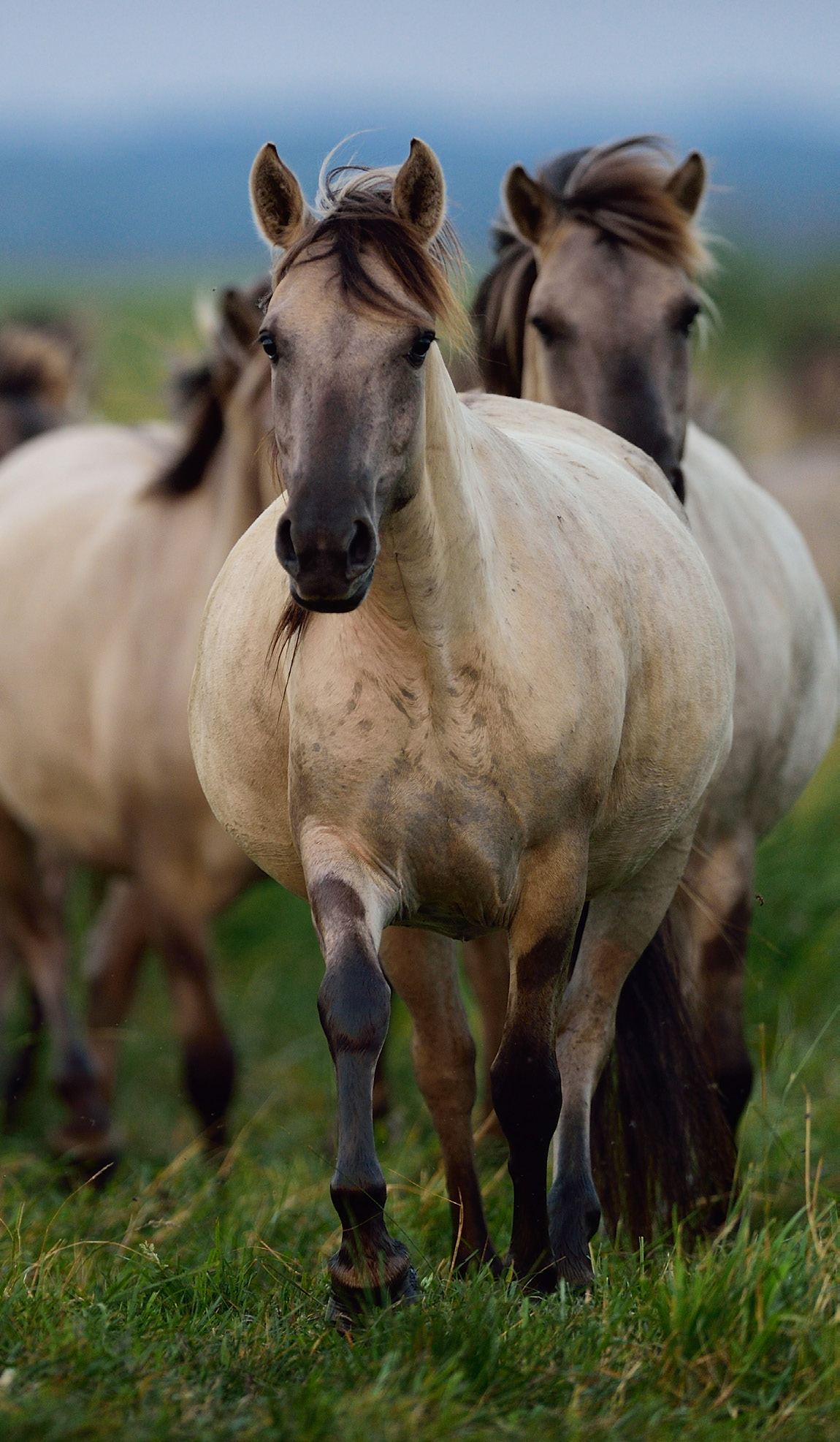
Wild Konik horses, Odry delta reserve, Stepnica.
Solvin Zankl / Rewilding Europe
4. What permits are needed to reintroduce protected species?
Again, it should be stressed that any reintroduction programme needs to be in cooperation with the respective public entities or, at least, with their knowledge and acquiescence. Not only are reintroductions and reinforcements a matter for the government, but they also always require administrative action.
If the reintroduction project is being led by private entities, special permits will be required to carry out specific actions in relation to protected species, which would otherwise be prohibited. These permits may be issued in the absence of alternatives, and where the proposed actions are not detrimental to the conservation of the existing population of protected species.
The justification for this permit may be the interest of protecting specific wild species, the conservation of natural habitats, or because such reintroduction is necessary to reinforce existing populations.18
Each Regional Director for Protection of Environment19 can issue permits to keep / breed / trade / transport / relocate / reintroduce species that are either under partial or strict protection.
If the action is to be undertaken in more than one region (Polish: województwo), the applicant needs to obtain the consent of the General Director for Protection of Environment.20 In addition, any action to
be undertaken within a national park will need the consent of the Minister for the Environment.
The permits may be only issued in the absence of alternative solutions, and only if they are not harmful to the conservation of other wild populations of protected species of plants, animals, or fungi. These permits may also:
- be issued in the interest of the protection of wild species of plants, animals, fungi, or the protection of natural habitats;
- be issued to limit serious damage to crops, livestock, forests, fish, water, or other types of property;
- be issued in the interest of public health or safety;
- be necessary for the implementation of scientific research, educational activities or purposes related to the restoration of the population, reintroduction of plant, animal, or fungal species, or for the purposes of reproductive activities, including the artificial propagation of plants;
- be issued to enable, under strictly controlled conditions and selectively and to a limited extent, the collection, acquisition or storage of plant or fungi specimens and the capture, acquisition, or storage of animal specimens of protected species in the number specified by the permit issuer;
- in the case of species under strict protection, bird species and species listed in Annex IV of the Habitats Directive21, be issued for reasons of overriding public interest22; or
- in the case of protected species other than those listed in point 6, result from a legitimate interest of the party or the overriding public interest, including requirements of a social or economic nature or requirements related to the beneficial effects of primary importance for the environment.
4.1. How can a special permit be requested?
If it is necessary to request a special permit to carry out any of the acts listed above, a request to the competent authority must be submitted with the following information:23
- the name and address / registered office of the applicant;
- the objective of the proposed actions;24
- a description of the activity for which the permit is sought;
- the species which will be affected by the action, in Latin and Polish, if the Polish name exists;
- the number of individual specimens (if this is possible to establish) to which the application relates;
- an indication of the means, methods, and devices to be used to capture or kill, or the manner of carrying out other activities for which the permit is sought, and the place and time at which such activities will occur, as well as the risks involved;
- an indication of the entity capturing and / or killing the animals (if applicable); and
- a justification of the application proving that the conditions for issuing the permit (as listed above in this section 4) are met. Please note that this is not a formal requirement25 indicated in the NCA, but practice shows that this element may help the authorities to make an informed decision on the permit.
Once requested, the competent authority should reach its decision within one month. However, in certain cases, it may take longer as the authority must establish whether the conditions to issue the permit are met. Please note that the authority may decide to carry out additional tests and seek expert opinions before such a permit is granted, although practices may differ between authorities.
It should also be noted that the one-month period is not a definitive deadline but only an instruction to the authorities. If approved, the permit is issued to the named applicant, and it will specify the nature and location of the permitted activities and may also include additional conditions which must be adhered to.
Practitioners are advised to check the government’s instructions and practical notes regarding permit applications here.
Finally, it is important to note that if a practitioner does not agree with the specifics of the permit granted (or with a refusal to grant it), it is possible to appeal such a decision. Each permit should contain an explanation of how the decision can be appealed and which authority is competent to consider such an appeal.
4.2. What are the obligations under a special permit?
If a special permit is granted, it is necessary to comply with the conditions therein.
During the validity period of the permit (which will be indicated in the permit and is decided on a case-bycase basis), the issuing authority will check if the permit holder is complying with the conditions.26 In particular, the relevant authorities may:
- enter the premises where the animals are being kept or bred;
- demand written or oral information related to the subject of the inspection; and
- access the documents related to the subject of the inspection, make copies or extracts of them and/or secure these documents.
Please note that inspections may be conducted only in the presence of the holder of the permit and only by authorised persons. The holder of the permit has the right to demand to be shown the documentation authorising these persons to conduct the inspection.27
After an inspection, the authorised persons will prepare a post-inspection record (protokół pokontrolny), which should be signed by them and the holder of the permit. Any refusal to sign the record will be noted on the record by the authorised persons.
If the inspection reveals any non-compliance with the conditions set out in the permit, it is possible that the permit will be revoked and / or the holder may incur criminal liability for violating the relevant provisions.
4.3. What if the species to be reintroduced is considered a dangerous animal?
The NCA prohibits keeping, importing, and trading in dangerous animals.28 Only in certain circumstances, and in relation to specific types of dangerous animals (less aggressive ones), can the Regional Directors for Environmental Protection issue a permit approving the keeping, importing, and trading in such animals. However, we note that this permit will not cover releasing such animals to the wild, which instead must be approved by the General Director for Environmental Protection.
For example, there is a national programme for the reintroduction of Lynx (which is also considered a strictly protected species, requiring active protection), that has been approved by the General Director for Environmental Protection. We therefore understand that the reintroduction of certain dangerous species is possible but will require cooperation with state authorities.
Example
Landowner A wants to use their land to help expand the range of wolves which exist in surrounding areas. They are considering two options to achieve this aim:
(i) Direct reintroduction programme: They know of a den that a wolfpack has on a border between where they currently are established and the territory where the animals appear to have been exploring and attempting to settle in the last months. Landowner A’s land is within this new territory. Could they relocate one breeding pair to Landowner A’s land?
From a purely legal perspective, the following must be considered:
(1) The first thing Landowner A should do is to contact the relevant authorities to discuss the proposed reintroduction plans and how to coordinate those with the relevant entities. If the authorities approve the reintroduction plan, Landowner A will be able to proceed.
(2) Relocation implies capturing, possessing, transporting, and releasing into the wild.
(3) Wolves are a strictly protected species of animal in Poland.
(4) All activities such as capturing, possessing, transportation and releasing into the wild are considered activities generally prohibited under
Article 52 of the NCA and therefore, Landowner A must obtain a permit under Article 56 of the NCA.
(5) Wolves are also dangerous animals, which requires a special permit (see subsection 4.3 above).
Therefore, Landowner A may relocate a wolfpack, if they obtain a permit under Article 56 of the NCA (see subsection 4.2 above). Additionally, if the wolfpack lives outside the borders of Poland, a permit under Article 61 of the NCA to export/import animals will be required (see section 5 below).
(ii) Indirect reintroduction programme: Alternatively, could Landowner A use the land to grow populations of wolves’ natural prey (wild horses, roe deer) to support the wolves in their new territory, thus expanding the range of the wolves?
The answer depends on whether the wolves’ natural prey is listed as a protected species or not.
If the animals whose populations Landowner A wants to increase and which they wish to reintroduce to their natural environment are:
(a) protected: theoretically, Landowner A could apply the procedure described above in (i). However, we note that Landowner A’s application may be denied if the activities mentioned in their application are not absolutely necessary to achieve the intended
goal. This would be the case if e.g., alternative solutions were available or if this plan was considered harmful to the protection of existing species of wild animals.
Since the application must state the aim of the activities for the permit is sought (i.e., increasing the population of protected animals to create natural habitat and hunting conditions for another species of protected animals), the authorities may refuse such application.
It is very important to clearly establish the causal link between the proposed action of reinforcing natural prey and the protection of wolves. If this is not well understood by the authorities, the request may be rejected, or the permit revoked during an inspection. In the latter case, authorities may conclude that Landowner A’s project is unnecessary. This may happen if, for example, there is evidence that the prey population is already sufficient and that the wolfpack is already hunting them, without any human interference.
It is also possible that during a compliance inspection the authorities may consider that the actions Landowner A are performing violate the conditions indicated in their permit or go beyond the scope of permit which was granted (e.g. by performing actions which have not been approved). If so, they may lose their permit and incur in criminal liability in the form of a fine or imprisonment.
(b) dangerous (see section 4.3): as a rule, one cannot reintroduce dangerous animals without permission. However, we assume that none of the wolves’ natural prey is considered dangerous.
(c) alien species: it is generally prohibited to introduce any alien animal species to the natural environment of Poland, regardless of whether they are considered invasive or not. The only exceptions are for aquatic and game animals, to which the prohibition does not apply, provided they are not invasive to the natural environment of Poland and the EU. Therefore, it would be possible to grow a population of alien species of game animals if they are not invasive (see section 5).
(d) not protected native animals: in this case, Landowner A may carry out their activities with no need to obtain a permit, unless such species were covered by regional regulations issued by the Regional Director for Protection of Environment.29 It is therefore suggested that practitioners confirm with the Regional Director for Protection of Environment whether the intended actions are likely to qualify as prohibited and whether the species in question are subject to any type of protection (either general or regional).
For questions regarding liability for damage caused by released animals as part of a reintroduction programme, see Rewilding in Poland: Liability for Animals.
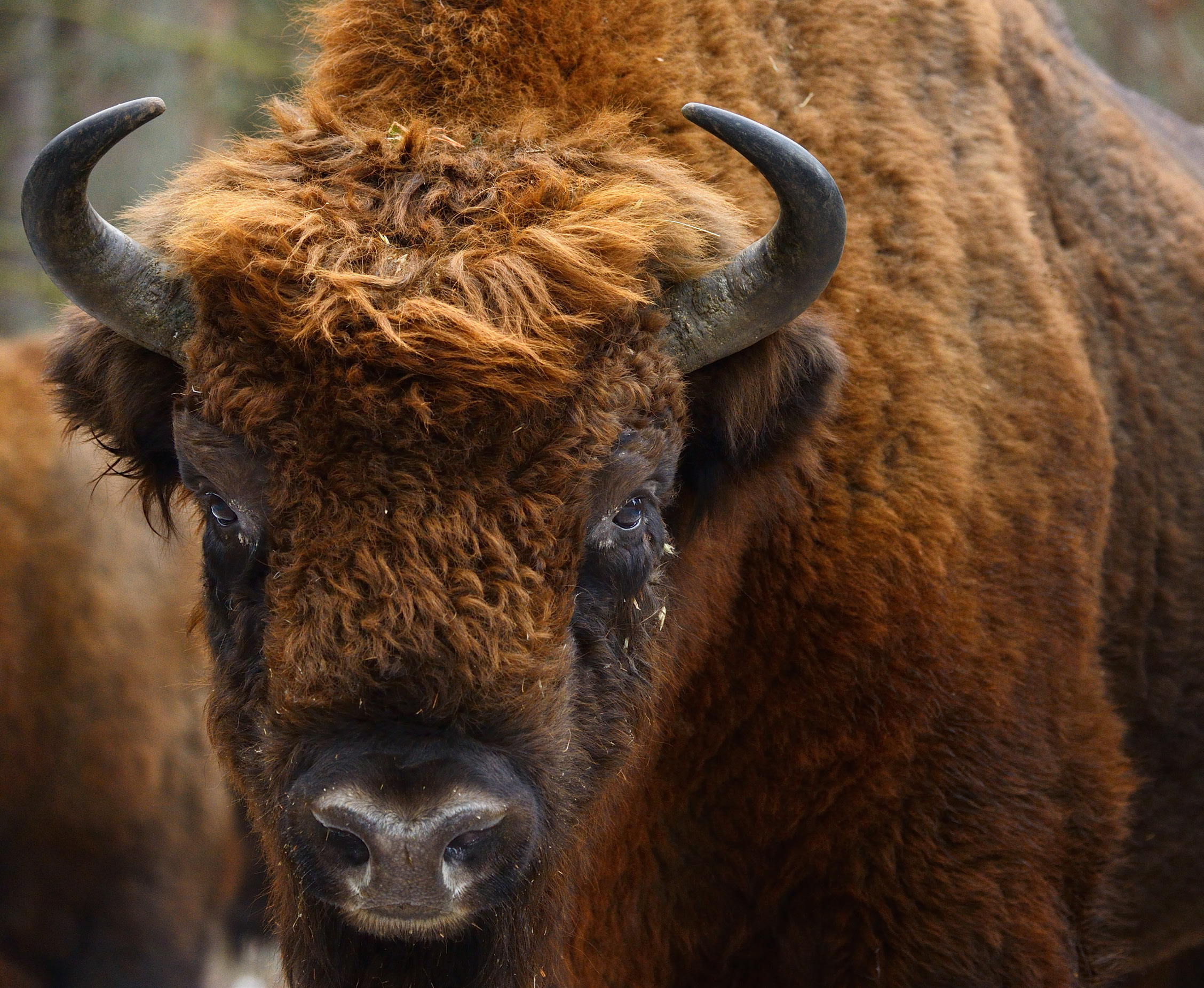
European bison (Bison bonasus), Drawsko Military area, Western Pomerania.
Staffan Widstrand / Rewilding Europe
Example
Landowner B wants to use his land to develop a programme for the release of Tatra chamois, a species native to the area. What would Landowner B need to do to capture the wild Tatra chamois and transport them to his land for release into an area, ideally without fencing?
As in the example above, and as with any reintroduction or reinforcement programme, the first thing that Landowner B needs to do is to contact the competent authorities to discuss the reinforcement plans and how to coordinate with such entities. Only if Landowner B gets the authorities on board, can he proceed with the next steps to implement his reinforcement plan.
Tatra chamois is a protected species in Poland, and Landowner B’s plan requires actions that are generally prohibited: capturing, keeping, transporting, and relocating protected species.
If the reintroduction project is being led by private entities, there are special permits that will be required to carry out certain actions in relation to protected species, which would
otherwise be prohibited. These permits may be issued in the absence of alternatives, where the proposed actions are not detrimental to the conservation of existing populations of protected species.
Therefore, Landowner B needs to request one (or more) permits to carry out the proposed actions in relation to the species.
First, Landowner B needs to assess if their plan meets the general conditions for granting a permit: an absence of alternatives, and that the proposed actions are not harmful to the existing population of protected species already present in the area.
The application should also describe all actions Landowner B intends to undertake and should be justified based on a need to protect specific species, to conserve natural habitats, or to reinforce existing populations.
Landowner B would also need to comply with all administrative and animal welfare requirements for capturing, transporting, keeping, and releasing of wild animals (section 7 below).
5. Is it possible to introduce non-native species to the natural environment of Poland?
If we are talking about species not native to Poland or to an area of Poland, these will be introductions rather than reintroductions. For introductions, a distinction needs to be made between non-native (any alive specimen of a species or subspecies which is introduced outside of its natural distribution area) and invasive species (non-native species whose introduction and spread in the wild threatens or has an adverse impact on biological diversity and associated ecosystem functions).
Despite the general view that non-native species are detrimental to the restoration of fully functioning ecosystems, there may be value in introducing nonnative species as proxies for now extinct native species. On the other hand, it seems much clearer that invasive species are likely to be unavailable for rewilding because of their potential harmful effects on the health of native populations.
The Act on Alien Species forbids, as a rule, the introduction into the environment and the movement of non-native species in the environment. If it is an invasive alien species (“IAS”30), it also forbids the importation, transportation, possession, breeding, trading in, and exchanging of these species.31
Before considering exceptions to the general prohibition, it is important to note that while it may be possible to transport, possess, breed, and introduce non-native species under such exceptions, they do not
extend to IAS. However, in specific circumstances the competent authorities (General or Regional Directors for Environmental Protection) can permit prohibited actions in relation to IAS, if justified by public interest and specific scientific purposes, although however, based on the wording of the applicable provisions, it appears that such exceptions are generally not available for the release of IAS species into the wild.32
One clear exception to the general prohibition on the introduction of non-native species is in relation to certain game animals. It is permitted to introduce non-native species of pheasant, fallow deer, or mouflon for the purpose of colonisation (i.e., introduction into the natural environment).33 This requires: (i) a prior favourable opinion of the locally competent forest inspector of the State Forests National Forest Holding (Państwowe Gospodarstwo Leśne Lasy Państwowe); and (ii) a notification to the Minister for the Environment before the animals are introduced into the environment.34
5.1. What are the consequences of introducing alien species without a permit?
The introduction of a non-native species (except for aquatic and game animal species) without a permit, or the importing, transportation, possession, breeding, use, placing on the market or exchange without a permit, may be fined up to PLN 1,000,000.35 It may also lead to detention.
It is more serious where the illegal introductions involve IAS. Here, the perpetrator may be sentenced to a term of imprisonment between three months to five years (or, if they acted unintentionally, a fine, restriction of liberty or a term of imprisonment of up to two years). Additionally, the court may order the forfeiture of the tools used to commit the offence and the IAS specimens.36
5.2. Is it permitted to take steps to eradicate IAS?
Any sighting of an IAS should be immediately reported to the municipal head, mayor, or town/city president competent for the place where the IAS was found in the environment. This can be done by email, and the person needs to identify themselves, the species spotted, the place and date. If the practitioner took any pictures, they should also attach those.
The municipal head, mayor or city/town president will pass the information to the competent director of the national park, director of the maritime office, the Chief Inspector of Sea Fisheries, or the regional director of environmental protection, depending on the area in which the IAS has been identified. The relevant authority will then initiate remedial action and enter information regarding the identification of the IAS in the environment in the IAS Register.37
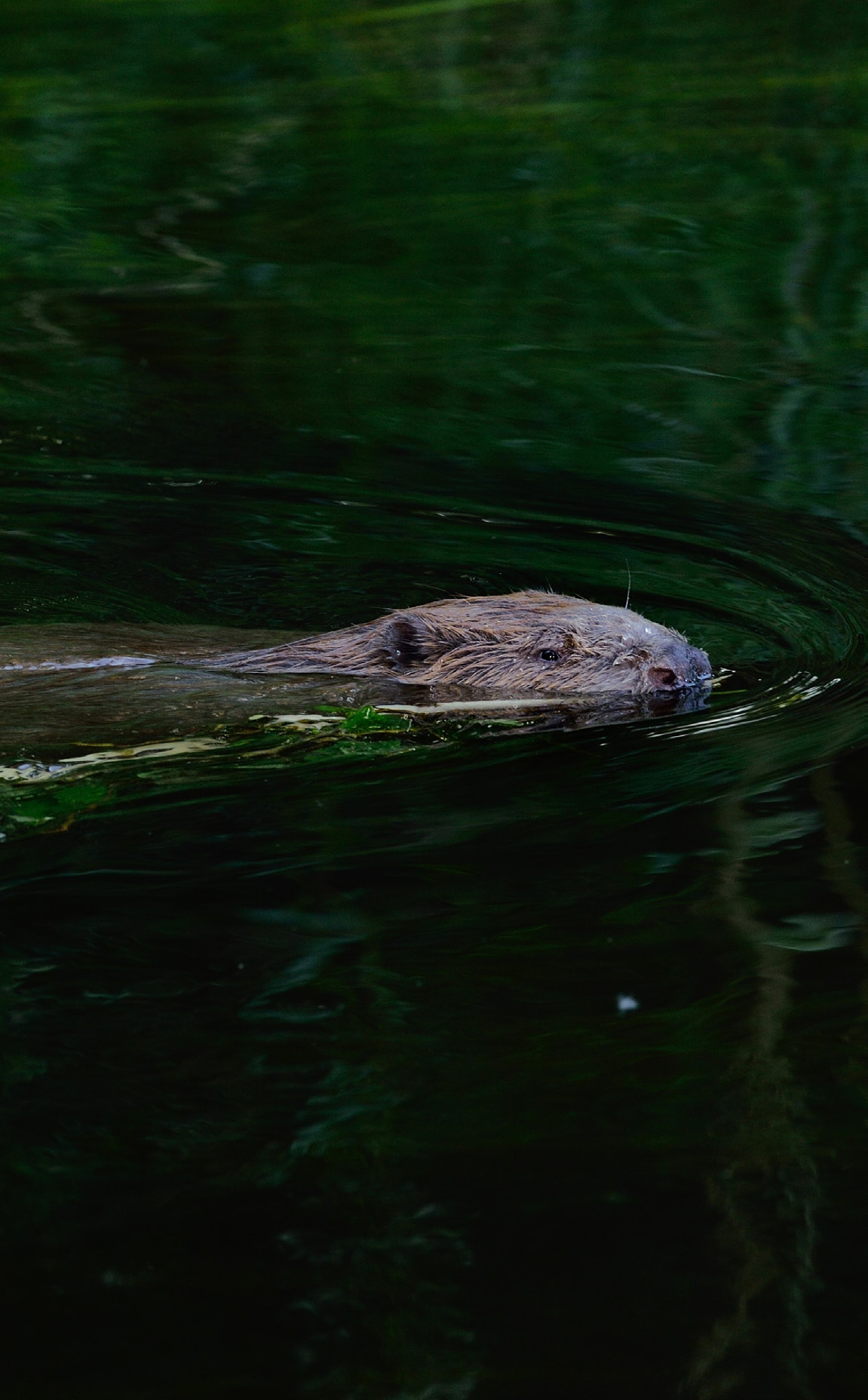
Beaver (Castor fiber), Peene valley.
Example
Landowner B wants to release Sea trout (Salmo trutta) and Atlantic salmon (Salmo salar) in a section of an international river (bordering two countries) which was recently freed by the removal of a dam. These two species have been absent from the river since the dam was built 50 years ago. Currently, there are invasive species living in the river which might be a threat to the survival of the native released species of trout and salmon. What are the legal steps for eradicating the invasive species from the river?
First, Landowner B must contact the local authority (mayor or city president) to report the presence of the invasive species in the river, identifying the location, date, and attaching pictures, if possible. All subsequent actions will be taken by the public authorities without the participation of Landowner B.
Once the invasive species for trout and salmon have been removed, Landowner B must consider the following in relation to the reintroduction of Atlantic salmon and Sea trout to the river:
(a) Neither Atlantic salmon and Sea trout species are protected by law nor defined as dangerous, so, in principle, no permission is required;
(b) both species are listed as native to Poland in the governmental ordinance of the Minister of Agriculture and Development of Rural Areas and can be reintroduced without special permission;
(c) although the reintroduction of these native species may not require a permit, Landowner B should be aware that the minister responsible for fisheries may determine, by way of a regulation, the conditions, in particular technical, organizational, or economic, for the transfer of fish not currently present, but recognized as native. The regulation may take into account the type of fishing activities to take place, the economic importance of those species and the expected impact of such a transfer on the local environment.
Thus, Landowner B should seek technical guidance from the competent authorities before reintroducing Sea trout and Atlantic salmon back to the river.
6. What are the applicable rules where animals are being imported, held, or transported for release?
A reintroduction or reinforcement programme may require the importing and/or temporary holding in captivity of the species before their release to the wild. In any case of cross-border movement where animals are transported across jurisdictional boundaries, it is important to ensure that the transporting complies with the regulations in all relevant jurisdictions. The rules on import and export of animals are complex and specialist advice should be obtained to ensure that any import of animals for use in reintroductions is lawful.
6.1. Importation of animals
The international movement of animals is regulated by CITES. However, within the EU, CITES is implemented by the EU Wildlife Trade Regulations which, in some instances, impose more onerous obligations (e.g. they include species that are not listed in CITES and they list species in different annexes).38
Internally, the importation of species protected under this regime requires making an authorisation request to the Minister for the Environment and the involvement of the scientific authority, the State Council for Conservation of Nature.39/40
The import authorisation request must be accompanied by an opinion or a veterinary certificate stating that the importer satisfies the conditions for
holding the species, having regards to their biological needs.41
After receiving the application, the ministry will request a scientific opinion from the State Council for Conservation of Nature, which shall issue it within 14 days,42 in the cases specified by EU law.43 The ministry may then decide whether to issue a permit.
Note that the permit may be rejected if the applicant has been convicted of a crime related to the trade of wild fauna and flora in the 3 preceding years.44 Even if an import permit has been issued, it may be withdrawn if the applicant is later discovered to have such a criminal conviction, or if the competent authority considers that the permit has been used in violation of its conditions.45
General veterinary requirements to import
The importing of protected (or strictly protected) animals must comply with general requirements on the import and transportation of animals.
Some of these requirements are veterinary and ensure that the animals being imported are in good health and pose no disease threats. There are specific requirements for certain species and countries; for this reason, it is important to obtain information from, and consult with, the relevant authorities.46
A distinction must be made between two regimes. The first regime applies to cases where the imported animals originate from a country not listed in Appendix I to EU regulation 2017/625 (i.e., countries outside EU/UK and North Ireland).47 Here, practitioners:
- can only import animals of specific categories (ungulates, birds, aquaculture animals, monkeys [Simiae and Prosimiae], bees [Apis mellifera], bumblebees, leporidae, minks, foxes and dogs, cats, and ferrets); and
- can only import them from the countries which are listed on the lists published by the European Commission.
In addition, practitioners must:
- obtain prior permission from the Chief Veterinary Officer (Główny Lekarz Weterynarii). Such permission is a formal decision which can be issued only if (i) the animal originates from a farm or area free from infectious animal diseases common for its specie and (ii) does not pose an epizootic and epidemic threat; and
- obtain (and have it with them when transporting the animals) the original health certificate issued by the official veterinarian of the third country from which the animals are dispatched. It is important to
highlight that this certificate should (i) be issued at least both in Polish and in the official language of the third country from which the animals are imported; (ii) confirm that the animal health requirements specified in the permit issued by the Chief Veterinary Officer (see above) have been met; and (iii) contain the number and date of issue of the certificate.
Failure to comply with these requirements may result in a fine, restriction of liberty or imprisonment of up to one year.48
The second regime applies to cases where the animals originate from a country listed in Appendix I to EU regulation 2017/625 (i.e. countries within the EU, UK, and Northern Ireland). Because the movement of animals takes place within the European Union, issues relating to the transport of animals are regulated in detail by Council Regulation No. 1/2005 (see section 6.3 below).
6.2. Holding of animals
After importing the animals to be released, there are further rules to comply with once the animals enter Polish territory
A holder or a breeder of an animal species listed in Annexes A and B to the EU Wildlife Trade Regulation (such as wolves, lynx, bison) is obliged to register such animals in a dedicated register maintained by the head of district (Polish: starosta)49 competent for the place where the animals are held or bred. Note that there is no central register as each starosta keeps a register separately, so whenever there is the need to consult these registers, it is necessary to contact the relevant district office (Polish: starostwo).50/51
For this, the holder / breeder should submit: (a) a written application for the registration of the animal, along with (b) any of the following documents (i) a permit to import the animal into the country; (ii) a permit to capture the animal living in its natural habitat; (iii) a document issued by the district veterinarian confirming that the animal was born
in a breeding farm; or (iv) any other document confirming the legal origin of the animal.
The obligation to register an animal arises on the day of acquisition, entry into the country or capture of the animal. The entry in the register should be deleted once the animal is disposed of, exported, lost or dies. Although it is not listed, it may be possible that a release into the wild would also be cause for deletion from the register. However, there is currently no evidence to support this interpretation.
The application for an entry in, or removal from, the register should be submitted to the competent starost within 14 days from the date the obligation arises and then the starost will issue a certificate confirming entry into the register.52
Failure to register an animal when required may lead to criminal liability in the form of a fine or restriction of liberty (Polish: ograniczenie wolności). Additionally, the court may order: (i) forfeiture of the animal or any other objects used for or derived from the offence committed; (ii) reinstatement of the previous situation; or, if this is not possible, payment of up to PLN 10,000 to a nature conservation organization.53
6.3. Transport obligations
As a general rule, and, pursuant to the general conditions for the transport of animals it is prohibited to transport animals or cause animals to be transported in a way that is likely to cause them injury or undue suffering.54
The general conditions for the transport of animals are that:
- all necessary arrangements must be made in advance to minimise the length of the journey and meet the animals’ needs during the journey;
- the animals must be fit for the journey;
- the means of transport must be designed, constructed, maintained, and operated so as to prevent injury and suffering and ensure the safety of the animals;
- the loading and unloading facilities must be adequately designed, constructed, maintained, and operated so as to prevent injury and suffering and ensure the safety of the animals;
- the personnel handling the animals must be trained or competent as appropriate for this purpose and must carry out their tasks without using violence or any method likely to cause unnecessary fear, injury or suffering;
- the transportation must be carried out without delay to the place of destination and the welfare conditions of the animals must be regularly checked and appropriately maintained;
- sufficient floor area and height must be provided for the animals, appropriate to their size and the intended journey; and
- water, food, and rest must be offered to the animals at suitable intervals and must be appropriate in quality and quantity for their species and size.55
The transportation of animals is not allowed unless the person accompanying the animals in the means of transport carries documentation stating the following:56
- their origin and their ownership;
- their place of departure;
- the date and time of departure;
- their intended destination; and
- the expected duration of the journey
The transporter shall make the above documentation available to the competent authority upon request.
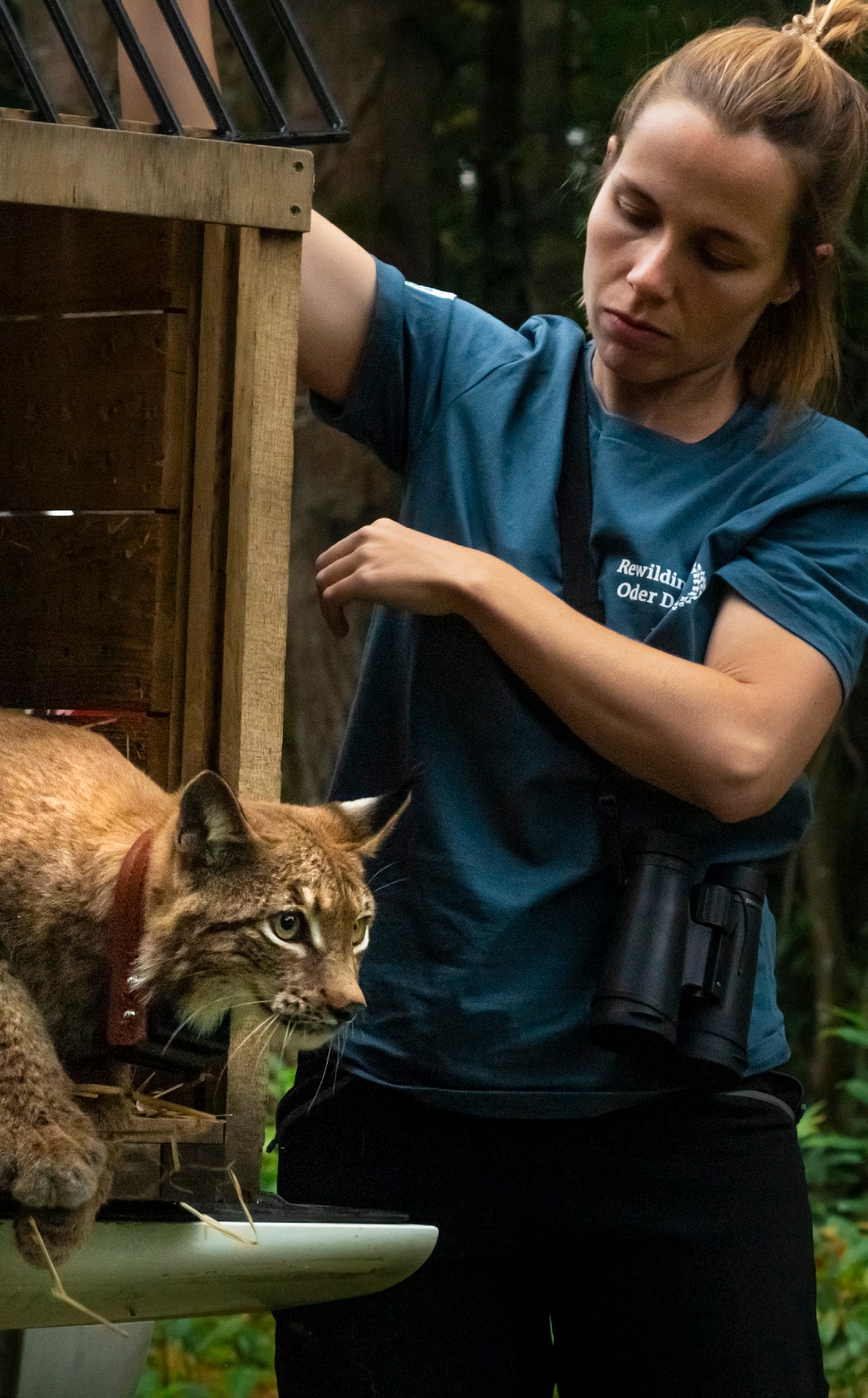
Lynx being released, Rewilding Oder Delta.
Neil Aldridge / Rewilding Europe
7. Considerations regarding animal welfare, health, and biosecurity
7.1. Welfare
Polish law has numerous administrative requirements relating to the acquisition, transport, possession, and release of animals. These are designed to ensure the well-being and safety of animals.57 We address some of them here, but it is highly recommended to get information from the authorities to ensure compliance with all obligations, so the reintroduction programme succeeds.
Accordingly, obligations to prevent what amounts to animal abuse, such as keeping animals in inappropriate living conditions, abandoning them, exposing them to weather conditions that endanger their health or life, or keeping them without food or water, need to be properly considered in a reintroduction programme, particularly during any pre-release phase.58
The relevant authorities that a reintroduction programme engages with may be adamant that these rules are followed. In this case, one should be aware that any violation of these obligations may result in imprisonment of up to three years.
7.2. Health
A reintroduction programme may involve keeping the animal in captivity for a period of time. During this
period, there are legal obligations to be complied with in relation to veterinary safeguards.59
Keeping animals prior to their release into the wild may be considered as an activity involving the protection and conservation of animal species, which is regulated and considered as a “supervised activity”60. In the context of reintroduction, a “supervised activity” (Polish: działalność nadzorowana) is always supervised by the veterinarian authorities. This is relevant and practitioners should obtain proper advice before carrying out any activity towards reintroducing species into the wild.
As a “supervised activity”, practitioners keeping animals prior to their release must:
- submit an application to the relevant district veterinarian at least 30 days before the start date of the supervised activity with all required information;61
- comply with all location, health, sanitary, organisational and technical requirements, and requirements protecting against epidemics;62
- notify the relevant district veterinarian in writing of the cessation of the supervised activity and of any factual and legal event related to the veterinary requirement for the supervised activity within seven days of the day the event occurring;63
- provide unrestricted access to the office, laboratory, social and storage premises and provide adequate protection and equipment for the persons conducting the inspection, if the continuous presence of veterinary inspectors at the place where the supervised activity is conducted is necessary.64
Failure to comply with these obligations may result in detention, a fine or restriction of liberty.65
7.3. Biosecurity
There are other veterinary requirements that must be complied with during the period when the animals are being kept before release.
Irrespective of the type of animals, as long as they are being kept, the keepers must:
- comply with the prohibitions, orders, and restrictions issued by the relevant district veterinarian in order to combat infectious animal diseases;66 and
- carry out mandatory general veterinary examinations and provide treatment for animals of species susceptible to an infectious animal disease.67
In case there is a breeding programme in place with the purpose of releasing animals into the wild, there are specific orders to be complied with if there is a suspicion of an animal infection. Such orders are issued by the relevant Veterinary Inspector.
Endnotes
- As a conservation tool, reintroduction is “the intentional movement and release of an organism inside its indigenous range from which it has disappeared.” It aims to re-establish a viable population of the local species within its indigenous range. Along with reintroduction, another conservation tool is reinforcement of species, defined as “the intentional movement and release of an organism into an existing population of conspecifics.” It aims to enhance population viability, for instance by increasing population size, by increasing genetic diversity, or by increasing the representation of specific demographic groups or stages. See, IUCN/SSC (2013). Guidelines for Reintroductions and Other Conservation Translocations. Version 1.0. Gland, Switzerland: IUCN Species Survival Commission, viiii + 57 pp
- Polish Nature Conservation Act of 16 April 2004, Journal of Laws 2004 No. 92 Pos. 880
- National programmes for nature conservation are issued by the minister in charge of environmental protection pursuant to Article 111 of the Nature Conservation Act. The authorities responsible for implementing the programmes are the General Director of Environmental Protection, Chief Inspectorate for Environmental Protection, the National Water Management Authority and the State Forests. The most recent such programme was adopted by the Council of Ministers on 6 November 2015 by virtue of Resolution no. 213 to approve the “Programme for the Conservation and Sustainable Use of Biological Diversity Together with the Action Plan for 2015–2020”, Journal of Laws, item 1207.
- For instance, in the last few years in Poland a very successful lynx reintroduction programme has been conducted jointly by the West Pomeranian Nature Society, the Mammal Research Institute of the Polish Academy of Sciences in Białowieża and the Culture Centre in Mirosławiec with the support of WWF Poland and co-financed by the State under the 2014-2020 Infrastructure and Environment Operational Programme.
- M. Goettel, Podmioty “własności” zwierząt, Sytuacja zwierzęcia w prawie cywilnym, Warsaw, 2013.
- However, we consider it to be a legal gap rather than the intended action of the legislative body.
- NCA, article 2, n.1 and n. 4.
- NCA, article 2, n.2.
- Ordinance of the Minister of the Environment on the Protection of Animals of 16 December 2016 (the Animal Protection Ordinance), Journal of Laws of 2016, item 2183.
- The Act on Alien Species, article 7
- This is a private document which is prepared every 10 years by the entity entitled to fishing in the given area which is strictly regulated and must be opiniated by Institute of Inland Fisheries. Stanisław Sakowicz in Olsztyn.
- Other rules that may be of use are the following: in the case of fish of the carp species, the condition for introduction into lakes and dam reservoirs is also the use of a stocking dose no higher than: 1. 4 kg and 5 kg of carp per 1 ha of the area of the fishing circuit - for lakes and reservoirs with an area not exceeding 100 ha; 2. 3 kg and 4 kg of carp per 1 ha of the area of the fishing circuit - for lakes and reservoirs with an area of more than 100 ha to 500 ha; 3. 2 kg and 3 kg of carp per 1 ha of the area of the fishing circuit - for lakes and reservoirs with an area of more than 500 ha.Moreover, some alien species listed in the governmental ordinance of the Minister of Agriculture and Development of Rural Areas can be introduced without special permission but only to the closed facility for breeding them and if veterinarian requirements have been complied with. If practitioners want to introduce such alien species into inland waters, it is necessary to obtain a permit issued by the minister responsible for fishery, and it includes various conditions.
- “Protected Animal Species” means animal species listed in the Ordinance of the Minister of the Environment on the Protection of Animals of 16 December 2016.
- Ordinance of the Minister of the Environment on the Protection of Animals of 16 December 2016 (the Animal Protection Ordinance), Journal of Laws of 2016, item 2183. You can find the complete list HERE.
- The list of such animals is determined in Appendix n. 1.
- NCA, article 52.
- NCA, article 2, n.2
- NCA, article 56, n. 4, 1) and 4).
- “RDOŚ”, Regional Director of Environmental Protection (Regionalny Dyrektor Ochrony Środowiska).
- “GDOŚ”, General Directorate for Environmental Protection (Generalny Dyrektor Ochrony Środowiska).
- Council Directive 92/43/EEC of 21 May 1992 on the conservation of natural habitats and wild fauna and flora.
- Such as socio-economic requirements, or requirements related to the beneficial effects of primary importance for the environment. What these entail, exactly, is not explained by the NCA or any legal commentary reviewed for the purpose of this briefing.
- NCA, article 56, n. 6.
- Please note that the explicit wording of the NCA suggests that the applicant may include more than one of the “prohibited” actions within a single permit application, if such actions are interconnected (e.g. if it is intended to relocate an animal, such actions would also encompass capturing, transporting and then releasing it). We would, however, recommend contacting the relevant authority before submitting the application to confirm the practical approach adopted by them.
- NCA, article 56, n. 7.
- NCA, article 56, n. 7a.
- The authorisation states the person authorised to conduct the inspection, the place and scope of the inspection and the legal basis for the inspection.
- NCA, article 73. For the list of dangerous animal species, please refer to the Ordinance of the Minister of the Environment on the Animal Species Dangerous to Human Life and Health of 3 August 2011.
- Article 53 of the NCA.
- “IAS” means invasive alien species as defined in Article 3 point 2 of Regulation No. 1143/2014 of the European Parliament and of the Council of 22 October 2014 on the prevention and management of the introduction and spread of invasive alien species.
- The Act on Alien Species, article 7.
- Please refer to Articles 8-10 and 14 of the Act on Alien Species.
- Article 16a of the Hunting Law (see Rewilding in Poland: Hunting).
- Article 16a of the Act of Alien Species. “IAS Register” means the surveillance system kept by GDOŚ, referred to in Article 14 sec. 1 of Regulation No. 1143/2014 of the European Parliament and of the Council of 22 October 2014 on the prevention and management of the introduction and spread of invasive alien species.
- Article 35 of the Act on Alien Species.
- Article 34 of the Act on Alien Species.
- Please refer to Article 15 et seq. of the Act on Alien Species.
- Council Regulation (EC) 338/97 of 9 December 1996 on the protection of species of wild fauna and flora by regulating trade therein. Please refer to the summary of the Regulation here. As regards the habitat of the Oder Delta, the animal species that must be registered are the common crane, otter, Atlantic sturgeon, harbour porpoise, lesser spotted eagle, osprey, and black stork.
- NCA, article 61, n. 1 and n. 3.
- NCA, article 61. This regime implements Council Regulation (EC) n. 338/97, of 9 December 1996, on the protection of species of wild fauna and flora by regulating trade therein.
- NCA, article 61, n. 3.
- NCA, article 61, n. 6.
- NCA, article 61, n. 5.
- NCA, article 61, n. 7.
- NCA, article 61, n. 8.
- Act on the Protection of Animal Health and Combating Infectious Animal Diseases, Article 13.
- Id.
- Act on the Protection of Animal Health and Combating Infectious Animal Diseases, Article 77; Article 37a of the Act on the Veterinary Inspectorate.
- The head of a poviat - one of three main local government units in Poland (the two others are municipality and voivodeship).
- NCA, article 64, n. 1.
- As an example, see the following registers: https://warszawa19115.pl/-/rejestracja-zwierzat-nalezacych-do-gatunkow-podlegajacych-ograniczeniom-na-podstawie-przepisow-prawa-uniieuropejskiej; https://samorzad.gov.pl/web/powiat-swiebodzinski/rejestracja-zwierzat-nalezacych-do-gatunkow-podlegajacych-ograniczeniom-na-podstawie-przepisow-prawa-unii-europejskiej.
- NCA, article 61, n. 5.
- NCA, articles 128a and 129.
- Idem.
- Article 4 of Council Regulation (EC) No. 1/2005 on the protection of animals during transport and related operations.
- The overarching framework is the Animal Protection Act (APP), Polish Act on the Protection of Animals of 21 August 1997.
- AAP, article 6 (1a) and (2).
- The main regulation to consider is the Act on the Protection of Animal Health and Combating Infectious Animal Diseases.
- Act on the Protection of Animal Health and Combating Infectious Animal Diseases, article 1, n. 1, which lists all activities deemed as a “supervised activity” for the purpose of the Act (e.g. protecting and preserving animal species).
- Article 5 of the Act on the Protection of Animal Health and Combating Infectious Animal Diseases.
- Article 4 of the Act on the Protection of Animal Health and Combating Infectious Animal Diseases.
- Article 7 of the Act on the Protection of Animal Health and Combating Infectious Animal Diseases.
- Article 21 of the Act on the Protection of Animal Health and Combating Infectious Animal Diseases.
- Article 85 of the Act on the Protection of Animal Health and Combating Infectious Animal Diseases.
- Article 44 of the Act on the Protection of Animal Health and Combating Infectious Animal Diseases.


Contact Us

Elsie Blackshaw-Crosby