


Rewilding in Portugal
Developing Land
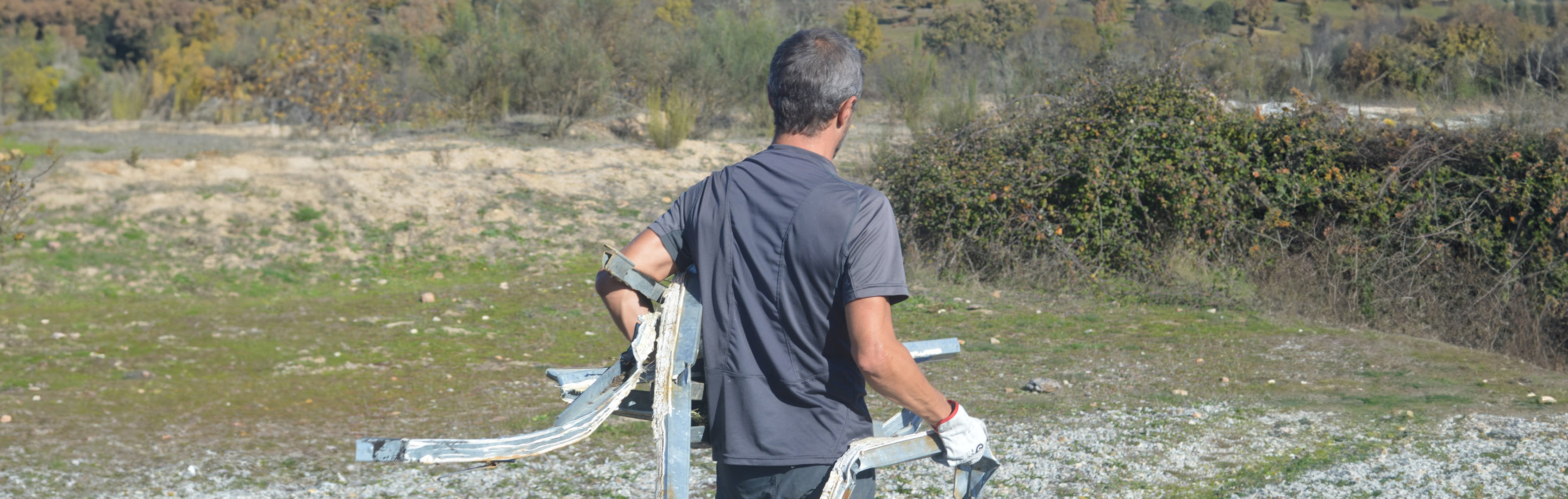
Cleaning-up work of rewilded land, Greater Côa Valley
Rewilding Portugal
Core Topics
- Land uses and management plans
- Public interest restrictions and public interest easements (REN and RAN)
- Construction permits
- Environmental assessments
Key Takeaways
1. What information is needed before starting to rewild land?
To implement a rewilding project, you may need to comply with licensing procedures and regulatory requirements.1 This note provides guidance on important aspects of developing a rewilding landscape.
You can start by looking at what territorial planning regulations say about the landscape you are planning to rewild. For that, you should take note of the (i) Law on the General Bases of Public Policy for Soil, Planning and Urban Development;2 (ii) Legal Framework for Urban Development and Construction (“RJUE”);3 and (iii) Legal Framework for Territorial Planning Instruments (“RJIGT”).4
Furthermore, before taking any decisions about what rewilding activities to undertake, you should consider the following:
- What are the permitted uses of the relevant land?
- Is the land subject to any public interest restrictions or other relevant limitations?
- Is the land in a protected area? If so, what are the consequences?
- Is it mandatory to follow a prior authorisation process for each relevant activity, e.g., licensing?
- Are there any other mandatory procedures applicable to the project?
2. Permitted uses and land classification
2.1. Planning regulations and plans
To understand what the permitted land uses are for a particular area of land, you should consult the planning regulations. These regulations set out the uses and activities allowed in any given area and identify the applicable rules for construction / development.
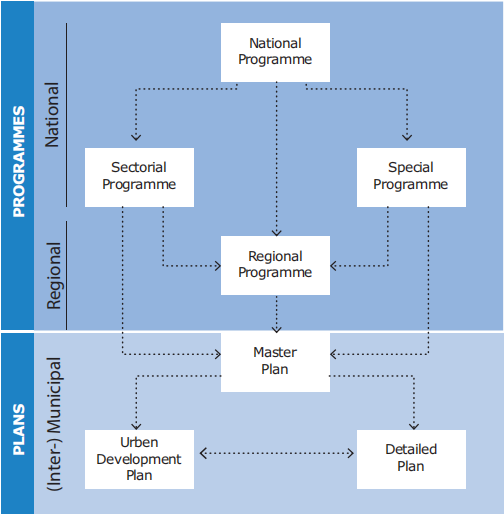
There are four levels of planning regulations:
- National;
- Regional;
- Inter-Municipal; and
- Municipal.
For rewilding projects, the most relevant are the Inter-Municipal and Municipal Plans (together the “Municipal Plans”) because they detail the conditions, criteria, and parameters for land occupation and permitted uses. Municipal Plans are binding on both public bodies and private individuals and entities.
Within the Municipal Plans, there are three instruments to consider:
- The Municipal Master Plan (Plano Director Municipal): it governs all municipal areas and identifies the permitted uses, the applicable construction parameters, the classification of areas
(urban or rural), the protection status of areas (see Rewilding in Portugal: Classified Areas), and the applicable public interest restrictions (please refer to sections 3 and 4 below).
- The Urban Development Plan (Plano de Urbanização): it develops and implements the Municipal Master Plan by defining the location of the main municipal infrastructures and collective facilities.
- The Detailed Plan (Plano de Pormenor): it covers specific smaller areas / projects and specifies, in detail, the urban parameters applicable to the area.
2.2. How is land classified?5
Land use is based on the fundamental distinction between urban areas and rural areas.
Urban areas are intended for construction development, whereas rural areas are used for:
- agriculture;
- livestock;
- forestry;
- conservation, development, and exploitation of natural, geological, or energy resources;
- natural and cultural spaces;
- tourism, recreation, and leisure; and
- risk protection (even if occupied by infrastructure).
You may be particularly interested in rural areas, given the type of projects that can be developed there.
2.3. Are there any other relevant categories for rewilding land?
In addition to the broad distinction between urban and rural, land can also be classified according to the primary purpose it serves. The primary purpose corresponds to the dominant use of the land.6
For rural land, it can be classified as:7
- agricultural or forest land;
- land for exploitation of energetic and geological resources;
- land assigned to industry directly related to the uses above;
- land with natural, cultural, and landscape value; and
- land for infrastructure or other kinds of human occupation, such as tourism, as long as it doesn’t require the land to be reclassified as urban.
Different uses of land can co-exist in the same landuse classification if they complement or are compatible with the dominant use. The compatible and complementary uses will be identified alongside the definition of the dominant use in the applicable Municipal Plans. However, it is worth noting that as a general rule, the co-existence of uses cannot put people, goods, or natural resources at risk.
Within the co-existing uses, you can also change the land use of certain areas within your land. In this case, you should first confirm whether there are any specific regulations protecting the flora species that currently exist on the land (see Rewilding in Portugal: Forests and Flora) and if the site is within any classified area (see Rewilding in Portugal: Classified Areas). If no protective regulation exists, there is no procedure to follow.
Reclassifying your land from urban to rural can be done at any time8 by following a land reclassification procedure which would require you to file a planning contract with the Municipality for the approval of a Detailed Plan with land registration effects.9
Example 1
Landowner A owns a piece of land which is classified as forest land. They wish to change the use of land from commercial forestry to forest conservation.
Within the forestry category of land use, there is normally no restriction on the type of trees to plant, thus no reclassification of land is necessary, as the uses are compatible. However, certain Municipal Plans may identify sub-categories of use classification within each rural area.10 They can determine, for example, that some areas are intended for productive forestry, forest conservation, or agroforestry. In these cases, there might be limitations on the type of trees or management methods that are authorised (see Rewilding in Portugal: Forests and Flora).
If applicable, these are restrictions on land use, which must always be understood prior to the execution of any project. They are established by Municipal Plans and will only be changed under the legal procedure for amending planning instruments. Thus, it is not in the power of practitioners to change these limitations.
In any case, consideration should always be given to provisions protecting or prohibiting specific flora species.
Example 2
Landowner B wants to change land use from irrigated agriculture to rainfed agriculture adapted to the dry local climate. The land is classified as an Irrigated Agricultural Area because it is under the Irrigation Perimeter of a river reservoir. Irrigation infrastructures were installed because of a water use programme that was developed in that area.
From the point of view of planning rules, despite all these conditions, rainfed agriculture is considered a compatible use. Therefore, it could be possible to make this change to how the land is managed without needing to reclassify the land use. However, the legal rules for hydro-agricultural and irrigation schemes may establish restrictions that prevent this change, which must be checked on a case-by-case basis.
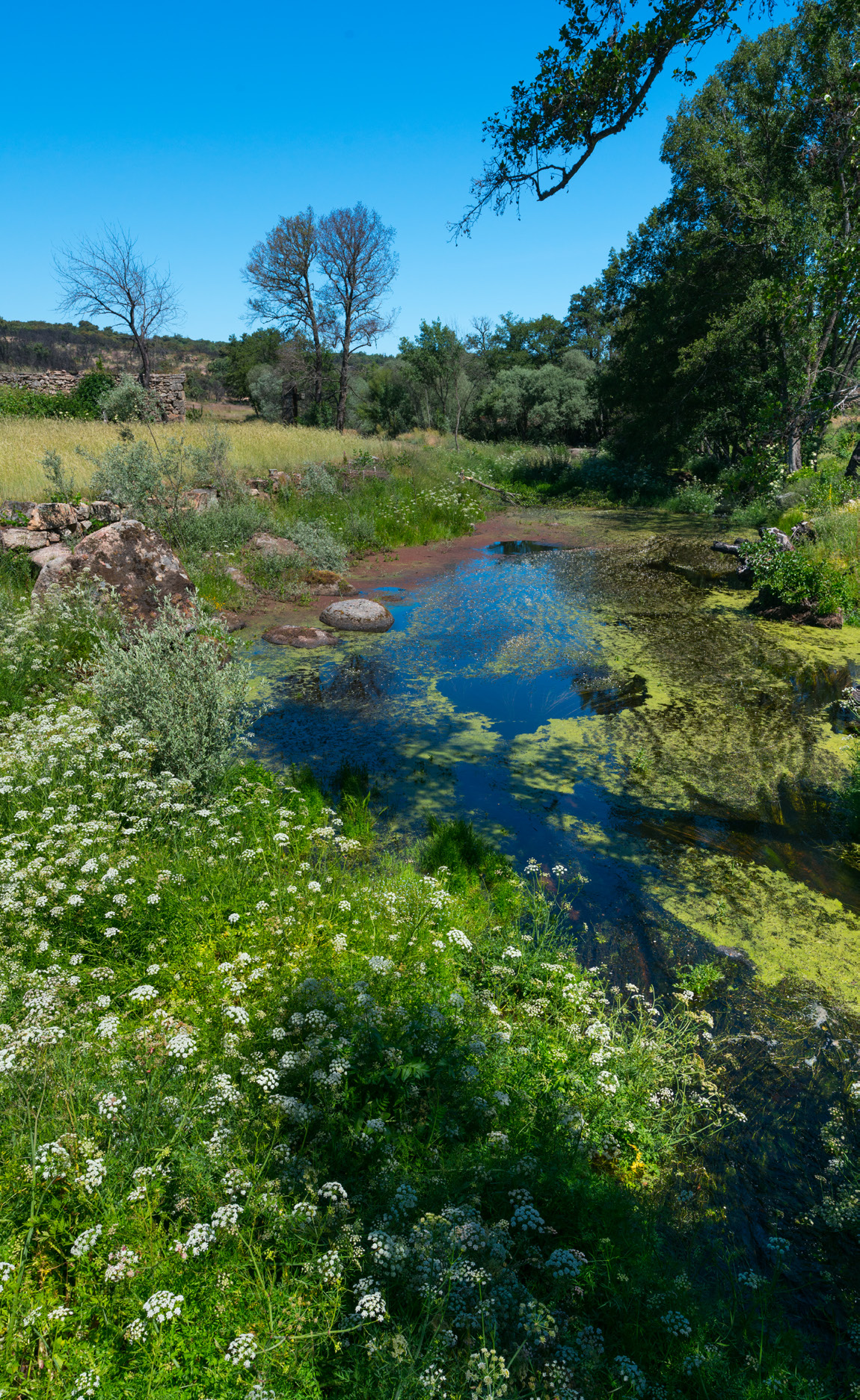
Ribeira das Cabras Valley, Greater Côa Valley.
Juan Carlos Muñoz / Rewilding Europe
3. Public interest restrictions and public interest easements
The Municipal Plans also identify what public interest restrictions11 and easements12 exist over any given area of the municipality
Public interest restrictions are legal limitations on the use, occupation, and transformation of privately owned land. If a public interest restriction exists over your land, it will impact what you can do on your land.
The two most important systems of public interest restriction are the National Ecological Reserve (“REN”) and the National Agricultural Reserve (“RAN”).
There are also public interest easements which are other restrictions created by law on a property to pursue concrete goals of public interest. A great variety of public interest easements exist, including, for example, those for the benefit of the public hydric domain (see section 4 below), infrastructures (e.g., roads, railways), or to protect classified property.13
3.1. What are National Ecological Reserves (REN) and how might they limit a rewilding project?
RENs are areas that need special protection due to their ecological value or due to their exposure and susceptibility to natural hazards.14
No construction is allowed in REN areas and the following activities are also prohibited: (i) land division operations; (ii) urban development; (iii) excavations and landfills; and (iv) destruction of the vegetation cover, except in actions required for regular agricultural and forestry activities. Agricultural activities are also significantly restricted in REN areas.15
REN areas are identified in the public interest restrictions chart, annexed to each Municipal Master Plan.16
If you hold land in a REN area, you should make sure that the plans you have for the landscape are not limited by this public interest restriction. As both REN and rewilding principles have many aspects in common, the fact that the landscape is in REN may not be significantly limiting. In any case, you should always make sure to seek professional advice if needed.
The competent authority for REN areas depends on geographical scope.17 At the national level, the National Commission for Territory and Portuguese Environmental Agency are responsible for REN areas. At the regional level, the five regional coordination commissions (CCDRs)18 are responsible for REN areas for each of their respective regions. At the local level, municipalities are responsible for REN areas.
Example 3
Landowner C is managing a marshland where a great biodiverse fauna can be found. As part of their plan to promote the ecological value of the site, Landowner C wants to build a fence to stop visitors being spotted by the animals. Visitors can still watch and admire the vibrant marshes. This marshland is in a REN.
As a rule, the construction of walls higher than 0.2 m above the ground is not admissible in marshes. However, the REN rules allow uses and actions that are compatible with the objectives of ecological and environmental protection and prevention and reduction of natural risks, so the project would have to be presented to the REN Authority for this purpose to be admitted.19
3.2. What are National Agricultural Reserves (RAN) and how might they limit a rewilding project?
RAN areas are intended to protect the best productive land for agriculture.20 All actions that reduce or destroy the land’s potential for agricultural activities are forbidden and construction is not allowed.21/22
Note that RAN areas may accommodate rewilding activities because “activity ancillary or complementary to agricultural activity”23 is permitted in RAN areas.
Agricultural activity is defined as “economic activity whose purpose is the production of plant, woody or non-woody, or animal goods that can be used as raw materials for various industries”.24
Therefore, although the definition of agricultural activity itself does not accommodate rewilding, there are types of ancillary activities that potentially “open the door” to rewilding activities. Activities which aim to preserve the environment, heritage, and the countryside (e.g., activities such as natural grazing or restoration of peatland) may constitute such ancillary activities and may therefore be permitted within RAN areas.
Some uses are exceptionally admitted if ancillary to the agricultural uses, if (i) they do not cause serious damage to the objectives of the RAN; (ii) there is no viable alternative outside the land of the RAN; and (iii) the legal requirements for the admissibility of these uses have been met.
To know what authorisation or notification procedures you need to develop a project located in RAN areas requires a case-by-case analysis. However, legally, you are exempt from requesting a prior opinion of the regional RAN entity if you intend to install a fence, as long as it uses metallic or plastic mesh with wooden stakes, concrete or cement props, without a continuous wall or base in concrete or any other material.
Similarly to REN, the responsibility for RAN areas falls on different entities, with different geographical scope.25 The RAN National Entity is the national competent authority, and the five RAN regional entities (ERRANs) have responsibility at the regional level.26

Guarding dogs at work, Greater Côa Valley.
Ricardo Ferreira / Rewilding Europe
4. What is the Hydric Public Domain (DPH) and how might it impact rewilding?
In Portugal, all public and private waters are subject to the Water Law27 and to the legal rules on Ownership of Water Resources.28 In addition, private waters are subject to the Civil Code.29/30
The DPH imposes public interest restrictions to achieve its objectives. These not only include preventing further degradation, but also protecting and improving both aquatic ecosystems and land ecosystems and wetlands that are directly dependent on aquatic ecosystems. It generally impacts parcels of land located on the beds of sea waters, river waters, lakes, and lagoons, including their banks and adjacent areas.
As public land, DPH areas cannot be acquired, but their resources are for common use and enjoyment, including recreation, leisure, and watering. It is not necessary to obtain a permit for these purposes if the
conditions defined in the applicable plans are respected and there is no significant alteration in the quality and quantity of water.31
Besides these common uses for the general public, what can you do if you need to use water resources from the public domain? To reserve more water resources from the public domain for private use, you need to obtain a permit for the use of water resources (TURH). The process to obtain such a permit, set out in the Framework on the Use of Water Resources,32 varies according to the complexity of the use and involves a competitive bidding process principle. The first step in getting a TURH is to submit a prior information request to the competent authority, describing in detail (i) the intended use for the TURH; and (ii) the exact location of the intended use.33
Example 4
A national river crosses a landscape recently bought by a rewilding association. The former owner severely damaged the riparian forest gallery, once home to many different bird species, food and shelter source for the beavers, and a natural protection against flooding during harsh winters. The rewilding association wants to restore the riparian forest gallery to create the conditions to restore the ecosystem that used to exist and to recover the much-needed natural protection for the grassland where large herbivores graze freely.
Restoring the banks of a watercourse by replanting the riparian gallery would require a TURH to be obtained through a licensing process, under the Law of Water34 and Use of Water Resources.35
The rewilding association can request prior information and, if they need to request a TURH, they should submit a TURH permit request online and pay the fee. The necessary forms and more information are available on the Portuguese Environmental Agency’s website (APA).
5. What do you need to know about construction works on rewilded land?
Although a core principle of rewilding is minimal human intervention, there may be times when, to ensure the closest conditions to wilderness, some degree of human intervention is needed. This section deals with construction works that might occur in rewilding landscapes.
There are many legal definitions of construction works, so the best starting point is to try to navigate what the law says about man-made structures.36
The general rule is that if a project involves urban development operations, such as construction, or land use for purposes not exclusively for agricultural, livestock, forestry, mining, or public water supply purposes,37 it may be subject to a prior control procedure.38
Putting up fences, removing barbed wire, building a hide, and converting a farm building into an education centre, are everyday examples of “urban development operations” undertaken in rewilding land which may therefore require a permit.
As a rule, there are two different paths:
- Licensing procedures:39 the municipality confirms that the proposed project complies with the applicable planning and technical regulations. Upon approval, the municipality issues a construction permit, and the developer must begin construction within one year.
- Prior communication (comunicação prévia):40 this is a swifter procedure, where works can begin 30 days after the submission of the request and payment of fee. The request must include details of the architectural and technical elements of the proposed construction.41
In addition to the above, and upon completion of construction works, obtaining a use permit42 is mandatory for all new building constructions.
Example 5
Landowner D bought land which includes an old concrete building for which they have no use and wish to demolish. Landowner D wants to restore their land to its natural landscape as closely as possible. Landowner D checks the Municipal Plan and they confirm their land is part of a REN area.
In areas subject to administrative easement or restriction of public utility (such as REN or RAN), the demolition of a building is subject to a licensing procedure.
Reconstruction works are also subject to licensing. This would apply if, for example, Landowner D changed their mind and decided to demolish the old concrete building and rebuild it as a visitors’ centre.
Landowner D must therefore apply to the municipality. If the proposed work is approved, the municipality will issue a construction permit to Landowner D.
However, if the land was not in a REN area and the reconstruction work kept the same footprint as the old building and there was no increase in height of the pre-existing façade nor an increase in the number of floors, the reconstruction would only require the submission of a prior communication. Any works beyond these limits – footprint, height, and number of floors – would be considered an expansion work and would therefore need a licensing procedure.
In addition, any decision to rebuild the building it as a visitors’ centre would need a use permit.
Finally, some works are not subject to prior control procedure43, such as conservation works of the building, alteration works in the interior of the building that do not affect any change to its structure, height, and outside looks, or works of minor urban relevance. The following are considered as having “minor urban relevance”:
- Constructions (or demolition of existing constructions) with a maximum area of 10 m2 that do not border public roads and have a (i) maximum height of 2.2 m; or that are (ii) not higher than the ground floor of a main building in a property.
- Construction or demolition of fenced walls up to 1.8 m high, that do not border public roads and retention walls, up to a height of 2 m or that do not significantly alter the topography of the area.
- Installation, in constructed areas, of (i) solar photovoltaic panels which do not exceed the covered area or the height of the construction in more than 1 m; or of (ii) wind generators that do not exceed the height of the construction by more than 4 m and that do not have a radius greater than 1.5 m.
Please note, however, that you will need to inform the municipality of the start date of the corresponding construction works, with prior notice of at least 5 days.
Example 6
Landowner E is managing a landscape and part of the land is covered by REN. They want to build a small wooden lookout for birdwatching and corresponding access paths.
Any construction of a structure permanently incorporated into the soil will be considered an urban development operation. Consequently, the construction of the birdwatching lookout may be subject to a licensing procedure.
However, the final answer depends on the size and height. If the construction is lower than 2.2 m in height and smaller than 10 m2, it will be exempt from prior control.44 These exceptions apply even when there is a public interest restriction (REN or RAN areas).
As for the access paths, the need for licensing procedure depends on the municipal regulations applicable to the area and the features of the path. For instance, if paths are built with permeable materials, thus allowing the absorption of rainwater to the ground, municipal regulations often consider these to be exempt from authorisation procedures. They can, however, require a prior communication.
Example 7
Landowner F is managing a landscape where, along the run-off lines, wet meadows struggle to recover their diversity of flora, previously suppressed by the intensity of grazing, which was concentrated in this land of great productivity. Landowner F plans to restore the wet meadows to facilitate the control of water levels to keep the soil damp. Landowner F hopes that with the meadow’s restoration, breeding habitats for wading birds and other biodiversity will follow. To achieve this, they want to remove the topsoil to reduce nutrient levels in nutrient-enriched soils and to increase flooding frequency by lowering the ground surface.
Landowner F must apply to the municipality for a licensing procedure for landscape remodelling. If there is a natural monument on the landscape, such as a specific geological formation, the specific classified area rules and restrictions will be applicable (see Rewilding in Portugal: Classified Areas).
If the land is within a REN area, the landscape remodelling will be allowed as far as the actions are compatible with the objectives of ecological and environmental protection and prevention and reduction of natural risks. The project would have to be presented to the competent regional REN Authority for this purpose to be admitted.45
If the land is within a RAN area it will not be possible to carry out this action on the land, because, under the terms of these protection rules, interventions or uses that cause soil degradation, including erosion, compaction, landslides, waterlogging, flooding, excess salinity, pollution, and other harmful effects, are not permitted.
6. Other mandatory procedures relevant to rewilded land
The implementation of a rewilding project has environmental impacts on the land, so it may be necessary to consider whether its execution should be preceded by an environmental impact assessment procedure.
Rewilding activities may not always be aligned with the specific conservation purposes of an area, considering that rewilding aiming at full ecosystem restoration could, at least in the short term, damage particularly vulnerable flora or fauna. Therefore, depending on the specifics of each rewilding activity and the specific conservation objectives set out for the classified area, rewilding may be subject to a prior environmental impact analysis. In fact, even if the goal is to improve the condition of the ecosystem and/or to restore the landscape to a wilder state, it is wise to confirm that there is no need for an environmental evaluation.
The rules on the Environmental Impact Assessment (EIA)46 and other related regimes might come into play in this context.
6.1. Is an EIA required to develop a rewilding project?
What are EIAs?
These assessments analyse the likely significant environmental effects arising from a proposed development. EIAs are typically required for large infrastructure projects, such as airports or motorways, which can cause significant environmental damage.
An EIA is mandatory for all projects listed in the annexes to the EIA Framework,47 if they meet the specified criteria. The EIA Framework identifies two groups of projects. The first group (Annex I) is out of the scope of this note because it refers to large-scale projects; the second group (Annex II) identifies certain types of projects which may require an EIA if they meet certain size criteria and/or are happening in sensitive areas. It is possible that a rewilding project may undertake activities listed in Annex II.
Moreover, if the project corresponds to one of the project types described in Annex II of the EIA Framework but does not reach the thresholds set out in it, it may still be subject to case-by-case examination to determine whether the project should be subjected to EIA by an administrative decision. In this scenario, the project will be subjected to an EIA if the licensing authority decides the project is likely to have a significant impact on the environment by virtue, among other things, of its nature, size, or location.
In principle, rewilding activities are unlikely to require EIAs, as they are unlikely to cause significant environmental damage. However, a rewilding project could potentially fall into the following Annex II activities and therefore require an EIA:
- Rural land consolidation projects with or without irrigation infrastructure,48 e.g., combining multiple rural land holdings49 into a single holding so as to
create a larger landscape and more holistic ecosystem.
An EIA is mandatory in these cases if the project has an area of ≥ 350 ha (with irrigation), or an area of ≥ 1000 ha with no irrigation. If the project is in a sensitive area, the thresholds are ≥ 175 ha and ≥ 500 ha, respectively.
- Afforestation and reforestation that involves replacing pre-existing species with fast-growing species and deforestation intended for conversion to another type of land use.50
An EIA is mandatory in these cases of afforestation and reforestation of an area of ≥ 350 ha, or of ≥ 140 ha if, together with pre-existing stands of the same species, spaced less than 1 km apart, it results in a wooded area of more than 350 ha, and ≥50 for deforestation.
If the project is totally or partially in a sensitive area, the thresholds are for the afforestation and reforestation ≥70 ha ≥ 30 ha respectively, and ≥10 ha for deforestation. - Theme parks51 with an area of ≥ 10 ha, or 4 ≥ ha if located totally or partially in a sensitive area. An example to consider would be a zoo park as a possible solution to reintroduce wild species to an enclosed area for conservation purposes (see also Rewilding in Portugal: Wildlife Reintroductions).
Separately, if you plan to deconstruct any works that required an EIA at the time of construction, you should check the final EIA decision and/or any Environmental Impact Statement (“DIA”)/Compliance Statement of the construction project which may set out requirements to be followed as part of any deconstruction or decommissioning.
Finally, although rewilding projects are unlikely to require EIAs, in theory it is possible that through a discretionary decision, considering the location, size or nature of the project and taking into account certain criteria, the Government may require the project to be subject to an EIA Procedure. If you are not sure whether your project requires an EIA, the following steps should be followed:
- Look for information that can help you determine if the legal framework applies: https://apambiente.pt/ avaliacao-e-gestao-ambiental/aplicabilidade-doregime-juridico-de-aia;
- Use the SILIAmb platform to generate and submit the opinion request together with the necessary documentation.52
Example 8
A rewilding association acquired a deactivated mining site with great rewilding potential. The historic mining activity created a large water surface, distributed in a great diversity of environments such as lagoons, canals, and permanent and temporary ponds, all interconnected by seasonally flooded wetlands and full of aquatic and riverine vegetation that grows on the former wolfram and sand extraction areas. The association wants to put in place management measures such as earth movements, smoothing some slopes, and increasing the area of flooding. This will facilitate access and reduce the risk to wildlife.
The deactivation of a mining site is an activity that must be approved by the public bodies. Their decision is based on a case-by case assessment.
Currently, the operation of mineral deposits is subject to compliance with an Operation Closure Plan annexed to the corresponding concession contract. The implementation of the Operation Closure Plan is carried out in close cooperation with the municipality and the competent authorities, namely the Directorate-General of Energy and Geology (DGEG).
In this case, as the mining site was already deactivated when the land was acquired, it is necessary to check the Operation Closure Plan and follow the instructions therein in relation to subsequent activities. The assessment of the planned activities for the land needs to be done on a case-by-case analysis. Obtaining targeted legal advice and consultation with the competent public bodies is recommended.
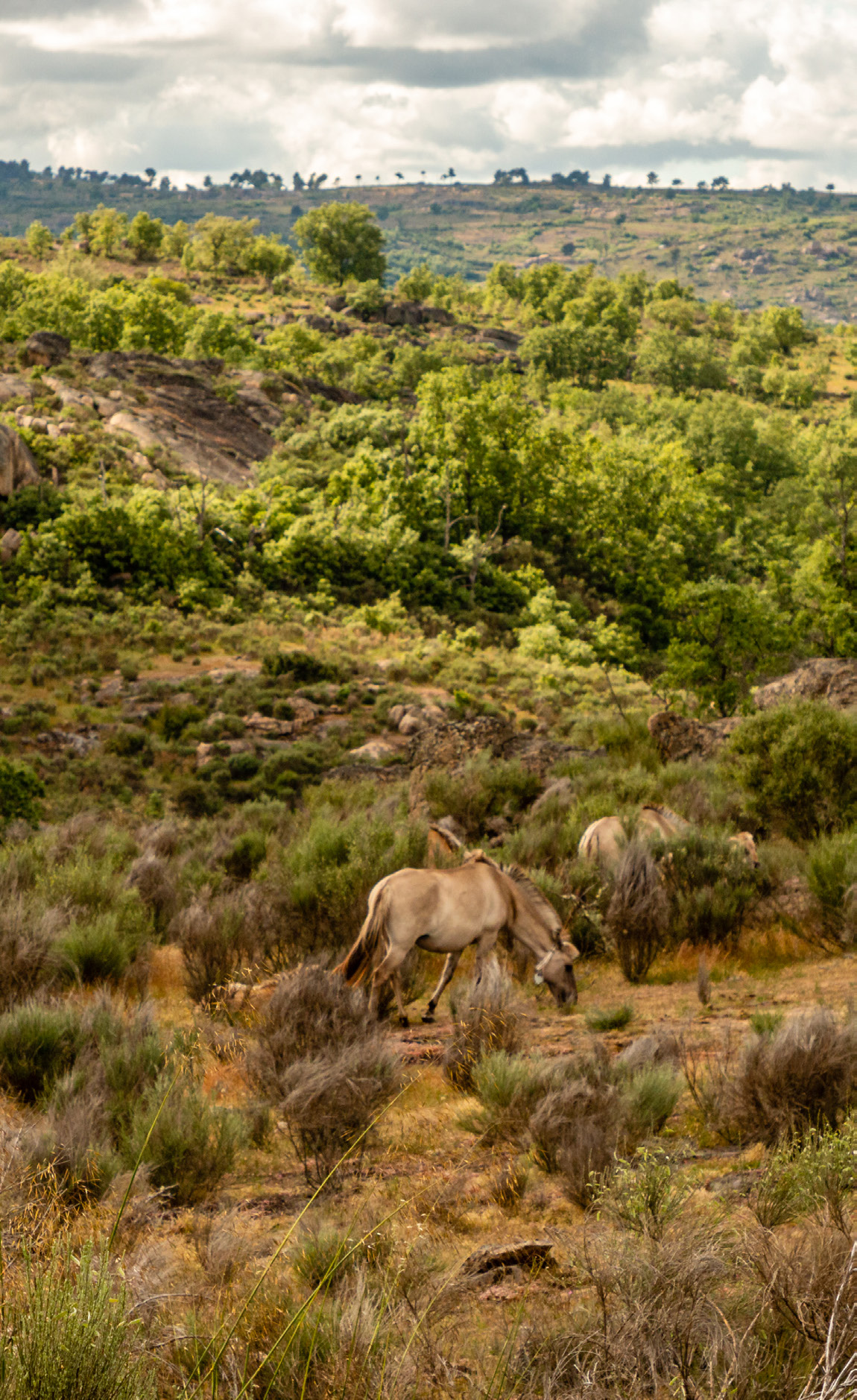
Sorraia horses in Vale Carapito, Greater Côa Valley.
Ricardo Ferreira / Rewilding Europe
Endnotes
- Rewilding projects may take place in classified areas, areas with natural habitats, with species of fauna and flora that have been granted special protection, etc. For this reason, it may be useful to consult the Natural Heritage Information System (“SIPNAT”). This is an inventory of the biodiversity and geological heritage present in Portugal and in waters under Portuguese jurisdiction, and the National Register of Classified Natural Values (as a draft), an archive of information on classified natural values and plant or animal species assigned a threat category by the national authority according to international criteria defined by The World Conservation (IUCN). A proposal for the Register has been drawn up and is currently under examination: https://participa.pt/pt/consulta/cadastro-nacional-dos-valores-naturais-classificados. The ICNF has prepared an explanatory note on the Register, which is available at the following link: https://www.icnf.pt/api/file/doc/731676fa520c 7d92.
- Law 31/2014 of 30 May, as amended.
- Decree Law 555/99 of 16 December, as amended.
- Decree Law 80/2015 of 14 May, as amended.
- Article 71 RJIGT
- Article 74(1) RJIGT
- Article 74(2) RJIGT
- Article 73 RJIGT
- Land reclassification usually occurs with the review of the Municipal Master Plans and is carried out by the municipality.
- Article 19 (3) Implementing Decree 15/2015, of 19 August.
- Article 11 Law 31/2014, as amended.
- Article 33 Law 31/2014, as amended. Public Interest Easements are different from Easements from the Civil Code (Rewilding in Portugal: Obtaining Land and Legal Mechanisms to Protect Wild Land)
- Article 2 of Decree Law 166/2008 of 22 August, as amended.
- There are, however, exceptions to these limitations and the development of any project requires prior confirmation and analysis of the applicable restrictions. In addition, confirmation of what authorisation or notification procedures a project located in NER areas is subject to requires a case-by-case analysis.
- REN areas may also be consulted at: https://cnt.dgterritorio.gov.pt/ren-vigor
- CCDR North; CCRD Centre; CCDR Lisbon and Tajo Valley; CCDR Alentejo; and CCDR Algarve.
- Article 20(2) of Decree Law 166/2008 of 22 August, as amended.
- Article 2 of Decree Law 73/2009 of 31 March, as amended.
- Article 21 of Decree Law 73/2009 of 31 March, as amended.
- Areas included in the RAN may not be sub-divided into parts smaller than 4 hectares, if the lands are intended for irrigation production, and 8 hectares, if they are lands for non-irrigation production (rainfed agricultural) or for forest production.
- Article 3(b) of Decree Law 73/2009 of 31 March, as amended.
- Article 3(a) of Decree Law 73/2009 of 31 March, as amended.
- ERRAN North; ERRAN Centre; ERRAN Lisbon and Tajo Valley; ERRAN Alentejo; and ERRAN Algarve.
- Law 58/2005 of 29 December, as amended.
- Law 54/2005 of 15 November, as amended.
- Articles 1385 to 1403 of Decree Law 47344/66 of 25 November, as amended.
- Article 18 of Law 54/2005, of 15 November, as amended.
- Article 58 of Law 58/2005, of 29 December, as amended.
- Decree Law 226-A/2007 of 31 May, as amended.
- Article 11(2) Decree Law 226-A/2007 of 31 May, as amended.
- Article 60 Law 58/2005 of 29 December, as amended.
- Articles 19 to 21 of Decree Law 226-A/2007 of 31 May, as amended.
- We will base our analysis on Decree Law 555/99 of 16 December, as amended, which establishes the legal framework of construction and land development (RJUE).
- These excluded land uses do not require any procedure under the RJUE. However, they may require an operation permit, for example, mining activity requires an operation licence to be requested from the Directorate-General for Energy and Geology, under Decree-Law 270/2001 of 6 October, as amended.
- Article 4 of RJUE.
- Article 4(2) RJUE and articles 18 to 27 RJUE for the licensing procedure.
- Article 4(4) RJUE and articles 34 to 36 RJUE.
- To see whether a project needs a prior communication, it is recommended to frame the project in accordance with the provisions of articles 4, 6, and 6-A of RJUE.
- Articles 62 and 63 RJUE. The use permit is obtained through an authorisation procedure to check compliance of the built structure with the prior control procedure filed.
- Article 6(3) with article 6(1)(b) and article 6(2) RJUE.
- Article 6-A of RJUE.
- Article 20(2) of Decree Law 166/2008 of 22 August, as amended.
- Decree-Law 151-B/2013 of 31 October, as amended. This law incorporated the EIA Directive (Directive 2014/52/EU of the European Parliament and of the Council of 16 April 2014) into Portuguese law.
- Id.
- Annex II, 1 a) of Decree Law 151-B/2013, of 31 October, as amended.
- What are the land uses of these “holdings”? A rural holding is a delimited parcel of land, which is not classified as urban and is intended for agricultural, livestock, forestry, or mining activities. A rural holding can also be a natural area intended for protection. Article 3(2) of Law 111/2015 of 27 August, as amended.
- Annex ii, 1 b) of Decree Law 151-B/2013 of 31 October, as amended.
- The law does not define “theme parks”. According to the European Commission Guidelines expressed in “parks falling within this project category could be developed, for example, for recreational, educational or informative purposes. However, it should be noted that the project category ‘theme park’ is listed in Annex II (12) under the heading ‘Tourism and leisure’. For instance, a park that has a specific theme or attraction or several attractions, like an amusement park, should be considered a theme park. Areas planned for a leisure attraction based on or related to a particular subject should also be covered by this project category. For example, water parks and zoos should be considered to fall under this project category.” in “Interpretation of definitions of projects categories of annex I and II of the EIA Directive”
- Annex IV to the Decree Law 151-B/2013 of 31 October, as amended.


Contact Us

Elsie Blackshaw-Crosby