


Rewilding in Portugal
Forests and Flora
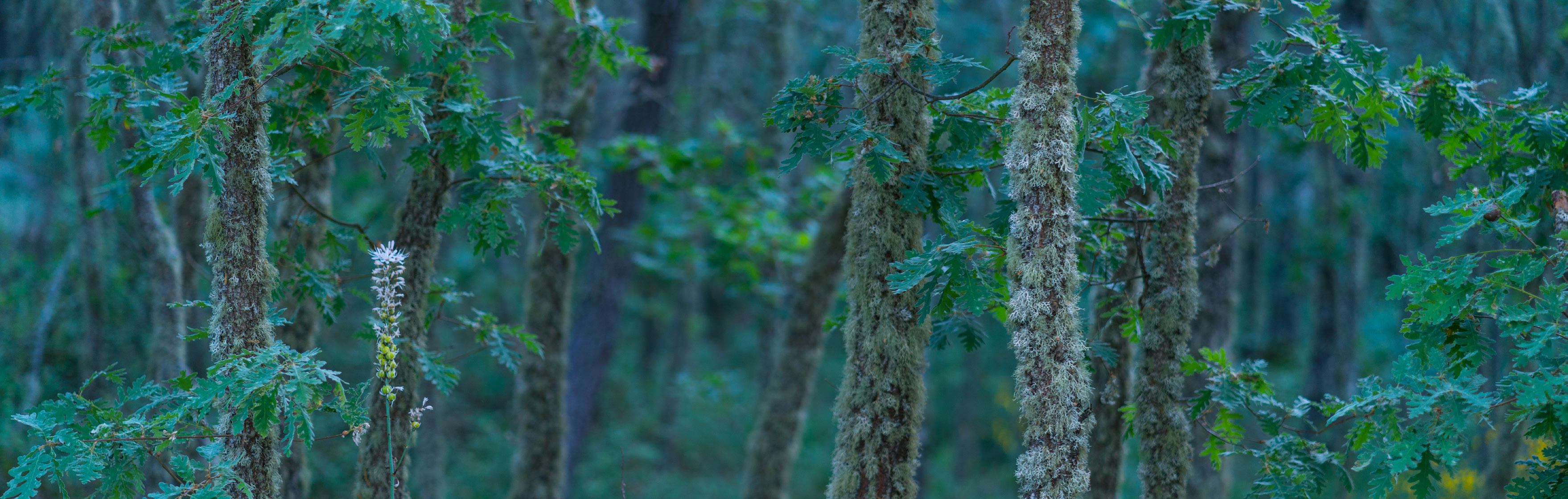
Pyrenean oak forest, Serra da Malcata Nature Reserve.
Juan Carlos Muñoz / Rewilding Europe
Core Topics
- Legal definition of forest and woodland
- Main planning regulations for forest management and associated restrictions
- Restrictions on afforestation and reforestation
- Special regimes for protected plant species
- Applicable rules for non-native plant species
Key Takeaways
Table of Contents
3.
4.
5.
1. What is meant by “forests” and “woodlands”?
Forest areas are defined by law as land occupied by forest, woodland and pasture or other spontaneous vegetation, in accordance with the criteria defined in the National Forest Inventory.1
That Inventory, in turn, defines “forest” as land with a minimum area of 0.5 hectares and a minimum width of 20 metres, with trees with a minimum height of 5 metres and a minimum 10% coverage, or the ability to reach these thresholds in situ.
“Woodland”, on the other hand, is defined as land with a minimum area of 0.5 hectares and a width of at least 20 metres, with spontaneous vegetation composed of scrub (e.g., heather [Calluna], brambles [Rubus fruticosus], broom [Cytisus scoparius], gorse [Ulex europaeus]) or shrubby formations (e.g., spontaneous kermes oaks [Quercus coccifera] or strawberry trees [Arbutus unedo]) with a minimum 25% coverage and a minimum height of 50 cm.
Additionally, it is commonly accepted that there are different types of forests, which reflect the purpose they serve:2
- Conservation forest: forest areas whose objective is to contribute to the conservation of classified habitats, protected species of flora or fauna, geomonuments, or genetic resources.
- Commercial forest: forests established with the objective of producing woody products, such as wood, cork, biomass for energy, fruits and seeds, natural resins, or other plant materials such as foliage, wicker, bark, or Christmas trees.
- Protection forest: forest areas with the purpose of contributing to the maintenance of environmental or ecosystem services such as protection of the hydrographic network, protection against erosion caused by wind (arborisation of dunes) or water, recovery of degraded soils, agricultural compartmentalisation, interception of fog, filtration of particles and air pollutants, carbon sequestration or fire protection.
- Native forest: composed of autochthonous species, that is, those that are naturally present in a given area (as opposed to forests of exotic species). In mainland Portugal, the native forest consists of oak groves. In the north, oak (Quercus robur) and Pyrenean oak (Q. pyrenaica) dominate; in the centre the Portuguese oak (Q. faginea); in the south, the cork oak (Q. suber) and the Monchique oak (Q. canariensis); and in the interior the holm oak (Q. rotundifolia).
- Planted forest: forest composed of trees established through planting and/or through intentional sowing of native or exotic species. Examples are pine forests, eucalyptus trees, cork oak forests and chestnut groves.
- Primary/natural forest: forests of native species regenerated naturally where there are no visible indications of human activities and ecological processes are not significantly disturbed. Areas of
forest with no evidence of human activity are normally considered natural forests, as opposed to planted forests. - Semi-natural forest: forest composed of native and exotic species, which regenerate naturally or by planting. For example, the montados subject to grazing.
2. What are the main planning regulations applicable to the management of existing forests and woodlands? What restrictions may arise from these regulations in a rewilding project?
Before starting a project related to forests, you should consult any regulations applicable to the forest in question, since they will contain specific rules concerning its use, occupation, and management.3 Taking into account the variety of issues that these planning regulations address, these programmes and plans are not only of interest from an economic/ commercial point of view in terms of the exploitation of forest areas.
In Portugal, forestry activities are controlled by forestry planning and management instruments at three different levels, all of which could apply to a single forest area:4/5
Regarding the term, amendment, and review of PROFs, PGFs, and PEIFs, note that:
- PROFs are in force for a maximum period of 25 years from the date of their publication;
- PGFs are valid for as long as the respective PROF is in force; and
- PEIFs are valid for a maximum of 10 years.
The PROF and the PGF may be subject to alteration or revision whenever there are relevant facts that justify it.6
2.1. Regional Forest Management Programmes (“PROFs”)7
The organisation, permitted uses, and intervention rules for forest areas are set out in Portugal’s seven regional forest management plans:
- PROF for Entre Douro and Minho (“PROF EDM”);
- PROF for Trás-os-Montes and Alto Douro;
- PROF for the Centre Interior;
- PROF for the Central Coastal Region;
- PROF for Lisbon and Tagus Valley;
- PROF for Alentejo; and
- PROF for Algarve.
PROFs are mainly programmatic regulations that Municipal Plans8 must comply with. PROFs can be directly and immediately binding for individuals in relation to the following:9
- preparation of forest management plans (see 2.2 below);
- rules regulating intervention in forest areas; and
- limits on the areas to be occupied by eucalyptus trees.10
This means that in relation to these matters, public entities may directly invoke PROFs to approve or reject actions or projects by private individuals.
By way of general overview, PROFs identify the areas subject to the forestry framework (see 2.4 below) and
establish the functions which should be given priority, the incompatible uses, including encumbrances, as well as the specific forestry rules to be applied.11
The PROF regulations also contain a list of species and systems to be favoured in the expansion and reconversion of forest stands.12 For each of the seven sub-regions listed above, PROFs identify the priority forest species, divided into two groups (Group I and Group II). The idea is that no reconversion to other species should take place in areas occupied by Group I species, unless another Group I species is used for reforesting. Following the same logic, the use of other species that are not in Group I or Group II must be authorised by the Institute of Nature Conservation and Forests (the “ICNF”13).14
PROFs also identify the species and forest systems that are subject to specific protection measures.15
In short, PROFs contain obligations and guidelines that may be relevant for you, in particular the set of rules applicable to intervention in forest areas.
2.2. Forest Management Plans (“PGFs”)16
What are PGFs?
PGFs are instruments that aim to characterise and describe various aspects of each forest holding17 in accordance with the limits imposed by the applicable PROF.
For example, PGFs establish the rules for when and where resources exploitation18 (for example, hunting,
aquaculture, beekeeping, geological and energy resources) or interventions of a cultural nature are to take place.
Is it required to have a PGF?19
The obligation to prepare a PGF depends, in the first instance, on the ownership of the forest holding in question. If the forest holding is public or communityowned, there is an obligation to prepare a PGF. If it is private, the PROF applicable to the region in question determines the minimum area (in hectares) from which the preparation of a PGF is obligatory.20
Therefore, if you own a private forest, you may be required to have a PGF, and this should be determined by reference to the applicable PROF. Furthermore, even if you are not required to have a PGF, there may already be one in place from previous owners which will be of interest at least for information purposes.21
What is included in a PGF and why are they relevant?22
PGFs have a local scope and refer to the specific features of each forest holding. They are drawn up by the ICNF or local authorities in the case of public or community forest holdings and by the landowners in the case of private forest holdings.
As mentioned above, territorial programmes, such as PROFs, are binding on public entities. On the other hand, territorial plans, such as PGFs, are binding on both public entities and, directly and immediately, on individuals. This means, for example, when a forestation project is submitted for approval, the
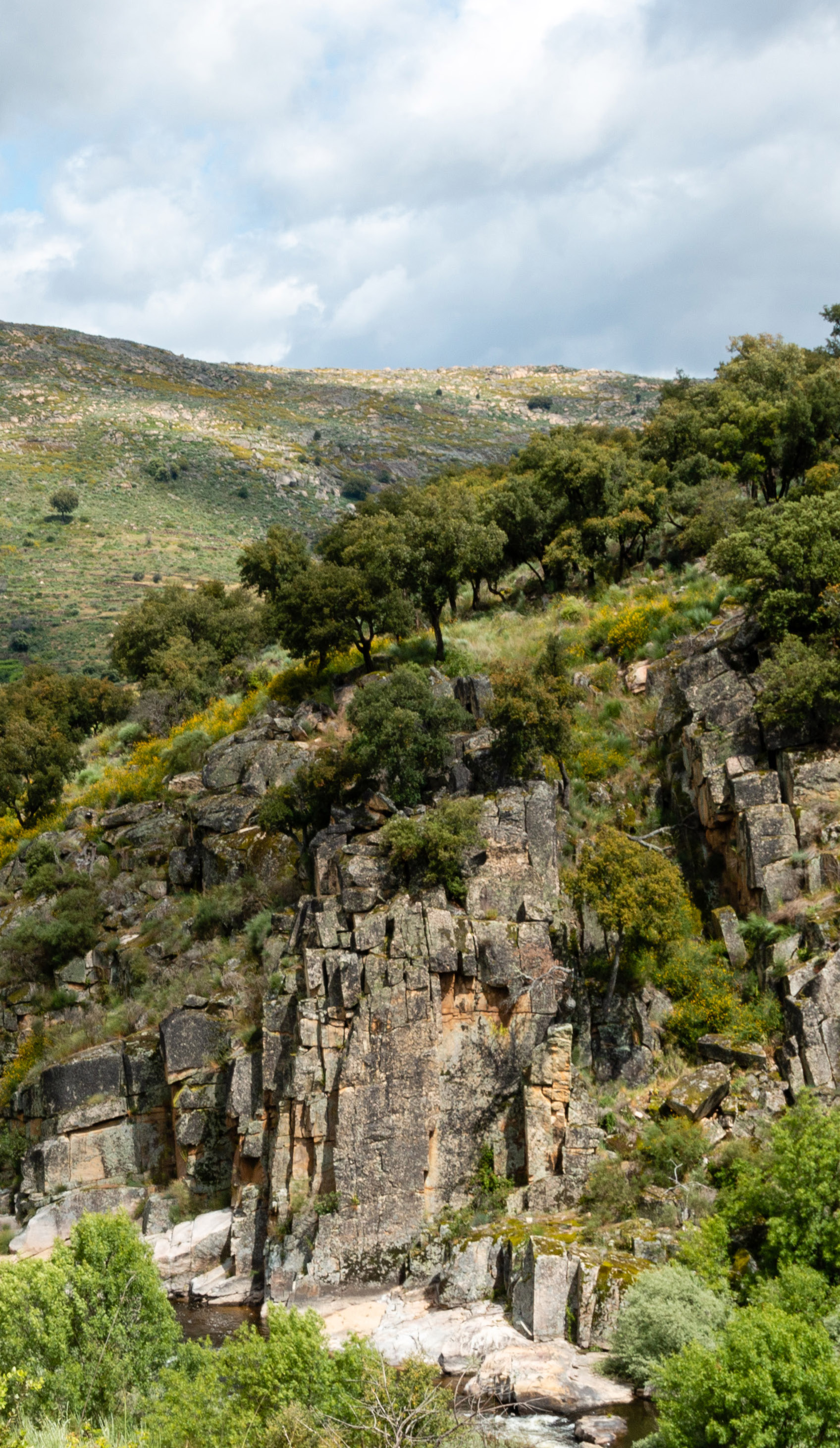
Mountainous landscape, Greater Côa Valley
Ricardo Ferreira / Rewilding Europe
competent authority will consider the PGF provisions when analysing the request.
PGFs must indicate the characterisation of the existing resources, namely in its forestry, hunting, and fishing in inland waters components. It must also determine the use of other resources and contain a wood production management programme, a programme for the use of non-wood resources and other associated services. If the forest holding is in a classified area, it must indicate a biodiversity management programme as well.
PGFs should also refer to changes in land use (afforestation, deforestation, etc.) and changes in forest coverage (i.e., changes in forest composition).
This instrument defines and delimits plots of land which are then used to differentiate between land for production, conservation, recreation, protection, landscaping, forestry, hunting, and fishing. It also indicates the existing forest formations and presents a summary of the intended forest management, i.e., the timetable for the planned interventions, including afforestation operations.
2.3. Specific Forest Intervention Plans (“PEIF”)23
PEIFs can be drafted for forests where specific action is required to tackle fire risks, to respond to pests or diseases, or to promote the recovery of degraded soils or protection of areas subject to severe flooding.
PEIFs are only compulsory if determined by law or at the request of the ICNF, although private forest owners or other private forest producers can voluntarily submit24 their forests to a PEIF.
Briefly, a PEIF is made up of three parts: (i) an assessment document (description of the existing resources and its compatibility with the respective PROF); (ii) an operational plan (summary of recommended interventions and implementation indicators, budget, coordination procedures); and (iii) graphic pieces, such as cartography.
As such, if any of the above-described issues are relevant to forests you are managing, you may need a PEIF.
PEIFs are approved by the ICNF.25 Depending on their objective, they may also require the opinion of other entities, such as the National Civil Protection Authority (whose opinion is mandatory if in the PEIF aims at preventing and combating abiotic agents), or the Portuguese Environment Authority. No fees or other charges are due for the issue of mandatory opinions in this regard.
If the area used in a rewilding project is already governed by a PEIF, it will be important to consult it, as it may contain obligations regarding, for example, pest and disease control and the defence of the forest against fires and may also contain a programme for controlling invasive species.
2.4. Forestry Framework
Forest and woodlands are also governed by a set of rules called the “Forestry Framework” which govern the creation, exploitation, and conservation of forestry resources.26
The Forestry Framework is enforceable at two different levels:
- Total Forestry Framework, which governs forest land belonging to the Portuguese State27 which is of public interest (e.g., National Forests or Forest Parks).
- Partial Forestry Framework, which governs municipal forest land and forest land owned by associations or private individuals.28 Under this partial framework, public interest is also considered, but the private interest of the relevant owners is also taken into consideration with regards to its use and exploitation.29
The Partial Forestry Framework is further divided between (i) a compulsory framework which applies to land belonging to Municipalities, Parishes, and other associations, as well as to private land whose afforestation has been declared of public utility (the forest perimeters); and (ii) a monitoring framework which applies to private land, at the request of its owner, in which case it is optional.
This may be relevant for rewilding operations as it may be relevant for a practitioner to ascertain whether
the rewilded land is, in whole or in part, subject to the Partial Forestry Framework, which, as set out above, might be applicable to privately owned land.30
The Forestry Framework applicable to a particular piece of land has implications as to how the land can be managed or used. This may affect you, for example, because on land subject to the Forestry Framework, only the competent member of the Government can authorise changes to its demarcation;31 or, the land may be subject to specific afforestation plans, development plans or exploitation plans; or the sale of the land may have to be communicated to the Directorate-General for Agriculture.32
For example, on land subject to the Total Forestry Framework:
- it is expressly forbidden to consent to or authorise new uses or easements;33
- it is necessary to restrict and, if possible, to redeem through compensation, the uses and easements which already exist;34
- the sale of woods or other forest land depends on a special authorisation, to be granted by law, even though it would in any case remain under the forest framework.35 The proceeds of the sale must be set aside for the acquisition and/or afforestation of a new area of forest land.
To find out whether a given area is subject to a Forestry Framework, you can consult the applicable PROF. If a PGF exists, it must also refer to the applicable Forestry Framework in the public utility restrictions.
Removing land from the Forestry Framework is only provided for in the optional Partial Forestry Framework, and only at the request of a certain quota of owners, by public deed, and approved by decree.
Under the compulsory Partial Forestry Framework, the owners can request that their property is purchased by the State for adequate compensation. In these situations, the land will be transferred into the ownership of the Portuguese State and shall be governed under the Total Forestry Framework.36
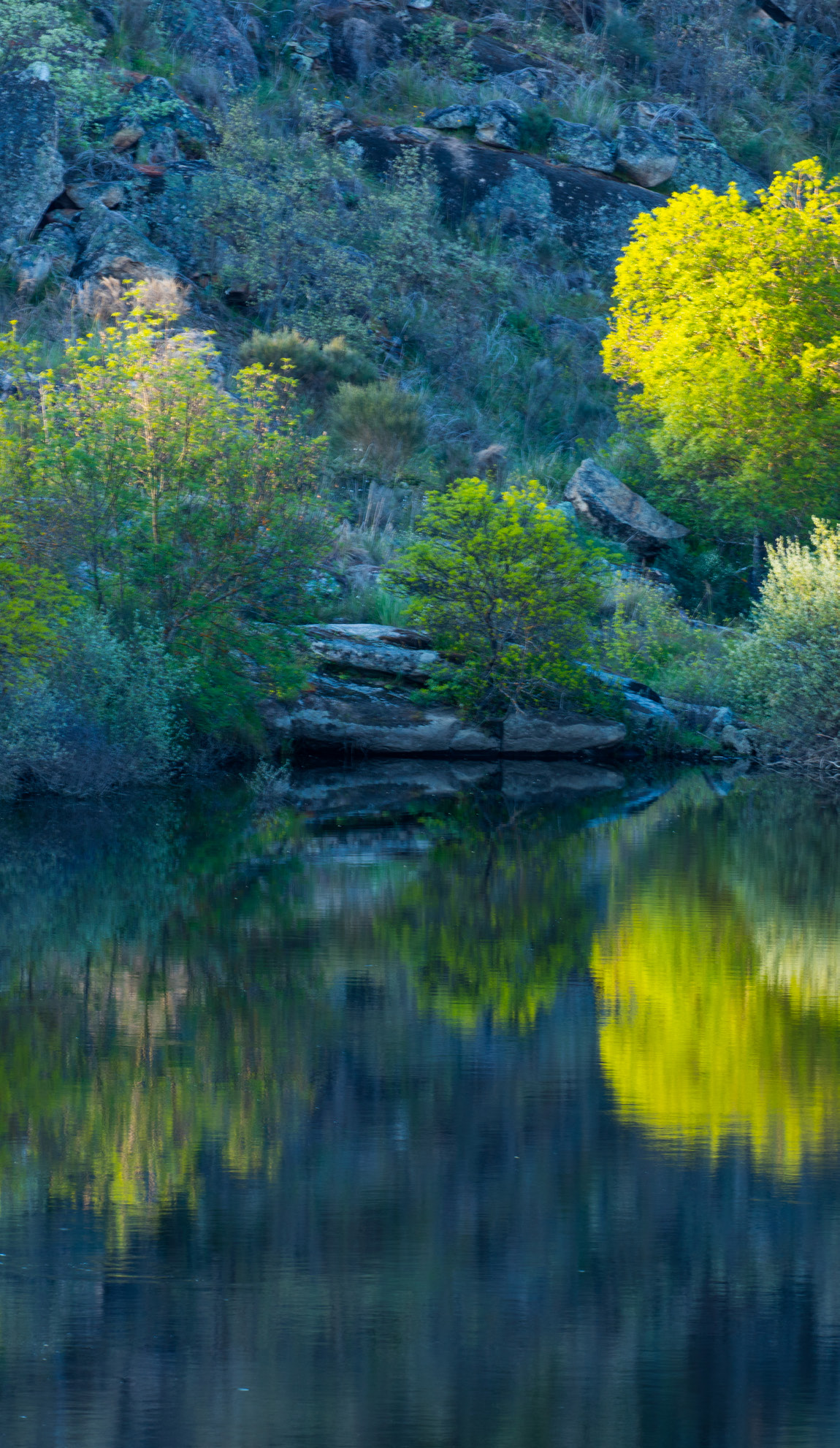
Riparian vegetation, Greater Côa Valley.
Juan Carlos Muñoz / Rewilding Europe
3. What other forest management legal mechanisms can be used?
In addition to the management mechanisms mentioned in the previous section, there are other mechanisms available that allow you to take over the management of a forest. Bear in mind, though, that these do not exclude the application of the regulations dealt with in section 2; rather, they complement and add to them. Moreover, these instruments must be compatible with the regulations described in section 2.
3.1. Forest Intervention Areas (“ZIFs”)37
The first legal tool – ZIFs – allows small landowners to come together and design specific intervention plans for a forest area.38 ZIFs are continuous and demarcated areas (see endnote 39 for criteria), composed mainly of forest parcels, that are governed by a PGF (in accordance with the respective PROF39) and managed by a single entity. This entity is referred to as the management entity, discussed in section 3.2 below.40 The goal is to create a common forest area, big enough to protect, preserve, and improve forest resources and other environmental assets.41
ZIFs serve important objectives for rewilding, such as:42
- ensuring the protection of forests of special ecological importance and sensitivity, namely fragile mountain ecosystems, dune systems, cork oak and holm oak forests and riparian formations and marginal freshwater areas; and
- ensuring the protection of the forest against biotic and abiotic agents, including fire.
When ZIFs are created they need to integrate different aspects of the policy for forest areas, such as:
- conservation of nature and biodiversity; and
- conservation and protection of soil and water resources, rural development.43
This is especially important in regions affected by biotic and abiotic agents and that need a quick recovery process. For these reasons, ZIFs may be helpful to rewilding practitioners seeking to achieve restoration goals on their land.
3.2. Forest Management Entities (“EGFs”) and Forest Management Units (“UGFs”)44
Considering the excessive fragmentation of private property, EGFs and UGFs were created as a way of encouraging the joint management of forest areas, a feature that may be relevant in a rewilding landscape.45
If applicable, this may be of interest to you, because UGFs and EGFs are able to access targeted public financial support, as well as obtain tax and emoluments incentives.
The difference between an EGF and an UGF relates to the management area of each entity and the legal form they adopt. EGFs are agricultural cooperatives, associations, or commercial companies whose corporate purpose is forestry, forest management, and harvesting. In contrast, UGFs are agricultural cooperatives or associations that manage continuous rural properties of no more than 50 hectares each, with a minimum area of 100 hectares and a maximum area of 5000 hectares.46
In both cases, the relevant group of landowners will have to create a legal entity, such as a company or an association, and it is this entity that applies for recognition as an EGF or UGF.
As a result, the requirement for continuous properties, which presupposes spatial interdependence, is a common feature of ZIFs and UGFs, but does not apply to EGFs.
As the constitution of an EGF is not subject to the continuity of the forest areas or the existence of a minimum area or minimum number of owners, it could be an interesting way to manage the forest area in a rewilding operation that includes several rural properties.
Example
Landowners A, B, C and D own, between them, 10 plots of land of about 30 hectares each, located in various parts of Alentejo. The land is characterised by cork oak forests, or montados. It nurtures thousands of plant species, including rare orchids, microflora and exotic birds like griffon vultures and hoopoes in a hot, dry climate. Besides housing a diverse biodiversity, cork forests increase biodiversity, improve soil composition, and regulate the hydrological cycle, helping to prevent forest fires. Despite the multiple ecological functions, montados are habitats at risk. These landowners want to carry out a joint operation to improve the conditions of these habitats and operate in the carbon market as cork oaks forests can fixate around 6 tonnes of carbon dioxide per hectare, while giving cork a commercial use as a sustainable alternative to aluminium, plastic, or leather. They want to look for funding possibilities to undertake this project.
One option would be to form an association to promote the ecological and economic sustainability of cork oak forests and acquire an EGF certificate. For that, landowners would need to prove that:
- their goal is to facilitate the joint management of cork oak trees to add ecological and economic value;
- the association they want to create is devoted to providing cork oak forest management services to its members;
- they have a forestry certification (to be obtained in the 5 years following its creation from one of the internationally recognised certification bodies – PEFC or FSC, for instance); and
- they have the appropriate management capacities.
They would then submit their application to be an EGF to the ICNF, on a digital platform. Regarding their interest in entering the carbon market, they should consult the regulations to see if their project is eligible to create carbon credits.
Example
Landowners A, B, C and D own, between them, 10 plots of land of about 30 hectares each, located in various parts of Alentejo. The land is characterised by cork oak forests, or montados. It nurtures thousands of plant species, including rare orchids, microflora and exotic birds like griffon vultures and hoopoes in a hot, dry climate. Besides housing a diverse biodiversity, cork forests increase biodiversity, improve soil composition, and regulate the hydrological cycle, helping to prevent forest fires. Despite the multiple ecological functions, montados are habitats at risk. These landowners want to carry out a joint operation to improve the conditions of these habitats and operate in the carbon market as cork oaks forests can fixate around 6 tonnes of carbon dioxide per hectare, while giving cork a commercial use as a sustainable alternative to aluminium, plastic, or leather. They want to look for funding possibilities to undertake this project.
One option would be to form an association to promote the ecological and economic sustainability of cork oak forests and acquire an EGF certificate. For that, landowners would need to prove that:
- their goal is to facilitate the joint management of cork oak trees to add ecological and economic value;
- the association they want to create is devoted to providing cork oak forest management services to its members;
- they have a forestry certification (to be obtained in the 5 years following its creation from one of the internationally recognised certification bodies – PEFC or FSC, for instance); and
- they have the appropriate management capacities.
They would then submit their application to be an EGF to the ICNF, on a digital platform. Regarding their interest in entering the carbon market, they should consult the regulations to see if their project is eligible to create carbon credits.
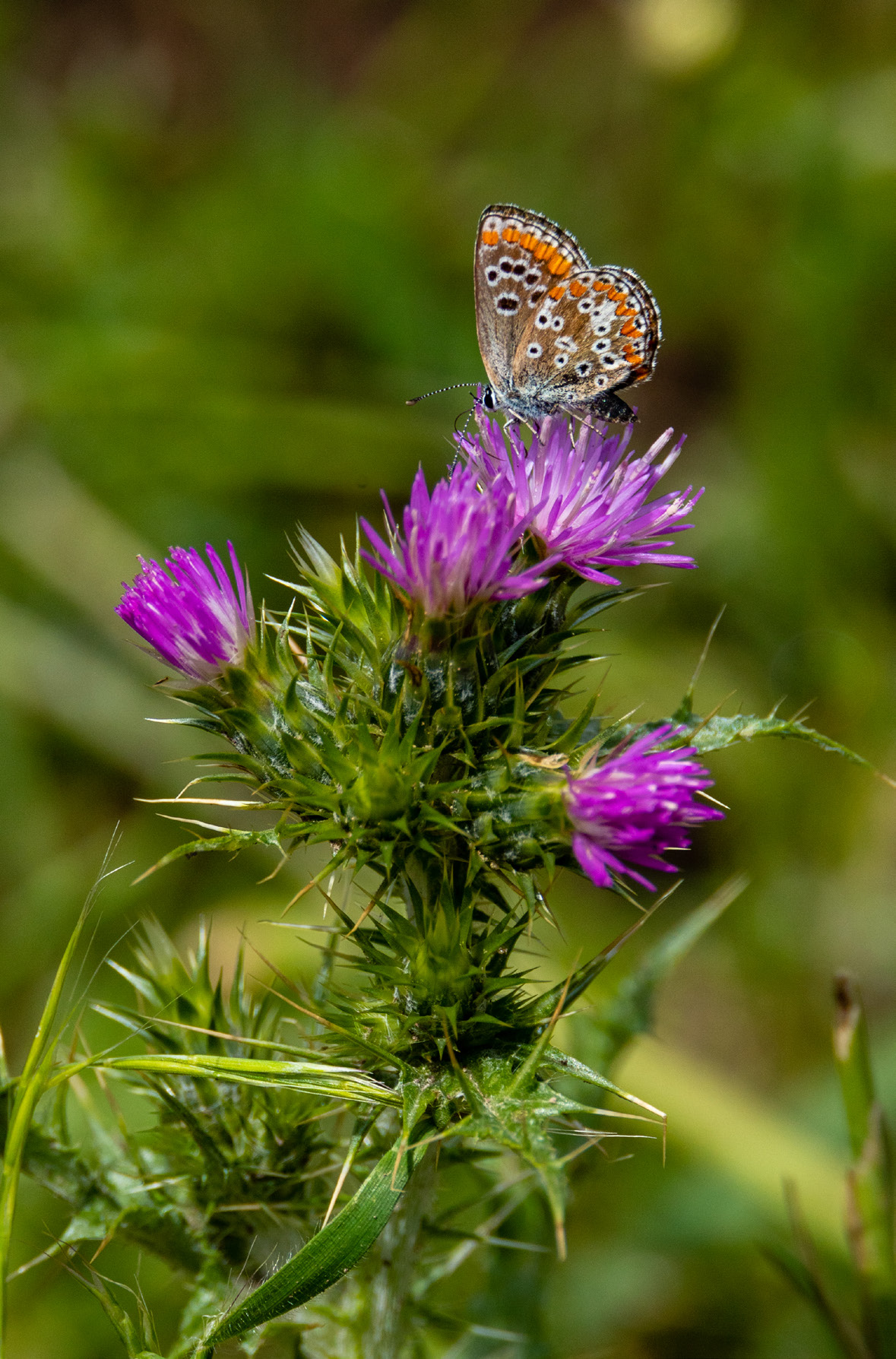
Butterfly pollinating, Greater Côa Valley
Ricardo Ferreira / Rewilding Europe
4. Are there any restrictions on felling trees or afforestation or reforestation?
4.1. Felling trees
You may want to fell a commercial forest that it is on land you acquire, or that you are managing. Felling those trees may require an authorisation from a competent body. This section provides high-level information about the required authorisations to fell pine and eucalyptus.
Commercial forests are commonly composed of maritime pine (pinus pinaster) and/or eucalyptus. They are fast-growing trees with high economic value. While maritime pine is a native species, eucalyptus is a non-indigenous species. Moreover, native, and diverse forests are being replaced by these commercial forests.
There are regulations which control the premature felling of pine and eucalyptus which you should be aware of if you are planning to take such actions.47
Any felling which aims to remove 50% of woody material from qualifying pine or eucalyptus plantations will require an authorisation from the ICNF. To qualify, plantations must meet the following:
- for pine: forest stands larger than 2 hectares, where at least 75% of its trees do not have a diameter at breast height equal to or greater than 17 cm or a circumference at breast height equal to or greater than 53 cm;
- for eucalyptus: forest stands larger than 1 hectare, where at least 75% of its trees do not have a diameter at breast height equal to or greater than 12 cm or a circumference at breast height equal to or greater than 37.5 cm.
Applications for authorisation must be made with the appropriate form and delivered to the district or forestry administration of the region where the forest stand is located.
The trees to be felled must be marked on the date of the authorisation request, except in the case of a final cut that removes all trees from a certain area, in which case the delimitation of the area is sufficient.
All felling will be considered authorised unless the applicant is notified in writing of an express decision to the contrary within 30 working days of submitting the application for authorisation.
4.2. Afforestation and Reforestation
You may be interested in restoring a native forest on your land, either because there used to be one or because the existing one is degraded or is a commercial forest. What do you need to know to undertake such a project?
There is a special framework for afforestation and reforestation when certain criteria are met.48 Afforestation is the creation of a forest where there has not been one in the last 10 years.49 Reforestation means replanting a forest in land that has been forested in the last 10 years. The legal framework applies regardless of the species involved, or
the quality and nature of the person undertaking the intervention.
This special framework does not always apply, though. It will not apply if you are afforesting or reforesting exclusively for agricultural purposes or if the area and density of the forest do not qualify as a forest holding.50 A forest holding is an area greater than or equal to 0.5 hectares with a width greater than or equal to 20 metres, with forest trees that have reached, or are capable of reaching, a height greater than 5 metres and coverage greater than or equal to 10%. If the relevant area where you wish to undertake reforestation or afforestation does not constitute a “forest holding”, these rules will not apply.
It is worth noting that this legal framework may apply e.g., if you plan to recover an area that was lost to a wildfire and has been through natural regeneration over the last years. You can facilitate the recovery of the forests using reforestation.
So, what do you need to do if the rules apply? There are two procedures: (a) prior authorisation, and (b) prior communication.51
- You will need to obtain prior authorisation from the ICNF if the intervention area:
- is in the National Network of Protected Areas or in the Natura 2000 Network (see Rewilding in Portugal: Classified Areas);
- is covered by the Forestry Framework of 1901 (see 2.4 above);
- is in an area managed by or with the ICNF;
- occupies the territory of more than one municipality;
- is in a municipality without a Forestry Technical Office; or
- using species of the genus Eucalyptus spp.
- You will need to make a prior communication to the municipality with a Forestry Technical Office or to the ICNF if the intervention area is, cumulatively:
- less than 2 hectares;
- not, totally or partially, in the National Network of Protected Areas or in the Natura 2000 Network;
- not covered by the Forestry Framework of 1901;
- a reforestation that will not alter the dominant species previously planted, except in the case of eucalyptus;
- does not occupy the territory of more than one Municipality; and
- covered by a PGF approved by the ICNF.
Take note of the following timelines as they are important if you are planning to undertake any afforestation or reforestation to which this framework applies:
- The ICNF must decide on your authorisation request within 45 days; if no decision is issued by the 60th day after the request, in certain situations, it may be considered tacitly approved.52
- The authorisation is valid for 2 years.53
- The prior communication must be made at least 45 days before the intervention starts, and such works should be done in the 2 years after submitting the prior communication.54
None of these obligations apply if the afforestation or reforestation project is already subject to an EIA or EIncA Procedure (see Rewilding in Portugal: Developing Land and Rewilding in Portugal: Classified Areas).55
Failure to comply with the obligations under this framework may result in penalties and an order to reverse the entire work of afforestation or reforestation, so you should plan carefully and seek advice if you have any question specific to your situation.
Example
Landowner A bought a piece of land in a forest area located in the Douro region, in Portugal. The land is currently occupied by eucalyptus (eucalyptus globulus). Landowner A wants to cut all eucalyptus from the area, sell its timber, and reconvert the land to Portuguese oak (quercus faginea).
The region is under the PROF for Entre Douro and Minho – PROF EDM. Under this PROF, both the eucalyptus and the Portuguese oak are Group I species, which means that the reconversion is possible, without prejudice to the specific legal frameworks for the protection of certain species and the legal framework for afforestation and reforestation actions (article 12(2) of PROF EDM).
Regarding the protection of these species, there is no specific framework for the Portuguese oak, but, as mentioned above, there is one for eucalyptus, aimed at controlling premature felling of forest stands of this species.
In holdings larger than 1-hectare, final cuts of eucalyptus forest stands, where at least 75% of the trees do not have a diameter of 12 cm or more at breast height or a circumference of 37.5 cm or more at breast height, will require authorisation. Therefore, if the eucalyptus trees present on Landowner A’s land meet these requirements, an authorisation from the ICNF will be required.
The framework governing afforestation and reforestation will be applicable to the case in question if the area forms a forest stand, as defined in article 3(b) of the special framework for afforestation and reforestation (see section 4.2 above and endnote 48). Therefore, depending on the characteristics of the land (area, location, management entity, forestry framework, etc.), Landowner A may require an authorisation from the ICNF or the competent municipality or may need to submit a prior communication to one of these entities, for example, depending on whether the area is subject to the forestry framework (which can be verified in the PROF EDM) or is located across more than one municipality.
An operation such as this may also be subject to the preparation and approval of a PGF, if developed in a public or community forest, or private area equal to or greater than 20 hectares (article 5(5) of the Framework Law on Forestry Policy and article 44 of PROF EDM).
Finally, regarding the sale of timber, the framework of Decree-Law 31/2020 of 30 June applies. Operators who cut, thin, or uproot trees of forest species and place the wood on the national market for sale (as is the intention of Landowner A) must, prior to cutting, submit a declaration to the ICNF, through the Cutting Manifesto Information System.
5. Are there any special regimes for protected plant species?
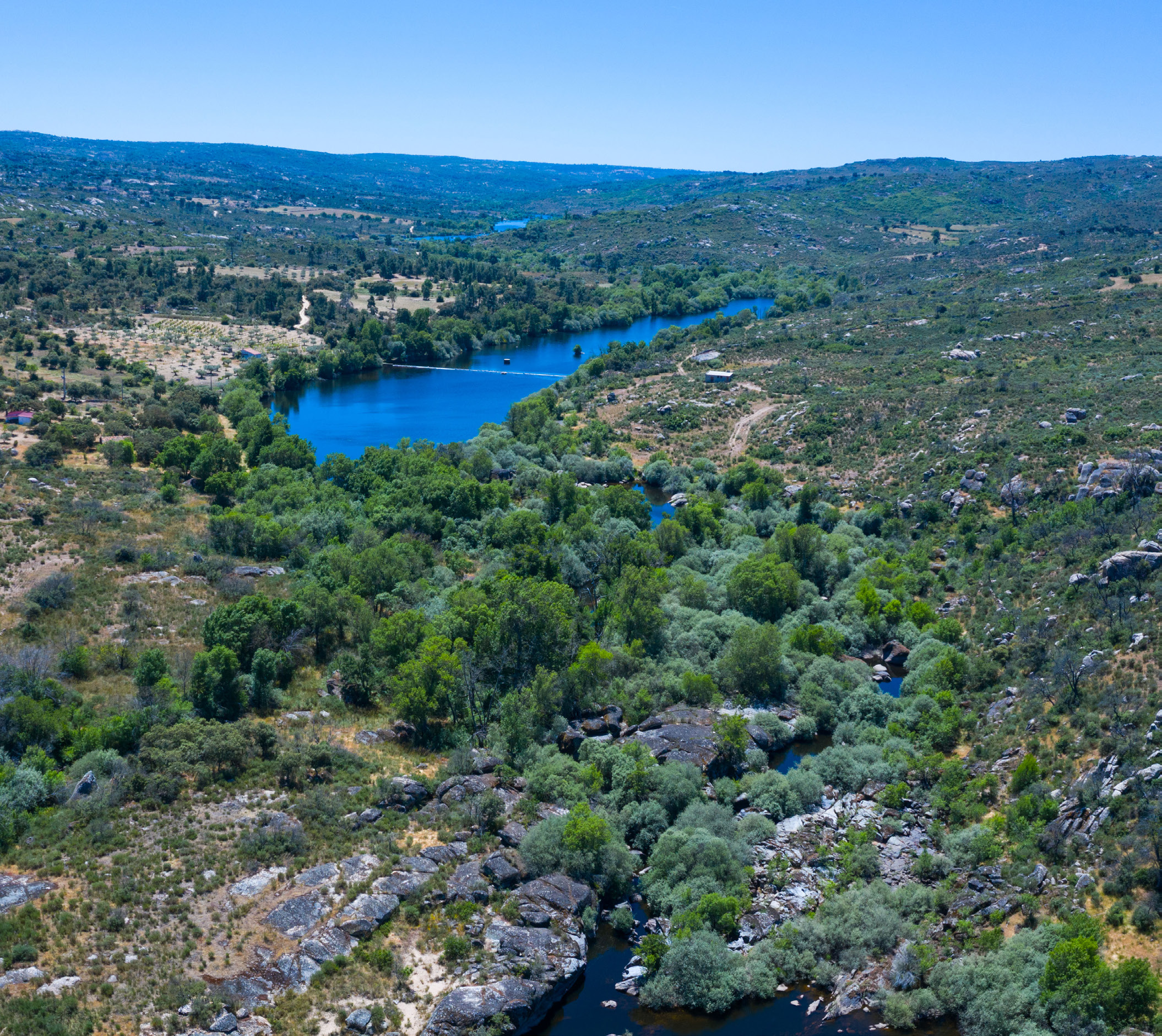
Greater Côa Valley, Western Iberia, Rewilding Portugal.
Juan Carlos Muñoz / Rewilding Europe
5.1. The Conservation of Wild Flora and Fauna and Natural Habitats Framework56
Attention should be given to the special protection of wild flora.57 This might be useful for you if you encounter species protected under this framework, especially if you have them on your land. You should be aware of the restrictions you may face, as well as the sanctions if you fail to act accordingly.
For species which are protected under this framework (see endnote 56 for the list of species), it is forbidden to:58
- collect, pick, cut, or pluck the species in the list provided;
- hold specimens; and
- sell, offer, and hold for sale, purchase, or propose the purchase, exhibition, or transport of the specimens.
The prohibitions above do not apply to specimens that have been artificially reproduced; had been gathered before entering the list of protected species; that had entered the country in accordance with applicable legislation; if they belong to a duly certified collection for research purposes; and dead specimens to be used in authorised actions.59
Furthermore, the ICNF may, exceptionally, issue a licence which permits the prohibited activities if no satisfactory alternative is available, and the
conservation status is maintained as favourable to achieve one of these goals:60
- protect wild flora and conserve natural habitats;
- avoid serious damage to forests and waters;
- obtain positive impacts of primal importance for the environment;
- allow repopulation and reintroduction of species; or
- allow, under the strict control of the ICNF, gathering or collection in places authorised by the ICNF.
5.2. Are there special laws regarding protected trees?
As explained below, there are specific frameworks for the protection of certain tree species, such as cork oak and holm oak,61 or holly,62 as well as conditions for managing olive trees.63 It is useful to be aware of these frameworks in case you witness destructive actions being taken against these species by third parties or in case they may impact your own activities. You can find more information on all protected tree regimes here.
These protection frameworks follow the general principle that actions which cause harm to these trees are forbidden and that there are sanctions in place for violating the protection obligations. However, there are exceptions which permit cutting or grubbing under certain circumstances.
Given the approach that rewilding takes on the land, it is unlikely that you will cut native trees. However, if for
some reason (e.g., sanitary reasons) you do need to cut protected trees, there are rules that apply.
In a nutshell, if you need to fell one of the trees listed below, you should be aware that:
- Digging up or cutting cork oak (Quercus suber) and holm oak (Quecus ilex) will only be accepted in exceptional situations and at the full discretion of the licensing authorities. You will therefore need to apply to RUBUS for a licence and follow the process therein if you wish to dig up or cut any trees of these species. The licensing procedure varies depending on whether the cork-oaks are (i) isolated or (ii) form a stand / small stand (both follow the same framework and are referred to as “stands” or “stand”). Cutting stands follows a stricter licensing procedure when compared to isolated cork oaks.64 Any cut follows a 1:1.25 ratio for replantation. Any breach of these rules may result in sanctioning procedure and an order prohibiting the change or conversion of land use for 25 years from the illegal cutting, unless said conversion is declared of public interest.
- Digging up and clear-cutting olive trees (Olea europaea) may only be carried out after prior authorisation has been granted by the regional agricultural directorates within the respective authorisation areas. Authorisation for digging up or felling may be granted, for example, in the following cases: (i) when the olive trees have reached a state of decrepitude or irrecoverable disease that renders their exploitation uneconomical; (ii) when digging them up is for the purpose of making other more
profitable crops viable or of proven economic and social interest; (iii) where grubbing-up is for the purpose of establishing a new olive grove. In turn, the digging up or cutting of single olive trees does not require prior authorisation.
- Digging up, partial or total cutting, transportation, and sale of the spontaneous holly (Ilex aquifolium L.) is prohibited throughout mainland Portugal unless required for public or private works of general interest (which are exempt from this prohibition, but subject to a permit).
Additional provisions that prohibit or establish conditions for forest tree felling exist in other legal or regulatory instruments, such as regional forest management programmes and forest management plans65 or Special Programmes of Protected Areas (“PEAP”) and management regulations of local or regional protected areas.66
5.3. Trees of Public Interest
You may want to award protected status to an area of forested land if other ways to protect it are not available. If you are managing a forest, groves, a coppice, or even arboretums, you might find the following information useful.
Patches of trees, or even isolated trees or other flora, may be classified as trees of public interest, due to their symbolical value, rarity, size, age, history, cultural significance, or landscape setting. By having public interest status, they fall under a special conservation framework, which can help you restore relevant forested areas on your land.
As the owner of the holding, you can request the classificaAs the owner of the holding, you can request the classification of public interest. You can also request this classification if you represent an environmental NGO, if you are part of a forest management body, such as a ZIF or an EGF (see above 3.1 and 3.2), or if you are simply a concerned citizen.67
The request for classification of public interest is made to the ICNF, and if approved it takes effect after publication in the Official Gazette.68 The classification, or the process of being classified, automatically awards the trees a general protection zone with a 50 m radius from its base.69 All interventions that may destroy or damage the classified holding or species are prohibited,70 including:
- cutting trunks, branches, or roots;
- removal or excavation from the protection zone;
- deposit of materials, whatever their nature;
- burning of waste or other combustible products;
- use of phytotoxic products; and
- any operation that may cause damage, mutilate, deteriorate, or harm the vegetative state of the classified specimens.
For any trees of public interest, all tree improvement operations in the public interest, including cutting, pruning, training or health pruning, or any other type of tree improvement, require authorisation from the ICNF. 71
The ICNF keeps a record of all trees with public interest classifications, including those which have been declassified, as well as the reason for such declassification.72 This might be of interest to know if you are planning to undertake any actions you believe are under a protection framework.
5.4. Protection of natural relief, arable land, and vegetation cover73
Destruction of vegetation cover (other than for agricultural purposes) and landfill or excavation actions that alter the natural relief and layers of topsoil may require a municipal licence. However, actions which, being subject to a specific legal framework, are already duly authorised, licenced, or approved by the competent bodies, do not need to obtain said authorisation.
6. What are the rules applicable to non-native species?
Non-native species or exotic species are species existing outside their natural range.74
It is possible that there may be ecological value in introducing non-native species to your land as they can bring conservation benefits. They can provide habitat or food resources to rare species, serving as functional substitutes for extinct species, and they can provide desirable ecosystem functions. These may become especially important as we face increasing climate challenges, and we need innovative approaches to preserve and improve ecosystems. For example, they can serve as plant pollinators, especially in fragmented landscapes or serve as biocontrol agents to limit undesirable effects of non-native invasive species in both agricultural and natural settings.
Every action involving non-native species needs to be thoroughly considered and planned, with reference to the applicable regulations. We strongly suggest that you seek advice if you are considering using non-native species for rewilding purposes because any use of alien species of flora in the wild is highly regulated.75
The general principle is to deter non-native species from becoming established and to avoid them spreading,76 and there are various restrictions applicable to their keeping, cultivation, breeding, and introduction into the wild.
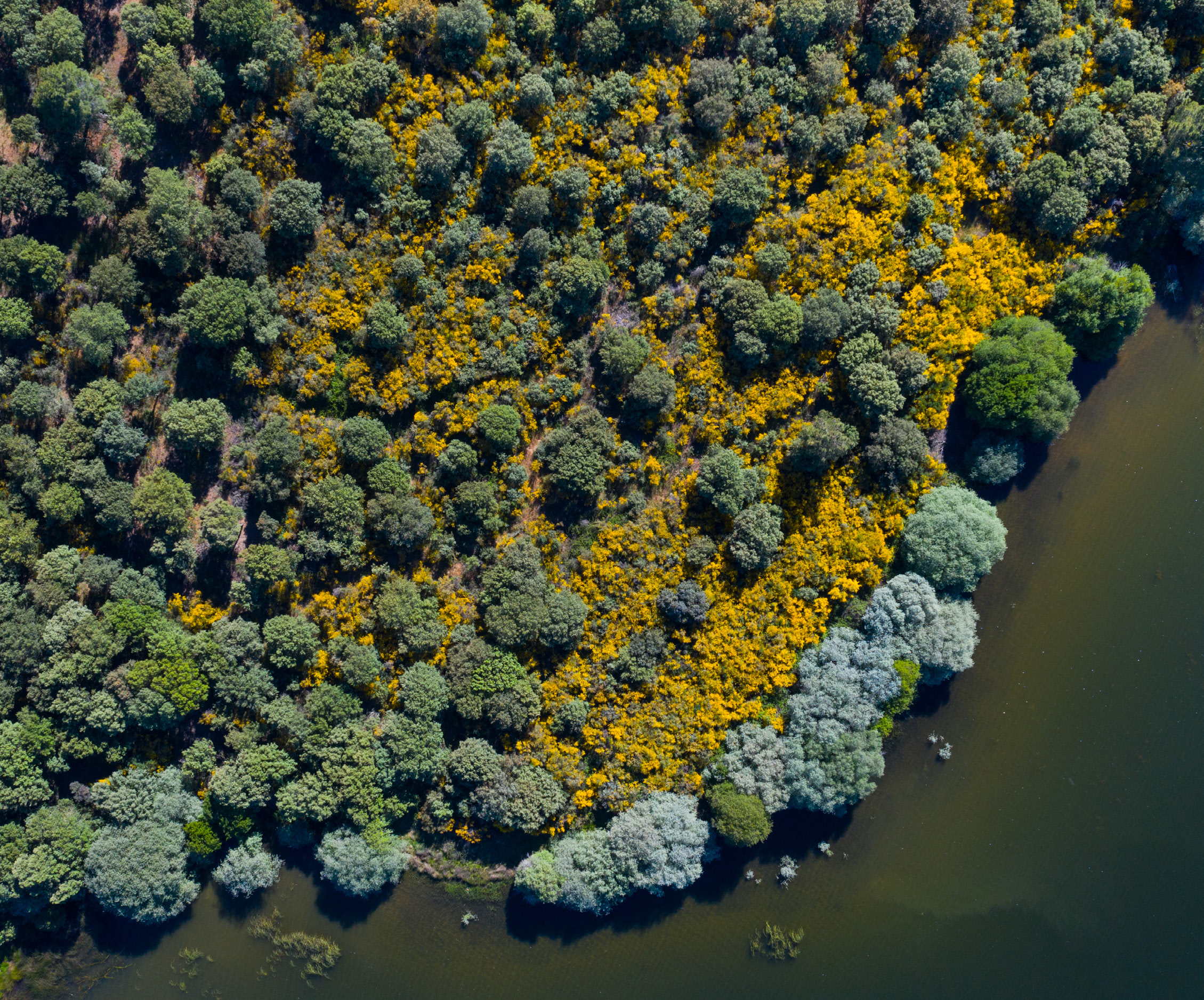
St. Maria de Aguiar reservoir, Ribeira de Aguiar, Greater Coa Valley.
Juan Carlos Muñoz / Rewilding Europe
You need a licence issued by the ICNF to be able to handle non-native species.77 In order to obtain a licence, you will need to show that your use of nonnative species will not harm native species, and you will need to justify the use of non-native species. You will also need to be able to demonstrate that, if your licence is revoked, you have a plan to safely dispose of the species you requested the licence for.78
You will also have to submit an opinion from an independent expert with your request, to provide impartial scientific evidence for your conclusions.79
If your licence is approved, you will have to pay a fee and you will be registered in the proper registry. The licence is valid for 3 years, and you can renew it.80
Holding a licence in the above terms also allows you to introduce non-native species, provided that:81
- the species in question is not included on the National List of Invasive Species;
- you show the unequivocal value of such introduction in the ecological community (biocenoses);
- you show that there is no native species that can achieve the same result; and
- if the introduction takes place in a protected area, you must demonstrate that this is the only effective action for nature conservation.
6.1. Is it necessary to take action where invasive species of plants are present on the land?
Invasive species are alien species whose introduction and spread in the wild threatens or has an adverse impact on biological diversity and associated ecosystem services. In Portugal, the National List of Invasive Species, managed by the ICNF, identifies the species considered to be invasive.82 There are around 197 species listed as “invasive” in Portugal, 13 of them are naturalised tree species with prohibited use (including eight different acacia species). The most common ones are the acacias, century plant, pampas grass, but you can find them all here.
It is important for you to be aware of the main invasive species because you may be required to take certain action to prevent their spread if they appear on
land you own or otherwise manage. The species on the National List of Invasive Species83 that occur in Portugal must be subject to national or local action plans aimed at their control, containment, or eradication, which may also include groups of species with similar characteristics.
National and local action plans are implemented by the entities responsible for the matter, in coordination with the ICNF. Specifically, local plans are implemented by any public or private entity with power over or interest in the matter and approved by the ICNF.
These plans should be consulted whenever invasive species listed on the National List of Invasive Species are present as they may require specific action to be taken. However, as this legislation establishing control, containment, or eradication plans is relatively recent, plans are still practically non-existent.84 In this case, you should consider the restrictions and requirements arising from the law and should, if it is in your interest, implement a local action plan directly.
Endnotes
- Article 2(b) of Decree-Law 16/2009 of January 14.
- Forest Policy framework: Law 33/96 of August 17, as amended.
- Article 3 of Decree-Law 16/2009 of 14 January, as amended.
- If the forest or woodland is in a classified area, in addition to these planning and management instruments, specific instruments applicable to classified areas should be considered. The instruments applicable to classified areas are described in Rewilding in Portugal: Developing Land.
- The existence of a relevant fact for the purposes of altering or revising the PROFs will be determined by order of the Minister for Agriculture, Forestry and Rural Development or, if it includes classified areas, by order of the Minister for Agriculture, Forestry and Rural Development and the Minister for the Environment and Climate Action respectively, following a proposal from the ICNF. The alteration or review of the PROFs must take place within two years of the publication of the ministerial order referred to above and the procedures laid down in the law for its preparation, approval and publication must be adopted. New guidelines introduced as a result of the amendment or revision of the PROFs will be considered in the first amendment or revision of the PGFs that occurs subsequently. The effects of non-revised PGFs will last for a maximum period of three years after the approval of the amendment or revision of the respective PROFs. Interested parties may request to the ICNF to issue a declaration of the lack of need to adapt PGFs, if they conform to the respective PROFs that have been approved or revised in the meantime
- Article 4 and ff of Decree-Law 16/2009 of 14 January, as amended.
- Please refer to Rewilding in Portugal: Developing Land for a description of the legal planning framework.
- Article 4(5) of Decree-Law 16/2009 of 14 January, as amended.
- The PROFs currently in force set, in annex IV, the maximum area (in hectares) to be occupied by eucalyptus in each county.
- Article 17 of Ministerial Order 364/2013 of December 20.
- Article 15(a) of Ministerial Order 364/2013 of December 20.
- For further information, consult the ICNF’s website: https://www.icnf.pt/oquefazemos/formularios.
- See, for example, article 12 of Annex A to Ministerial Order 58/2019 of February 11, which constitutes the regulation of PROF EDM.
- Article 15(d) of Ministerial Order 364/2013 of December 20 and, as an example, article 8 of the regulation of PROF EDM.
- Article 12 and ff of Decree-Law 16/2009 of 14 January, as amended.
- Article 2(c), of Decree-Law 16/2009 of 14 January, defines “forest holding” as the property or group of properties occupied, wholly or partially, by forest land belonging to one or more owners and subject to a single management. In turn, land occupied by forest, brush and pasture or other spontaneous vegetation is considered “forest land”.
- Article 6 of the Framework Law on Forestry Policy and article 12 of Decree-Law 16/2009 of 14 January.
- Article 13(b) with article 14(4) of Decree-Law 16/2009 of 14 January, as amended.
- In this case, failure to comply with the obligation to prepare a PGF constitutes an administrative offence punishable by a fine of between EUR 500 and EUR 3700 for natural persons and EUR 2500 to EUR 44,000 for legal persons.
- PGFs in place can be consulted in: https://www.icnf.pt/florestas/pgf.
- Article 15 of Decree-Law 16/2009 of 14 January, as amended.
- Article 16 and ff of Decree-Law 16/2009 of 14 January, as amended.
- The PEIF must be presented to the ICNF.
- The ICNF has a 30-day period to approve the PEIF.
- Article 25 of Decree of 24 December 1901.
- Articles 26 and 27 of Decree of 24 December 1901.
- Articles 26 and 28 of Decree of 24 December 1901.
- Article 3 of Decree of 24 December 1903.
- The most recent map made available by the ICNF of the areas subject to the forest framework can be consulted here: https://www.icnf.pt/api/file/doc/cf8b87154831df5e.
- Article 42 of Decree of 24 December 1903.
- Article 34 of Decree of 11 July 1905.
- Article 212 of Decree of 24 December 1903.
- Id.
- Article 257 of Decree of 24 December 1903.l
- Article 257 of Decree of 24 December 1903.
- Decree-Law 127/2005 of 5 August, as amended.
- Article 6(1) and article 3(l), Decree-Law 127/2005, of 5 August, as amended.
- Article 4-A(d) of Decree-Law 127/2005 of 5 August, as amended.
- Article 3(q) of Decree-Law 127/2005, of 5 August, as amended. A ZIF must comprise a minimum area of 500 hectares and a maximum of 20,000 hectares and include at least 25 forest owners or producers and 50 rural properties. The creation of ZIFs is subject to a procedure started by owners or other forestry producers who own a group of rural properties covering at least 5% of the area proposed for the ZIF. For more detailed criteria to create a ZIF, see article 5 of Decree-Law 127/2005, of 5 August, as amended.
- Article 4-A(a) and (b) of Decree-Law 127/2005 of 5 August, as amended.
- Article 4(g) and (h) of Law 33/1996 of 17 august, as amended.
- Article 4 of Decree-Law 127/2005 of 5 August, as amended.
- Decree-Law 66/2017 of 12 June, as amended.
- Article 3 of Decree-Law 66/2017 of 12 June, as amended.
- Article 2(c) and (d) and article 3 of Decree-Law66/2017 of June 12, as amended.
- Decree-Law 173/88 of 17 May.
- Decree-Law 96/2013 of 19 July, as amended.
- Article 3(a) and (c) of Decree-Law 96/2013 of 19 July, as amended.
- Article 2(2) of Decree-Law 96/2013 of 19 July, as amended.
- Articles 4 and 5 of Decree-Law 96/2013 of 19 July, as amended.
- Article 4(5) with 3 and article 11 of Decree-Law 96/2013 of 19 July, as amended.
- Article 4(3) and 4 of Decree-Law 96/2013 of 19 July, as amended.
- Article 5(3) and 4 of Decree-Law 96/2013 of 19 July, as amended.
- Article 6(3) of Decree-Law 96/2013 of 19 July, as amended.
- Decree-Law 38/2021 of 31 May, which implements at the national level the Bern and Bonn conventions. This law will also be dealt in Rewilding in Portugal: Wildlife Reintroductions from the fauna perspective.
- Annex I to the Bern Convention and Annex to Decree-Law 38/2021 of 31 May.
- Article 4(1) Decree-Law 38/2021 of 31 May.
- Article 4(4) Decree-Law 38/2021 of 31 May.
- Article 11 Decree-Law 38/2021 of 31 May.
- Decree-Law 169/2001 of 25 May.
- Decree-Law 423/89 of 4 December.
- Decree-Law 120/86 of 28 May.
- The official form and information regarding the necessary documents are available at: https://www.icnf.pt/florestas/protecaodearvoredo/protecaodearvoredoformularios.
- See below, subsections 2.1 and 2.2.
- See Rewilding in Portugal: Classified Areas.
- Article 3(2) of Law 53/2012 of 5 September.
- Article 3(5) of Law 53/2012 of 5 September
- Article 3(8) of Law 53/2012 of 5 September.
- Article 4(2) of Law 53/2012 of 5 September.
- Article 4(5) of Law 53/2012 of 5 September.
- Article 6 of Law 53/2012 of 5 September
- Decree-Law 139/89 of April 28.
- Article 2(i) and (j) of Decree-Law 92/2019 of 10 July.
- Decree-Law 92/2019 of 10 July, which ensure the execution of Regulation 1143/2014 of 22 October, of the European Parliament and the Council, modified by Regulation 2016/2031 of 26 October, of the European Parliament and the Council at the national level.
- Article 1(1) and (2) of Decree-Law 92/2019 of 10 July,
- Article 5 Decree-Law 92/2019 of 10 July
- Article 6 Decree-Law 92/2019 of 10 July
- Article 14(2) Decree-Law 92/2019 of 10 July.
- Articles 9 and 10 Decree-Law 92/2019 of 10 July.
- Article 14(1) Decree-Law 92/2019 of 10 July.
- Article 17 and Annex II to Decree-Law 92/2019 of 10 July
- Annex II to Decree-Law 92/2019 of 10 July.
- With the exception of the Local Action Plan for the Control, Containment and Eradication of the Water Hyacinth in the Municipality of Montemor-o-Velho.


Contact Us

Elsie Blackshaw-Crosby