

Rewilding in Portugal
Grazing Rights
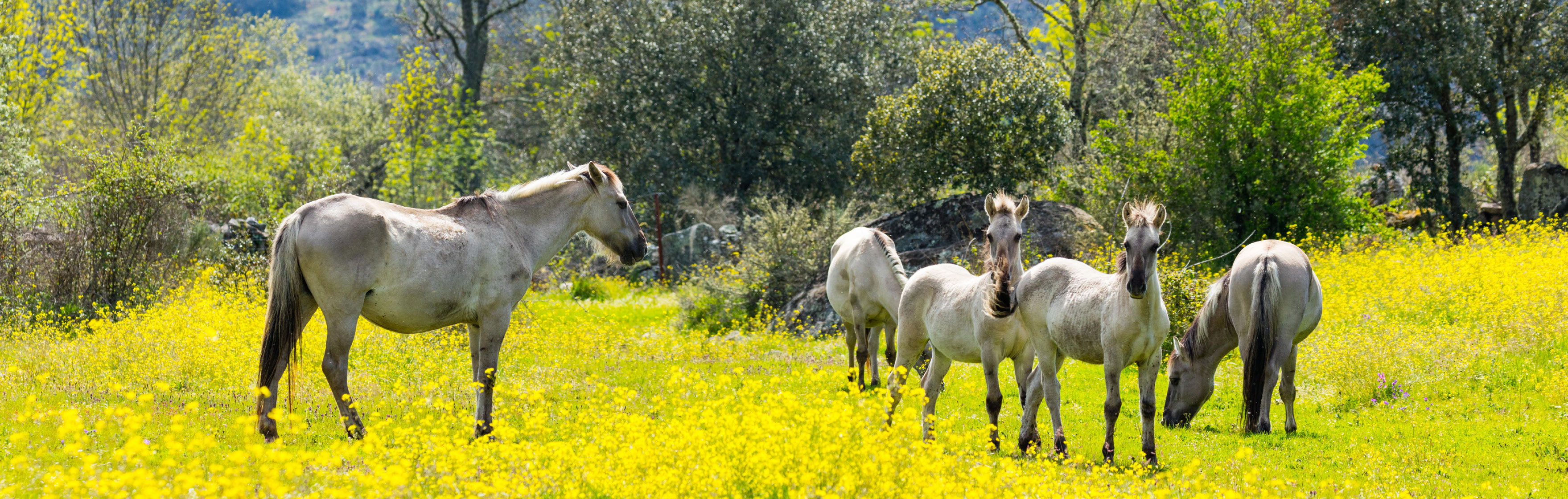
Sorraia horses grazing, Greater Côa Valley.
Juan Carlos Muñoz / Rewilding Europe
Core Topics
- Informal and formal mechanisms to secure grazing rights on private and public land
- The impact of different mechanisms when ownership of land changes
Key Takeaways
Table of Contents
1. What are grazing rights?
Grazing rights are the right to use graze animals on suitable land belonging to another person, whether that is another individual, a community, or an entity. Grazing rights include the right to pass over and remain on grazing grounds - transhumance – for as long as necessary or as agreed between the parties.
Grazing rights are important for rewilding landscapes seeking to use natural grazing for the many benefits it brings. These benefits include protecting and restoring
vegetation mosaics with elevated levels of biodiversity, carbon sequestration and reducing wildfire hazards.
Despite being a common and long-standing practice in rural areas, Portuguese law does not make any provision for grazing rights. As a result, grazing rights often exist on the basis of an informal relationship established between the keeper of the grazing animals and the owner of the land.1
2. How can a practitioner obtain grazing rights?
2.1. If the properties involved are privately owned
If the practitioner is not able to get a formal agreement, they can follow the customary practice and enter into an informal agreement with the landowner in question to allow their animals to graze on the relevant land. This is precarious because the lack of a written agreement setting forth the terms and conditions to be complied with may mean that the practitioner cannot prove their grazing rights over the land. Also, if not created by an in rem right (see Rewilding in Portugal: Obtaining Land and Legal Mechanisms to Protect Wild Land) the grazing rights cannot be enforced against future owners of the land. In this case, there would nothing to prevent future land use degrading the ecological gains achieved by natural grazing
For a more formal relationship, the practitioner has several options, such as:
- If the grazing land is owned by a third party and the practitioner (owner of the animals) also owns or has an in rem right over another piece of land, a voluntary easement for grazing purposes can be created. Within this, the land of the owner of the animals would be the dominant property and the land where the animals would graze would be the servient one.
- Create a usufruct right over the grazing land in favour of the practitioner.
- Enter into a lease agreement, by means of which the practitioner is allowed to use the third party’s land for grazing purposes, against payment of a rent.
- Enter into a contract which sets out the terms of the grazing agreement, just like people enter into contracts with each other for the provision of other services.
These legal regimes are explained in Rewilding in Portugal: Obtaining Land and Legal Mechanisms to Protect Wild Land.
Example
Landowner A bought a piece of land north of a historic village, with a diverse mosaic of natural habitats. Mixed forests of hardwoods and softwoods, scrub, and dry and wet meadows create conditions for the coexistence of animals and plants with very different ecological requirements. Landowner A brought an ancient breed of horses to the land, which are very similar to wild horses that used to inhabit the region. The herd was introduced to replicate the role of its ancestors, mainly herbivory and reinforcement of the nutrient cycle having a positive effect on the remaining biodiversity. The herd grazes on a semi-wild basis and caught the attention of one of the neighbours. This neighbour invited Landowner A to extend the grazing area to encompass his land. However, between the Landowner A’s land and the neighbour’s land there is another property, the owner of which does not wish to have the horses crossing his land. There is a public path linking both properties, but it is very close to a public road.
If the supportive neighbour is willing to create an in rem right over its land, a voluntary easement
or a usufruct right can be created. Alternatively, a lease agreement or a mere grazing contract can also be entered into. Please refer to Rewilding in Portugal: Obtaining Land and Legal Mechanisms to Protect Wild Land.
As Landowner A does not have authorisation for the horses to cross the land in between his land and that of the supportive neighbour, the horses will have to use the public path, in which case measures should be taken to prevent the horses from damaging public property or causing damage to third parties (e.g., traffic accidents).
A key issue to consider when determining which of these options to pursue is the long-term rights they each grant. In particular, it is important to understand whether the proposed option will be enforceable against future owners of the land. This is a concept that is discussed more fully in the note Rewilding in Portugal: Obtaining Land and Legal Mechanisms to Protect Wild Land.
Generally, an in rem right (as set out in options a) and b) as well as lease agreements (option c)), will be enforceable against future owners to the extent of their prescribed term. In contrast, a simple contract (option d)) does not run with the land and future owners are not obliged to keep the contract in force or permit grazing.
Example
As in example above, but Landowner A and the supportive neighbour sign a grazing contract (following option d) above). The contract permits grazing for a 10-year period with no break options. After 5 years, the neighbour sells the grazing property to a third party who has others plans for the land.
Since in this case the grazing right was not granted by means of the incorporation of an in rem right or a lease agreement, but rather by a mere contract between the parties, it is not enforceable against third parties. This means that the new owner has no obligations towards Landowner A and, as such, does not have to comply with the grazing agreement.
As, in Portugal, grazing rights exist on an informal or contractual basis, there are no other legal requirements involved (e.g., the need to set up a farm, have a minimum number of animals or others), except for those relating to the specific agreement to be executed between the person engaging in the grazing activity and the owner of the land.
2.2. If grazing takes place on public land
Classified land
In the case of classified areas, grazing rights may be considered to be an active conservation action and so will be allocated through the contractual instruments referred to in Rewilding in Portugal: Classified Areas.
Unclassified land
In the case of unclassified land, it must be determined whether the land is in the public domain or private domain of the State or other public entities (such as, municipalities).
If the land is in the public domain, the allocation of grazing rights may be considered to be either an extraordinary common use, in which case an authorisation will be required, or a private use of the public domain, in which case a licence or concession will be required. The competent authority will determine which of these routes is applicable. However, it seems certain that agreement by the public entity is always necessary.
With regard to the private domain, the law provides for the possibility of acquiring, either for a fee or free of charge, the right of ownership or other in rem rights for the installation or operation of public services or for carrying out other public interest activities. In relation to grazing rights, the law provides for the possibility of
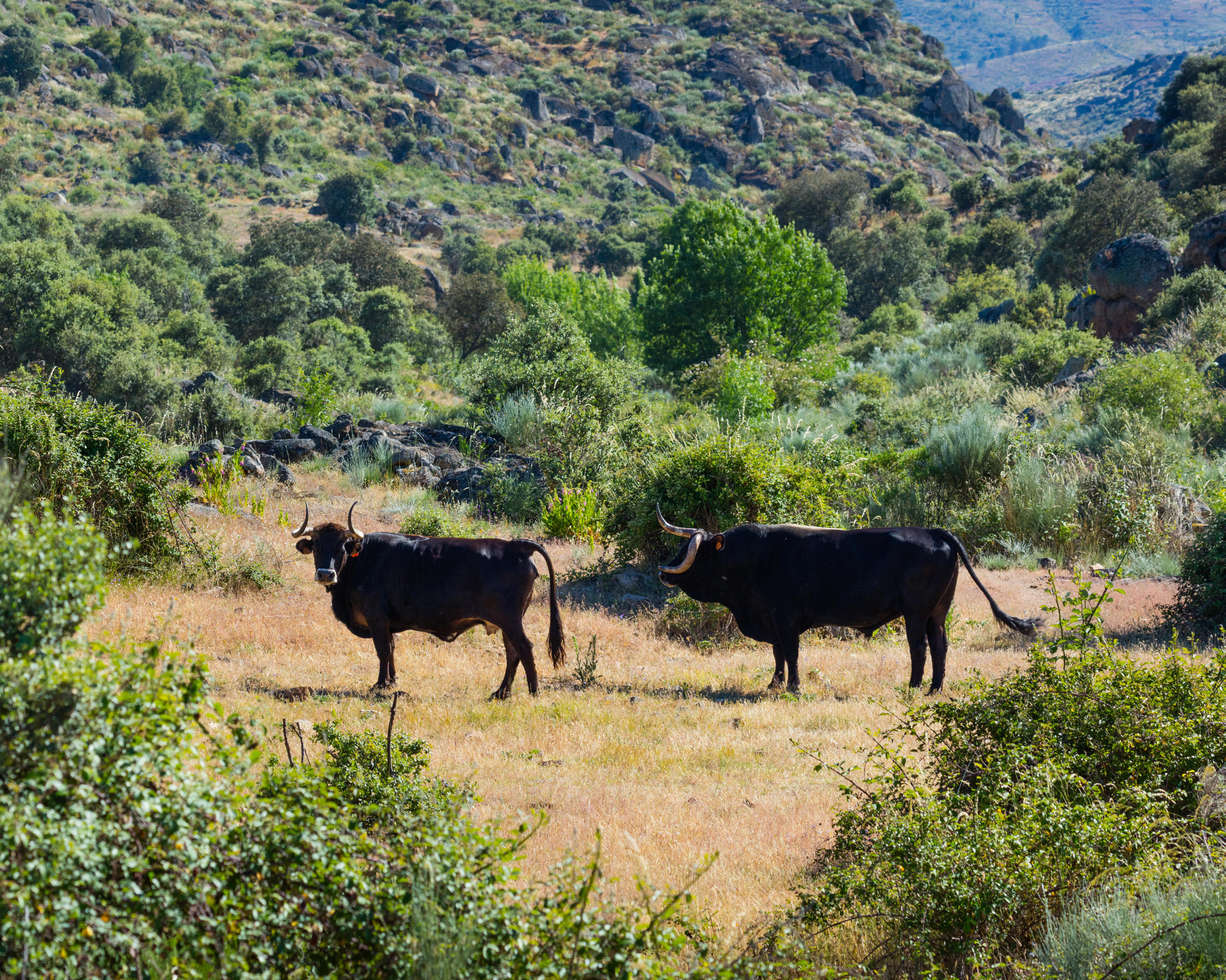
Maronesa cow grazing, Greater Côa Valley.
Juan Carlos Muñoz / Rewilding Europe
transferring the use of real estate in the State’s private domain by establishing surface rights.2
In either case, the public interest underlying the assignment of grazing rights, relating, for example, to vegetation control and fire prevention, should be emphasised.
However, following the general principles underlying administrative activity, the contracting of these usage rights may be subject to open consultation with the community to find out if there is interest in disputing the allocation of these rights.
Given the various options available, the best route for allocating grazing rights on public land must be analysed on a case-by-case basis.
2.3. If grazing takes place on common land3
Common land is used by communities for grazing cattle, collecting firewood and brushwood, hunting, producing electricity and for any other economic and productive uses. Common land belongs to commoners (persons with the right to use the common land, which is often the local community).
If a practitioner wants to use common land as grazing grounds, the best way is to first confirm that grazing is included in the respective common land usage plan
(plano de utilização dos baldios).4 These plans are approved by the commoners’ assembly.
If the practitioner is considered a commoner, they are entitled to use the common land, provided that such use complies with the common land usage plan.
Note that a non-resident can obtain “non-resident commoner” status, if agreed by the commoner’s assembly.5
If the practitioner is not considered a commoner, because they reside outside the area of the common land, they can access the common land’s grazing grounds by entering into an operating assignment agreement with local communities owning and managing the common land.6
These agreements assign to third parties the right to benefit from the economic potential of common land’s resources. These agreements need prior approval from the commoners’ assembly, are limited in time, and will require a payment.7
Operating assignment agreements can last up to 20 years, and they can be automatically renewed for further 20-year periods, to up to 80 years in total.
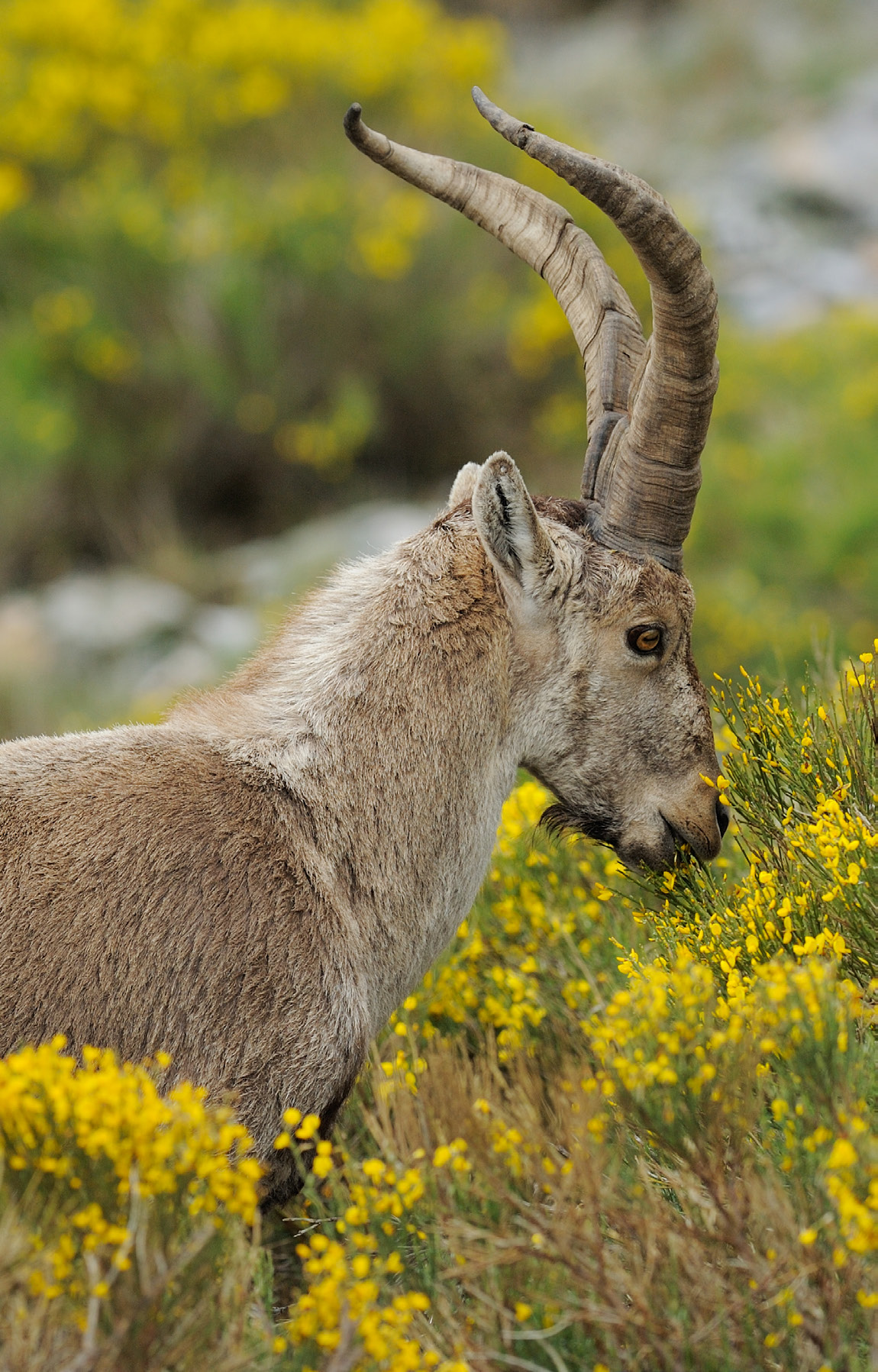
Iberian ibex (Capra pyrenaica), Greater Côa Valley.
Staffan Widstrand / Rewilding Europe
Endnotes
- In some jurisdictions, the specific right of easement for grazing is legally regulated. The Brazilian legal system appears to set out a specific right of easement for grazing based on usucapion (pursuant to analysed Brazilian law and doctrine, namely Doctor Nelson Rosenvald Farias in Curso de Direito Civil - Volume 5 – Reais).
- Article 67 of Decree 280/2007, of 7 August.
- Law 75/2017, of 17 August. For information on the common land legal regime, please refer to Rewilding in Portugal: Obtaining Land and Legal Mechanisms to Protect Wild Land.
- Article 10 Law 75/2017, of 17 August.
- Article 7, 2 Law 75/2017, of 17 August
- Article 36 Law 75/2017, of 17 August.
- Article 36, 3 Law 75/2017, of 17 August.


Contact Us

Elsie Blackshaw-Crosby