Rewilding in Portugal
Liability for Animals
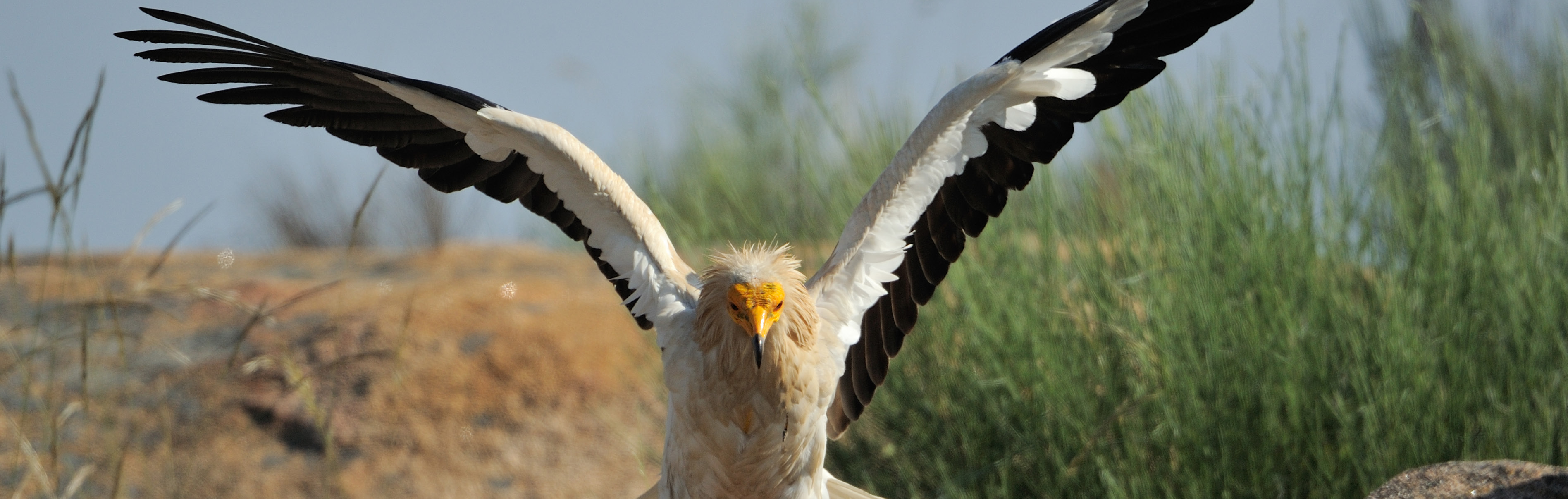
Egyptian vulture (Neophron percnopterus), Faia Brava private protected area, Côa valley.
Staffan Widstrand / Rewilding Europe
Core Topics
- Liability for damage caused by wild animals, kept animals, and game animals
Key Takeaways
Table of Contents
1. What is the liability for damage caused by animals?
2. Special provisions regarding liability for damage caused by animals
The Civil Code has two special provisions regarding liability for damage caused by animals (including wild animals, game, livestock, dangerous animals, domesticated animals, etc). Any situation that is not covered by these special provisions (or other special provisions) follows the general rule of third-party liability (see Rewilding in Portugal: Third-Party liability).2
In the context of a rewilding project, even if a species reintroduction program was authorised by the government, the Portuguese state will only be required to compensate for damage if it is expressly provided for in law (see Rewilding in Portugal: Wildlife Reintroductions).3 Furthermore, even when the Portuguese state is liable to pay compensation for damage caused by reintroduced animals, it is unclear whether the person or organisation releasing the animals could also be liable under the rules mentioned below or the general rule explained in Rewilding in Portugal: Third-Party Liability.
Additionally, it is important you bear in mind that the Civil Code was not drafted in the context of rewilding projects, and we have not found any case law or academic research that has studied the relevant provisions in the context of a rewilding project. Therefore, the examples and conclusions below might
need to be altered as new legislation is approved or as case law and academic research starts to address the liabilities related to damage caused by animals in the context of rewilding projects.
2.1. Liability of those who have a duty to keep watch over the animals
Anyone who has the duty to keep watch over any animals is liable for any damage caused by the animals, unless they prove that they were not at fault or that the damage would also have occurred had they not been at fault.4
This is a situation where fault is presumed, meaning that the injured party does not need to prove fault for the keeper to be liable. They only need to prove the unlawful fact, the damage, and the causal link. It is up to the keeper to rebut this presumption of fault.
But who has a duty to keep watch over the animals?
- There is an assumption that anyone who owns an animal has a duty to keep watch over that animal.
- The duty to keep watch, and the potential liability for damage caused by animals, may also arise in other situations where there is some control over the animals. For example, roles such as shepherds or keepers of enclosed animals will fall under this rule.
Example 1
A rewilding project involves the translocation of deer. The deer are released onto the rewildland by its team to roam free within the project grounds, which are fenced. One of the deer escapes the boundaries of the project and hits a passing car.
It is possible to argue that the association had the duty to keep watch over the deer and, therefore, that they are liable for the damage caused, unless they prove that they acted without fault or that the damage would also have occurred had they not been at fault.5
In the same scenario, imagine that someone from outside the association intentionally opened a gate and let the deer escape.
If the association can prove this, it is possible that this can be considered proof that there was no fault on their part, thus excluding their liability under this provision.
Furthermore, the person that intentionally opened the gate may be liable before the rewilding association and / or the owner of the car for the damage they caused under the general rule of third-party liability (see Rewilding in Portugal: ThirdParty liability).
However, given that it can be hard to prove how a gate was opened, if available, it is recommendable to have an insurance policy in place that covers damage caused by animals.
2.2. Liability of those who use animals for their own interest
Anyone who uses animals for their own interest is liable for any damage caused by the animals, provided that this damage results from the special danger involved in the use of those animals.6 This is a situation of strict liability, i.e., where the person will be liable even if the act is lawful and they act without fault.
“Use for own interest” is not a strictly economic concept, as, for example, in the case of those who have horses to give horseback riding lessons or those who have animals to provide safari trips. Rather, case law and scholars have interpreted it widely to include any kind of interest (e.g., pet animals, where the interest is mostly of company and affection).
Furthermore, as mentioned, not every damage is included in this provision. The “own interest” provision only covers damage that results from the “special danger” relating to the use of the animal. Some case law and scholars have interpreted this concept widely to include not only the specific dangers that each specific species represents (such as the kick of a horse or a bite of a dog), but also all dangers associated with the unpredictability and irrationality of animal behaviour.
Example 2
A flock of sheep escapes the boundaries of their owner’s land and crosses a railway line causing the derailment of a train. The owner has the sheep to sell their wool.
The derailment of a train is not a specific danger associated with sheep, such as biting or kicking someone. However, it is included in the possibilities resulting from their unpredictable and irrational behaviour. Therefore, the damage resulting from the derailment of a train may be considered damage resulting from the “special danger” involved in the use of these animals. As the owner of the sheep uses them for their own interest, they may then be liable for the damage, regardless of whether they acted lawfully and/or without fault.
2.3. Liability of those who have a duty to keep watch over the animals vs. liability of those who use animals for their own interest
These two types of liability can exist in the same person or be associated with different people. The fact that someone is liable based on their duty to keep watch over an animal does not exclude the possibility of that same person, or someone else, being liable for the use of animals for their own interest and vice-versa.
Example 3
A family visits Landowner A’s land. One of the family members gets too close to a wild horse and the animal kicks that person to the ground, breaking his arm. The horses are owned by Landowner A and used as grazers to prevent wildfires. The brother of Landowner A is the keeper of the horses and oversees the visit.
In this scenario, the brother may be liable for damage under the provision that presumes the fault of the keeper, as the one with the duty to keep watch over the horses. Additionally, Landowner A may also be liable in parallel with his brother under the strict liability provision, as the kick is a special danger associated with horses and it can be argued Landowner A uses the wild horses for his own interest.
If Landowner A was also the keeper of the horses and had overseen the visit, they could be liable under both provisions, because they not only had a duty to keep watch over the animals, but also because they use the horses for their own interest and the kick is a special danger associated with horses.
Finally, if the family member had intentionally provoked the horse, for example, by throwing a stone at it, causing the animal to react, there may be grounds for mitigation or exclusion of liability for Landowner A’s brother because the family member’s behaviour may be considered a culpable action contributing to the damage. However, this might not mitigate or exclude Landowner A’s liability because strict liability does not require fault (see Rewilding in Portugal: Third-Party Liability).
2.4. Liability where the animals are acquired / captured solely for the purpose of reintroduction or translocation into the wild
The existing legal framework for damage caused by animals was not designed with situations where the person acquires / captures the animal solely for the purpose of reintroduction or translocation into the wild in mind. Scholars and case law have not studied these situations yet, and so they offer no guidance as to how to resolve situations of damage caused by animals acquired / captured and then released into the wild.
However, to get some sense of how the provisions mentioned above could apply in these situations, two questions should be asked first:
- Can the person / organisation undertaking the reintroduction be considered the owner of the animals?
- Does the person / organisation undertaking the reintroduction have a duty to keep watch over the animals?
These questions can only be answered on a case-bycase basis and any detail can impact whether liability will arise. Additionally, as rewilding and projects involving animal reintroductions and reinforcements
become more broadly known and accepted, it is possible the Civil Code may be changed, or special legislation may be published regarding these issues. In any case, you should always seek targeted legal advice.
Example 4
A group of wild boars (not released by the landowner or by any other person) settles for a while on Landowner B’s land for natural reasons (i.e., with no intervention of the landowner or anyone else).
If the wild animals remain on Landowner B’s land for natural reasons, they most likely will not be considered the landowner’s property. Therefore, Landowner B is unlikely to be liable for any damage they inflict on others under the abovementioned provisions regarding liability for damage caused by animals.
Example 5
A rewilding project simply geotags wild animals already existing in nature and monitors their movements through the geotag. The rewilding project does not capture them, does not maintain them or in any way interfere with their freedom other than the minutes / seconds it takes to geotag them.
It can be argued that the animals in question are truly wild animals, in the sense that they do not belong to the rewilding project and that the rewilding project has no duty to keep watch over the animals as they do not try to control their actions. If this argument is accepted by the courts, even if the animals cause damage, it is possible that the rewilding project will not be held liable under the provisions described above.
However, please note that the fact that the rewilding project geotags the animals could potentially be used as an argument to attribute some sort of duty to keep watch over the animals to the rewilding project. If the courts decide in favour of this line of argument, it is possible that the rewilding project would be held liable for any damage caused by the geotagged animals.
Example 6
Landowner C owns land where they reintroduce European bison to graze freely within a fenced area.
The Civil Code seems to establish that wild animals used to a certain shelter provided by man’s industry belong to the person who shelters them.7 Therefore, in this case, since the animals are contained within Landowner C’s property by the fence, it can be argued that they are Landowner C’s property or, at least, that Landowner C has some sort of duty to keep watch over them. If this argument is accepted by the courts, Landowner C might be held liable for any damage caused by the bison under the abovementioned liability provisions.
Example 7
A rewilding association starts a bear releasing programme. Under this programme, the bears are simply released into the wild by the association to roam free to wherever they feel like roaming.
It can be argued that the bears are wild animals, and since they are not controlled in any way by the association, they cannot be considered the association’s property. However, this issue has not been tested in case law and has not been considered by scholars to date. Therefore, it may be argued that prior to their release the bears were controlled / belonged to the rewilding association, which, in turn, could potentially be used to argue that the bears are the association’s property, despite them roaming free. It is unclear whether a court would accept these arguments as there is no case law on this matter and consequently, it is not clear how a court would decide regarding the liability of the association for the damage caused by these bears.
In situations like these, be especially careful with your risk assessments and, if available, make sure you have good insurance coverage in place.
If the practitioner is considered the owner / possessor of the animals, the next relevant question is:
- Can it be considered that the practitioner is using the animals in their “own interest”?
As mentioned above, the concept of “own interest” is interpreted broadly to include almost all types of private interests. Whether or not a rewilding project is using the animals for their “own interest” will be a question of fact based on exactly how the animals are being kept / used.
Example 8
A rewilding project includes a sanctuary into which wolves are reintroduced. The wolves are allowed to roam free within the sanctuary. The sanctuary is fenced, and the public is not allowed to visit it. One of the wolves escapes the sanctuary and attacks a neighbouring flock of sheep, killing a lamb.
It can be argued that there is no “own interest” in the “use” of the wolves in this situation, but only a
public / collective interest of preserving the species and encouraging a fully functioning ecosystem. If the courts accept this argument, the rewilding project may not be held liable under the strict liability provision mentioned above.
Imagine that instead of being closed to the public, the rewilding project offers paid guided tours of the sanctuary.
As the rewilding project includes an economic activity there is an identifiable “own interest” in the use of the wolves. In this scenario, the rewilding project may be liable for the damage caused by the wolves under the strict liability provision mentioned at section 2.2 above.
In both scenarios, assuming that the rewilding project is considered the keeper of the wolves, it may be held liable under the presumed fault liability provision mentioned at section 2.1 above, as it may be considered that they had a duty to keep watch over the wolves.
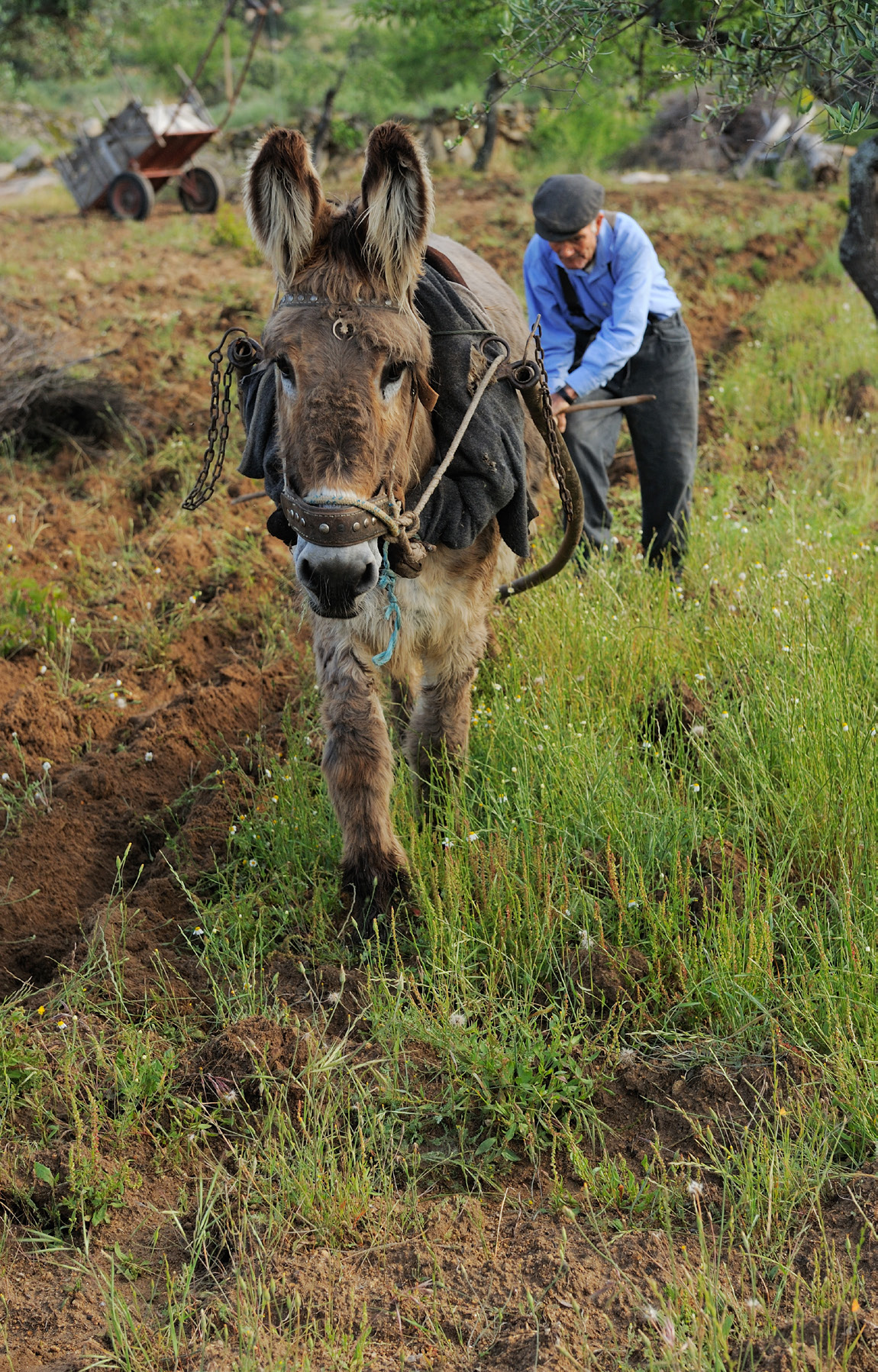
Traditional ploughing, Greater Côa Valley.
Staffan Widstrand / Rewilding Europe
3. Liability for damage caused by game
Under the general provisions mentioned above, there is no liability of a landowner for any damage caused to third parties by the game that is on their land, except where they can be considered owners of the game or to have a duty to keep watch over the game. However, the laws applicable to hunting activities contain three special provisions that can be relevant to rewilding projects (see Rewilding in Portugal: Hunting):8
- Holders of hunting zones, game hunting facilities and game training camps are required to compensate for any damage caused by their activities to neighbouring lands and their own land.9
- Landowners can ask the government to prohibit hunting on their property: it is called direito à não caça (no-hunting right).10 The holder of a no-hunting right is liable for any damage caused by the game to their neighbours’ land and to their own land.11
These two liability provisions do not seem to require an unlawful act or fault by the holder of the hunting zone or no-hunting right for this holder to be liable for the damage caused by the game. In other words, they seem to be strict liability provisions. Nonetheless, for the holder of a hunting zone or no-hunting right to be held liable for the damage caused by the game, there must be a causal link between the activity of the holder of the hunting zone / the exercise of the no-hunting right and the damage caused.
Example 9
A landowner requests the prohibition of all hunting activities on their land and the request is granted. The population of wild boars dramatically increases because of the no-hunting right granted to the landowner. The wild boars go to the land next to the landowner’s land where there’s a small creek and a field of watercress next to it. The animals eat all the watercress, which was to be sold.
It can be argued that the landowner — as the holder of the no-hunting right — may be liable for the damage caused by the wild boars under the second provision described above.
- Finally, the Portuguese state is liable for damage caused by game species to forests, farming, and livestock, provided it has not authorised corrective measures or carried out them directly.12
Exactly how these three rules of liability interact remains unclear and will need to be assessed on a case by case.
Endnotes
- However, please note that this is not absolute, as explained for the situations where someone can be considered as the owner of the wild animal.
- Case law and scholars distinguish between damage caused by animals — in which case, the provisions described in this section apply — from damage caused with (the use of) animals — in which case, the general rule of third-party liability (see Rewilding in Portugal: Third-Party Liability) applies. The situations of damage caused with animals are those where the animals cause the damage, but because they are instrumentalised by the liable person. E.g., someone makes a horse kick a door to open it forcibly, someone sets a dog on someone else and the dog injures that someone else.
- An example of such situation would be Decree-Law no. 54/2016, of 25 August, related to lobo-ibérico (Canis lupus signatus, Cabrera 1907). Otherwise, the Portuguese state can only be held liable in the general terms applicable to state liability, which is not the scope of this briefing (there are special rules applicable to the liability of the state).
- Article 493(1) of the Civil Code.
- Please note that in some cases, such as in highways, the entity responsible for the concession of the road can also be considered liable.
- Article 502 of the Civil Code.
- Article 1320 of the Civil.
- Decree-Law no. 202/2004, of 18 August.
- Article 114(1) of Decree-Law no. 202/2004, of 18 August. For more detail on hunting zones, see Rewilding in Portugal: Hunting.
- Article 57 of Decree-Law no. 202/2004, of 18 August. For more details, please see Rewilding in Portugal: Hunting.
- Article 114(2) of Decree-Law no. 202/2004, of 18 August. For this purpose, the following species are considered game: Coelho-bravo - Oryctolagus cuniculus, Lebre - Lepus granatensis, Raposa - Vulpes vulpes. Saca-rabos - Herpestes ichneumon, Perdiz-vermelha - Alectoris rufa, Faisão - Phasianus colchicus, Pombo-da-rocha - Columba livia, Gaio - Garrulus glandarius, Pega-rabuda - Pica pica, Gralha-preta - Corvus corone, Melro - Turdus merula, Pato-real - Anas platyrhynchos, Frisada - Anas strepera, Marrequinha - Anas crecca, Pato-trombeteiro - Anas clypeata, Marreco - Anas querquedula, Arrabio – Anas, Piadeira - Anas penelope, Zarro-comum - Aythya ferina, Negrinha - Aythya fuligula, Galinha-d’água - Gallinula chloropus, Galeirão - Fulica atra, Tarambola-dourada - Pluvialis apricaria, Galinhola - Scolopax rusticola, Rola-comum - Streptopelia turtur, Codorniz - Coturnix coturnix, Pombo-bravo - Columba oenas, Pombo-torcaz - Columba palumbus, Tordo-zornal - Turdus pilaris, Tordo-comum - Turdus philomelos, Tordo-ruivo - Turdus iliacus, Tordeia - Turdus viscivorus, Estorninho-malhado - Sturnus vulgaris, Narceja-comum - Gallinago gallinago, Narceja-galega - Lymnocryptes minimus, Javali - Sus scrofa, Gamo - Cervus dama, Veado - Cervus elaphus, Corço - Capreolus capreolus, Muflão - Ovis ammon.
- Article 115(1) of Decree-Law no. 202/2004, of 18 August.
Contact Us

Elsie Blackshaw-Crosby