


Rewilding in Portugal
Liability to Neighbouring Landowners
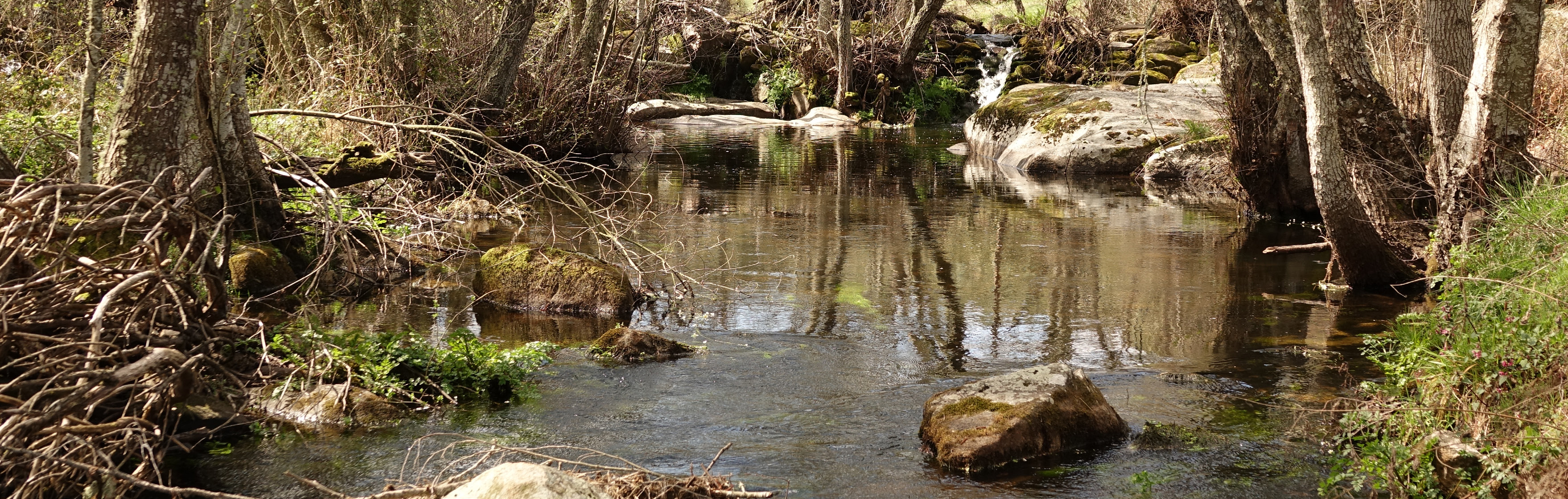
Natural stream, Faia Brava private protected area, Greater Côa valley.
Raquel Filgueiras / Rewilding Europe
Core Topics
- Liabilities for damage caused to your neighbours and other third parties1 as a result of activities on your land
Key Takeaways
Table of Contents
1. What is the liability in relation to neighbours / neighbouring land?
Neighbours have a general duty not to negatively impact neighbouring land or the enjoyment of that land. As such, any act or omission that does so may result in a liability claim by the neighbouring property owner and an obligation for the liable party to pay compensation for any damage caused (provided all the non-contractual liability requirements are met - see Rewilding in Portugal: Third-Party Liability).
To minimise the risk, it is recommended that you:
- seek legal advice for any potential actions that may impact your neighbours;
- undertake and keep up to date detailed risk assessments;
- if available, obtain third-party insurance that specifically covers any events / activities that may negatively impact your neighbours / neighbouring land;
- always take all reasonable and appropriate measures to avoid causing damage to your neighbours; and
- seek legal advice when in doubt, or when faced with a liability claim.
In addition to this general duty, landholders may be required by law to undertake, or to refrain from taking, certain actions in relation to their neighbours. Usually, these obligations are aimed at balancing conflicting rights between neighbouring lands.2 A breach of these specific duties can generate liability, provided all the non-contractual liability requirements applicable to the specific situation are met (see Rewilding in Portugal: Third-Party Liability).
Example 1
Landowner A cuts a neighbour’s fence without their permission.
Landowner A may be liable for the damage resulting from such action, including the costs of repairing the fence or, for example, the costs of recovering any animals that escaped through the cut fence.
Example 2
Landowner B is constructing a hide and uses the neighbour’s land to store the construction material overnight without the neighbour’s consent.
Landowner B may be liable for any damage resulting from such use of the neighbour’s land.
Example 3
The only access to the neighbouring property is through Landowner C’s land.
Landowner C may have a duty to let the neighbour cross their land to access the neighbouring land.3 If Landowner C does not let the neighbour cross their land, they may be liable for the damage caused to the neighbour by such action.
Imagine that Landowner C’s refusal prevents the neighbour from doing their annual harvest and, thus, from selling the cereal that would be harvested to the local dealer.
Landowner C may be obliged to compensate the neighbour for the damage / losses resulting from the non-sale of the harvest.4
2. What is the liability for damage caused by excavations?
If you are the landowner, you are entitled to undertake excavations on your land, provided you do not deprive neighbouring lands of the necessary support to prevent landslides or displacement of earth.5 This seems to apply to all types of excavations, including those with the purpose of digging mines or wells, which are expressly provided for in the relevant provision.
However, you may be required to compensate the neighbouring landowner for any damage which does occur as a result of the excavations, even where all necessary precautions have been taken.6 This seems to be a case of strict liability, i.e., you may be liable even if you have acted lawfully and without fault.
Furthermore, the legislation refers to damage resulting from “works done” and so does not seem to expressly limit compensation to damage resulting from landslides or the displacement of earth. Therefore, it can be argued that all damage to neighbouring lands resulting from excavations may fall under the abovedescribed strict liability provision, giving rise to liability. When in doubt, you should seek relevant technical and legal information in relation to the specific work you are planning to undertake.
Example 4
Landowner D excavates their land and takes all necessary and reasonable precautions to avoid a landslide. However, a landslide occurs (which is shown to be caused by the excavation work) and destroys part of the crops of the neighbouring land.
Even though Landowner D acted lawfully (they have the right to excavate their land and had obtained the necessary permission) and without fault, they may be held liable for the damages connected to the destroyed crops.
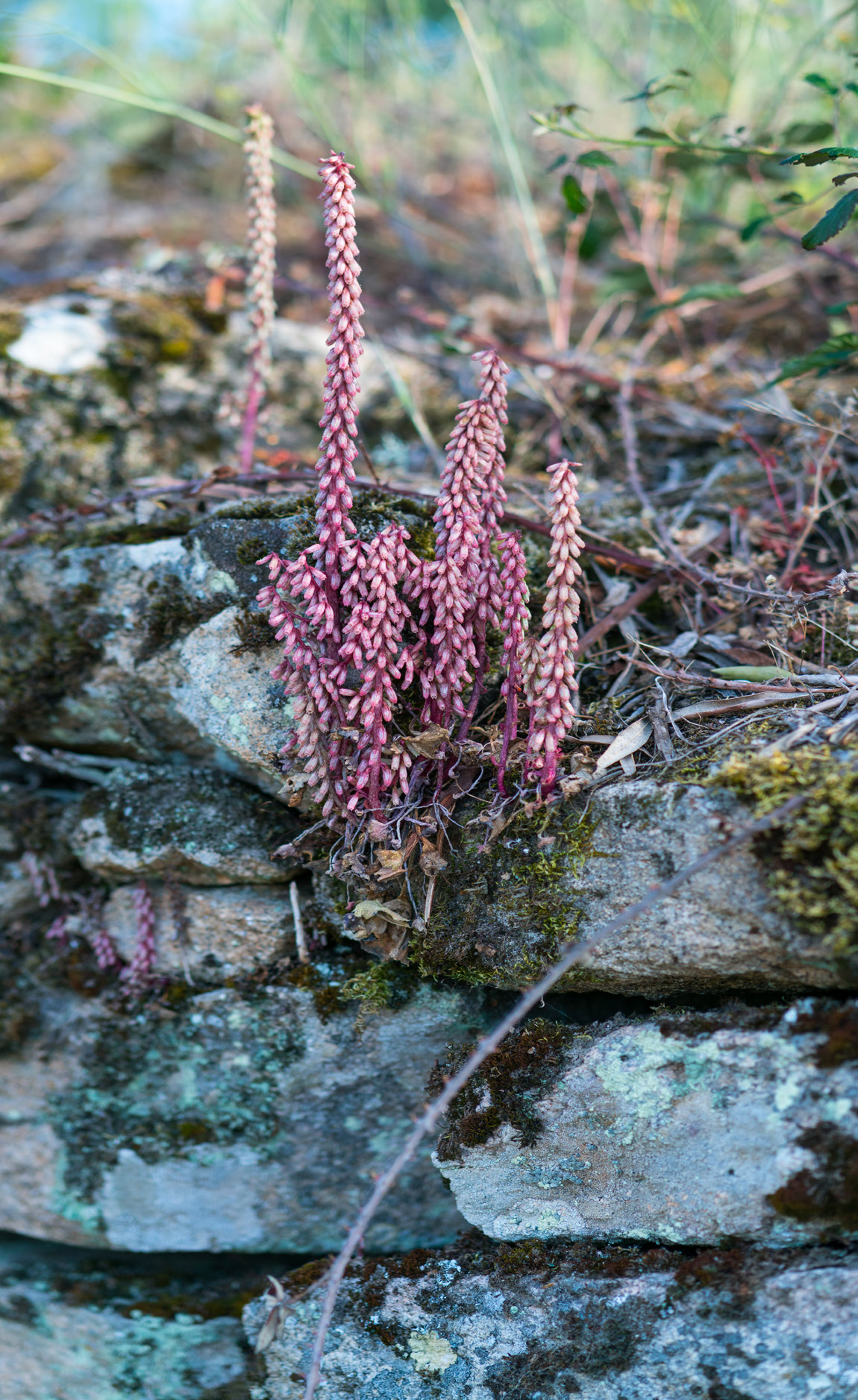
Endemic species in stone wall, Greater Côa Valley.
Juan Carlos Muñoz / Rewilding Europe
3. What is the liability for damage caused by trees, branches, or roots?
Within the legislation, there seems to be an assumption that whoever owns a thing has a duty to watch over it and maintain / preserve it. This duty applies not only to an owner who is in possession of such thing, but also to those who are not owners but who have possession of the thing and a duty to guard it (e.g., a custodian).
Although there is no provision that specifically provides for liability for damage caused by trees, branches or roots, there is a general provision that regulates the damage caused by movable and immovable property.7 Because trees are connected to the ground, trees, their branches, and roots are considered immovable property, and thus fall within the scope of this general provision. In the same line, trees that are no longer connected to the ground, because they were pulled, for example, or plants that are on a vase are considered movable property, also falling within the scope of this provision.
Therefore, in law, if you possess movable or immovable property and have a duty to watch over it, you are liable for any damage it causes. This is the case unless you can prove that you were not at fault or that the damage would have occurred regardless of whether you were at fault. This is another provision that establishes a presumption of fault, meaning that
Example 5
A tree belonging to Landowner E falls and destroys a wall on neighbouring land and a few fruit trees. The fruit from the trees was to be sold at a local market.
It is possible that Landowner E will be held liable for the destruction of the wall, the trees, and the fruit, unless they prove that there was no fault on their part or that the damage would have occurred regardless of whether they were at fault.
For example, Landowner E will have to prove either that they acted diligently to avoid the tree falling (e.g., that the tree was healthy and that they regularly inspected the tree to make sure it remained healthy) or that the tree would have fallen regardless (e.g., the wind was so strong that even if the tree was healthy and well planted it would have fallen).
the injured party does not need to prove fault for you, as the holder of the thing that caused the damage with a duty to keep watch over it, to be liable. It is up to you to rebut this presumption of fault and to prove you were not at fault.
Example 6
The roots of a tree belonging to Landowner F destroy a wall on neighbouring land.
It is possible that Landowner F will be held liable, unless they can prove that there was no fault on their part or that the damage would have occurred regardless of whether they were at fault.
For example, Landowner F will have to prove that they acted diligently to avoid the roots reaching the wall and destroying it (e.g., that they planted the tree far enough so that the roots would not reach the wall) or that the roots would have grown up to the wall and destroyed it even if Landowner F had taken all necessary precautions to avoid it.
4. What is the libility for damage caused by the use of water and water courses?
There are several provisions that regulate the use of water and water courses by landowners. For example:8
- If there is a water spring or source on your land, you, as the landowner, can use it or change the course of the water even it if affects its use by neighbouring lands.9 However, if the spring/source or the waters running from it have been used by the inhabitants of a village or community for domestic purposes for more than five years, you can no longer change its customary course.10 The same rules apply to the water from lakes and ponds.
- A landowner can search for underground water in their land, provided that this does not prejudice rights that third parties have acquired through fair title.11 However, a landowner who, while using underground water, alters or reduces the water in a spring or reservoir intended for public use is obliged to restore things to their previous state. If this is not possible, they must supply water equivalent to that of which the public was deprived, for the same use and in an appropriate place.12
However, there are no specific provisions in the Civil Code regarding liability for damage caused by water courses, the use of waters, or flooding. Therefore, most situations would fall under the general rule of third-party liability (see Rewilding in Portugal: Third Party Liability).
Certain activities involving water and water courses, including the building of dams, may attract different rules of liability if they are considered a “dangerous activity”.13 Anyone who causes damage to another person while carrying out an activity which is dangerous by its nature or by the nature of the means used, is obliged to repair such damage, unless they can show that they took all the measures required to prevent the damage.14 This is therefore another situation where there is a presumption of fault. As above, this means that the injured party does not need to prove fault for the person carrying out the dangerous activity to be liable. It is up to the latter to rebut the presumption and prove they were not at fault.
Whether or not an activity is “dangerous” is a matter of fact and must be assessed on a case-by-case basis. However, as a rule of thumb, activities that have a higher-than-normal probability of causing damage are more likely to be “dangerous activities”.15 The idea is that such activities require special measures of prevention to avoid damage to third parties.
Example 7
As part of a large rewilding project, a river is to be allowed to regain its natural floodplain. To that end, the landowner refrains from maintaining banks and river defences. During a period of heavy rainfall, neighbouring land bordering the river is flooded which causes damage to property. Over time, the river also begins to erode neighbouring land overlooking the river, parts of which begin to break off into the river and are no longer safe for grazing.
As far as we are aware, the liability of the landowner in this scenario would be ascertained under the general rule of civil liability. Thus, for the landowner to be held liable for the damage caused, the claimant would have to prove that the landowner acted unlawfully and with fault and that the damage is a consequence of the landowner’s actions.
Note: As flooding is a matter of public concern, there may be rules regarding the maintenance of riverbanks and river defences. The breach of such rules may give rise to liability claims. Therefore, before engaging in any activity like the one in the example, please seek targeted legal advice or contact the competent authorities.
Example 8
A rewilding project decides to drain a small artificial lake to return the landscape to marshland. A drainage channel is created for these purposes.
It is possible that this activity is considered dangerous by the courts as it may have a higher probability than normal of causing damage.
Imagine that the water drains via neighbouring farmland, flooding the soil and ruining its crops.
If the draining of an artificial lake is considered a dangerous activity by the courts, the rewilding project may be held liable for the damage caused, unless they prove that they took all the appropriate and required measures to prevent the damage.
5. What is the liability for damage caused by fire?
The Civil Code has no special provisions regarding liability for damage caused by fires. Therefore, most cases will likely fall under the general rule of third-party liability (see Rewilding in Portugal: Third-Party Liability).
Nonetheless, please note the following:
- There are several woodland management rules aimed at preventing wildfires (i.e., a public interest)16 (see Rewilding in Portugal: Forests and Flora and Rewilding in Portugal: Land and Wildfires). However, if the courts accept an argument that these rules also exist to protect private interests and you do not comply with such rules, you may be held liable for the damage resulting from a wildfire caused by your actions or omissions.
- Some activities involving the use of fire may be considered dangerous activities. For example, the burning of debris in open fields, which is common in the management of woodland activities, has been considered a dangerous activity by the courts. In this case, if you cause damage to another person while carrying out a dangerous activity involving fire, you may be obliged to repair such damage, unless you show that you took all the measures required to prevent the damage.17
Example 9
As a part of a rewilding project, Landowner G stops clearing their land in breach of the rules regarding the management of woodland and dry bush accumulates. A wildfire starts in the accumulated dry bush, spreads to neighbouring lands, and burns the crops and everything else on those lands.
If the legal woodland management rules breached are found to also protect private interests, namely the interests of other landowners, Landowner G may be held liable for the damage caused by the wildfire.
Example 10
Landowner H decides to clear shrub in a small area using machinery to allow grass and wildflowers to germinate. At some point, one of the machines used to clear the area produces a spark, which causes a fire. This fire advances to the neighbouring land and burns the crops and everything else on that land.
The activity of clearing shrubs with machines may be considered a “dangerous activity” as it increases the likelihood of a fire. If the courts consider it a “dangerous activity”, there would be a presumption of fault by Landowner H and, thus, to avoid being held liable, Landowner H would have to prove that they took all the appropriate and required measures to prevent any fire from starting and/or spreading.
Endnotes
- Please be aware that although the examples provided in this Note relate to neighbouring relations, most of the provisions explained in this Note are also applicable to damage caused to third parties that are not neighbours. For further information related to damage caused to third parties please see Rewilding in Portugal: Third-Party Liability.
- Please note that there are several provisions that regulate neighbouring relations, and it is not possible to list them in this briefing given its scope. When implementing a rewilding project, please seek targeted legal advice as to the limitations and duties of action in relation to neighbour landowners / lands.
- Please note that the landowner, however, has the right to receive a compensation from the neighbour for letting the neighbour cross their land.
- In addition to a compensation for the damage caused, the neighbour can also seek a court order to make the landowner grant them access to their land through the landowners’ land.
- Article 1348(1) of the Civil Code.
- Article 1348(2) of the Civil Code.
- Article 493(1) of the Civil Code.
- Please note that this is only a summary of some of the rules of the Civil Code. If you wish to change a water course, build a dam, destroy a dam or other projects involving the waters available in your land, please look for specific legal advice. For dam removal, see Rewilding in Portugal: Dam Removal.
- Article 1391 of the Civil Code.
- Article 1392 of the Civil Code.
- Article 1394(1) of the Civil Code.
- Article 1397 of the Civil Code.
- Please note that the Appeal Court of Coimbra has considered the building of a dam to be a “dangerous activity”.
- Article 493(2) of the Civil Code.
- The examples of dangerous activities vary widely. Horse races, paintball, the transport of cranes, explosive manufacturing, the use of explosives to blast rocks, the stacking of round logs, the burning of debris in open fields have all been considered dangerous activities by the courts.
- That is why, in most cases, the breach of such rules generates administrative liability (responsabilidade contraordenacional in Portuguese).
- Article 493(2) of the Civil Code.


Contact Us

Elsie Blackshaw-Crosby