


Rewilding in Portugal
Third-Party Liability
Porto de S. Miguel, Greater Côa Valley.
Juan Carlos Muñoz / Rewilding Europe
Core Topics
- General rules applicable to thirdparty liability and how noncontractual liability arises (including waiver and exemptions)
- Liability for construction or maintenance defects
- Liability for damage to people on / entering your land
- Measures to adopt with regard to trespassers
Key Takeaways
Table of Contents
3.
1. Practical steps to limit potential civil liability
As this note will explain, landowners and land managers may incur liability for any injury or damage caused to third parties by their actions or omissions. Whilst these may not apply to every rewilding project, the following practical steps should be taken to limit the risk of such liability arising:
- Seek detailed legal advice regarding the specific project to be implemented. You should cover any potential liabilities that may arise from the project and how they can be avoided.
- Undertake, and keep up to date, detailed risk assessments in relation to all aspects of the project.
- If available, get comprehensive third-party liability insurance and ensure that you engage with your insurer about the risks involved in your project and follow their requirements.
- Always bear in mind that there is a general duty to avoid damaging your neighbours’ property. You must therefore take all reasonable and appropriate measures to avoid causing damage to your neighbours’ property through your acts and omissions.
- If the rewilding project includes any animals, consider building and maintaining a fence and/or other appropriate barriers to (i) prevent the animals escaping from the project and (ii) to prevent the public from entering the project grounds without invitation.
- Use signs / other notifications to make explicitly clear to the public that they are entering a rewilding project. The signs should indicate what animals are present and any associated dangers. They should explicitly warn the public to be careful.
- If the project is not open to the public, make explicitly clear (by using signs / other notifications) that anyone entering the property without authorisation will be trespassing.
- When in doubt, or when faced with a liability claim, seek legal advice.
2. What are the general requirements of civil liability?
| Requirement | What does it mean? |
|---|---|
| Fact2 | A voluntary act or omission by the liable person |
| Unlawfulness3 | The fact must be unlawful. For non-contractual liability purposes, unlawfulness is divided into two different categories: (i) the fact breaches a right of another person, such as a property right or a personality right; or (ii) the fact breaches a legal provision intended to protect the interests of another person.4 |
| Fault5 | The conduct of the liable person must be reprehensible because the person (i) acted negligently or recklessly; (ii) accepted that their action could cause damage; or (iii) intended to cause damage. |
| Damage6 | The injured person must have suffered damage / loss.7 |
| Causal link8 | The act or omission by the liable person must have caused the damage suffered by the injured person.9 |
Example 1
Landowner A cuts the fence of a neighbour without their permission.
Such act breaches the property rights of the neighbour. Therefore, Landowner A may be liable for the damage resulting from such action, including the costs of repairing the fence or, for example, the costs of recovering any animals that escaped through the cut fence.
Example 2
Imagine a legal provision that states that all spaces open to the public must be kept clean and well-lit to avoid endangering the people that visit those spaces.
If the owner of such a space breaches this provision willingly and a person visiting falls and breaks a leg due to bad lighting, the owner may be liable for the damage this person suffers. This could include the hospital bills, but also the pain and suffering from the broken leg.
3. Are there any factors that exclude or mitigate liability?
3.1. General grounds for exclusion of liability for unlawful facts
There are several situations where an unlawful action will be considered lawful, therefore removing liability:
- The lawful exercise of a right or fulfilment of a legal duty: if damage is caused by the exercise of a right or fulfilment of a legal duty, there will generally be no liability. Please note that this is not an absolute exception. For example, where the right of the injured person is considered to be more important than the right of the liable person, the liable person may still be liable.10
- Direct action11, self-defence12 and situations of distress13: these are complex legal provisions under which a person is able to harm another person’s rights without it being unlawful. The common elements are that the action was taken to protect or ensure a right, and it was not possible to protect or ensure the right through the normal means at a person’s disposal.
There must also be a consideration of whether the action was proportionate with respect to the interests of each party and the damage caused. This will vary depending on the specific legal provision.14 - Consent of the injured party15: an act or omission harmful to the rights of another person will not be
Example 3
A rewilding project keeps a herd of wild horses. A third party is walking their dog by the herd without a leash. While the owner of the horses is nearby to collect the GPS collars, the dog attacks one of the horses. To defend the horse and to prevent the dog from being hurt by the horse, the owner of the horses hurts the dog to scare it away from the herd.
In normal circumstances, where the dog had not attacked the horse, the owner of the herd could be liable for the damage inflicted on the dog. However, in this case, liability may be excluded as their action may be considered lawful under the self-defence provision.16
unlawful if the injured person consents to the damage. However, consent will not exclude the unlawfulness of an act or omission when such act or omission is contrary to a legal prohibition or public decency (bons costumes in Portuguese).
In cases of strict liability, the situations mentioned above would not exclude liability. This is because the strict liability provisions do not require the relevant act or omission to be unlawful for liability to arise. In other words, in these cases, even though the act or omission is lawful, the party is still liable.
Example 4
It is a windy day and Landowner B sees a big fire on their neighbour’s land. The firefighters are too far away, so to prevent the fire from spreading, Landowner B cuts the surrounding crops or covers them with water, ruining them.
If there was no fire, Landowner B would likely be liable for the damaged crops. However, in this case, Landowner B may not be liable for the damage, as their action may be considered lawful under the situation of distress provision.
Example 5
Landowner C asks their neighbour if they can cut the neighbour’s fence, damaging it, and the neighbour expressly consents.
In this case, Landowner C is not liable for damage to the fence as the neighbour consented to that damage. Note that Landowner C may be liable for other damage for which consent was not granted. Therefore, in a case like this, liability may not be excluded for all damage resulting from the cutting of the fence.
3.2. Grounds for exclusion or mitigation of liability due to another’s faulty (culpable) act or omission
Liability towards a third-party may also be excluded or reduced when a faulty (culpable)17 act or omission of the injured party contributes to the damage.18 In these circumstances, the court will decide whether the compensation should be awarded in full, reduced or even excluded depending on each party’s respective fault.
Usually, this ground for exclusion/mitigation of liability would not apply to strict liability situations, as there is no fault requirement in such situations. Therefore, in most cases of strict liability, even if the injured party acted with fault, the person liable under a strict liability provision would still be fully liable.19
Conversely, when liability is based on a presumption of fault, unless there is a legal provision stating otherwise, the existence of a culpable act or omission by the injured party will completely exclude the liability of the liable person.20/21
Example 6
Landowner D builds a lookout for bird watching on their land. This lookout has a defect and, one day, collapses on a visitor, injuring them. Later, Landowner D finds out that the injured person was vandalising the lookout, trying to bring down one of the walls, and that these actions contributed to the collapse of the lookout.
Although there is a presumption of fault on the part of Landowner D (see section 4 below), due to the culpable action of the injured person, the liability of Landowner D may be excluded or mitigated.
Example 7
Landowner E invites some people onto their land and one of them decides to swing on a tree branch, causing it to snap and they suffer injuries.
The decision to swing on the branch may be considered a culpable act of the injured person. Although there may be a presumption of fault of Landowner E, the culpable act by the injured person may exclude or mitigate the liability of Landowner E.

Iberian wolf, Greater Côa Valley.
Daniel Allen/ Rewilding Europe
4. What is the liability for damage caused by man-made structures if there is a construction or maintenance defect?
The owner or possessor of a building or other structure that collapses, either wholly or partially, due to a construction or maintenance defect, is liable for any damage caused by such collapse, unless they prove that they were not at fault or that, even with the diligence required, the damage could not have been avoided.22
Example 8
Landowner F builds a lookout for bird watching which has a construction defect that is not visible or obvious. One day, the lookout collapses and injures a passer-by (or causes damage to the neighbouring land).
The passer-by (or the neighbouring landowner) does not need to prove any fault on the part of Landowner F for Landowner F to be liable for the damage caused by the collapse. The fault is presumed, and Landowner F will be liable unless they rebut this presumption and prove that they were not at fault or that, even with the diligence required, the damage could not have been avoided.
Where there is no construction defect or defect in maintenance, liability will be determined according to the general rule demonstrated by the following example:
Example 9
A visitor enters Landowner G’s land. While there the visitor trips over a hidden drainage grate and breaks their leg.
This situation is not included in the special provision mentioned in this section because there is no collapse of a man-made structure due to a construction or maintenance defect. Therefore, it falls under the general rule which states that there is only liability if the broken leg can be causally linked to an unlawful faulty act or omission. This unlawful act or omission can include e.g., breach of a legal provision designed to avoid damage to the visitor, such as a safety regulation applicable to the situation.
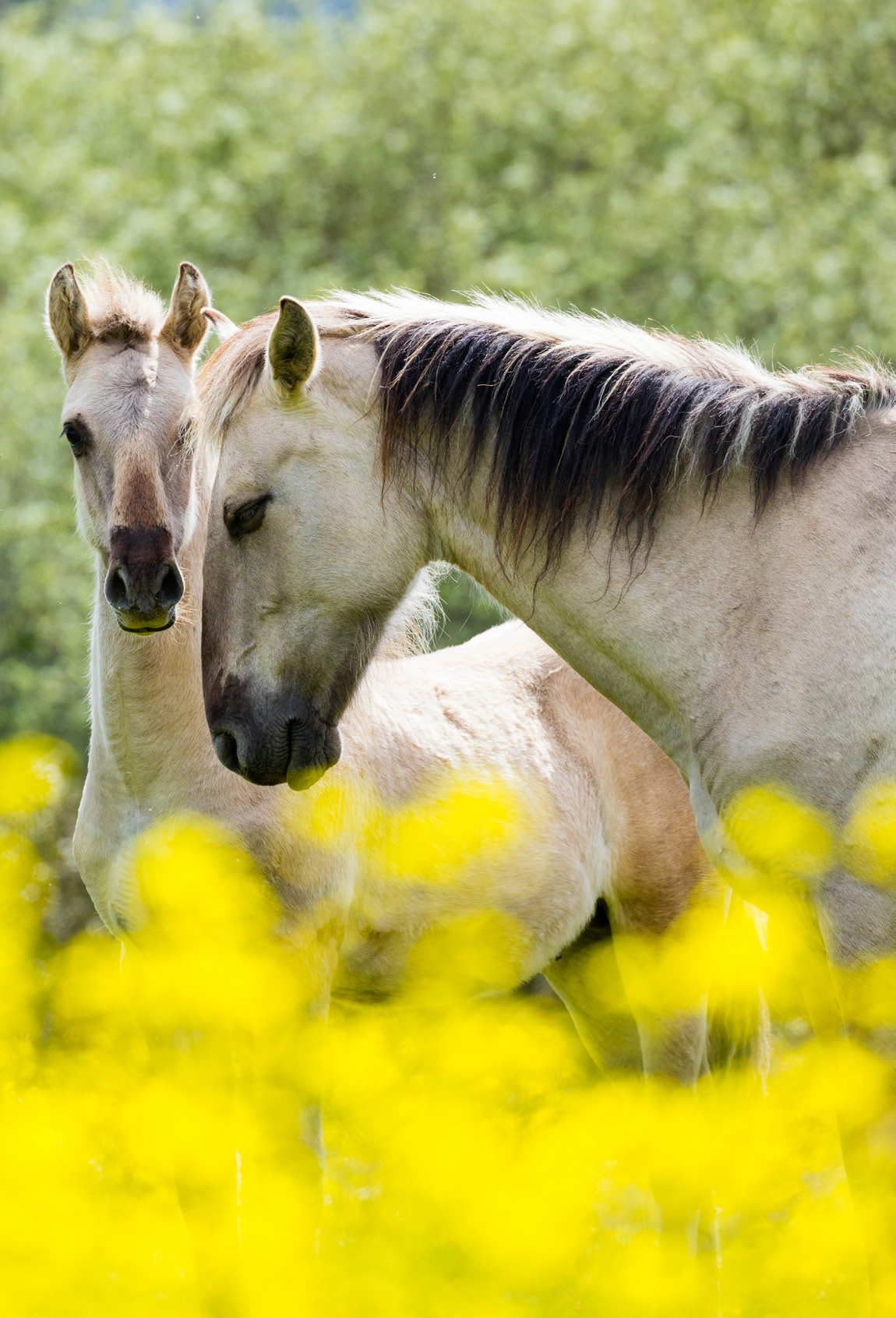
Sorraia horses, Greater Côa, Côa Valley.
Juan Carlos Muñoz / Rewilding Europe
5. What is the liability of the landowner or land manager in relation to individuals entering or remaining on the land?
The fact that an individual enters your land (both when they are invited and when they are trespassing) does not mean that you are automatically liable for any damage suffered by such individual whilst on your land.
With regards to civil liability, the requirements set out in section 2 must be met for you to be held liable for any damage.
However, please note that if you wish to undertake a commercial activity in connection with a rewilding activity, specific legislation may be applicable (for example, health and safety provisions). Breach of this legislation may generate non-contractual civil liability if the general requirements are met or if the legislation specifically provides for it. Therefore, before undertaking a commercial activity, please seek specific legal advice to ensure you are aware of all the applicable legislation and of your legal obligations.
Example 10
Landowner H invites people onto their land for a guided tour. During the tour, a visitor trips over a rock and injures himself.
If no legal provision was breached by the landowner, it is unlikely that the landowner will be held liable for the injuries suffered by the visitor.
Example 11
In the same scenario as Example 10, a visitor is kicked by a wild horse during the guided tour.
If the wild horse is kept by Landowner H, they may be held liable. This is because fault is presumed for those who have a duty to keep watch over animals (see Rewilding in Portugal: Liability for Animals).
Moreover, those who use animals for their own interest are strictly liable for any damage caused by those animals. Landowner H’s liability under this rule will depend on the specific circumstances, i.e., whether it can be proved that Landowner H is using the wild horse for their own interest. For further detail, please see Rewilding in Portugal: Liability for Animals.
If the wild horse is not considered to be owned or kept by Landowner H (e.g., where the horse belongs to someone else and has escaped onto Landowner H’s land), non-contractual liability will only arise if the general requirements mentioned in section 2 are met.
The solutions in the examples below may differ if there is a contract between the landowner and the visitors. Please seek legal advice if you wish to undertake a commercial activity involving guided tours.
Example 12
Landowner I invites people onto their land for a guided tour. During the guided tour, they pass by a stall owned by Landowner I that is used to provide shelter to animals. A construction defect in the stall causes it to collapse on one of the visitors, causing injury.
Landowner I may be held liable for the injuries suffered by the visitor, unless they prove they were not at fault or that, even with the diligence required, the damage could not have been avoided (see section 4 above).
Example 13
On another day, Landowner I invites people onto their land for a guided tour. During the guided tour, a tree branch falls onto one of the visitors causing him injuries.
Landowner I may be held liable, unless they prove that there was no fault on their part or that the damage would also have occurred if they had not been at fault (see Rewilding in Portugal: Liability to Neighbouring Landowners, section 3).
5.1. What is the liability of the landowner / land manager in relation to unauthorised people on the land?
What is trespass? Trespass occurs where:
- a person enters private land without a valid legal basis for doing so, for example, where there is no right of way, and the site is not otherwise open to the public;
- a visitor goes beyond the extent of the permission granted by the landholder; or
- the landholder withdraws permission given to a visitor.
What can you do? Besides making it clear that they are not allowed to enter the property, you should always politely ask trespassers to leave and / or remind them of the consequences of not leaving voluntarily. If they do not leave voluntarily, consider calling the police. Do not try to force trespassers to leave the land.
The fact that a trespasser suffers injuries while trespassing on your land does not make you automatically liable for this damage. However, the fact that they are trespassers does not automatically exclude your liability for the damage they suffer. Nonetheless, in the situations where you might be held liable, this liability may be reduced or excluded if there is a causal link between the trespassing and the damage suffered by the trespasser.
Example 14
Landowner L discovers a group of wild campers on their land. Landowner L explicitly tells the wild campers they should leave immediately. On the way out, one of the campers injures herself by tripping over old barbed-wire.
The fact that the camper tripped over barbed wire does not, in itself, make Landowner L liable for the injuries suffered by the camper. For Landowner L to be held liable, all the requirements of civil liability applicable to the situation would have to be met.
Example 15
An unauthorised person enters Landowner M’s land and falls off a cliff. There is no warning sign of the danger, and she seriously injures herself.
The fact that someone trespassing on Landowner M’s land falls off a cliff does not, in itself, make Landowner M liable for the injuries suffered by the trespasser, even if there were no signs warning of the danger. For Landowner M to be held liable, all the requirements of civil liability applicable to the situation would have to be met.
Example 16
Landowner N put up a fence around their property with warning signs. These signs indicate that it is private property with no public access permitted and there are wild animals on the property, namely wild boars. A person ignores these signs and enters the land. While there, the person injured by a wild boar.
Whilst Landowner N may be liable as the keeper of the wild boar,23 the fact that the injured person was trespassing may constitute a culpable action which contributed to the injuries they suffered. If such argument is accepted by the courts, Landowner N’s liability may be excluded or mitigated (see section 3.2 above).
Endnotes
- Article 483 of the Civil Code.
- Facto in Portuguese.
- Ilicitude in Portuguese.
- For the purposes of the second category of unlawfulness — the fact breaches a legal provision intended to protect the interests of another person—, the legal provision must be understood in broad terms (to include, for example, administrative regulations, municipal regulations, police regulations, etc.) and the interests at stake must be directly protected by the legal provision (and not merely indirectly or reflexively. The legal provisions that are aimed at protecting only public interests are also excluded).
- Culpa in Portuguese.
- Prejuízo or dano in Portuguese.
- For these purposes, damage is usually divided in two categories: material damage (Danos patrimoniais in Portuguese ) and non-material damage (Danos não patrimoniais in Portuguese ), according to whether they are assessable in monetary terms or not. Examples of material damage would be damage to property, hospital bills, loss of profit, etc. Examples of non-material damage would be the suffering or pain felt by someone. In relation to material damage, please note that the duty to compensate includes not only the damage caused, but also the benefits that the injured party no longer obtains because of the harm caused.
- Nexo de causalidade in Portuguese.
- In addition, it is also required that, according to the rules of common experience, such act or omission usually results in such damages.
- Article 335 of the Civil Code.
- Article 336 of the Civil Code.
- Article 337 of the Civil Code.
- Estado de necessidade in Portuguese. Article 339 of the Civil Code.
- For further and specific details regarding each of these legal provisions: MÁRIO JÚIO DE ALMEIDA E COSTA, Direito das Obrigações, 2009, pp.569-576, or LUÍS CARVALHO FERNANDES / JOSÉ BRANDÃO PROENÇA (coord.), Comentário ao Código Civil, Parte Geral, 2014, pp.793-805.
- Article 340 of the Civil Code.
- Please note that in this example we assume the wilder horses are considered property of the practitioner (i.e., the practitioner is their owner for all legal purposes).
- Culposo in Portuguese.
- Article 570(1) of the Civil Code.
- However, please note that recent case law has been arguing that when a culpable act or omission by the injured party in a car accident contributed to the occurrence or worsening of the damage, this can reduce or exclude the liability of the liable person. If the courts accept the reasoning used in car accident litigation in other strict liability situations, liability may be excluded /mitigated in other cases of strict liability when a culpable act or omission of the injured party contributed to the occurrence or worsening of the damage.
- Article 570(2) of the Civil Code.
- However, please note even if there is a presumption of fault, the parties may still prove the fault of the liable person. In these situations — where there is a presumption of fault, but fault is proven — the courts have been holding that the culpable act or omission of the injured party does not automatically exclude the liability of the liable party, but instead the general rule becomes applicable: the court analyses the fault of both parties to determine whether liability should be reduced or excluded in this case.
- Article 492 of the Civil Code.
- Please note that Landowner N may also be liable as the owner of the wild boar. In this respect, please see Rewilding in Portugal: Liability for Animals.


Contact Us

Elsie Blackshaw-Crosby