


Rewilding in Portugal
Public Access and Restrictions
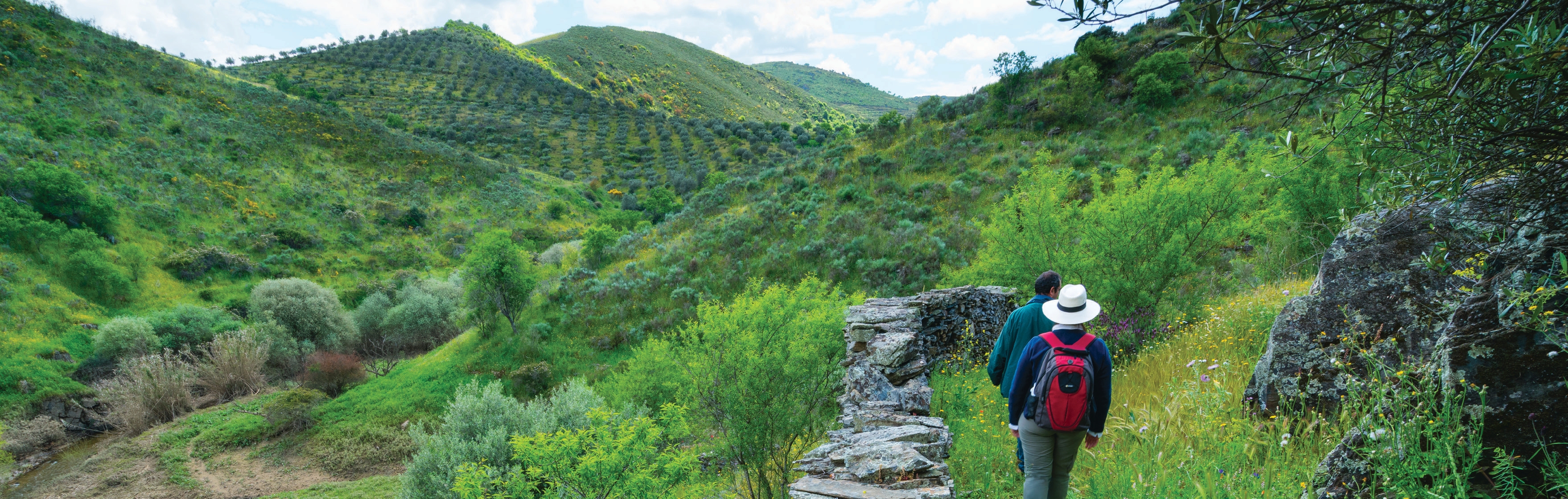
Hikers in Ribeira de Piscos, Greater Côa Valley.
Juan Carlos Muñoz / Rewilding Europe
Core Topics
- Types of property and public access
- How to permit and/or limit access to private property
- How to create restricted areas
Key Takeaways
Table of Contents
1. What types of property are there and how do they affect public access?
In a nutshell, you may have:
- Private property, which is land owned by any natural or legal person that is not part of the public domain.1 Public access depends on the will of the landowner subject to a few exceptions, dealt with below.
- Public property, which is land that is in the public domain, and it is considered to be public property.2 Public access is generally allowed on these areas, and all restrictions are regulated by public law.
- Common land (“baldios”), which is land and equipment owned and managed by local communities to be used and exploited for grazing cattle, collecting firewood and brushwood, hunting, producing electricity and for any other economic and productive uses.3 Access to common land is regulated by the Commoner’s Assembly.
2. What are the common ways to access private property?
As a rule, you may always allow or, inversely, prevent, any third parties from entering your property.
If you do allow access, there are several practical steps you may take to minimise any risks and associated liability:
- make the conditions under which access is permitted very clear and visual (e.g., a visual sign with rules: only leashed dogs / no dogs allowed, sticking to designated paths, not making any fires, keep distance from the animals, etc.);
- undertake and keep up to date detailed risk assessments;
- have in place third-party insurance that specifically covers public access; and
- when in doubt or faced with a liability claim, seek legal advice.
You may also take action against trespassing where there are unauthorised people on your land (see Rewilding in Portugal: Third-Party Liability).
However, there are certain situations where you are required to tolerate third party access to private property. The most common situations are explored below.
2.1. Easements4
A land easement is a burden created over a property for the benefit of another property. As a result, it will not be terminated or changed when the owner of the property changes. This means that where an easement exists on your land, you will have to permit access in accordance with the terms of that easement.
There are different kinds of easements:
Voluntary easements5
Voluntary easements are those created by an agreement between the owners of different properties. The most common type is an easement granting a right of way through a property.
Whenever an easement is created by agreement, the parties may also agree to the terms and conditions for granting such an easement. For instance, the parties may define the specific path of a right of way, if the passage must be done only on foot or if vehicles are allowed through, liability for damages and costs, etc.
Legal Easements6
As the name indicates, legal easements are created by law.
- Mandatory rights of way
These are the most common legal easements and exist either when a property has no direct access to a public road or for the domestic or agricultural use of spring or reservoir waters from another property (including through the incorporation of underground pipes). - Public paths used since time immemorial
by the general public leading to a bridge or water spring.
A right of way will exist where a specific property is crossed by a public path which has been used since
time immemorial to access a bridge or a water spring. If there is no alternative access through public roads, the owner must tolerate the passage of others to access the bridge or spring.7
- Other public paths classified as such by law
Other public paths have been established by specific legislation.
In addition, a path used by a community since time immemorial, for a specific purpose which benefits such community, should also be deemed a “public path” for all legal purposes.8
In these situations, the owner of a property crossed by the public path may be obliged to allow people to cross their property.
2.2. Hunting
The right of way for hunters depends on whether the land they want to cross or hunt in is in a Hunting Area.
If the land is not in a Hunting Area, the general access rules will apply, but if it is in a Hunting Area, the access rules for each Hunting Area will apply.
You should refer to Rewilding in Portugal: Hunting and check what the rules are regarding access for the purposes of hunting.
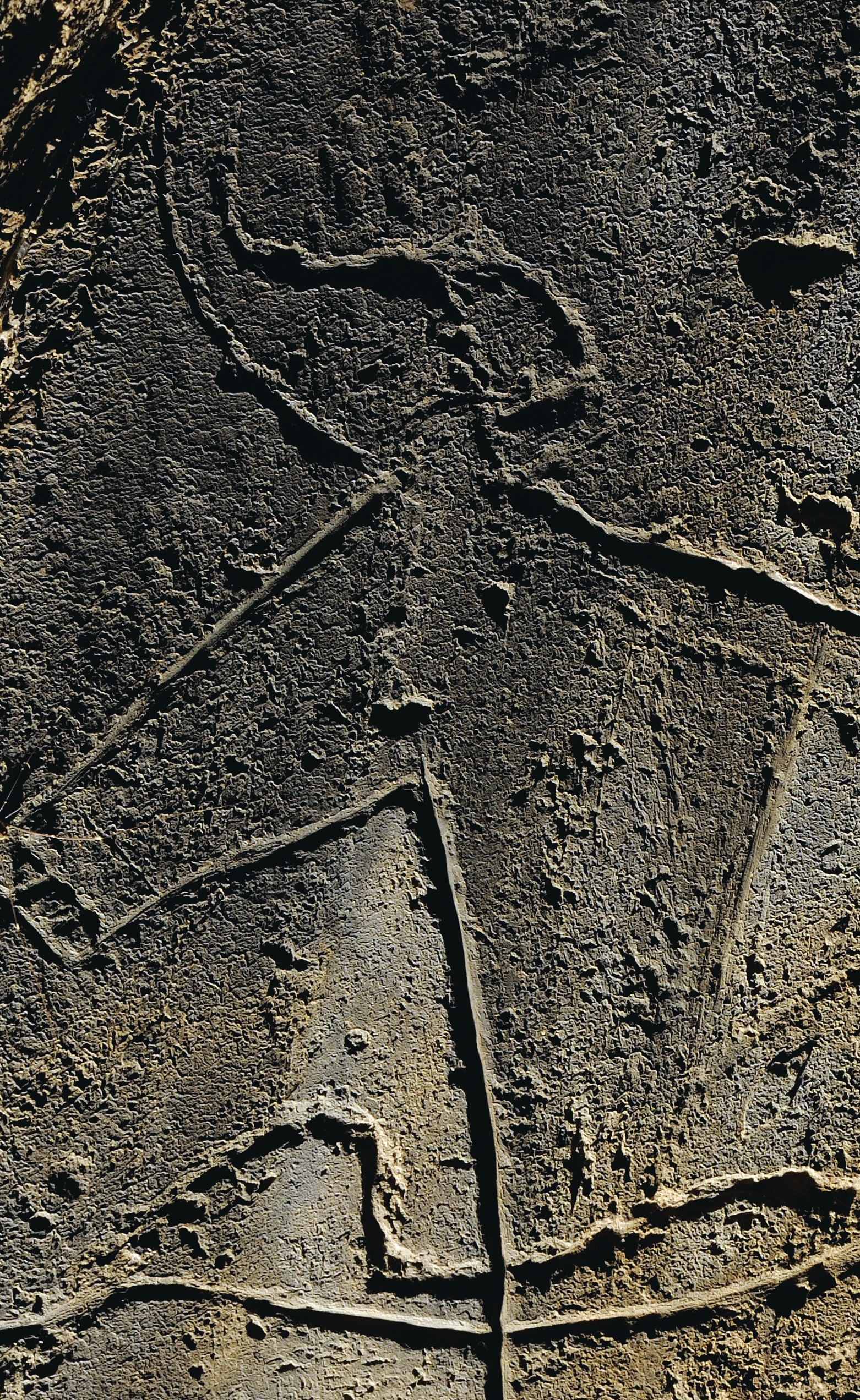
Rock carvings, Aurochs (Bos primigenius), Côa Valley Archaeological Park.
Staffan Widstrand / Rewilding Europe
3. Is there a right to fence private property?
You have the right to fence your property and to physically separate it from adjoining properties. Adjoining owners are obliged to cooperate to accurately define the boundaries of each adjoining property.
If your land is not open to the public, you should make it explicitly clear that anyone entering the property without authorisation will be trespassing. Besides fencing / walling your land, you can put up signs warning the public that entry is not allowed and that they may incur liability if they do so.
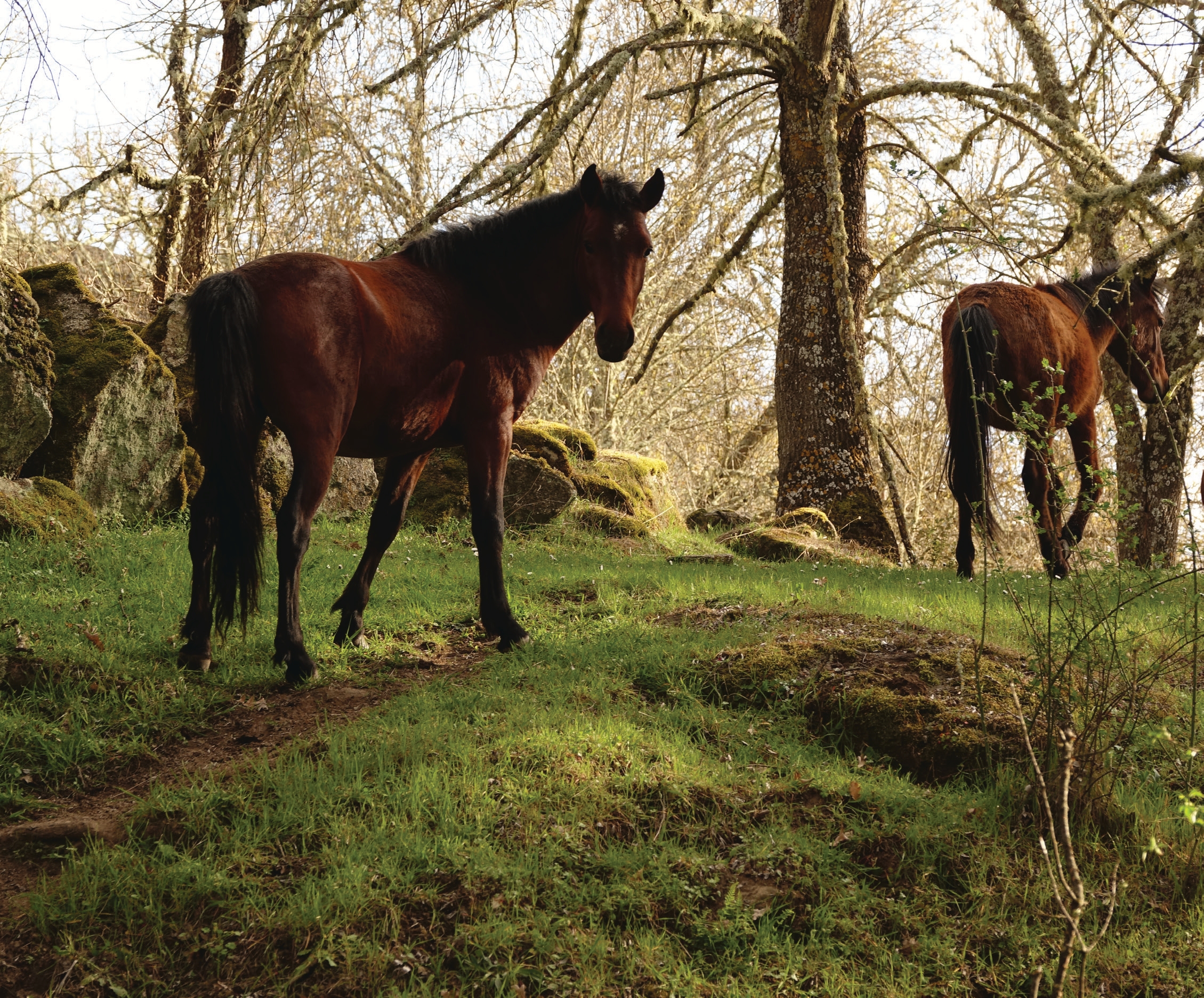
Garranos horses, Faia Brava private protected area.
Raquel Filgueiras / Rewilding Europe
4. Can I allow access to private property by third parties? Can I limit such
access or even revoke it?9
Beyond the existing rights of public access, you may grant wider access to your property.
When such access is granted, you should make clear the terms and conditions for access, especially if the third parties are required to take action to avoid causing damage to themselves or to the property.
If you open your land to the public, but you want some areas of the land to be restricted, it is recommended that you make this clear near such restricted areas. You can fence these areas and / or put-up signage that the area is restricted, and that entry is not allowed.
If you grant access to third parties, you may also revoke such access, unless it was granted by agreement and / or if an easement was created. Moreover, if access exists by virtue of an economic activity / business operating in the private property, the requirements for the termination of such economic activity / business must also be observed. Please seek targeted advice before undertaking any commercial activity on your property to ensure you are informed of all applicable legislation and obligations.
Please refer to Rewilding in Portugal: Third-Party Liability for more details on liability rules in relation to individuals entering private property.
Example
A landowner reintroduces wild horses to their project and is concerned about public access to site during breeding season.
If the project is on private property, the owner will have the right to prevent access and fence its property. If, alternatively, the project is on public land, the definition of the rules applicable to property access shall be defined by public authorities, meaning that the project may be required to maintain public access even during the breeding season.
Example
A landowner wants to allow public access to her rewilding landscape which is on private land with no existing public access rights.
For such purpose, she can allow public access, either generally or by defined paths which, considering the private nature of the property, can be altered / terminated in the future.
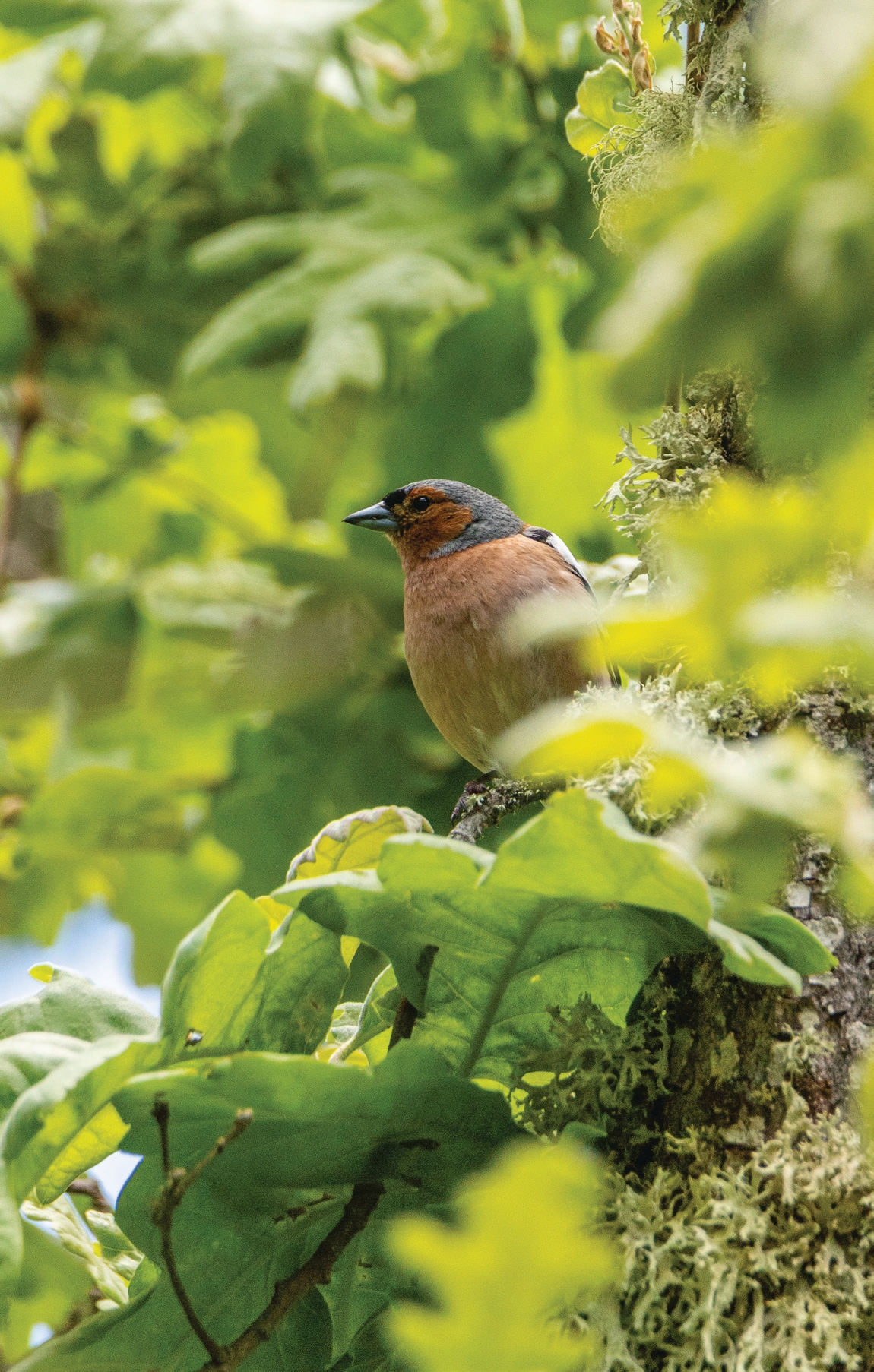
Common finch (Fringilla coelebs), Greater Côa Valley
Ricardo Ferreira / Rewilding Europe
Endnotes
- The Portuguese State, the local authorities and the Portuguese autonomous regions may also be the owners of land that is part of the private domain.
- Public domain is a comprehensive concept which includes land belonging to (i) the Portuguese State; (ii) local authorities (municipalities and parishes); and to (iii) the Portuguese Autonomous Regions (the Azores and Madeira archipelagos).Under the Constitution of the Portuguese Republic, the following are considered to be an integral part of the public domain: (i) territorial waters with their beds and contiguous seabed, as well as lakes, ponds and navigable or floating water courses and their beds; (ii) aerial space above the aerial limit recognised as belonging to private owners; (iii) mineral deposits, mineralmedicinal water springs, natural underground caves, with the exception of rocks, common earth and other materials commonly used for construction purposes; (iv) roads; and (v) national railways. The law may also classify other assets as being a part of the public domain and establish the corresponding applicable rules and limits as well as the conditions for the use of that public property.
- Please refer to Rewilding in Portugal: Obtaining Land and Legal Mechanisms to Protect Wild Land.
- Please refer to Rewilding in Portugal: Obtaining Land and Legal Mechanisms to Protect Wild Land.
- Articles 1543 and following of the Portuguese Civil Code.
- Articles 1550 and following of the Portuguese Civil Code.
- Article 1384 of the Portuguese Civil Code.
- As per decision of the Portuguese Supreme Court issued in 1989.
- Other limitations to the restriction of public access to private property are the right of public authorities to enter private property, such as the case of public authorities to be entitled to enter private property in specific circumstances and in accordance with due process regulations, and other rights of third parties to access private property, such as hunting, dealt with in Rewilding in Portugal: Hunting.


Contact Us

Elsie Blackshaw-Crosby