Holding governments and companies to account in the duties they owe to nature by harnessing the power of litigation and legal challenge
Governments, public bodies and companies already have many obligations to protect and restore nature and biodiversity. Compliance with and enforcement of those obligations is often the real issue, and nature suffers as a result.
In our Litigation for Nature programme, we take legal cases in our own name or supporting other NGOs and local activists across global jurisdictions to challenge decisions and policies which undermine existing legal obligations. We also work to push the boundaries of such legal protection through the courts and legal precedent and to help the law develop in nature friendly ways.
September 2026 Lifescape’s judicial review of National Planning Policy Framework
On 15 September 2026, we issued a formal pre-action protocol letter to the Secretary of State for Housing, Communities and Local Government concerning new provisions in the National Planning Policy Framework (“NPPF”) which seek to restrict the circumstances in which local planning authorities can require Biodiversity Net Gain (“BNG”) above the statutory 10% minimum. The letter has also been sent to the 29 local planning authorities who have already set (or have plans to set) their targets higher than the minimum and to the 47 other Responsible Bodies on the Defra register, any of whom may intervene in the legal case as it develops.
The 2021 Environment Act brought in a statutory BNG regime establishing a requirement for qualifying developments to deliver at least 10% biodiversity net gain. It does not establish 10% as a maximum. BNG is one of the Government’s flagship policies for achievement of the country’s 30 by 30 and wider nature recovery targets.
The revised NPPF, published on 17 August 2026, introduced new policies N1 and N2 which, on their face, restrict the ability of local planning authorities (LPAs) to adopt and give effect to such BNG requirements in excess of the 10% statutory minimum as they may decide are appropriate for their area.
The policies, particularly when read alongside other recent BNG exemptions, will have a significant negative impact on the market for BNG credits, the stability of which rests on its statutory underpinning, as repeatedly acknowledged by the Government. Experts agree that BNG has not had sufficient time to embed itself before such extensive changes are made, and the changes have not been properly impact assessed, particularly as regards their disproportionate impact on disadvantaged communities.
Lifescape’s concern is that the revised NPPF risks turning the statutory minimum into a practical ceiling and undermining the ability of locally prepared development plans to respond to local community biodiversity needs.
The challenge also raises a wider constitutional and public law issue: whether national planning policy can be used to materially alter the practical operation of local statutory planning powers without Parliament changing the underlying legislation. We have invited the Secretary of State to withdraw or clarify the effect of the policies. If that does not happen, judicial review is an option.
We will post developments on this page.
Strategic Review
In Autumn 2027, our Litigation for Nature programme will commence a strategic review. As part of this, Lifescape will be reaching out to other stakeholders and partners to learn more about the systemic legal issues facing landscape scale recovery and restoration. If you would like to be part of deciding which legal issues we will tackle next, please get in touch with Nola Donachie, our Managing Lawyer for Litigation. Watch out for more information on the news section of our website.
Peat Extraction
Since 2025 we have been providing assistance to a local wildlife trust with its longstanding efforts to obtain environmental information from its local authority under the Environmental Information Regulations 2004 regarding their policies on ongoing peat extraction within their area and their associated duties to assess the environmental impact of such licences. Ongoing peat extraction destroys critical habitats and is contrary to the Climate Change Committee’s prioritisation of peat restoration as part of the UK’s climate mitigation and adaptation pathways.
Successful judicial review of NatureScot’s beaver culling licences
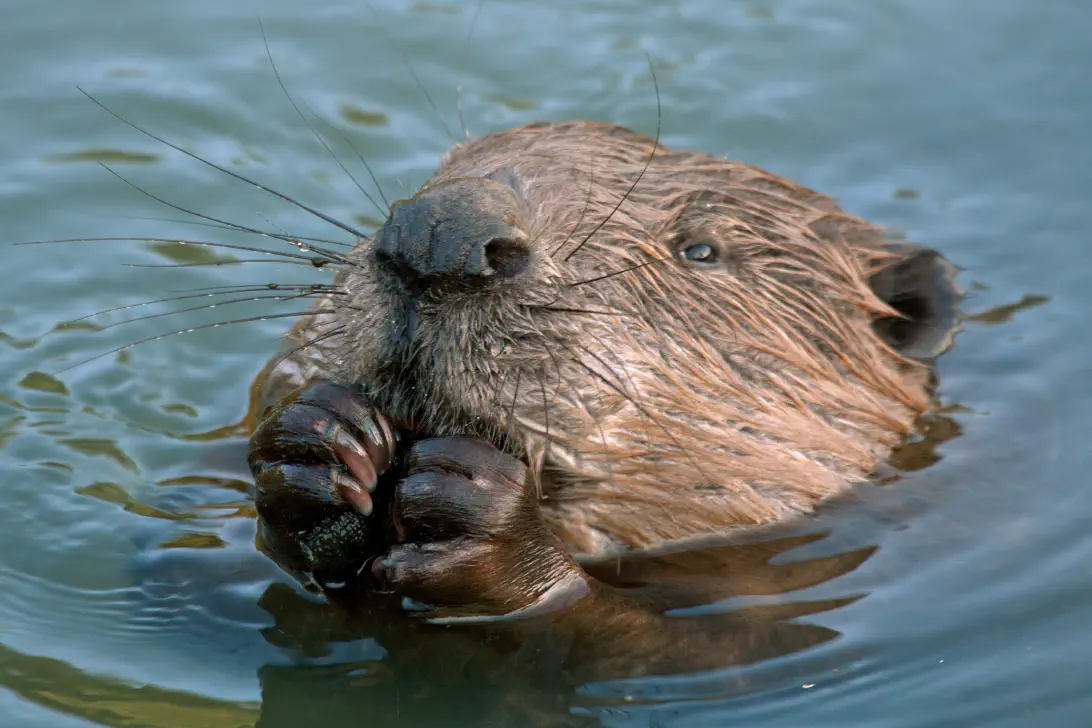
We collaborated with Scottish rewilding charity Trees for Life in bringing their ground breaking case which successfully challenged beaver culling licences issued by NatureScot. In herjudgment on the case, Lady Carmichael found that beaver culling licences had been issued unlawfully by NatureScot. Shortly after judgment was received, the Scottish government announced a U-turn in its policy and is now favouring translocation of beavers instead of culling. In our view, this really demonstrates the power of litigation to change policy.
Holding Scottish agencies to account for unauthorised parking development in the Cairngorms National Park
We are working with local activists to challenge the creation of roadside parking around Loch Morlich in the Cairngorms National Park which has commenced unlawfully without any planning permission or consents being obtained, despite being in the middle of multiple protected areas. The work has caused significant damage to veteran Caledonian pine trees and is threatening to pollute the freshwater environment of Loch Morlich which is part of the River Spey Special Area of Conservation.
We are challenging these actions both to protect the immediate environment and to ensure that the Scottish agencies involved understand more generally that adherence to environmental protection obligations is not optional.
Read our letter to the agencies here and read more about the issue as covered by The Ferret, here.
Swiss Wolves
In 2024 we supported collaborators in Switzerland, alongside the European Nature Trust, to find counsel, take legal advice, and bring a challenge against Swiss Cantons promoting wolf culling. Whilst the action did not succeed, being dismissed by the tribunal, we believe that the impact of showing strong resistance to the government to discourage more extreme anti-wolf actions, as well as generating news coverage of the issue, has yielded positive impacts for wolves in Switzerland. Sadly though, the inappropriate culling of wolf packs in Switzerland is ongoing and we continue to consider other options to help stop this.