


Rewilding em Portugal
Obter e Proteger Áreas para Renaturalização
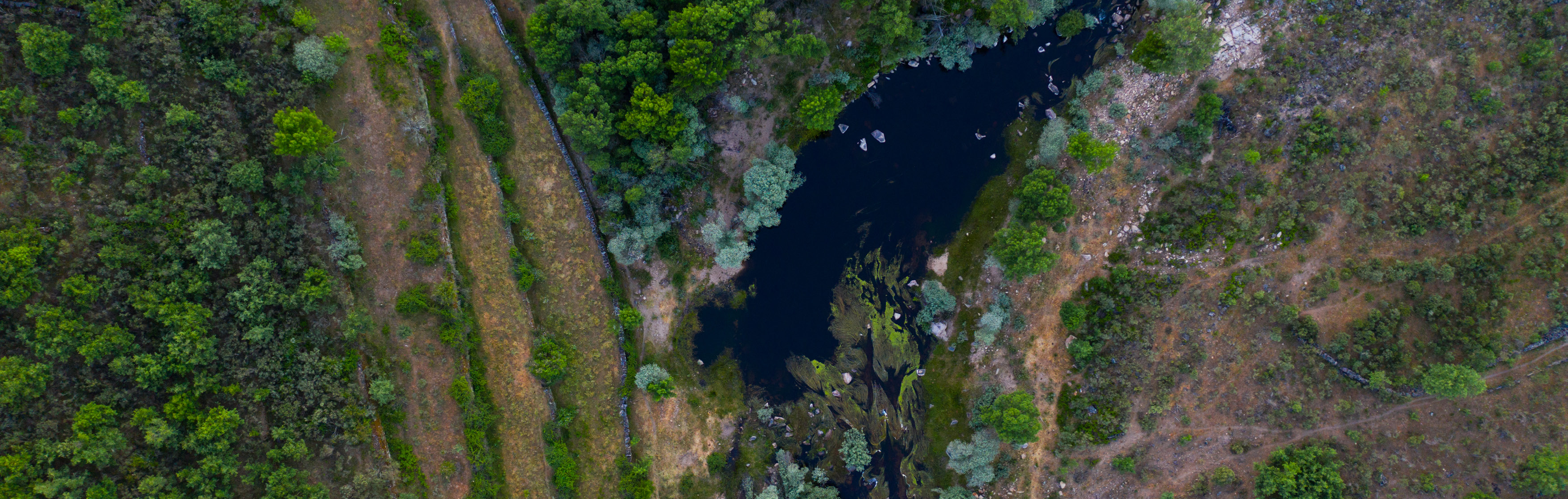
Confluência dos rios Côa e Noéme, Grande Vale do Côa.
Juan Carlos Muñoz / Rewilding Europe
Tópicos Principais
- Diferentes figuras jurídicas para a obtenção de terrenos para fins de renaturalização (rewilding) e o seu potencial de proteção a longo prazo
- Contratos de arrendamento
- Baldios e Bolsa Nacional de Terras
- Áreas Protegidas Privadas
- Registo de Propriedade
Ideias a reter
1. How can land be obtained for rewilding purposes?
To implement a rewilding project, you need land. After obtaining the land, you then need to make sure it stays entrusted to rewilding purposes for as long as possible, ideally in perpetuity.
Without legal protection, the restoration of nature achieved by rewilding action is at risk of being lost if new owners do not share the same vision and goal.
This guidance note discusses the methods at the disposal of practitioners to preserve rewilding gains for the long-term in a jurisdiction where the right to private property has almost no opposition or limitations.
In Portugal, access to land may be achieved through ownership and other in rem rights, as well as through contractual and private mechanisms, such as lease agreements, ensuring the right of use and enjoyment. You may also gain access to common land for rewilding activities, such as natural grazing. The Land Bank and Land Market (“Banco de Terras e Bolsa de Terras”) may represent an important instrument to find a suitable land, depending on the activities to be performed. Finally, there are public law mechanisms that may ensure that rewilded protected areas stay so in the long-term, even if privately owned.
An important point to be aware of is that ownership and other in rem rights are subject to registration in the Land Register.1 The registration of these rights makes them enforceable not only between parties, but
also against third parties.2 Registration is dealt with in section 6 below.
1.1. Ownership right3
Ownership of land is the right through which someone holds the use, benefit, and right to dispose of land, in a full and exclusive manner (except in the case of co-ownership), within certain legal limits and restrictions.4
It is the strongest form of property right and provides the most control to the owner in terms of what activities they can pursue on the land. In addition, it offers the strongest long-term protection for rewilding gains, particularly if the owner of rewilding land is an entity intended to survive and maintain the ownership in perpetuity. In this case, the rewilding gains on the land will similarly survive at the owner’s discretion.
Such security is less certain when land is owned by individuals as the ownership will always change on the death of that individual, at which point the new owner may decide to manage the land differently. It is therefore important to consider who holds ownership title to land as a means of increasing long-term protection of land (see section 2 below).
1.2. Surface right5
The surface right is the right to build or maintain works on land belonging to another person, or to plant or maintain plantations on that land (which include the rights of use, fruition, and disposal, in terms identical
to those comprised in the ownership right). The owner of the land keeps ownership of the “bare property”, while a third party acquires the rights to the surface, becoming the superficiary
Although not very common, the surface right may be used to acquire the right to use land for rewilding purposes. It is an important option to consider because it can be perpetual and, as such, it may be used to achieve a long-term protection of rewilded land (see section 2 below).
1.3. Easements6
An easement is the burden imposed on a property for the exclusive benefit of another property belonging to a different owner. The property subject to the easement is the servient tenement and the land that is benefited is the dominant state.
The potential scope of easements is broad. As such, and although the nature of easements means that practitioners do need to own one of the relevant areas of land that will be included in the easement, it appears that they could be used in various rewilding scenarios, as described in section 2 below.
1.4. Usufruct right7
Usufruct is the right to fully use, enjoy, and manage (including ordinary maintenance) something owned by a third party, with the right to keep the profits resulting therefrom, but without altering its form or substance nor its economic purpose.8 Such rights must
be exercised within the scope of what a reasonable person would do.9
In case the usufruct is created in favour of an individual, it may not exceed the lifetime of that individual (although it may be created successively in favour of different persons).10 In case of legal entities, the usufruct right may not exceed 30 years.11
Usufruct rights may serve rewilding purposes and be a mechanism to secure day to day management control over land. However, if the land is not already rewilded and if the rewilding operation entails the alteration of the form, substance, or economic purpose of the land, practitioners may struggle to use usufruct to obtain the necessary management control rights over land in order to undertake rewilding.12 In addition, considering the non-perpetual nature of the usufruct, it does not offer long term protection of the ecological gains achieved by rewilding nor guarantee the irreversibility of a rewilding project.
1.5. Property held in trust13
Property is held in trust where there is a three-way legal relationship between the owner, a trust, and a trustee. The trust (fiduciário) is responsible for keeping and maintaining the property, and is also allowed to use it, as long as the essence of the property is not changed. The trustee (fideicomissário) is the beneficial owner of the property, with full ownership being transferred to it once a given condition is met (usually the death of the trust). In the meantime, the trust will receive any benefit (e.g., profits) from the land. Property held in trust is not regulated under
Portuguese law, save for the case of disposal by the owner of their goods ahead of their death.14
This idea of property held in trust is of potential interest to rewilding practitioners because recently, it has been suggested that a perpetual “ecological fiduciary” could be created over a property.15 This theory says that ecosystems, as humankind’s common heritage, should be left in good condition by the current generation for the benefit of future generations. Here, the property would be an ecosystem, the trust would be current people in charge of the health of said ecosystem, and the trustee would be the future generation who would benefit from it.
Although an appealing idea, it has not been tested in practice and for various reasons, the legality of such an arrangement would appear to be open to challenge. Under the general principle of freedom of contract, it is admissible for the parties to establish and structure fiduciary contractual relations as the ones mentioned above and to freely establish the respective rights and obligations. However, such arrangements are not registerable with the Land Registry Office and will not be enforceable against third parties (e.g., future purchasers of the land) and, thus, are not a secure way to ensure that the land will be allocated to rewilding purposes for the long term.
In addition to this, there are legal constrains that forbid a given owner from imposing limitations on future transmissions of an asset beyond a certain limit.
2. Which of these legal structures are best for achieving long term security
of the land?
2.1. Ownership right and identity of owners
The safest way to secure land for rewilding is to acquire ownership of the land.16 The right of ownership is acquired by agreement (e.g. sale and purchase17, donation18), inheritance, adverse possession19/20, and accession21 (when land owned by someone else is incorporated into your land).
However, whenever there is a change of ownership – e.g., through sale of the land to a third party or by death of the original owner (in case of an individual) – the new owners might have different plans as to how to manage the land and may decide to pursue actions which harm the nature restoration achieved through rewilding.
One way to limit this risk is for the land to be owned by a legal entity rather than an individual. This is beneficial because, assuming the legal entity is
established for the purpose of promoting and achieving rewilding, it will be capable of keeping the land in its ownership for generations until it is for some reason dissolved. This is in contrast to ownership by an individual which will always pass to another individual on the owner’s death (save for a will which determines otherwise). Individuals are also not subject to the type of legal restrictions as to their decisions and actions which certain legal entities may be (as described below).
There are different types of legal entities that may be incorporated in Portugal and the decision on the most suitable legal entity to incorporate for a rewilding project will vary in accordance with the purpose, size, and characteristics of each project.
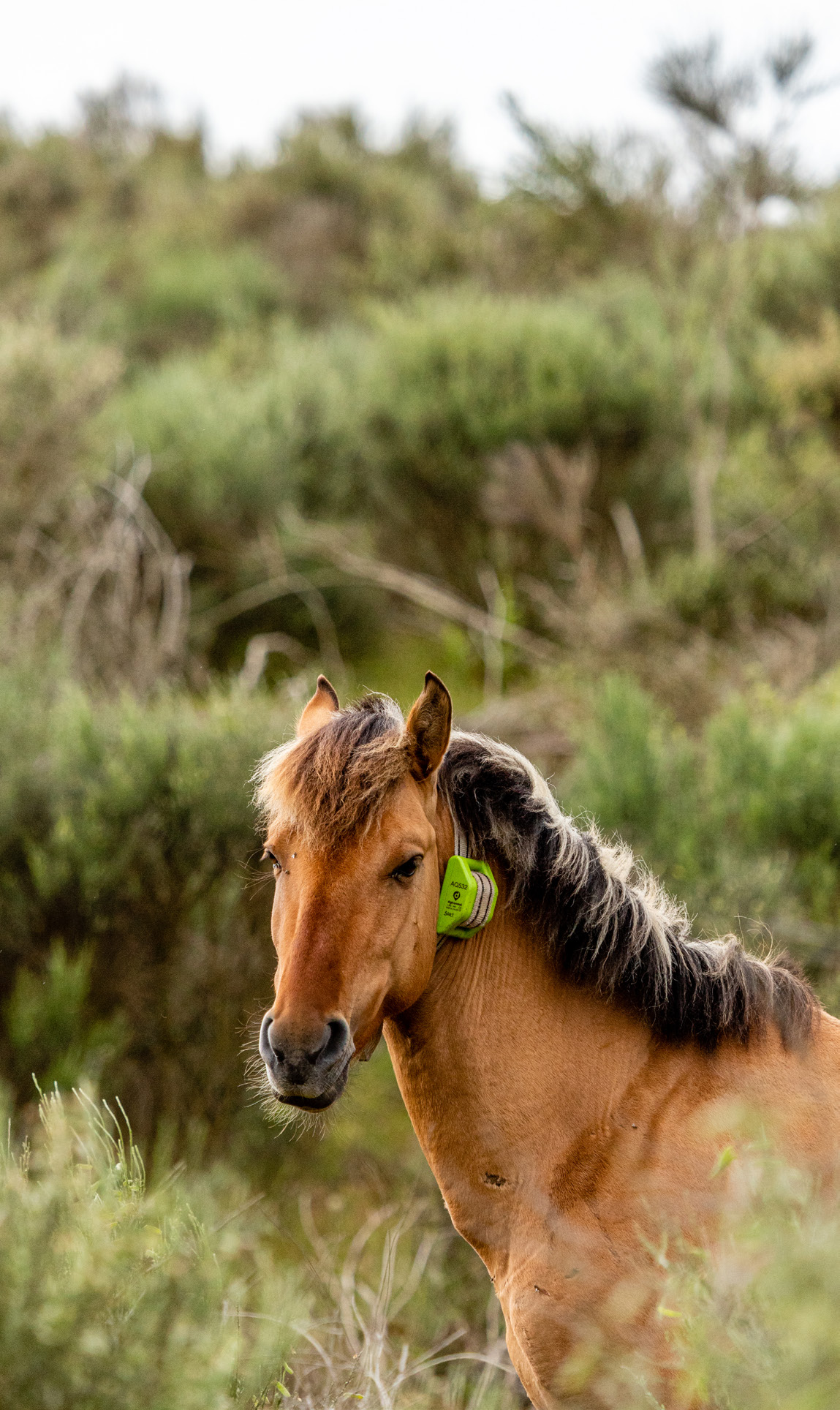
Sorraia horses in Vale Carapito, Greater Côa Valley
Ricardo Ferreira / Rewilding Europe
Example 1
One type of legal entity, the foundation, may be particularly suited for the purposes of ensuring a longstanding conservation purpose of rewilded land.
Foundations are non-profit legal entities, of a private or public nature, which own an estate that is irrevocably allocated to the protection of a specific purpose of particular social interest.
One of the specific purposes the law allows a foundation to follow is the protection of the environment or of the natural estate. The creation of a foundation must be approved by an approving act of the prime minister of Portugal and the dissolution of a foundation is also governed by specific rules.
A rewilding association could use this mechanism as follows:
- They could promote the establishment of a foundation which has as its purpose environmental protection. The foundation would be endowed with property owned by the association or a third party.
- The foundation will irrevocably allocate the real estate to the protection of the environment.
- A board of directors will need to be appointed, and it should agree a long-term action plan in relation to the foundation’s land which is informed by rewilding principles.
- The board of directors can agree to designate the rewilding association as the managing entity of the real estate and of the projects that unfold in the property, as agreed by the board of directors on an arms-length basis.
- The foundation and therefore the rewilding association will be obliged to manage the land in accordance with principles and purpose established in the foundation’s incorporation documents.
- The rewilding association, as managing entity, could carry out activities that create profit to be reinvested in the purpose of the foundation.
Note that this a high-level hypothesis and, therefore, if this mechanism is of interest and you wish to explore it further, it is strongly recommended that you seek proper legal advice, as there are many variables to consider that are out of scope of this legal guidance briefing.
2.2. Surface Right
Surface rights may be a good option if you can’t afford to buy land, or if the owner does not want to sell but is willing to grant a right for you to use the surface of the land.
If you can obtain perpetual surface rights,22 they can be a particularly powerful tool, because they can last for as long as their intended purpose is still on going. This means that the right to use the land for rewilding purposes will continue even if the ownership of the land (bare property) changes in the future. Given the fact that rewilding projects are usually long-term plans, this is a safe way to secure land for rewilding.
Surface rights can be established, mainly by agreement, will or by adverse possession23 and must be registered at the Land Registry to ensure enforceability against third parties (see section 6 below).
Although it appears that you could use surface rights to develop a diverse range of activities, a surface right must include constructing or maintaining works or planting or maintaining plantations on a land belonging to a third party. As such, this minimum content should be included in the scope of the surface right, in the respective title regardless of any other rights or obligations which are granted to the holder of the surface right.
It is worth noting that we are not aware of surface rights previously being used in this way (they are typically used in the built environment) and so this is a novel application of the law. This may mean there will be some resistance to the registration of a surface right agreement with this scope of application and legal advice should be sought.
If the parties agree on the payment of a price for the incorporation of the surface right, there are three things to keep in mind:24
- the parties may agree whether payment will be in the form of a single payment or shall be made on an annual or other periodic basis;
- if the parties choose to instate annual payments, this does not impact or otherwise reduce the agreed term of the surface right (including where it is granted on a permanent basis); and
- payment should always be in the form of money rather than any form of payment in kind. In the case of delay of payment, the landowner of the bare property has the right to claim three times the amount due.
If granted for a specified period, the surface rights will terminate at the end of the agreed period, at which point the owner of the bare property acquires ownership over the works or plantations, paying compensation to the superficiary.25
Example 2
A landowner wants to allow a rewilding association to rewild their estate and to ensure that once it is rewilded it cannot be returned to its earlier, non-rewilded state. The landowner, however, wishes to retain ownership of the land. Both parties want to guarantee that the land remains secured for rewilding purposes, under the management of the rewilding association, regardless of who inherits the land once the landowner dies. The rewilding association suggests an agreement whereby it would have a perpetual right which would give it control over the management of the land and, in particular, the right to rewild it and keep it rewilded, even if the underlying ownership changes in the future.
Could this type of arrangement work in Portugal?
Yes, a surface right could be created in favour of the rewilding association, with the purpose of rewilding the land and further keeping it rewilded. Through the incorporation of a surface right, the ownership of the land (bare property) remains with the original owner.
Furthermore, and in case of transfer of the bare property to a third-party (either by agreement or by succession) the surface right shall remain unchanged throughout its entire term, which means that the land can remain secured for rewilding purposes until the term of the surface right (or for perpetuity in the event the surface right has been incorporated perpetually).
The scope of the surface right is, among others, the right to plant or maintain plantations on someone else’s land, but nothing prevents the parties from agreeing on additional activities to be performed on the land, such as grazing. For the surface right to be binding, it must be incorporated by means of a notarial deed or a private authenticated document and registered at the Land Registry Office (see section 6 below).
Surface rights may also be extinguished:26
- with the reunion of the surface right and the ownership right in the same entity (e.g., if the superficiary decides to sell its right and the owner of the bare property exercises its pre-emption right over such sale);
- as a penalty for not constructing / planting within the agreed term or 10 years (if no term was agreed);
- as a penalty for not reconstructing / replanting within the agreed term or 10 years (if no term was agreed) in cases where the original works or plantation have been destroyed;
- if the land is lost or becomes unusable for the agreed purpose;
- expropriation of the land in the public interest; and
- by other causes set out in the respective title.
Example 3
A landowner agrees to grant to a rewilding organisation a perpetual surface right to land where an old-growth forest sits, for a price that matches the carbon credits for 20 years. Besides the maintenance of the existing forest, both parties agree that the rewilding organisation can open an area for grassland to form a mosaic to boost the existing ecosystem. The landowner subsequently dies ten years after he granted the surface rights to the rewilding organisation and his son inherits the land.
Maintaining the existing forest and agreeing on the opening of an area for grassland (new plantation) are activities that fall within the regular scope of the surface right and, thus, a surface right may be created for these purposes. The rewilding organisation (as superficiary) has the right to use the land for the agreed scope of the surface right for the entire term the surface right was created (inclusive for perpetuity in the event the surface right has been incorporated perpetually).
For this reason, the death of the original owner of the bare property does not terminate or alter of the surface right, since the heirs of the deceased will inherit the bare property only, encumbered with the surface right under the exact terms it was incorporated.
The surface right can be transferred to third parties by agreement or inheritance, in which case the contents of the surface right shall remain unchanged.27 To be noted, however, that the landowner is entitled to a pre-emption right in case of sale or payment in kind of the surface right.28
2.3. Easements
Although typically used to establish rights of way over the servient tenement to access a specific property, easements can be used to establish any kind of utility.29 As such, given the broad scope of easements, other easements may be created to guarantee specific benefits to the owner of the dominant property.
Note that there are also legal easements which are mandatory to grant a specific benefit to the dominant land.30 Such legal easements may include rights of way for properties without their own access to a public way31 or the use of water (for example, you have a spring on your land, and the neighbouring land depends on its waters for their household).32 See more in Rewilding in Portugal: Public Access & Restrictions.
In relation to obtaining access to land for rewilding and protecting it in the long-term, easements can be used, for example, to connect two lands as grazing grounds for a long period of time and facilitate transhumance, thereby facilitating the natural behaviour and roles of large herbivores.
However, except for those created for public use, easements can only be established between two properties, belonging to different owners, and not in favour of a specific person or entity. This means that in order to create the type of easement described
above, you need to own one property (“dominant state”) and create the burden over another property, which belongs to a third party (“servient tenement”).
In addition to being a way to obtain access to additional land, putting an easement in place can generate a form of long-term legal protection over the servient tenement, that is, the property over which the easement is imposed.
Apart from the legal easements expressly provided for in the law (which, if not voluntarily incorporated by the relevant parties, may be created by court or an administrative decision), easements may be incorporated by agreement, will, adverse possession, or by the so-called “destination of the father of the family”.33/34
The scope of an easement must be defined in the document that creates it, or where no such document / provision exists, by what law provides.35
Under an easement, and except if otherwise provided for in the respective incorporation title, the owner of the dominant land is allowed to access and undertake works on the servient tenement to the extent necessary to use that land as envisaged in the easement (e.g., if the easement permits grazing on the servient tenement, the dominant state’s owner is allowed to erect or repair any fencing required for the purpose of the grazing).
Note that, this is possible as long as the easement does not become more onerous to the servient tenement and the works are executed in the most convenient form and timing for the owner of the servient tenement.
The most common way for easements to come to an end are:36
- if the easement is temporary, the easement will terminate at the end of the specified term;
- when the easement is not used for a period of 20 years, regardless the reason;
- by waiver of the owner of the dominant state; or
- if the same person or entity comes to own both the dominant state and the servient tenement.
Example 4
Landowner B bought an area of land and plans to convert it into a permanent meadow covered with native forage herbs and grass. She also plans to release a herd of taurus to graze the land. These animals are not meant to be sold as meat. She would ideally like to ensure that this area of land cannot be degraded or reverted to e.g., general agricultural land by future owners.
The land is adjacent to another area of land, owned by a neighbour, the soil characteristics of which are like Landowner B’s land. The neighbour doesn’t use her land for any particular purpose and would like to support Landowner B’s endeavours. However, B’s neighbour is not interested in selling the land. The parties agree that the neighbouring land should be used as an extension of the permanent grazing pasture for the taurus and will also be converted into a permanent meadow for this purpose.
- What type of agreement could be put in place between the two landowners to record and enact such collaboration in practice? How would such an agreement effect the future use of each area of land?
An easement could be created whereby the neighbouring land would be used in favour of Landowner B’s land to serve as an extension of the permanent grazing pasture for the taurus. The easement deed (or a preceding agreement) could include the obligation of conversion of the neighbouring property as a permanent meadow. - Should / could the agreement refer to the conservation purpose of this collaboration? What advantages would that bring to Landowner B to guarantee that the agreement serves her purposes?
Yes, the scope of the easement should be clearly defined under the respective title in order to be binding upon the neighbour and future owners of the neighbouring land. - Are there time limits for such an agreement? How long can it remain in place, and will it bind subsequent owners of either/both parcels of land? Can any future owners of either parcel of land bring such agreement to an end?
Easements can be established perpetually and are binding upon the owner of the servient tenement (in this case the neighbouring land) at all times and regardless of who the owner is. This means that future owners of the neighbouring land will be obliged to allow Landowner B to use the land and to maintain it as a permanent meadow (if that is specified in the easement agreement).
In case of the dominant land (Landowner B’s land), we understand that Landowner B can only ensure that future owners of their land (in case of death of Landowner B or transfer of their land to third parties) keep the characteristics and use of the land by means of a creation of a perpetual surface right in favour of e.g., a rewilding charity. - Are there any public power protections that can be arranged / required to ensure such an agreement is enforceable?
Yes, easements are subject to registry at the Land Registry Office and by being duly registered they become enforceable against third parties (see section 6 below).

Common chaffinch, Greater Côa Valley.
Ricardo Ferreira / Rewilding Europe
3. Lease agreements as mechanisms to ensure enjoyment of a property
Lease agreements are agreements through which the owner of a property grants the temporary use of such property to a third party, in return for payment of rent.
Lease agreements are likely the most commonly used legal structure to acquire management rights to land alongside ownership and may be a good option if it is not possible to purchase land or if you want to work on land on a temporary basis.
However, lease agreements offer little long-term protection and if you are rewilding an area of land pursuant to a lease agreement, the owner will generally be free to reverse the nature restoration you have achieved at the end of your tenure. This risk may be partially mitigated by entering into a long duration lease agreement (e.g., the maximum 70-year lease for forestry).
3.1. Rural lease subject to the rural lease regime37
Rural leases are those pursuant to which the landlord leases a rural property38 to the lessee for agricultural and forestry purposes or other activities of production of goods or services associated with agriculture, livestock, or forestry.
The rural lease might assume three types: agricultural, forestry and exploitation of one or more seasonal cultures (arrendamento de campanha).39 Within these
types of rural lease, the following purposes are possible:40
- Agricultural activity: growing and harvesting agricultural products, breeding of animals, the production of goods of animal origin, and the maintenance of land in good agricultural and environmental conditions.41
- Forestry activity: creation and management of forest stands on bare land or covered with spontaneous vegetation, exploitation of existing forests, operation of forests nurseries, the constitution or expansion of conservation zones, and all activities related to the development, maintenance, and exploitation of forests stands and nurseries (see also Rewilding in Portugal: Forests and Flora).42
- Agro-forestry activity: agricultural and forestry activities carried out on the same land, under a single management, intended for silvopastoral systems and the development of annual crops under forest cover.43
Rural leases cover the land, water, and vegetation on the relevant property, and, if this is the will of the parties expressly stated in the contract, it may cover engaging in associated activities, such as conservation of natural resources and landscape, not aimed primarily at producing commercial goods44. So, you may lease land for rewilding while falling under the above-mentioned definitions. Although harder for
agricultural activities (because they focus on production of goods), rewilding can fit under forestry and agro-forestry.
Forestry leases may include activities to conserve natural resources and the landscape, not predominantly oriented towards the production of commercial goods, which may be a good solution for rewilding landscapes. Other examples are to use an agro-forestry or forestry lease to develop a native tree nursery or to manage a forest for conservation including open canopy forests containing grassland where herbivores graze. In the case of forestry leases, changes to the composition, framework, and structure of stands may only be carried out with the consent of the landlord.
Notwithstanding the above, a rural lease is always primarily aimed at the economic and productive use of the land. Therefore, the conservation activity when included in a rural lease must always be associated with an agricultural or forestry activity to be valid, meaning that the scope of a rural lease may not be for conservation purposes alone.
This means, in practice, that most rewilding activities can be undertaken on land secured under a rural lease provided that the economic and productive exploitation of the land is guaranteed.
Are there formalities which must be followed to enter into a rural lease?
Rural lease agreements shall be written,45 otherwise they will be void46. They also need to be
communicated to the tax authorities within 30 days of execution.47 Failing to do this results in the imposition of a fine issued by the tax authorities.48 Rural leases do not need to be registered (see section 6 below) and they are exempt from stamp duty or other related taxes or fees (with exception of any eventual public act needed).49
Rent is paid annually and should have a pecuniary nature (rather than a payment in kind).50 If it is a rural lease for forestry, the rent may vary depending on the productivity of the land.51 Because the value of a rural lease is so dependent on natural events, the law provides the possibility of altering the value of the rent if, due to unforeseeable and abnormal circumstances beyond the control of the parties, changes occur which have a significant impact52 on the regular and normal productive capacity of the land. This change may be temporary or permanent.53 It is unclear how this might apply where the purpose of the lease is for the conservation of natural resources rather than the production of commercial goods and it seems like this would be for discussion between the parties.
What rights and obligations in terms of works and improvements do the parties have during the term of the lease?
During the term of the lease, both parties are, in certain circumstances, able to make repairs or improvement works on the land to keep it in good shape for the purpose it serves and to increase conditions of productivity.54/55
As a general rule, a lessee cannot undertake works without the landlord’s consent, save if otherwise provided for in the lease agreement or in the following cases:56
- where the landlord, after being required to do so, fails to undertake urgent repairs for which the landlord is responsible, there is no need to seek consent (provided that the urgency is not compatible with a judicial proceeding) and the rewilder will be entitled to seek compensation from the landlord; or
- where urgent repairs do not allow any delay, such repairs may be done immediately and the rewilder will be entitled to compensation from the landlord provided that it gives simultaneous notice of the repair to the landlord.
In a lease for forestry, ”works” includes any change to the composition, regime, and structure of the forest stand and can only be made with the landlord’s consent, without prejudice to applicable regulations.
Improvement works made with the landlord’s consent do not entitle any revision of the rent but entitle the lessee to compensation at the end of the lease if such works are to become part of the property owned by the landlord.
Improvement works made without the landlord’s consent do not entitle any revision of the rent or compensation at the end of the lease.
In the case of conservation activities, it can be understood that an improvement of conditions is the
one that improves the ecological state of the land and landscape. This understanding is arguable, but it has not been tested. We suggest that if you wish to be able to claim compensation from the landlord for the increased ecological status of the land at the end of the lease, you should seek to agree this in writing or otherwise not count on it as a part of your financial planning. It is also unclear how such improvements would be valued, but this could also go in the lease.
How long do rural leases last for and how can they be terminated?
Rural lease agreements are entered into for the following terms:
- agricultural purposes – at least 7 years, renewable for periods of at least 7 years if not terminated pursuant to law;57
- forestry purposes –at least 7 years and up to 70 years, not renewable except if otherwise agreed between the parties;58
- leases for the exploitation of one or more seasonal cultures – initial term not higher than 6 years, not renewable except if otherwise agreed between the parties.
When land that is subject to an agricultural or forestry lease is sold, tenants whose lease has been in force for more than three years will have pre-emption right to buy the property. The lessee will also have a pre-emption right over lease agreements executed within 5 years of its lease ending, where the lessee was not responsible for the termination.
A rural lease may be terminated by:59
- agreement between the parties;
- termination (due to breach);
- expiry;
- opposition to renewal; and
- early termination provided by law.
If either party dies or cease to exist, or if the landlord sells the land, there are several scenarios you should be aware of:
- The lease does not expire by the death of the landlord or by the transfer of ownership of the land.60 This rule may be of special relevance because it ensures that the lease runs with the land for the duration of its term.
- The lease does not expire if the lessee dies or, in the case of a legal entity, if the entity ceases to exist:
- If the lessee is a natural person: the lease is inherited in accordance with general principles of inheritance.61
- If the lessee is a legal person: the lease passes to the entity to which, according to the law, is entitled to the rights and obligations of the extinguished entity.62
- In any case, those benefiting from the transfer of the lease need to notify the landlord that they now hold the lease in the 6 months following transfer.63
What happens at the end of the lease?
At the end of the lease, it is highly likely that the land will be significantly altered for the better, in terms of biodiversity and ecosystem restoration. Those are clear signs of success for rewilding.
This also means that it may be difficult to comply with the general rule that, as a lessee, you need to return the land as it was at the beginning of the lease.64
However, the provision does not prohibit changes that are inherent in the “proper use” of the land in accordance with the purpose of the lease, subject to improvement works, mentioned above. The law says that a proper use is the use of the land in accordance with the techniques proven to be necessary to the implementation and pursuit of the activity agreed in the lease.65
In practice, this means that you need to take extra care when negotiating the lease to ensure that it clearly describes the activities you are going to be undertaking and the anticipated changes to the land that will result from those activities. If this is not done, there is a risk that you will be required to return the land back to its state at the start of the lease, thereby undoing all of the hard work and the associated ecological gains. Alternatively, if you do not return the land in its original state, the landowner may seek a penalty / compensation payment from you under the terms of the general law.66
More generally, once the lease ends (and without prejudice to the tenant’s pre-emption right over new leases as explained above), there is no wider protection for the land and the landowner will be free to use it and manage as he wishes. This could mean, for example, returning it to intensive agriculture or commercial forestry. This is an inherent weakness of lease agreements from the perspective of securing the long-term protection of the ecological gains achieved through rewilding.
3.2. Non-housing lease over rural land
If your planned rewilding activities do not qualify as being for agricultural, forestry, or agro-forestry purposes and you are therefore unable to use a rural lease, you may be able to enter into a lease agreement for conservation or rewilding purposes using the general rules of the lease agreements for non-housing purposes and the civil rental regime (locação).67
This regime is relatively flexible, as the most relevant features of the lease may be freely stipulated by the parties: purpose of the lease, rent, duration, renewal, obligation of the parties, termination, etc. If there’s no
agreement, then various automatic terms will be applied by law.
However, it should be noted that these agreements are subject to certain legal limitations which may limit their utility in cases where rewilding practitioners wish to achieve long term protection of rewilded land (e.g., the agreement’s initial term cannot exceed 30 years).68
One of the benefits of this type of lease in comparison with the rural leases is that these leases are subject to registry with the Land Registry Office if the respective term is longer than 6 years (see section 6 below).
If you, as a rewilding practitioner, are considering entering into this type of lease agreement, it is advisable to agree on the key aspects of the lease directly in the lease agreement. This is important because if the parties have failed to stipulate some terms and conditions on the lease agreement, the following will apply regarding:
- Duration and renewal – it is presumed that the contract has a fixed term of 5 years, renewable automatically and successively for periods of 5 years.69
- Opposition to the renewal – both the landlord and the lessee may oppose the renewal of the lease agreement by communicating such intention to the other party with, at least, 60 (sixty) days prior notice with reference to the end of the agreement’s initial term or any of its renewal periods.70
- Maintenance works – it is up to the landlord to undertake all the regular maintenance works and it is assumed that the lessee is allowed to make repair works required by law or by the purpose of the lease.71
- Rent - pursuant to law and in the absence of regulation, the rent is paid on the last day of duration of the agreement or on the last day of the period to which it relates, but the parties may agree that it is paid periodically, which is in practice the most common arrangement.
These leases may cease by agreement, termination due to breach, expiry, opposition to the renewal and early termination, as provided by law.
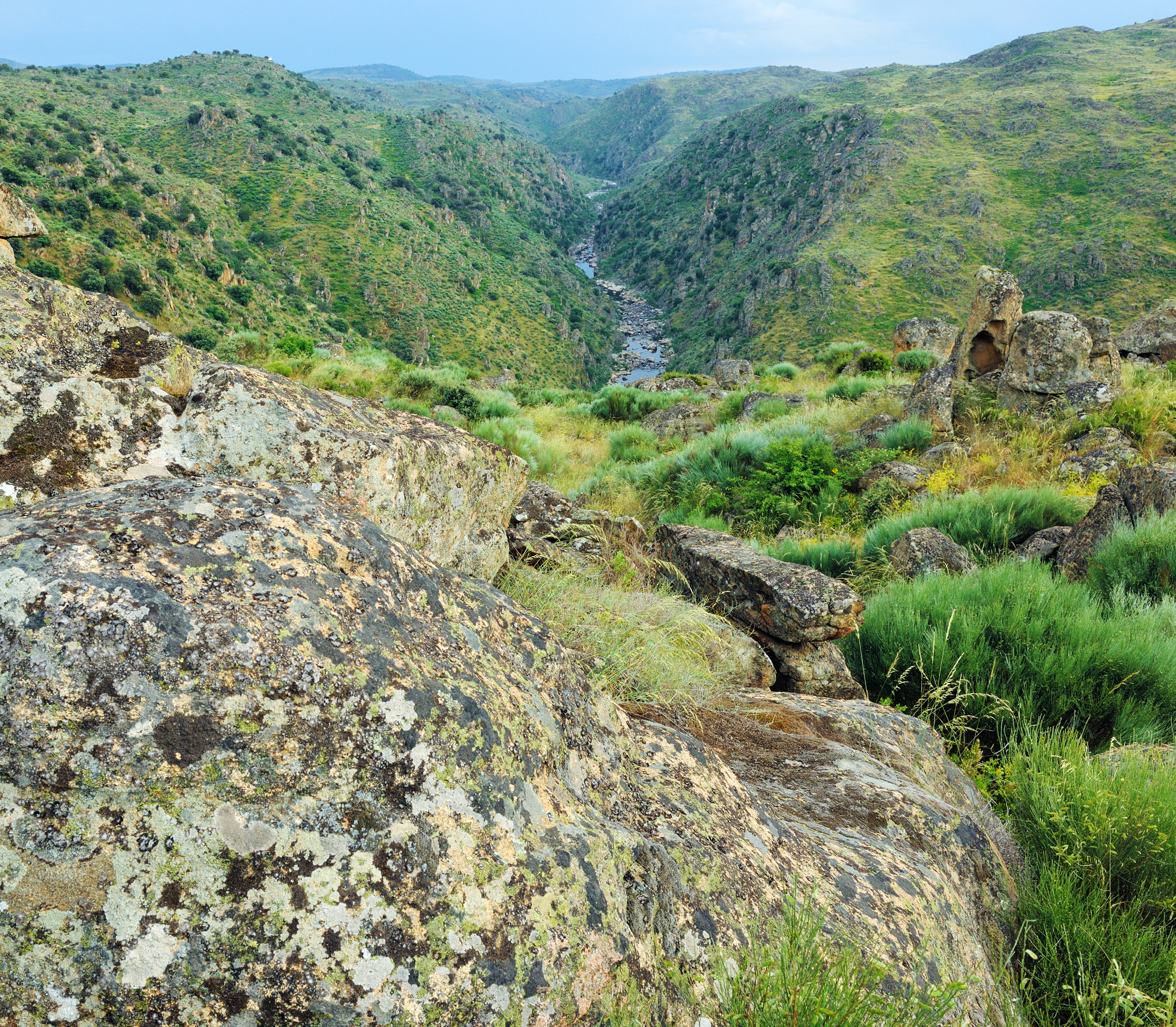
Faia Brava private protected area, Greater Côa valley.
Staffan Widstrand / Rewilding Europe
4. Use of common land (“baldios”), Land Bank and Land Market (Banco de Terras e Bolsa de Terras)
4.1. Common land (“baldios”)72
“Common land” (“baldios”) is legally defined as the land, and equipment therein, owned and managed by local communities with the intention that it is used and exploited by such local communities for grazing cattle (see Rewilding in Portugal: Grazing Rights), collecting firewood and brushwood, hunting, producing electricity and all other current and future economic and productive potential of such common land, pursuant to law and local uses and customs. The legal regime is therefore designed to allow for an economic use of the common land.
The local communities correspond to a group of individuals organised pursuant to law and residing in the area of the land or as such indicated by the Assembly of Commoners (“assembleia de compartes”).
The Assembly of Commoners shall agree on the common land usage plan (plano de utilização dos baldios), which shall identify the main uses to be developed in the common land, the conditions for access to and use of the common land by third parties and corresponding fees.
The use of common land by third parties is always subject to an assignment of operation agreement (contrato de cessão de exploração) to be executed in writing between the third-party users and the local communities owning and managing the common land, against payment of consideration. This agreement should establish all the rights and obligations of the parties as well as the information regarding the uses to be given to the common land in use.
This agreement has to be authorised by the Assembly of Commoners and grants the respective user the right to temporarily exploit the economic potential of the common land or part of it. It also may grant the right to an exploitation already existing therein for a term not exceeding 20 years (renewable for 20-year periods for a maximum of 80 years), especially if the investment made by the user on the common land justifies the maintenance of the assignment of operation agreement for a period longer than the initial 20 years. This is justified to enable the user to recover the investment made by it on the common land.
To be noted that common land may not be sold (except for in very limited cases), nor seized or subject to encumbrances (except for easements).
4.2. Land Bank and Land Market (“Banco de Terras e Bolsa de Terras”)
In addition, in Portugal, there is a specific legal regime creating the Land Bank and the Land Market (Banco de Terras and Bolsa de Terras)73, which purpose consists of:
- Promoting the resizing of agricultural and forestry production units, improving their technical and economic performance conditions;
- Combating the abandonment of land with agricultural, forestry or silvopastoral aptitude and the rural exodus;
- Facilitating the start of agricultural, forestry and silvopastoral activities, particularly by young people, rejuvenating the productive fabric;
- Improving the economic indicators of the agri-food and forestry sectors, increasing production;
- Supporting agricultural and forestry research, experimentation, demonstration, and development.
The Land Bank integrates properties with an exclusive or predominant rural nature with agricultural, forestry or silvopastoral aptitude, belonging to the State and public institutes’ private domain, as well as those which do not have a known owner, as such acknowledged by Law. The objective of the Land Bank is to facilitate access to land suitable for agricultural,
forestry, or silvopastoral activities, as well as, in the case of forestry properties, to allow for an adequate and sustainable forest management. The legal regime also created the Land Mobilization Fund, with a view to successively renew the land available at the Land Bank.
The Land Market integrates properties with an exclusive or predominant rural nature belonging to individuals, private companies, municipalities, and the state business sector and also facilitate access to land.
By using the “Banco de Terras” or the “Bolsa de Terras”, you can buy, lease, or acquire rights to exploit land suitable for agricultural, forestry or silvopastoral use.
Notwithstanding the main purposes set forth in the relevant legislation (which includes, inter alia, supporting agricultural and forestry research, experimentation, demonstration and development), it seems that the land made available at the Land Bank and the Land Market is primarily aimed at the economic use of rural land, notably by conducting agricultural, forestry, or silvopastoral activities.
As such the use of either common land and land made available through the Land Bank and the Land Market may serve rewilding purposes should the proposed rewilding activity have an economic purpose.
5. Private Protected Areas (“APP”)
It may be possible for private legal persons, individuals, or collectives, to apply for a certain area of land to be granted protected status, aiming at the maintenance of biodiversity and ecosystem services and geological heritage, as well as the enhancement of the landscape. This could prove a powerful tool if you want to ensure the long-term protection of rewilding land and the ecological gains achieved.
Considering that the conservation of natural values and the promotion of their enhancement implies the involvement of society as a whole, the law also provides for the possibility of developing partnerships between the ICNF, public entities, and the private sector, whenever the participation of these entities is deemed appropriate for the pursuit of these objectives.74
5.1. Are there any legal mechanisms that private entities can use to grant their land protected status?
Yes, there are. The law establishes the possibility of private entities and landowners submitting a request for the classification of an area and its insertion into the National Network of Classified Areas (see Rewilding in Portugal: Classified Areas). Such protected areas are called Private Protected Areas (“APPs”).75
Currently there are four APPs in Portugal: APP da Faia Brava, APP Fraga Viva, APP Vale das Amoreiras, and APP Montado do Freixo do Meio.
An APP classification request can be submitted by:
- the landowner;
- holders of other rights in rem (e.g., lease holders) provided that they are authorised to do so by the landowners of the property to be included in APP; and
- non-governmental environmental organisations76 or private legal persons with whom the landowner has concluded an agreement for the submission of an APP application.
This means that you could apply for APP status over land either when you own it or have otherwise agreed with the owner to submit a joint application.
5.2. How can an APP classification request may be submitted?
The application for classification as an APP must be submitted in writing using the form available on the website of the ICNF, addressed to the President of the Directive Council, accompanied by the information and supporting documents listed in the Ministerial Order No. 1181/2009.77
One of the most relevant documents to be presented along with the application is a draft of the APP management plan.78 This plan should provide for the active conservation actions to be developed, aimed at fulfilling the objectives of the classification as a protected area, namely: the maintenance of
biodiversity and ecosystem services and geological heritage, as well as landscape enhancement.
The application should also identify the entity which will assume the management functions of the APP.79
5.3. What are the general features of the APP classification procedure?
The ICNF has a period of 90 working days to decide on an application for classification, counting from the submission of the application or the submission of additional information requested by the ICNF.80 During this period, it may consult other entities such as the municipalities of the area to be integrated in the APP and other public entities.81
The decision to classify an area as an APP is made by an order of the President of the ICNF which must contain the identification of the private protected area, the identification of the managing entity and a brief justification for its creation.82
It is recommended that, before submitting the application to the ICNF, you explain the project to the ICNF to improve the ICNF’s understanding. Such approach will allow, whenever possible, the tailoring of the project according to the understanding of the ICNF to avoid a negative decision.83
5.4. What are the rules governing the management of APPs?
The management of the APP should obey the Management Protocol to be signed between the applicant of the classification request and the ICNF, within a maximum of two months from the classification as an APP.84 If the Management Protocol is not signed within this deadline, the classification of the area as an APP expires.85
Compliance with the Management Protocol by the managing entity aims to guarantee that the objectives of biodiversity conservation will be respected.
The entity responsible for the management of the APP must prepare an annual report on the implementation of the management protocol to be submitted to the ICNF.86
5.5. What are the main implications of the classification of an area as an APP?
After the signing the Management Protocol, some acts and projects to be carried out within the APP may be prohibited or subject to authorisation by the ICNF if deemed harmful to biodiversity, geological heritage, or other characteristics of the APP.87
However, these actions may be authorised if they are recognised as being of public interest or a relevant project of general interest, recognised by Government order.
5.6. Can the classification status as an APP be revised?
Yes, the ICNF periodically evaluates the maintenance of the assumptions underlying the APP classification.88
Furthermore, the law also establishes the following situations in which the recognition as an APP may expire:89
- at the request of the owner or original applicant;
- for repeated non-compliance with the Management Protocol;
- when the natural values which justified its classification cease to exist;
- when the APP does not comply with the applicable planning regulations, forest management plans, or even specific legal regimes for the conservation of nature and biodiversity;
- due to lack of agreement, if applicable90 , by the owners of properties that form part of the APP area; and
- if the Management Protocol was not signed with the ICNF.
The fact that an APP classification can simply be reversed at the request of the owner means that it is a relatively weak mechanism and does not really provide long-term security and protection of rewilding gains. It will be for you to consider whether the obligations and work associated with registering land as an APP will be worthwhile to achieve your objectives.
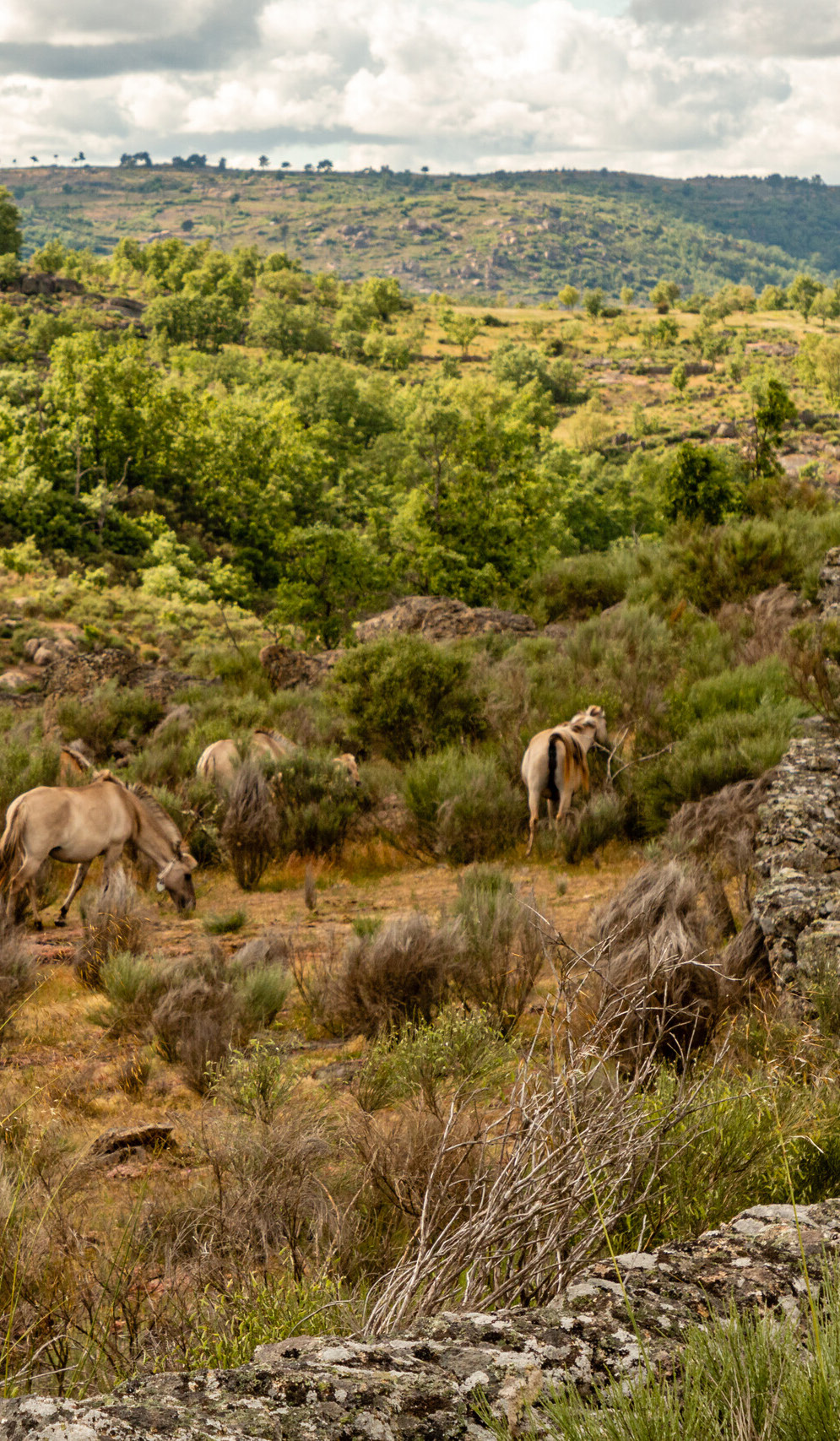
Sorraia horses in Vale Carapito, Greater Côa Valley
Ricardo Ferreira / Rewilding Europe.
Example 5
Landowner A recently bought a piece of land with some of the remaining old-growth forests in the country. Besides owning it, she does not intend to interfere with the land. She also plans to secure its wilderness to ensure that no one, including her descendants, can change her vision for the property. She is especially concerned about the possibility of her heirs, who do not have the same sensitivity towards nature, to fell the trees for timber and profit from it.
- Are there any public law instruments to protect the land to the level intended by the landowner? (e.g., could the landowner elect for the land to be designated as some sort of protected area)
Landowner A could seek to register their land as an APP which will bring certain protections to biodiversity etc. The management of the property will be subject to the Management Protocol agreed between the applicant of the classification request and the ICNF. To be noted that the recognition as an APP does not confer on the landowner any special rights or prerogatives of authority, but it depends on the willingness of the owner to maintain such status. The rules to create an APP are set out in article 21 of Decree-Law No. 142/2008 and the Ministerial Order No. 1181/2009.
However, the classification of a land as an APP does not protect it against the possibility of the descendants asking for its declassification because they could simply ask for the classification to be removed.
- What are the requirements for a privately owned land to be considered a protected area and what categories exist in your jurisdiction?
The law does not establish any specific requirements to classify a property as an APP. However, it is implied from the text of the law that the area to be classified should have natural values to be preserved. The approval of the application for the classification depends on the provision of active conservation actions in the draft of the Management Protocol submitted along with the application. Moreover, the documents that should be filed with the application are identified in the Ministerial Order No. 1181/2009. Among them, in addition to the mentioned draft, the documents should also include a note explaining the reasons and objectives for designating the land as a private protected area, containing an indication of the natural values that occur in the proposed area and the actions planned for conserving and promoting biodiversity and ecosystem services, geological heritage and landscape enhancement.
- Is it possible to enter into a nature conservation agreement between the landowner and an environmental agency in which the public entity prescribes a prohibition to build on the land or exploit its resources for commercial purposes regardless of who owns the property claiming that the conservation of nature and restoration of ecosystems are public interests and can alienate private interests (such as commercial exploitation)?
The recognition as an APP does not confer on the landowner any special rights or prerogatives of authority. The Management Protocol is not exactly an agreement but is based on a proposal of the applicant that is approved by the ICNF. The Protocol sets forth the actions relating to the maintenance of biodiversity and ecosystem services, geological heritage, and landscape enhancement, which the applicant undertakes to comply with.
On the other hand, the classification decision of an APP may prohibit or impose conditions on the authorisation of the national authority within the protected area and the actions, acts, and activities of private initiative that may harm biodiversity, the geological heritage, or other characteristics of the protected area.
There is an exception to this general restriction where an action is determined to be of public interest or an undertaking is of relevant general interest, as recognised as such by order of the members of the Government responsible for the area of nature conservation and in accordance with the subject matter of such public interest or relevant general interest.
6. General overview of acts and facts subject to registration
6.1. Land Registry Office
Properties in Portugal must be registered at the Land Registry Office91 . Such registry shall include, among other information, indication of the property’s composition (e.g.: olive grove, pine forest, warehouse, 2-storey building, etc.), location, areas, ownership (and means of acquisition) and eventual liens encumbering the property
The Land Registry is essentially intended to publicise and make available to the public the legal situation of properties, with a view to grant more security to the real estate trade.
6.2. Facts subject to registration
There are several facts subject to mandatory registry with the Land Registry Office, such as:92
- the incorporation, transfer, modification of the ownership right, usufruct right, surface right, easements and other in rem rights;
- the incorporation of mortgages, liens, seizures of goods and other encumbrances over real estate property;
- the mere possession of real estate property; and
- any (urban) lease agreement executed for more than 6 years, its transfers and subleases.
The rural lease agreements are not subject to registration (see section 3.1 above).
Registry is subject to costs and emoluments.93 The late presentation of facts subject to registry entails the payment of fines.94
If you need to register property rights, you need to submit the registry request within a general deadline of two months after the formalisation of the act
subject to registration.95 Please note that other deadlines may apply to other facts subject to registration, such as legal actions to discuss ownership right over a determined property.
The obligation to proceed with the registration of the facts subject to registration falls with the lawyers, solicitors, or notaries before whom the deeds or private authenticated documents are executed and legalised. In the event no lawyers, solicitors, or notaries are instructed, then the person in favour of whom a determined right is incorporated shall be the person who is legally bound to proceed with the registration of such fact.
It is important to ensure that the facts subject to registration are effectively registered with the Land Registry Office, as they may only be enforceable against third parties if duly registered.
Endnotes
- Decree Law 224/84, of 6 July, as amended, which approved the Land Registry Code.
- Articles 4 and 5 of the Land Registry Code.
- Article 1305 of the Civil Code.
- Article 1308 of the Civil Code.
- Article 1524 and following of the Civil Code.
- Article 1543 and following of the Civil Code.
- Article 1439 of the Civil Code.
- Article 1446 of the Civil Code.
- The legal test is the action of a bonus pater familias which has been interpreted by the court as a reasonable person.
- This possibility seems to have been designed for the cases where the usufructuaries are all natural persons, but we do not see a reason not to accept it also in the cases where the usufructuaries are two legal persons, provided that the usufruct rights’ term does not exceed 30 years.
- Article 1443 of the Civil Code.
- For instance, if the usufruct right is incorporated over a property where a eucalypt forest sits, the usufructuary may not remove the eucalypts and replace them with other type of trees or plants more suitable to rewilding purposes (this would alter the nature of the thing – land – that was given in usufruct). On another example, if the usufruct right is incorporated over a land being used for rural tourism, the usufructuary may not cease to explore it for rural tourism, notably by using the land for grazing purposes only (this would change the economic purpose of the land). In this situation, the usufructuary cannot also destroy the rural lodging to, for instance, create space for grazing purposes, since this would alter the form of the thing given in usufruct.
- Article 2286 of the Civil Code.
- Articles 2286 to 2296 of the Portuguese Civil Code.
- de Sousa Aragão, Maria Alexandra (Ph.D thesis), “O Princípio do Nível Elevado de Proteção e a Renovação Ecológica do Direito do Ambiente e dos Resíduos” (The High Level of Protection Principle and the Ecological Renewal of Environmental and Waste Law), Almedina, 2006.
- Article 1316 of the Civil Code.
- Article 408, 1 of the Civil Code.
- Article 954 of the Civil Code.
- Article 1287 of the Civil Code: resulting from occupying and keeping possession over something for a certain lapse of time.
- Articles 1294 and 1295 of the Civil Code: timings for acquiring ownership resulting from occupation depend on the way such occupation is made (namely if it is made in good-faith or bad-faith).
- Article 1325 of the Civil Code.
- Article 298, n. 3 of the Civil Code.
- Article 1528 of the Civil Code.
- Article 1530 of the Civil Code.
- Article 1538 of the Civil Code.
- Article 1536 of the Civil Code.
- Article 1534 of the Civil Code.
- Article 1535 of the Civil Code.
- Article 1544 of the Civil Code.
- Article 1547, 2 of the Civil Code.
- Article 1550 and ss. of the Civil Code
- Article 1557 and ss. of the Civil Code.
- Article 1547 of the Civil Code.
- Article 1549 of the Civil Code. The easement by destination of the father of the family consists of an easement which is created at the precise moment when two properties which used to belong to the same owner and had elements which determined an utility from one to the other, come to belong to different owners. Its requirements are, therefore: (i) the existence of two buildings / units of the same owner; (ii) visible and permanent signs revealing the utility of one to the other; (iii) the separation in terms of ownership of the two buildings or units and (iv) the absence of a declaration contrary to the easement in the document relating to that separation.
- Article 1546 of the Civil Code. If the parties fail to detail the extension and/or the specific way the owner of the dominant state may make use of the easement, then it is understood that the easement comprehends anything necessary for its use and conservation by the owner of the dominant state and to allow him to satisfy the regular and predictable needs of the dominant state that fall within the scope of the easement with the minimum impact possible for the servient tenement.
- Article 1569 of the Civil Code.
- Regulated by Decree-Law no. 294/2009, of 13 October.
- It may also apply to the joint lease of a rural part and an urban part, if that is the express will of the parties.
- When parties do not express its intention, the lease shall be deemed as for agricultural purposes.
- Article 71, 2 b) RJIGT (Rewilding in Portugal: Developing Land).
- Article 5 c) of Decree-Law no. 294/2009, of 13 October.
- Article 5 e) of Decree-Law no. 294/2009, of 13 October.
- Article 5 d) of Decree-Law no. 294/2009, of 13 October.
- Article 4, 4d) of Decree-Law no. 294/2009, of 13 October.
- The mandatory elements to include in a rural lease are listed in Article 7 of Decree-Law no. 294/2009, of 13 October.
- Article 6, pp. 1 and 2 of Decree-Law no. 294/2009, of 13 October.
- Article 6, 3 of Decree-Law no. 294/2009, of 13 October.
- Article 6, 7 of Decree-Law no. 294/2009, of 13 October.
- Article 6, 4 of Decree-Law no. 294/2009, of 13 October.
- Article 11, 1 of Decree-Law no. 294/2009, of 13 October.
- Article 11, 3 of Decree-Law no. 294/2009, of 13 October.
- Article 12, 2 of Decree-Law no. 294/2009, of 13 October.
- Article 12, 1 of Decree-Law no. 294/2009, of 13 October.
- Article 21 of Decree-Law no. 294/2009, of 13 October.
- Article 23 of Decree-Law no. 294/2009, of 13 October.
- Article 23 of Decree-Law no. 294/2009, of 13 October.
- Article 9, pp. 1 and 3 of Decree-Law no. 294/2009, of 13 October.
- Article 9, pp.4 and 6 of Decree-Law no. 294/2009, of 13 October.
- Article 15 and ff of Decree-Law no. 294/2009, of 13 October.
- Article 20, 1 of Decree-Law no. 294/2009, of 13 October.
- Article 20, n. 2 a) and n. 3, n. 4, n. 5 of Decree-Law no. 294/2009, of 13 October.
- Article 20, n. 2 b) of Decree-Law no. 294/2009, of 13 October.
- Article 20, 6 of Decree-Law no. 294/2009, of 13 October.
- Article 22, 1 of Decree-Law no. 294/2009, of 13 October.
- Article 22, 2 of Decree-Law no. 294/2009, of 13 October.
- In the case of coppice farming, at the end of the lease the tenant is under the obligation to destroy or remove the stumps, except if the parties agree otherwise.
- Provided for in articles 1108 and following of the Civil Code, which is a subsection of the urban lease regime.
- This maximum term of 30 years only applies to the initial term of the lease agreement. It does not prevent, however, a lease agreement from being in force for more than 30 years, notably by being successively renewed for several periods that exceed 30 years.
- Article 1110, 2 of the Civil Code.
- Article 1055, 1 b) of the Civil Code.
- Article 1111, 2 of the Civil Code.
- The current legal regime was approved by Law no. 75/2017, of 17 August.
- Law 49/2023, of 24 August, which revoked the previous regime (Law 62/2012, which created the “bolsa nacional de terras”). Information on the relevant land should be made available through the Land Bank and Market Information System (Sistema de Informação do Banco e Bolsa de Terras - SiBBT) at the BUPi - Balcão Único do Prédio. However, as this legislation is very recente, no information seems to be yet available.
- Article 35, Decree Law 142/2008, of 24 July, as amended.
- Article 21, Decree Law 142/2008, of 24 July, as amended.
- These are regulated by Law 35/98, of 18 July, as amended.
- Article 3 of the Ministerial Order No. 1181/2009, of 7 October.
- Article 6 of the Ministerial Order No. 1181/2009, of 7 October.
- Article 3, n. 1e) of the Ministerial Order No. 1181/2009, of 7 October.
- Article 5, n. 1 of the Ministerial Order No. 1181/2009, of 7 October.
- Article 4 of the Ministerial Order No. 1181/2009, of 7 October.
- Article 5, n. 3 of the Ministerial Order No. 1181/2009, of 7 October.
- Article 3, n. 5 of the Ministerial Order No. 1181/2009, of 7 October, a contrario.
- Article 21, n. 3 of Decree Law 142/2008, of 24 July, as amended and article 5, n. 5 of the Ministerial Order No. 1181/2009, of 7 October.
- Article 5, n. 6 of the Ministerial Order No. 1181/2009 of 7 October.
- Article 6, n. 2 of the Ministerial Order No. 1181/2009, of 7 October.
- Article 21, n. 5 of Decree Law 142/2008, of 24 July, as amended.
- Article 7 of the Ministerial Order No. 1181/2009, of 7 October.
- Article 9 of the Ministerial Order No. 1181/2009, of 7 October.
- Article 8 of the Ministerial Order No. 1181/2009, of 7 October.
- Properties in Portugal are also mandatorily inscribed at the Tax Authorities. On the other hand, Decree-Law 72/2023 of 23 August (in force from 21 November 2023) approved the Land Registry Legal Framework (Regime Jurídico do Cadastro Predial), pursuant to which all properties in Portugal will be subject to registry (cadastro predial), with information on their location, area, configuration, ownership and other in rem rights. However, these matters do not fall into the scope of this legal guidance briefing.
- Article 2, 1 of the Land Registry Code.
- Article 21, Decree Law 322-A/2001, of 14 December, as amended.
- Article 8-D, n. 1 of the Land Registry Code.
- Article 8-C, n. 1 of the Land Registry Code.


Contacte-nos

Elsie Blackshaw-Crosby