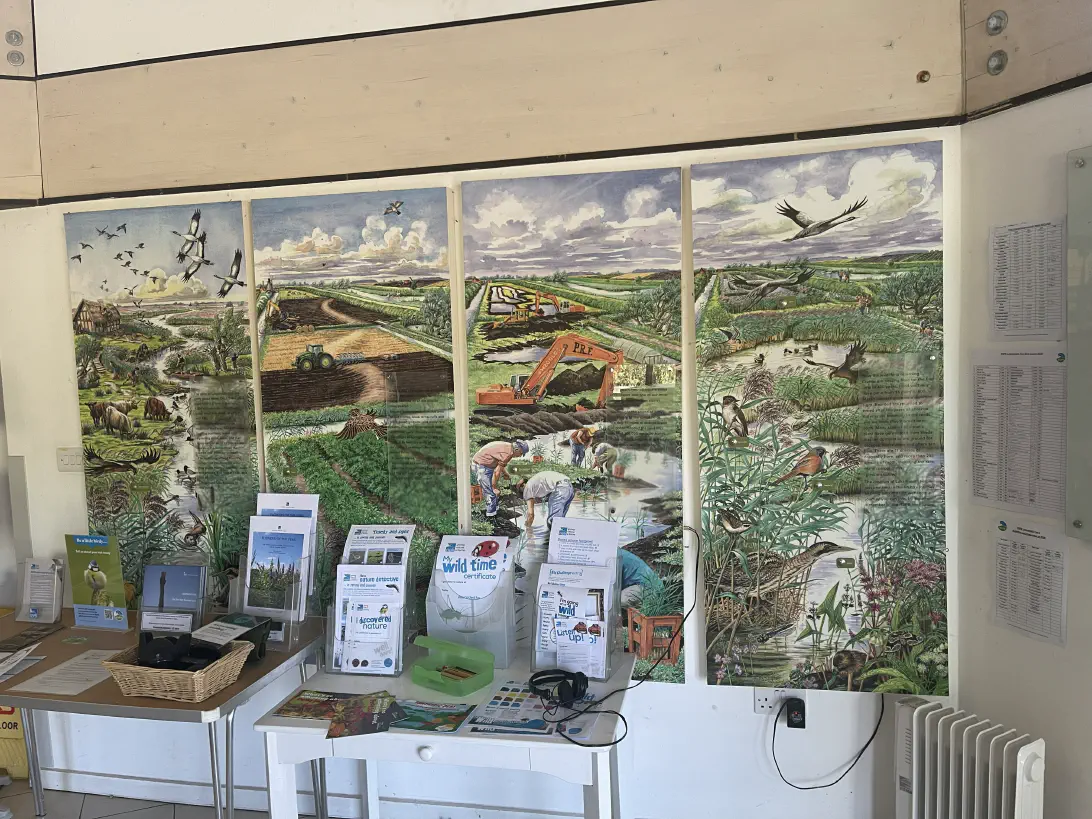
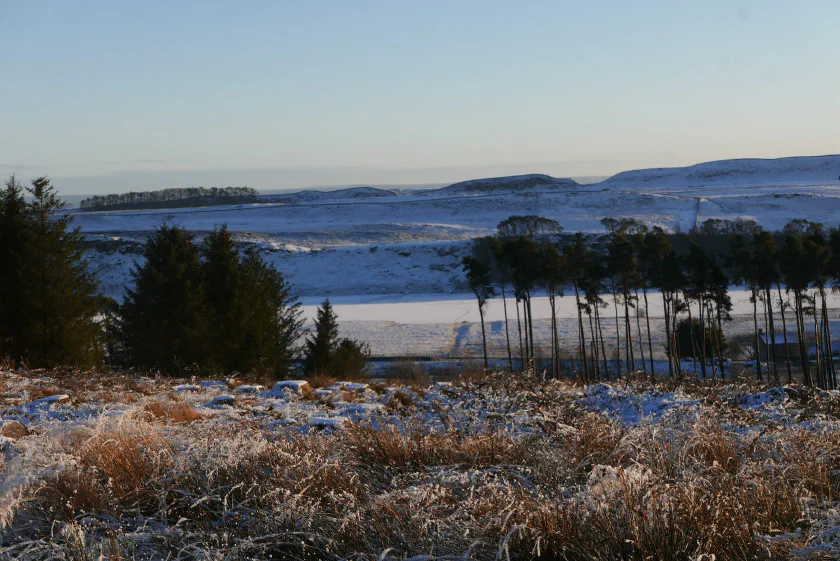
The ecological journey at Lakenheath Fen reserve: moving from ancient wild landscapes, to intense agriculture and land drainage, to remedying damage by facilitating more natural processes including meandering watercourses, and finally to recreating a wild landscape rich in biodiversity.
We’re delighted that we’ve recently entered into a new conservation covenant with the Royal Society for the Protection of Birds (RSPB) at their Lakenheath Fen site in Suffolk.
On a recent visit to the site, we were shown around by the Site Manager Dave Rogers. It was inspiring to see and hear how conservation covenants and the biodiversity net gain (BNG) regime are being used to restore nature in the fascinating landscape of the Fens.
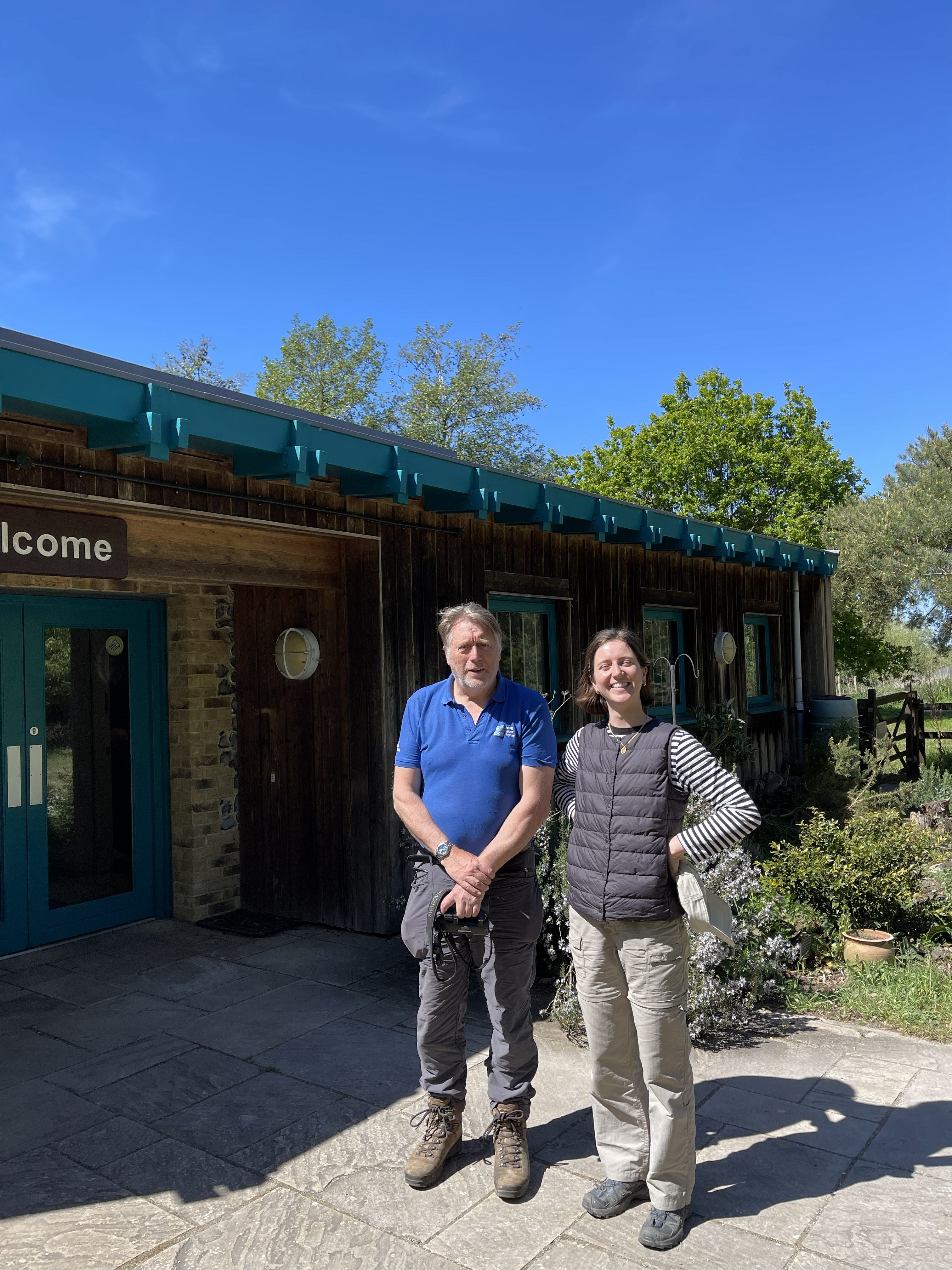
Catríona Campbell (Lifescape) with Dave Rogers, the Site Manager at RSPB Lakenheath
The importance of the Fens
RSPB Lakenheath sits in the Fens, a flat region in Eastern England which was historically very wet and marshy. Over the last 400 years however, it has been extensively drained so that the land can be used for agriculture and horticulture. Due to these historic activities like moving watercourses and installing drains and pumps, much of the land now sits below sea level.
The ecological cost has been significant: natural fenland habitats are now very rare.
What RSPB is doing at Lakenheath
At Lakenheath Fen, RSPB have converted an area of ex-arable farmland into a large wetland by managing the water table and facilitating more natural processes. This wetland, consisting mainly of reedbeds and grazing marshes, is now a much-loved nature reserve: open to the public and well-known among birdwatchers for its rare visitors including bitterns.
As well as managing the reserve, RSPB have recently purchased additional neighbouring agricultural land, enabling them to turn more ex-arable farmland into a haven for biodiversity. These habitat restoration measures will also be used to generate BNG units.
The team have been re-wetting this new land and creating wildlife friendly habitats including fen and wet grassland, providing a protected place for animals to live, feed and breed, and supporting plants and other organisms. They are also re-wetting a small non-native conifer woodland, which is a great habitat for little egrets.
As well as the benefits to wildlife, RSPB have explained that restoring wet conditions helps prevent carbon dioxide from being released into the atmosphere because the peaty soils here store carbon, which is released as the soil dries out.
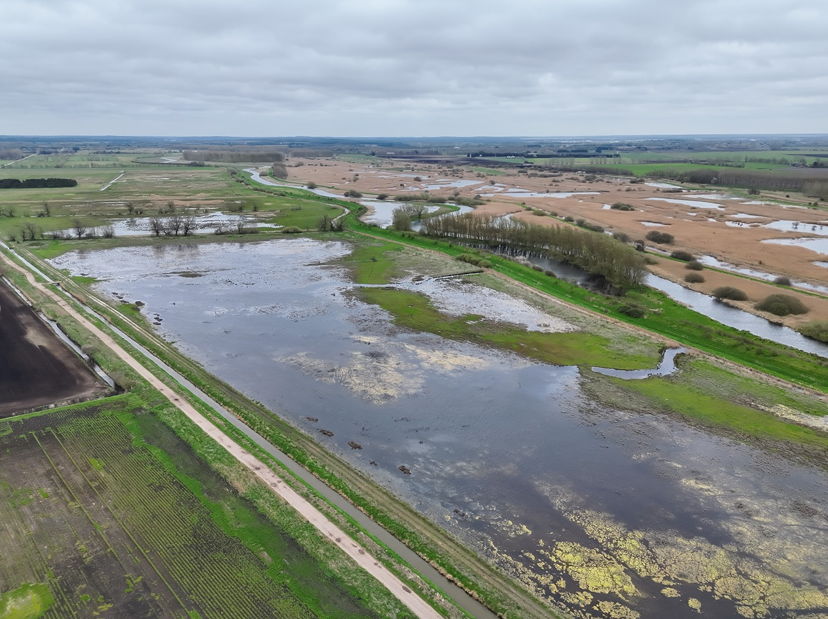
Aerial view of re-wetted land at Lakenheath Fen, which is the site of a new conservation covenant between RSPB and Lifescape
Dave explained that it will take some time for the habitats here to be fully restored. But even at this stage, the variety of plants and animals at this site is incredible. The species of birds we saw (or heard) included common curlew, little egrets, cormorant, lapwing, redshank, green sandpiper, yellow wagtail, pied wagtail, and stone chats – some of which appear on the IUCN’s red list of endangered species.
After our visit Dave sent us a photo of a bittern from the site. We were also delighted to learn that hobbies use Lakenheath as a kind of ‘motorway services’ on their migration route from Africa, stopping to refuel before continuing their journey.
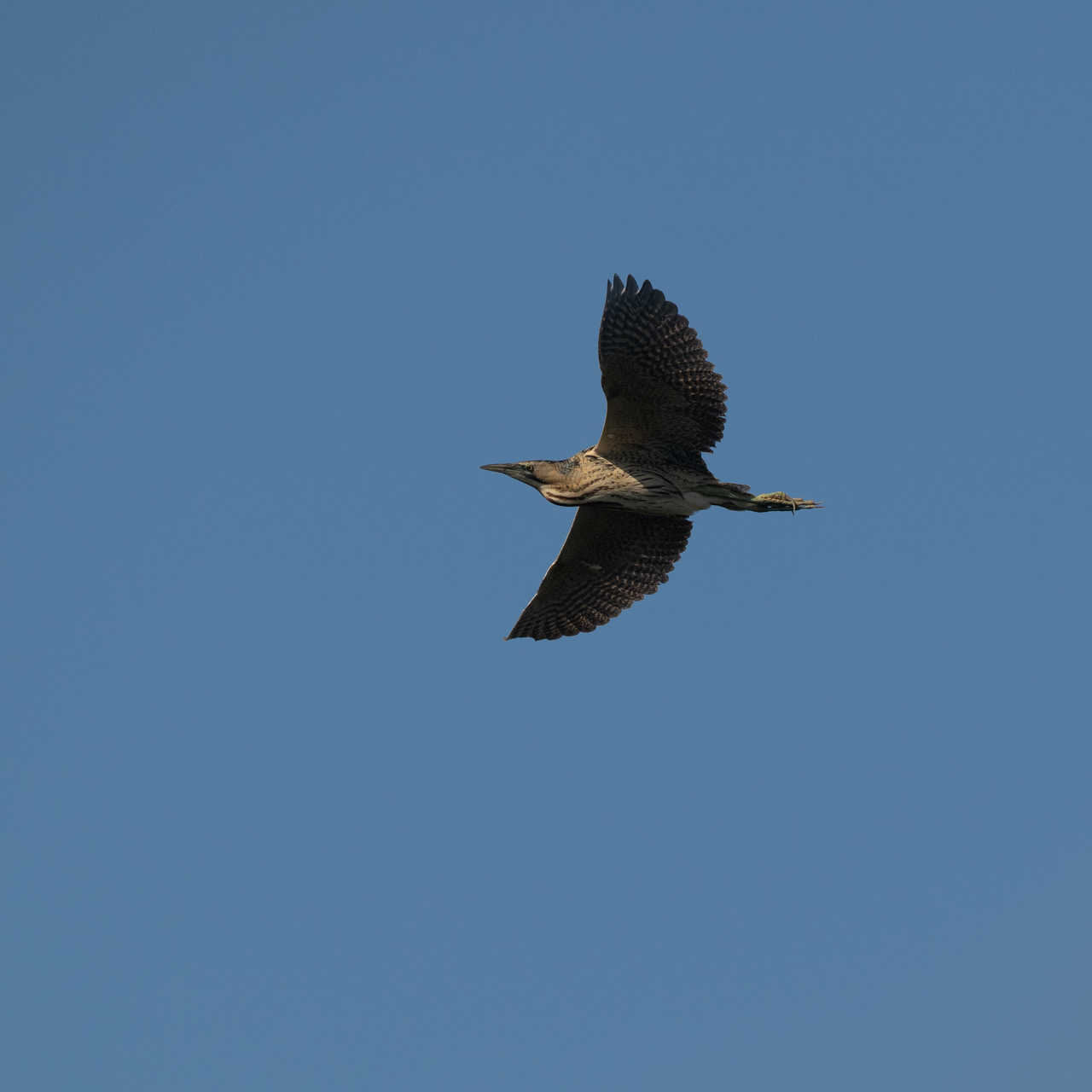
Dave sent us this photo of a bittern from Lakenheath
The role of conservation covenants and BNG
The BNG regime, introduced by the Environment Act 2021, promotes enhancements in biodiversity by mandating that new developments increase biodiversity by 10%. Developers can restore biodiversity on-site where possible, or they can purchase biodiversity units from off-site providers which can be used to satisfy to the 10% requirements.
Biodiversity units are how biodiversity is valued; with value depending on aspects such as size, quality, location and type of habitat. Landowners carry out initial habitat creation and enhancement works which must be maintained for at least 30 years. Land used for BNG must be legally secured using either a conservation covenant (with a Responsible Body, designated by Defra) or an s.106 agreement (with the local planning authority).
Conservation covenants are legally binding agreements between landowners and responsible bodies. This is where Lifescape comes in. We have been a Responsible Body been able to hold conservation covenants since autumn 2024. You can find out more about conservation covenants here.
Funding bigger, better, more joined up habitats
As Dave explained to us during our visit, RSPB will sell biodiversity units generated at its Lakenheath site to developers. Because the habitat here is so distinctive, this means that its biodiversity value is high, generating more units per hectare and generally fetching a higher price.
RSPB will use the proceeds of these sales to manage the new habitats for the next 30 years and any profits will be used for further nature conservation work. Habitats on such lands will be restored, increasing the abundance of bird and plant species. Dave pointed out that this reflects the principle of creating habitats that are “bigger, better and more joined up”, as recommended in the Government’s Lawton Report. In practice, this means that expanding the reserve and stitching together more land can make nature recovery more effective: larger, more connected areas are better for biodiversity, and managing more land as part of a single hydrological system reduces the need to rely on neighbouring landowners’ water processes.
This creates a powerful cycle of nature recovery: BNG unit sales, made possible by the conservation covenant between RSPB and Lifescape, will help fund the restoration of the land, and hopefully create larger and more connected habitats over time. For Lifescape, it is really exciting to see a conservation covenant directly supporting our mission to restore and protect wild landscapes.
Dave said:
“I’m really excited to reach this point. For the last three years we have been working to re-wet this 67 hectares of land. Supported by the Esmee Fairbairn Foundation, Morgan Sindall Group and the Fen East Peat Partnership, the aim was to create new fen, wet grassland, ditches and wet woodland.
With the signing of the covenant with The Lifescape Project we can now proceed onto the BNG register and sell units. Income from the sales will fund the management of this new area of wetland for the next 30 years and any profits can be ploughed back into more nature conservation work.
A huge thank you to Catríona, the Lifescape Team, WLG Gowling, my RSPB colleagues and our solicitors HCR Law for getting this done - the first Conservation Covenant RSPB has entered into.
We now manage the habitats and water levels and watch the wildlife arrive and make a home.”
Looking ahead
We’re proud to be working with RSPB at Lakenheath, and we look forward to watching and supporting this remarkable site as it continues to develop over the next 30 years and beyond.
A huge thank you to Dave for showing us around with such enthusiasm; and to Ben Stansfield, Jay Edwards and Emma Cartledge-Taylor at Gowling WLG for their support with our covenant work.
The Lifescape Project is a designated responsible body which can enter into conservation covenants in England. If you are interested in how a conservation covenant could support your project, please get in touch with stephanie.smith@lifescapeproject.org.