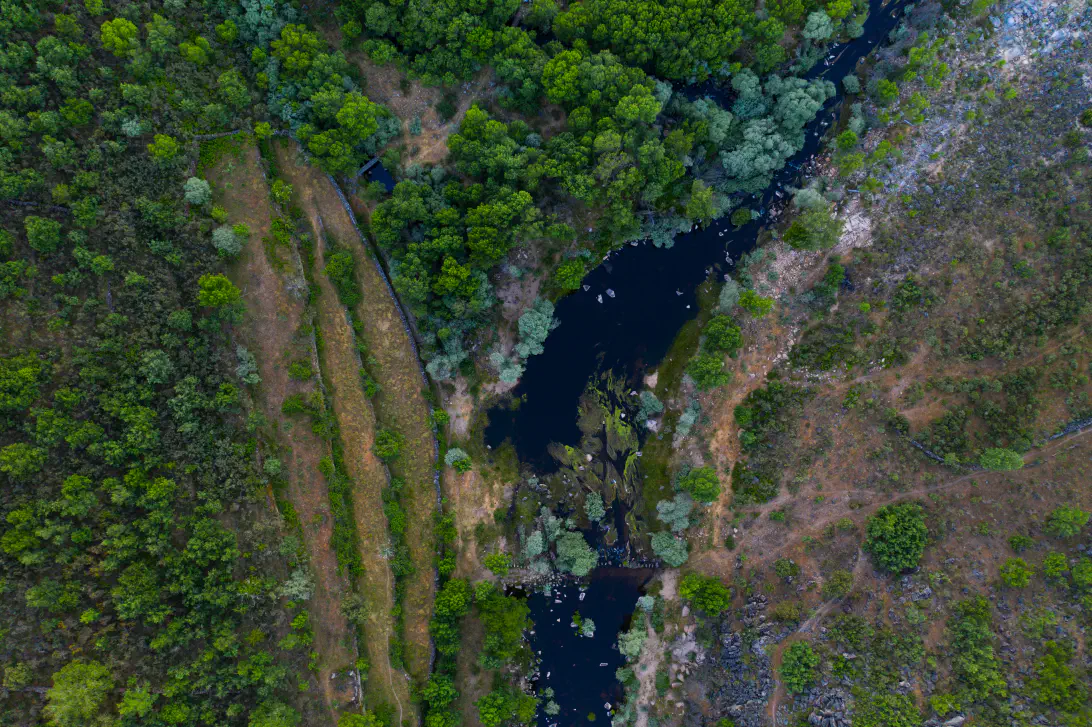
Riparian vegetation, Greater Côa Valley (Credit: Juan Carlos Muñoz / Rewilding Europe)
Many rewilding projects encounter a major and often overlooked challenge: the law. Lifescape’s Rewilding Law team exists to bridge the gap between legal systems and rewilding practice, and to create the legal foundations for large-scale nature restoration across the UK, Europe and internationally. We ensure that the realities of rewilding on the ground are reflected in legal thinking and decision-making.
As part of this, we have just launched our new and improved Rewilding Law Hub. This unique resource translates complex legal frameworks into practical guidance, showcases our work to identify and address legal barriers to ecological recovery, and provides a platform for knowledge exchange. Find out more about what’s on the Hub below.
Rewilding Legal Innovation Lab
Through our Rewilding Legal Innovation Lab, we use legal innovation to break down systemic barriers to rewilding, centred around four key themes:
Read more about the work we’re doing across these four areas in our Innovation Lab. We share insights from our collaborations with many different actors – rewilding projects, land managers, communities and partners like those in the Large Herbivore Working Group – to overcome potential legal barriers and maximise positive legal impact for rewilding. We are sharing our work and learnings in the hope that other projects will be able to replicate and adapt the identified solutions, upscaling the impact of our legal innovation and ultimately increasing the area of rewilded land across Europe.
One example is the initiative ‘Making Legal Room for Large Herbivores’, developed in collaboration with Rewilding Europe and Rewilding Spain, through which we are testing how far the current legal framework can accommodate horses, Tauros and European bison living in wild or semi-wild conditions in the Spanish Iberian Highlands. When able to live wild or semi-wild, these animals bring significant ecological benefits through grazing, browsing, trampling, and facilitating nutrient cycles. Yet EU and Spanish law classify many of the animals used for natural processes as production animals/livestock, which means they are subject to strict livestock rules such as on registration, identification, movement and disease-control. We are focusing on the practical routes available to reduce the impact of livestock rules designed for conventional farming, and exploring how a new legal category based on the functional role these animals play could be developed.
Mara Zamora, General Manager, Rewilding Spain, says:
“The Iberian Highlands are demonstrating the positive role that large herbivores can play in increasing biodiversity, reducing the risk of catastrophic wildfires, and revitalising local economies. In this context, legal frameworks must adapt to changing realities, remaining sufficiently flexible to respond to evolving societal needs and developments. This requires recognising the ecological functions performed by these animals and incorporating this reality into the legal framework.”
Catarina Prata, Senior Rewilding Lawyer, The Lifescape Project, says:
“Rewilding projects often face legal challenges in isolation. By sharing our Rewilding Legal Innovation Lab work – from large herbivore frameworks to long-term protection for wild land – we hope to spark discussion, encourage replication, and build the legal foundations needed for large-scale nature restoration.”
 Sorraia horses, Greater Côa Valley (Credit: Juan Carlos Muñoz / Rewilding Europe)
Practical legal guidance for rewilders
In 2023 we launched our Legal Guidance for Rewilders, a first-of-its-kind resource for rewilders, developed in partnership with Rewilding Britain and Rewilding Europe, and with the generous support of our pro bono law firm partners. These notes are designed specifically for people delivering rewilding on the ground.
As part of our newly updated Hub, we have added notes for Germany and Romania and have updated our other European notes to account for legal and policy developments since they were first published. We will shortly be updating the UK notes – stay tuned for an announcement on that. Our notes now cover seven jurisdictions: England & Wales, Scotland, Italy, Portugal, Poland, Romania, and Germany.
We provide jurisdiction-specific information covering key aspects of rewilding from a legal perspective, including the following:
- Developing and managing rewilding projects;
- Legal responsibilities and liabilities;
- Animal reintroductions;
- Legal mechanisms to protect land; and
- Tax and subsidies.
For example, our species reintroductions notes set out guidance on how those involved in such projects must consider various regulations that govern not just whether an animal or plant may be released into a landscape, but also the conditions under which it can be captured in the donor site, and how it must be transported between the two.
Rewilding Law Group
Our Rewilding Law Group brings together rewilders, lawyers, academics, policymakers, students and others interested in the intersection of law and rewilding, creating opportunities to exchange information and learn from one another.
Through the group we share relevant updates and events, while our quarterly webinars explore practical legal strategies for ongoing projects. For the first time, we’ve made the recaps and recordings from previous Rewilding Law Group quarterly webinars publicly available, allowing you to catch up on topics ranging from beaver reintroductions and marine rewilding to wolf protection in Europe. To be notified about upcoming webinars, join our LinkedIn group.
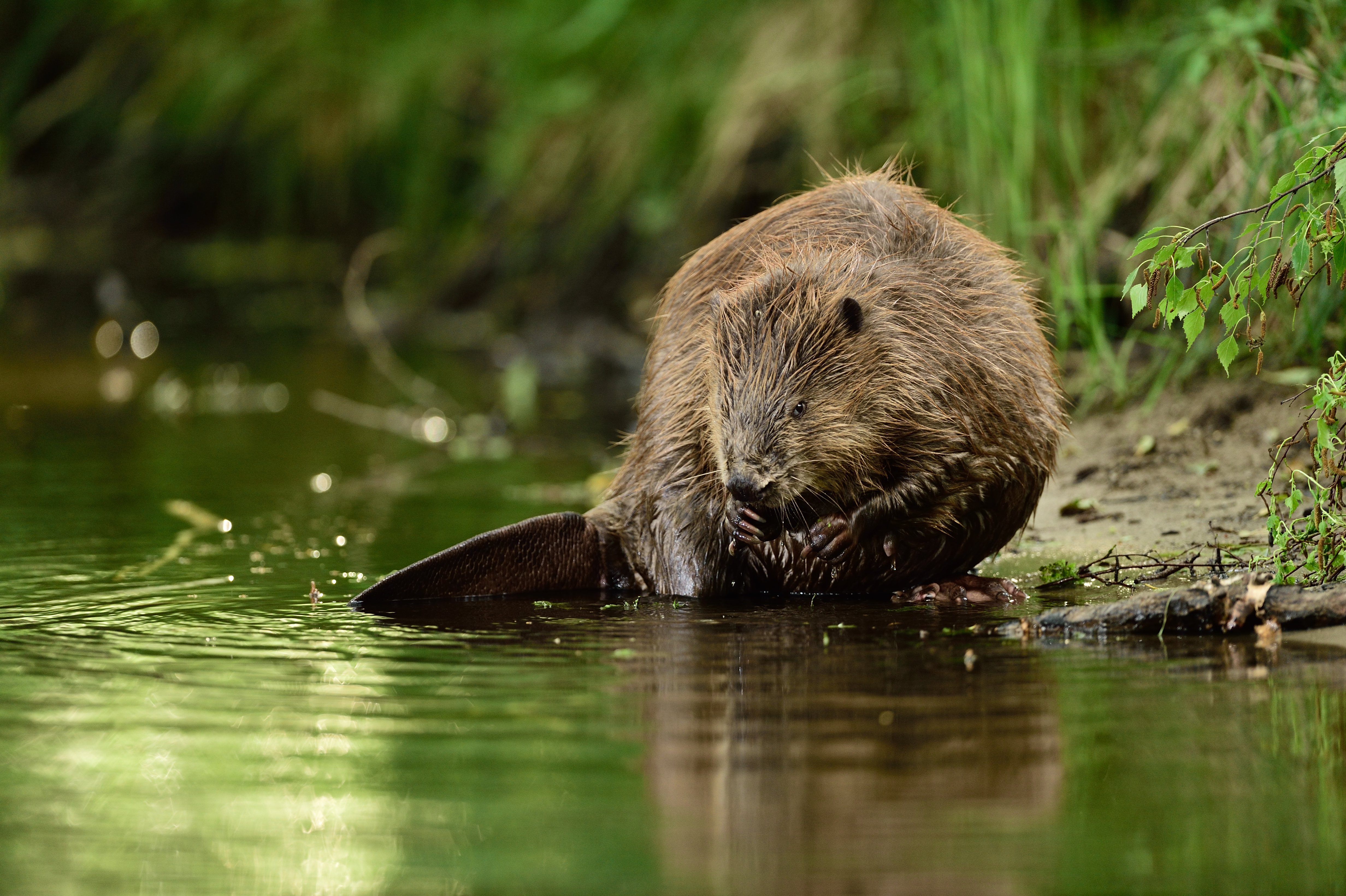 Beaver (Castor fiber), Peene valley (Credit: Solvin Zankl / Rewilding Europe)